📍 Location
Location Map Coordinates 35.897479, 14.511133

Introduction
The National Museum of Archaeology in Valletta is one of Malta’s most important cultural institutions, offering a comprehensive journey through the island’s prehistoric and early historic past. Located in the heart of the capital city, the museum provides visitors with a unique opportunity to explore artefacts spanning thousands of years, from the earliest human settlement to the Phoenician period.

Housed within the historic Auberge de Provence, the museum combines architectural grandeur with archaeological significance. It serves as a gateway to understanding Malta’s ancient civilisations and their remarkable achievements.

Historical Origins of the Building (16th Century)
The museum is located within the Auberge de Provence, a prestigious building constructed between 1571 and 1574 during the early years of Valletta’s development. The auberge was designed by the Maltese architect Girolamo Cassar, who played a key role in shaping the architectural identity of Valletta following the Great Siege of 1565.

Originally, the building served as the residence and headquarters of the Knights of the Order of St John from the Provence region of France. It functioned as a meeting place, administrative centre, and communal residence for members of the Order.
Architecturally, the auberge reflects a refined Baroque style, with later modifications enhancing its façade and internal spaces during the 17th century.

One of the most impressive features of the building is the Gran Salon, an elaborately decorated hall that once served as a refectory and meeting space for the Knights.
Transformation into a Museum (20th Century)
The Auberge de Provence underwent significant changes over the centuries, particularly after the departure of the Knights from Malta in 1798. During the British period, the building was used for various administrative and social purposes, including housing the Malta Union Club.

In 1958, the building was officially opened as the National Museum, marking the beginning of its role as a public cultural institution.

Initially, the museum housed both archaeological and fine arts collections. However, in 1974, the fine arts collection was transferred to another institution, and the museum was renamed the National Museum of Archaeology, focusing exclusively on Malta’s archaeological heritage.

Restoration and Modern Developments
In 1998, the museum underwent a major refurbishment aimed at modernising its exhibition spaces and improving conservation standards.
During this restoration:
- Climate-controlled display cases were introduced
- Artefacts were reorganised for improved interpretation
- Exhibition layouts were redesigned to enhance visitor experience

Ongoing developments continue to expand the museum’s scope, with plans to include additional galleries dedicated to Roman, Byzantine, and medieval periods, further enriching its historical narrative.

Collections and Artefacts
The National Museum of Archaeology houses one of the most important collections of prehistoric artefacts in the Mediterranean. Its exhibits span from approximately 5200 BC to 400 BC, covering Malta’s Neolithic, Temple, Bronze Age, and Phoenician periods.

Neolithic and Temple Period
The ground floor is primarily dedicated to Malta’s prehistoric temple culture, showcasing artefacts from some of the world’s oldest free-standing structures.

- The Sleeping Lady from the Ħal Saflieni Hypogeum
- The Venus of Malta from Ħaġar Qim
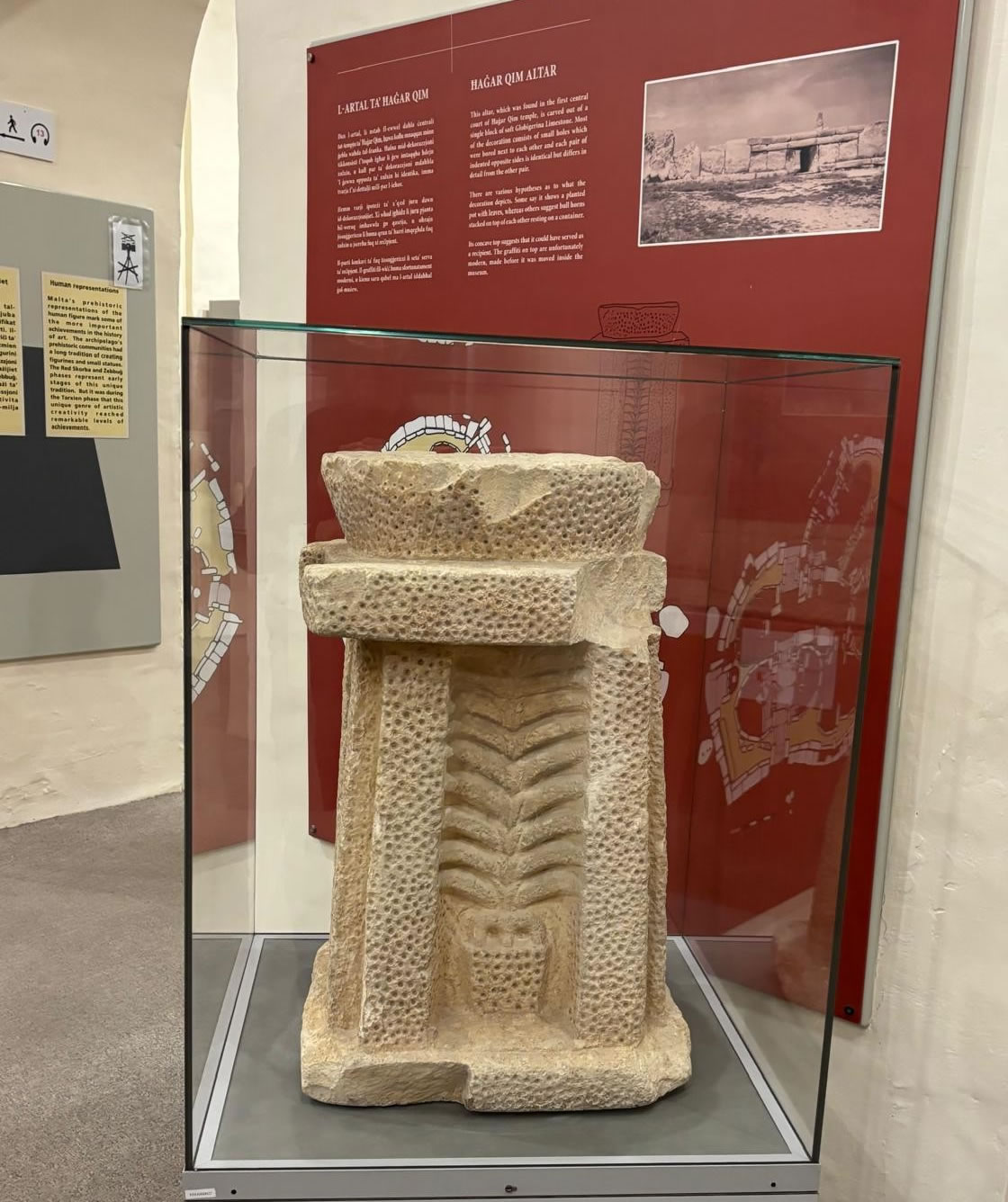
- Temple models and carved stone decorations
- Early tools and domestic objects
These artefacts demonstrate the advanced artistic and engineering skills of Malta’s early inhabitants.

Bronze Age Collections
The museum also features artefacts from the Bronze Age, including:
- Bronze daggers from the Tarxien Temples
- Pottery and tools reflecting evolving technologies

These items provide insight into changes in society, trade, and craftsmanship during this period.

Phoenician and Early Historic Period
The upper floors display artefacts from the Phoenician period, including:
- Amulets and jewellery
- Funerary urns and sarcophagi
- The famous Cippus inscription linked to the decipherment of the Phoenician alphabet

These exhibits highlight Malta’s role as an important Mediterranean crossroads in antiquity.

Architectural Features
Beyond its collections, the building itself is a major attraction. The Auberge de Provence is considered one of the finest examples of Baroque architecture in Malta.

Key features include:
- The Gran Salon with painted ceilings and ornate decoration
- Elegant limestone façade typical of Maltese architecture
- Historic rooms once used by the Knights of St John

The integration of museum displays within this historic setting enhances the visitor experience, blending architecture and history into a single narrative.

Role and Cultural Importance
The National Museum of Archaeology plays a crucial role in preserving and interpreting Malta’s cultural heritage. It serves as:
- A national repository of archaeological artefacts
- An educational resource for understanding Malta’s past
- A starting point for exploring other archaeological sites across the islands

By presenting artefacts in a chronological framework, the museum allows visitors to trace the development of Maltese civilisation over thousands of years.
Visitor Experience
Visitors to the museum can expect a comprehensive and engaging experience, with carefully curated exhibits and informative displays.

Highlights include:
- Iconic prehistoric sculptures
- Interactive and educational exhibits
- Temporary exhibitions featuring rare artefacts
- Audio guides available in multiple languages
The museum’s central location in Valletta makes it easily accessible and an essential stop for anyone interested in Malta’s history.

Location and Accessibility
The museum is situated on Republic Street in Valletta, Malta’s capital city and a UNESCO World Heritage Site. It is within walking distance of the Valletta City Gate and major landmarks.
Coordinates: 35.897479, 14.511133
Public transport connections from across Malta make the museum easily reachable, with the main bus terminal located just a short walk away.

Conclusion
The National Museum of Archaeology in Valletta stands as a cornerstone of Malta’s cultural identity. From its origins as a Knights’ auberge in the 16th century to its role today as a leading archaeological museum, it embodies the island’s rich and diverse history.
Its extensive collections, combined with its architectural beauty, make it an essential destination for visitors seeking to understand Malta’s ancient past. Whether exploring prehistoric temples, Phoenician artefacts, or the legacy of the Knights, the museum offers a truly immersive experience.