Region: Cottonera (Three Cities)
Also Known As: Città Invicta
Location: Grand Harbour, Malta

Introduction
Senglea, also known as L-Isla, is one of Malta’s historic Three Cities, alongside Birgu (Vittoriosa) and Bormla (Cospicua). Situated on a narrow peninsula extending into the Grand Harbour, Senglea is one of the smallest yet most historically significant cities in Malta.
Location
Despite its compact size, Senglea has played a crucial role in Malta’s military, maritime, and cultural history, particularly during the period of the Knights of St John and the famous Great Siege of 1565.
Early History and Origins
Before the arrival of the Knights of St John in 1530, the area was largely undeveloped and known as Isola di San Giuliano. A small chapel dedicated to St Julian existed as early as 1311, marking the earliest known structure on the peninsula.
Recognising its strategic importance overlooking the Grand Harbour, the Knights began fortifying the peninsula in the mid-16th century.

Foundation and Fortifications (1552–1554)
On 8 May 1552, the foundation stone of Fort St Michael was laid, marking the beginning of Senglea’s transformation into a fortified settlement.
Shortly after, in 1554, Grand Master Claude de la Sengle officially founded the city and gave it his name.
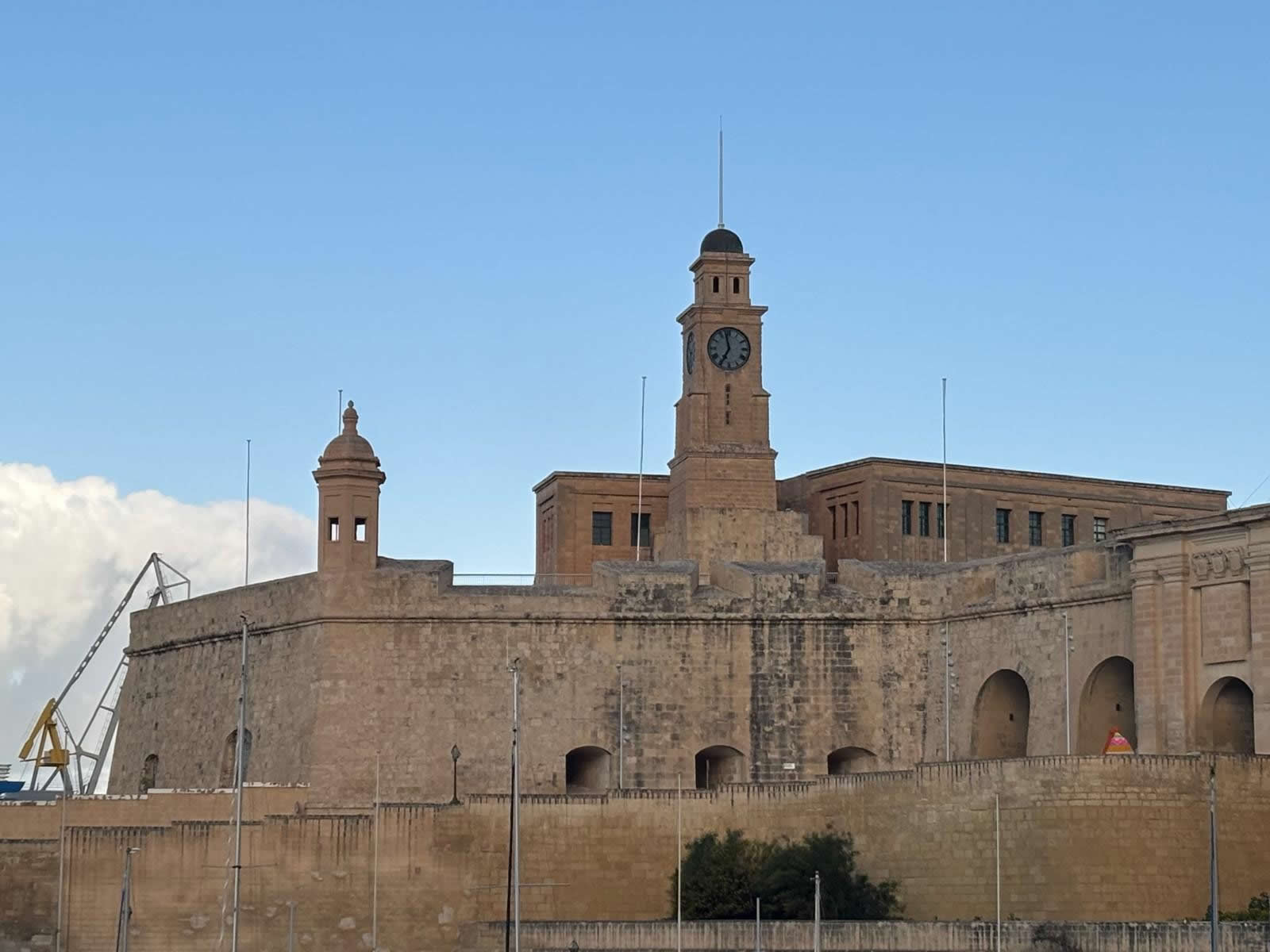
The town was enclosed by bastions and defensive walls, forming part of a larger defensive system protecting the Grand Harbour from Ottoman attacks.

The Great Siege of Malta (1565)
Senglea played a vital role during the Great Siege of Malta in 1565, when Ottoman forces attempted to conquer the island. The city was heavily attacked and suffered significant destruction, but it remained unconquered.
In recognition of its bravery, Grand Master Jean Parisot de Valette awarded Senglea the title:
“Civitas Invicta” – The Unconquered City
This title remains one of Senglea’s most important historical distinctions.
Growth and Development (16th–18th Century)
Following the Great Siege, Senglea was rebuilt and expanded. By the 17th and 18th centuries, it had developed into a thriving maritime and commercial centre.
- Shipbuilding and dockyard activity increased
- Residential areas expanded within fortified walls
- Religious institutions were established
By the 18th century, Senglea was considered one of the most prosperous of the Three Cities.
Religious and Cultural Life
Religion has always played a central role in Senglea’s identity. The parish dedicated to the Nativity of the Virgin Mary was established in 1581.
The city is especially known for:
- The devotion to Marija Bambina
- The annual feast held on 8 September
- Traditional regattas in the Grand Harbour
These traditions continue to define Senglea’s cultural identity today.
French Period and British Rule (1798–1964)
In 1798, Senglea became involved in the Maltese uprising against French occupation. Following the expulsion of the French in 1800, Malta entered a new phase under British rule.
During the British period:
- The dockyard was expanded significantly
- Senglea became closely linked to naval activity
- Economic growth was driven by maritime industries
This reinforced Senglea’s importance within the Grand Harbour region.

World War II Destruction (1940–1945)
Senglea suffered devastating damage during World War II due to intense aerial bombardment. Much of the city was destroyed, and many residents lost their lives.
A particularly severe air raid in 1941 caused widespread destruction across the city.
Despite this devastation, Senglea was rebuilt in the post-war years, preserving its historical identity while adapting to modern needs.
Post-War Reconstruction and Modern Senglea
After the war, Senglea underwent extensive reconstruction:
- Residential areas were rebuilt
- Dockyard activities resumed
- Infrastructure was modernised
Today, Senglea remains a residential community with strong historical character, offering panoramic views of the Grand Harbour and Valletta.
Architecture and Urban Layout
Senglea is characterised by:
- Narrow streets and traditional Maltese houses
- Fortified bastions and defensive walls
- Baroque churches and historic buildings
The city’s layout reflects its origins as a fortified military settlement.
Gardjola Gardens and Landmarks
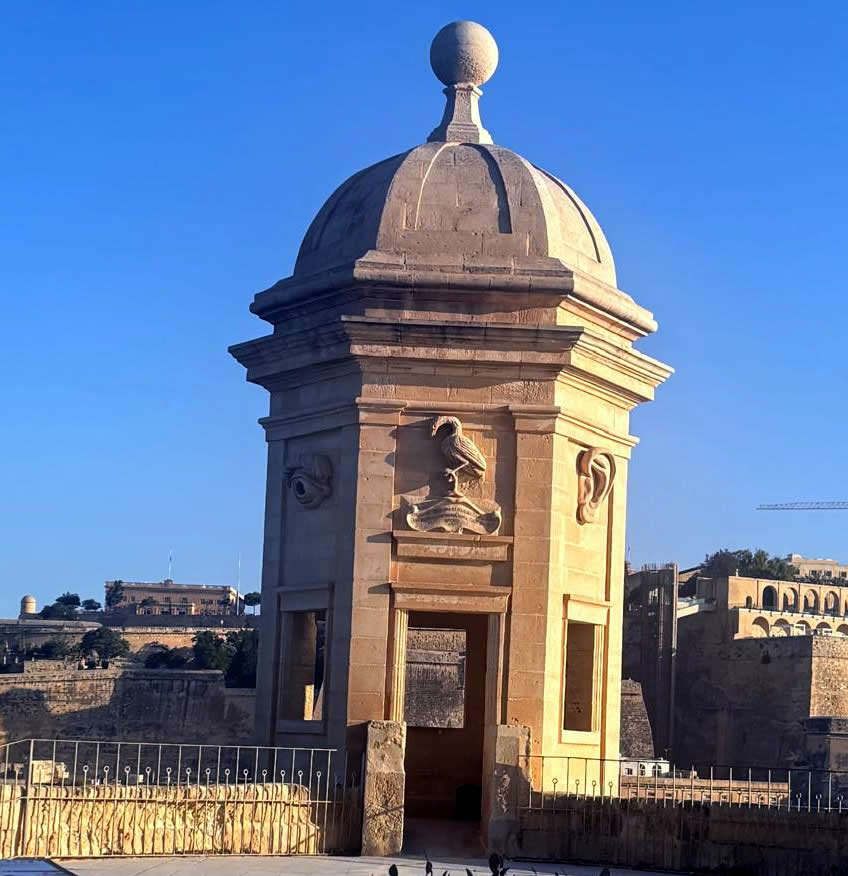
One of Senglea’s most iconic landmarks is the Gardjola Garden, located at the tip of the peninsula. From here, visitors can enjoy panoramic views of:
- Valletta
- Grand Harbour
- Dockyard Creek
The garden also features a famous watchtower symbolising vigilance and defence.
The Sentry Box Icon: Il-Gardjola
Fortification Architecture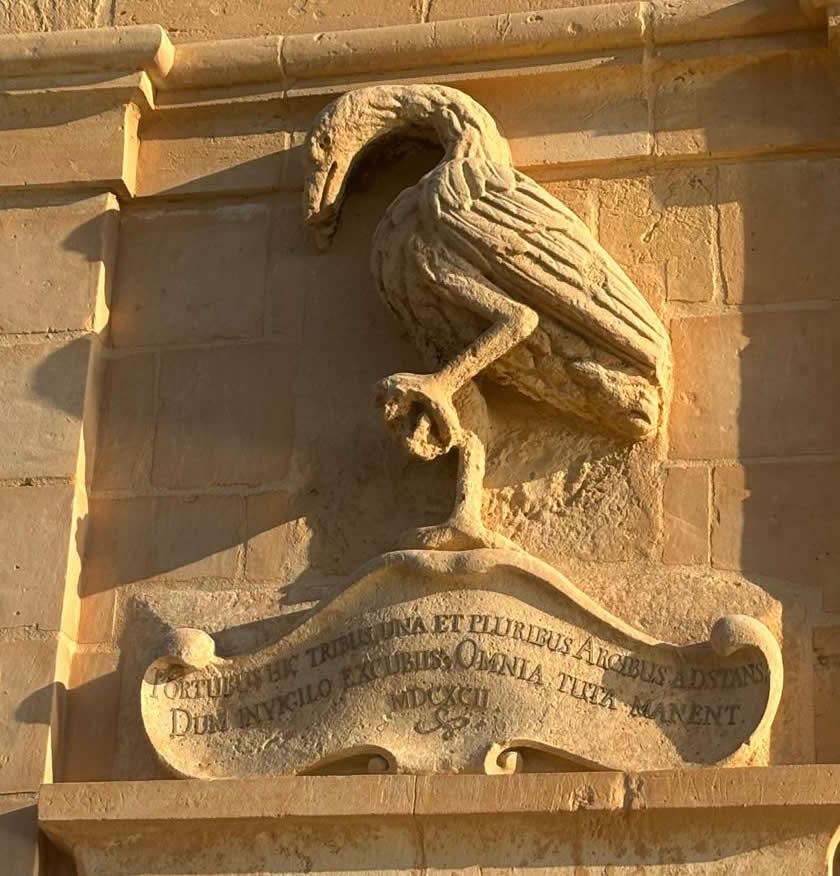
Architecture and Defensive Symbolism
Perched on the tip of the Senglea peninsula within Gardjola Gardens is the famous Gardjola—the iconic stone sentry box built by the Knights of St. John to keep watch over the mouth of the Grand Harbour. The outpost is celebrated for its symbolic architectural details, designed to remind guards of their duties. These symbols include sculpted ears and eyes carved into the stone panels, alongside this striking high-relief emblem of the Crane of Vigilance
In ancient and medieval bestiaries, the crane was the ultimate representation of a sentinel. According to natural myth, a guard crane stands on one foot while clutching a stone in its raised claw. If the bird nods off to sleep, its grip relaxes, dropping the stone onto its other foot to instantly shock it back awake. For the fortification city of Senglea (*Città Invicta*), this motif mirrored the sleepless military watch required to protect the harbors from invading fleets.
Original Latin Inscription (1692)
PORTUBUS HIC TRIBUS UNA ET PLURIBUS ARCIBUS ADSTANS,
DUM INVIGILO EXCUBIIS, OMNIA TUTA MANENT.
MDCXCII
S P
English Historical Translation
Standing here as one over three harbors and multiple fortifications,
while I keep a watchful eye on guard, all things remain safe.
1692
[Sanctus Philippus / Senglea Patronus]
Cultural Importance
Senglea represents:
- The military resilience of Malta during the Knights’ period
- The maritime and industrial heritage of the Grand Harbour
- The cultural traditions of the Maltese people
Its title Civitas Invicta continues to symbolise its enduring spirit.
The Churches and Chapels of Senglea
Visiting Senglea
Senglea is easily accessible from Valletta and forms part of the popular Three Cities itinerary.
- Location: Grand Harbour, Malta
- Nearby: Birgu and Bormla
- Highlights: Fortifications, Basilica, Gardjola Gardens
Conclusion
Senglea stands as one of Malta’s most historically rich cities. From its foundation in the 16th century to its heroic role in the Great Siege and its resilience through war and reconstruction, it remains a symbol of strength and heritage.
Today, Senglea continues to attract visitors seeking to explore Malta’s past while experiencing the unique atmosphere of one of the island’s oldest fortified cities.