📍 HMS Orpheus Submarine Memorial
Location Map Coordinates 35.902231, 14.519625
← Return to the Submarine Roll of Honour
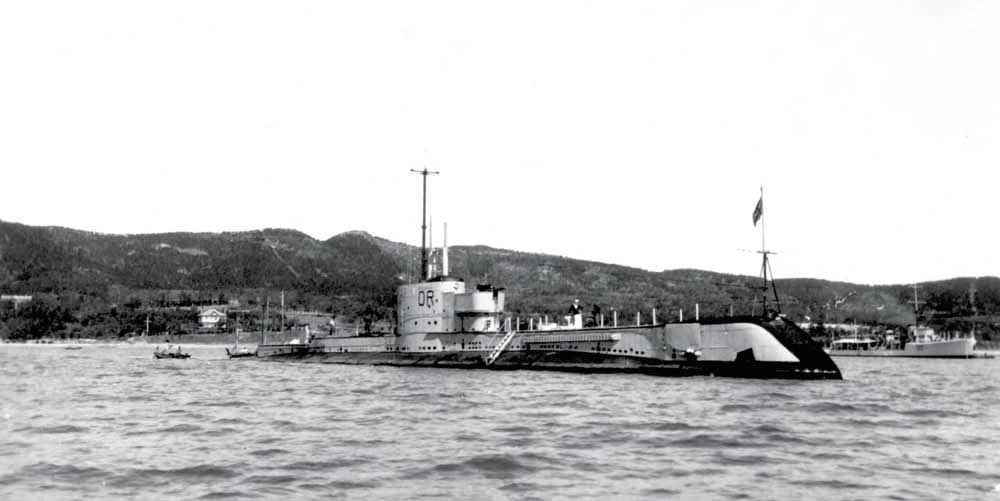
HMS Orpheus was an Odin-class submarine of the Royal Navy that served with the Mediterranean Fleet during the opening weeks of the Second World War. Operating from Malta shortly after Italy entered the conflict, she undertook offensive patrols against Italian naval and merchant shipping. On her second wartime patrol she was lost with all hands in June 1940 after striking an Italian minefield in the Strait of Otranto.
Introduction
HMS Orpheus belonged to the six-boat Odin class, designed during the late 1920s for long-range patrol operations throughout the British Empire. Larger than the later U-class submarines associated with Malta, the class was intended for extended operations in distant waters and was equipped with a powerful torpedo armament and a 4-inch deck gun.
Following the outbreak of war, HMS Orpheus joined the Mediterranean Fleet and was based at Malta. Together with submarines such as HMS Odin, HMS Grampus and HMS Olympus, she formed part of Britain's first underwater offensive against the Italian Navy after Italy declared war on 10 June 1940.
Construction and Design
HMS Orpheus was built by Vickers-Armstrong at Barrow-in-Furness. She was launched on 26 February 1929 and commissioned into the Royal Navy during 1930. Like the other submarines of her class, she was designed for ocean-going patrols, combining long endurance with a heavy torpedo armament.
The submarine displaced approximately 1,475 tons on the surface and around 1,780 tons submerged. She measured 283 feet (86.3 metres) in length and was powered by diesel engines on the surface with electric motors underwater. Her eight 21-inch torpedo tubes and 4-inch deck gun made her a formidable weapon during the early stages of the war.
| Class | Odin-class submarine |
|---|---|
| Pennant Number | N46 |
| Builder | Vickers-Armstrong, Barrow-in-Furness |
| Launched | 26 February 1929 |
| Commissioned | 1930 |
| Length | 283 ft (86.3 m) |
| Displacement | 1,475 tons surfaced / 1,780 tons submerged |
| Armament | Eight 21-inch torpedo tubes and one 4-inch deck gun |
| Crew | Approximately 55 officers and men |
Mediterranean Operations
When Italy entered the war on 10 June 1940, HMS Orpheus immediately began operational patrols from Malta. British submarines were tasked with attacking Italian warships and merchant vessels operating between southern Italy, Albania and North Africa. These patrols placed submarines in heavily defended waters where enemy destroyers, aircraft and extensive minefields presented constant danger.
HMS Orpheus was assigned to patrol the Strait of Otranto, an important route linking the Adriatic Sea with the wider Mediterranean. The area was intensively mined by the Italian Navy to protect access to its Adriatic bases.
Loss of HMS Orpheus
On 19 June 1940, HMS Orpheus failed to return from patrol after being ordered to intercept Italian naval traffic in the Strait of Otranto. She was subsequently declared overdue and presumed lost with all 55 members of her crew.
Post-war research established that HMS Orpheus almost certainly struck an Italian defensive minefield laid off Brindisi. No distress signal was received and there were no survivors. The submarine disappeared only nine days after Italy entered the war, making her one of the earliest Royal Navy submarine losses of the Mediterranean campaign.
The loss of HMS Orpheus, together with HMS Grampus and HMS Odin, highlighted the extreme hazards faced by British submariners during the opening weeks of operations from Malta. Despite these early losses, Royal Navy submarines would go on to play a decisive role in disrupting Axis supply routes throughout the Mediterranean.
Roll of Honour – Crew Lost
HMS Orpheus was lost with all hands on 19 June 1940 after striking an Italian mine while on patrol in the Strait of Otranto. The following officers and ratings are commemorated in the Malta Defiant & Triumphant – Rolls of Honour 1940–1943.
| Name | Rank / Rating |
|---|---|
| Wise, J A S | Lt Cdr – Commanding Officer |
| Allen, D J | AB |
| Allen, S C | Leading Seaman |
| Armstrong, J D | ERA 3 |
| Ayers, W F | AB |
| Bevis, P A | Leading Telegraphist |
| Biddulph, P | Petty Officer Telegraphist |
| Burtenshaw, C W | Stoker 1st Class |
| Butler, L W | Leading Stoker |
| Critchell, W J G | Leading Seaman |
| Cross, E K | Warrant Engineer |
| Dance, J W | ERA 2 |
| Davies, C T | Lieutenant |
| Dolton, L H | Leading Stoker |
| Ellison, J W | Leading Telegraphist |
| Evans, J | Leading Signalman |
| Fawkes, P F | Lieutenant |
| Foreman, C H E | Leading Stoker |
| Forrester, W J | Leading Cook (S) |
| Fox, E S S | AB |
| Gill, R V | ERA 3 |
| Glanvill, F | AB |
| Hardaker, G | Chief Petty Officer Telegraphist |
| Hawkins, A H | Stoker 1st Class |
| Jones, W C | Stoker Petty Officer |
| Kellaway, L R | AB |
| Kemp, W H | Leading Stoker |
| Kitson, J | Engine Room Artificer 1st Class |
| Lumby, R | Stoker 1st Class |
| McGrath, M | AB |
| McLean, A W | Leading Stoker |
| McLoughlin, N | Stoker 1st Class |
| McNally, J E | Leading Stoker |
| Manuel, W J | Petty Officer |
| Martin, G G | Petty Officer |
| North, W | Leading Seaman |
| Pallister, H | Leading Stoker |
| Penfound, L C H | Chief ERA |
| Perry, E G | AB |
| Phelps, R H | Stoker Petty Officer |
| Pickthall, T | Stoker 1st Class |
| Powell, W J | AB |
| Reeson, F | Leading Seaman |
| Roberts, H M | ERA 2 |
| Robertson, F S | Leading Stoker |
| Salt, B F | Leading Seaman |
| Scott, T N | Chief Petty Officer |
| Strawbridge, R J J | Telegraphist |
| Symonds, J D | Sub-Lieutenant |
| Tott, F R | Petty Officer |
| Venning, L C | Stoker 1st Class |
| Waddell, R | AB |
| Watts, E H | Leading Stoker |
| Wilkinson, A T | Warrant Engineer |
| Wood, F H | Leading Seaman |
Legacy
Although HMS Orpheus completed only a short period of wartime service from Malta, her loss became one of the first Royal Navy submarine casualties of the Mediterranean campaign. Together with HMS Odin and HMS Grampus, she represented the sacrifice made by Britain's submarine service during the opening weeks of Italy's involvement in the Second World War.
The experience gained from these early patrols helped shape later submarine operations from Malta. As the war progressed, Royal Navy submarines operating from the island would inflict heavy losses on Axis shipping supplying North Africa, making Malta one of the most important submarine bases in the Mediterranean.
Today HMS Orpheus is commemorated on the Submarine Roll of Honour overlooking Malta's Grand Harbour, ensuring that the sacrifice of her officers and crew continues to be remembered.
Timeline
Launched by Vickers-Armstrong at Barrow-in-Furness.
Commissioned into the Royal Navy.
Served with the Royal Navy before the outbreak of the Second World War.
Italy declared war on Britain and France; HMS Orpheus commenced operational patrols from Malta.
Believed lost after striking an Italian mine in the Strait of Otranto.
Declared overdue and officially lost with all hands.
Technical Specifications
| Class | Odin-class ocean-going submarine |
|---|---|
| Pennant Number | N46 |
| Builder | Vickers-Armstrong, Barrow-in-Furness |
| Launched | 26 February 1929 |
| Commissioned | 1930 |
| Length | 283 ft (86.3 m) |
| Beam | 30 ft (9.1 m) |
| Draught | 13 ft (4.0 m) |
| Displacement | 1,475 tons surfaced / 1,780 tons submerged |
| Speed | 17 knots surfaced / 9 knots submerged |
| Range | Approximately 8,400 nautical miles at 10 knots |
| Armament | Eight 21-inch torpedo tubes, one 4-inch deck gun |
| Crew | Approximately 55 officers and men |
References
- George Cross Island Association. Malta Defiant & Triumphant – Rolls of Honour 1940–1943.
- British Admiralty Naval Staff Histories.
- Royal Navy Submarine Museum archives.
- Imperial War Museums Collections.
- uboat.net – Allied Warships – HMS Orpheus.
- Naval-History.net – Royal Navy submarine losses.
Commemorated in Malta
HMS Orpheus is commemorated on the Submarine Roll of Honour at Fort St Elmo, Valletta, overlooking the Grand Harbour, where the names of Allied submarines lost while operating from Malta during the Second World War are permanently remembered.