📍 Location
Location Map Coordinates 35.913757, 14.480319
Introduction
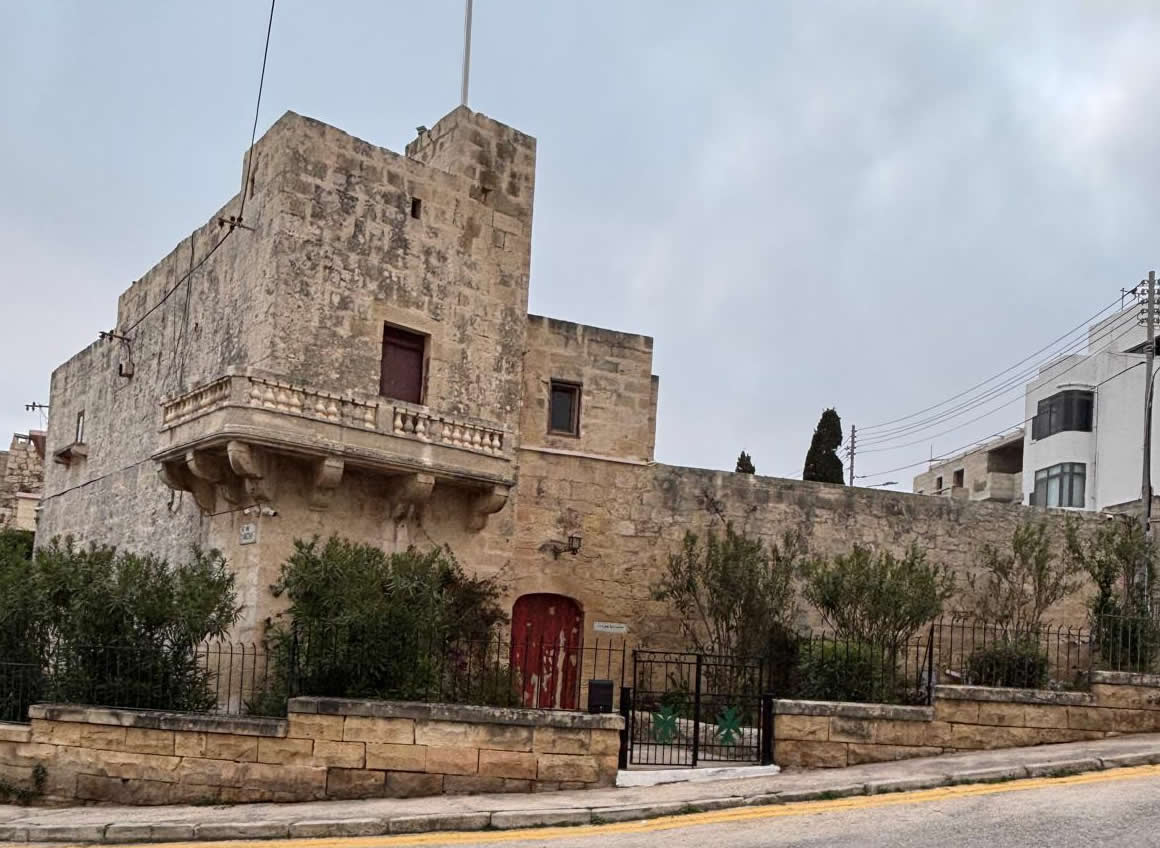
Torri Lanzon, more widely known as Castello Lanzun, is one of the most historically significant privately built fortified structures in Malta. Located in the Mensija area of San Ġwann, this imposing building represents a rare survival of a medieval fortified farmhouse that evolved into a defensive refuge and later a symbolic headquarters of a chivalric order.
Dating back to the 15th century, the structure predates the arrival of the Order of St John in Malta and reflects the early development of rural defensive architecture. Over the centuries, it was expanded, fortified, damaged during war, and eventually restored, making it a remarkable example of continuity in Maltese architectural heritage.
Origins and Early Construction (15th Century)
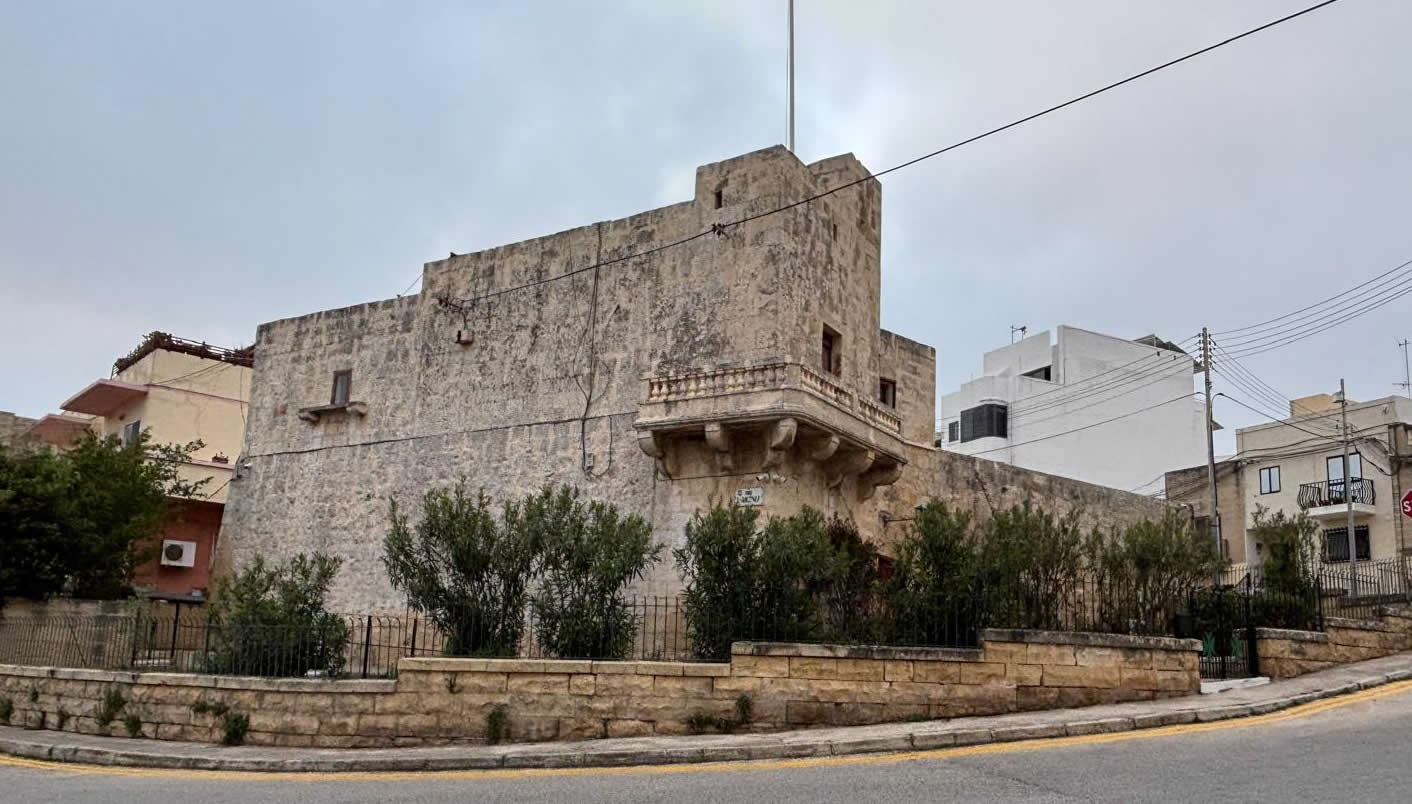
The origins of Torri Lanzon date to the 15th century, when it was originally constructed as a farmhouse within a rural agricultural landscape. At the time, Malta was still under the Kingdom of Sicily, and such buildings were designed primarily for agricultural use while incorporating basic defensive features.
The structure’s layout follows the traditional Maltese farmhouse design, organised around a central courtyard and surrounded by thick limestone walls. This configuration provided both climatic comfort and a degree of security in an era when rural communities were vulnerable to raids.
Its early construction places it among the oldest surviving examples of privately built fortified residences in Malta, representing a transitional form between simple farmsteads and later defensive towers.
Association with Wenzu Lanzun and the 1676 Plague
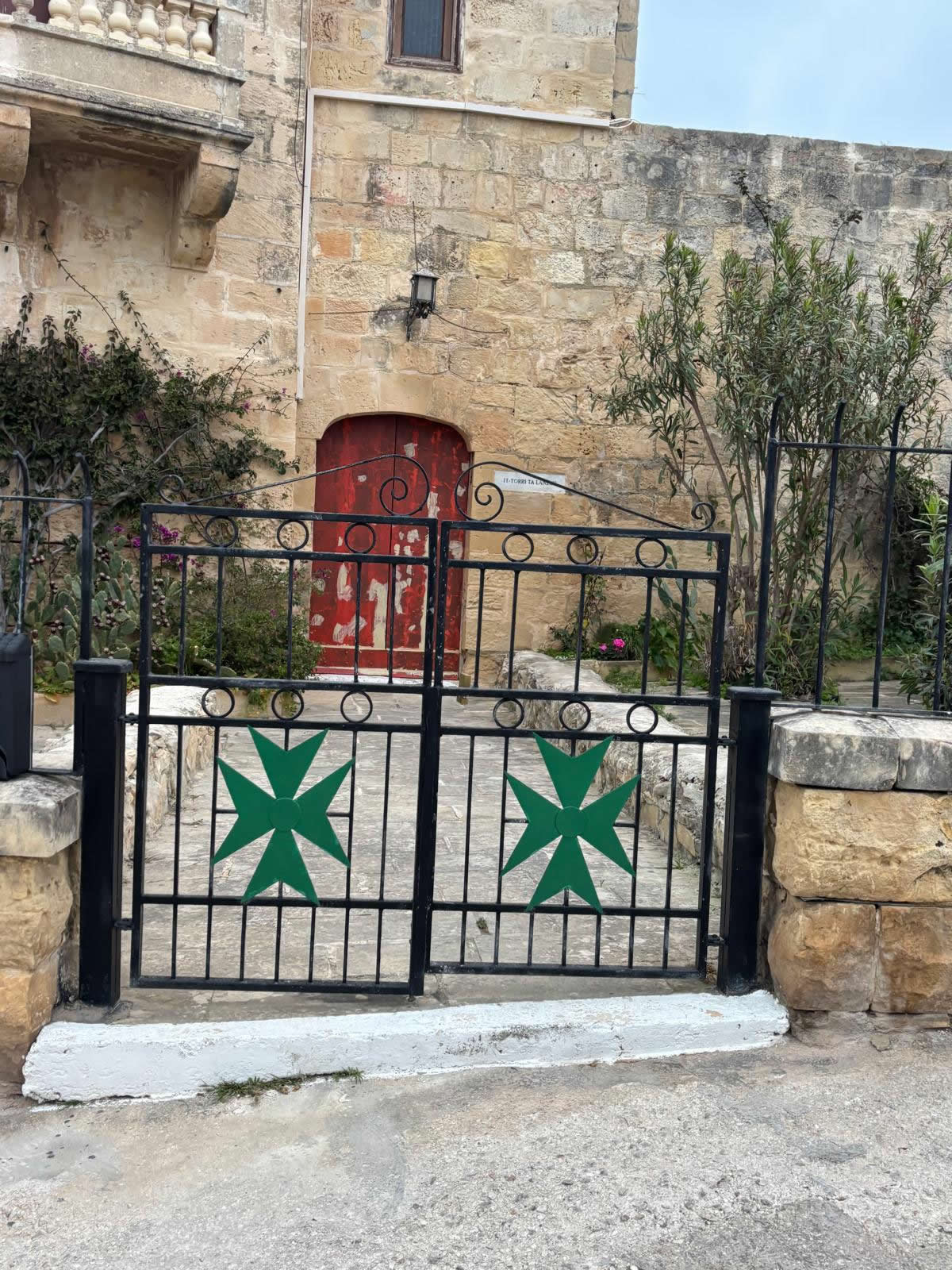
The tower derives its name from Wenzu Lanzun (Vincenzo Lanzun), a merchant from Birgu who resided in the building during the devastating plague epidemic of 1676.
According to historical accounts, Lanzun used the farmhouse as a place of isolation during the epidemic, which claimed the lives of members of his family. This association cemented the building’s identity and gave rise to its enduring name.
The connection to the plague period highlights the building’s function not only as a residence but also as a refuge in times of crisis—an aspect common to many privately built towers across Malta.
Fortification and Expansion in 1713
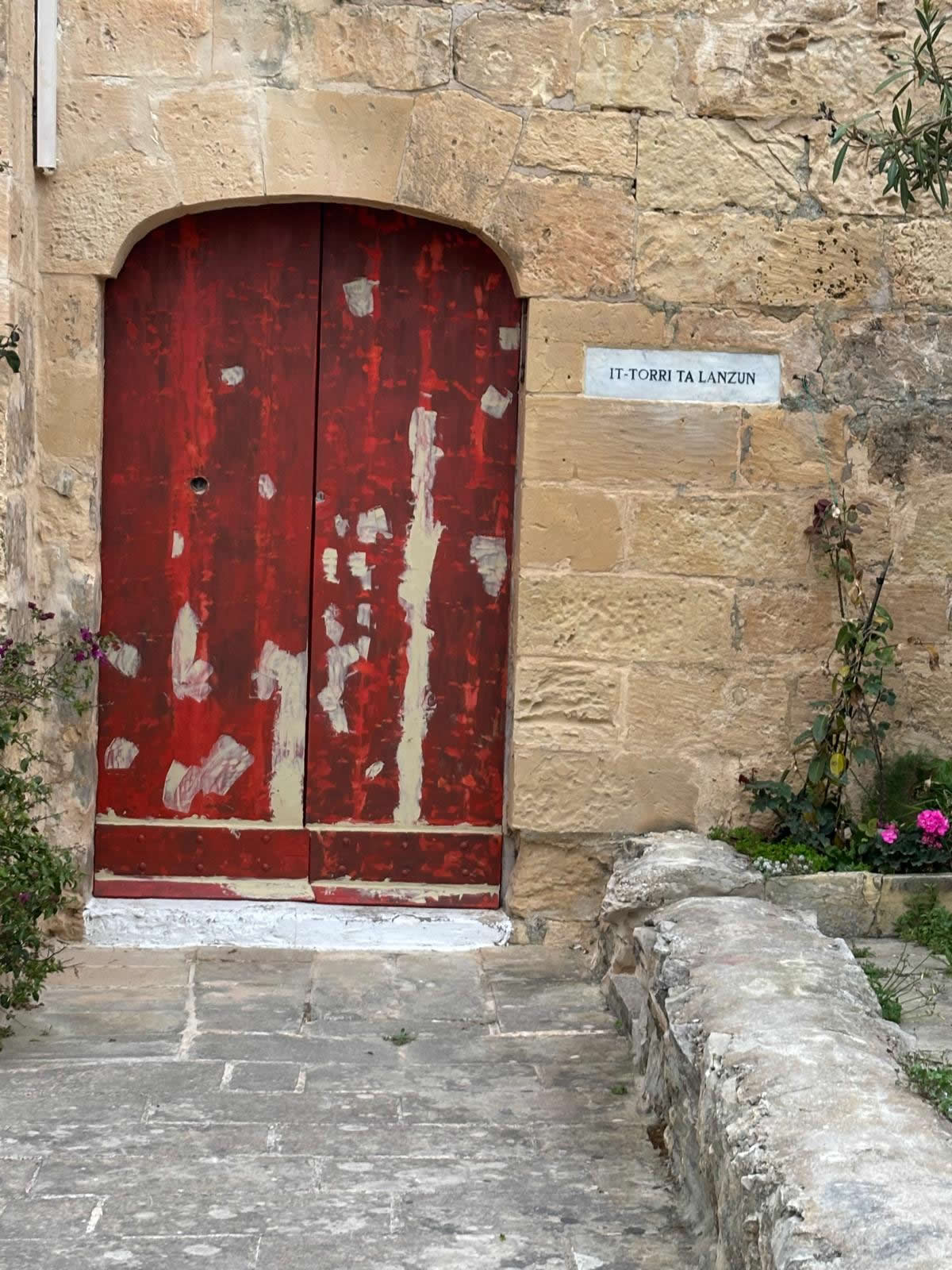
In 1713, the structure underwent significant modification and fortification. These alterations transformed the farmhouse into a more robust defensive complex capable of offering protection against corsair raids, which remained a persistent threat in the Mediterranean.
The fortified structure included enhanced defensive features such as thicker walls, controlled access points, and elevated vantage positions. The building could accommodate local inhabitants seeking refuge during attacks, reflecting its role within the broader network of rural defence.
During this period, the building also served as a hunting lodge for the Grand Masters of the Order of St John, demonstrating its dual function as both a defensive and semi-aristocratic residence.
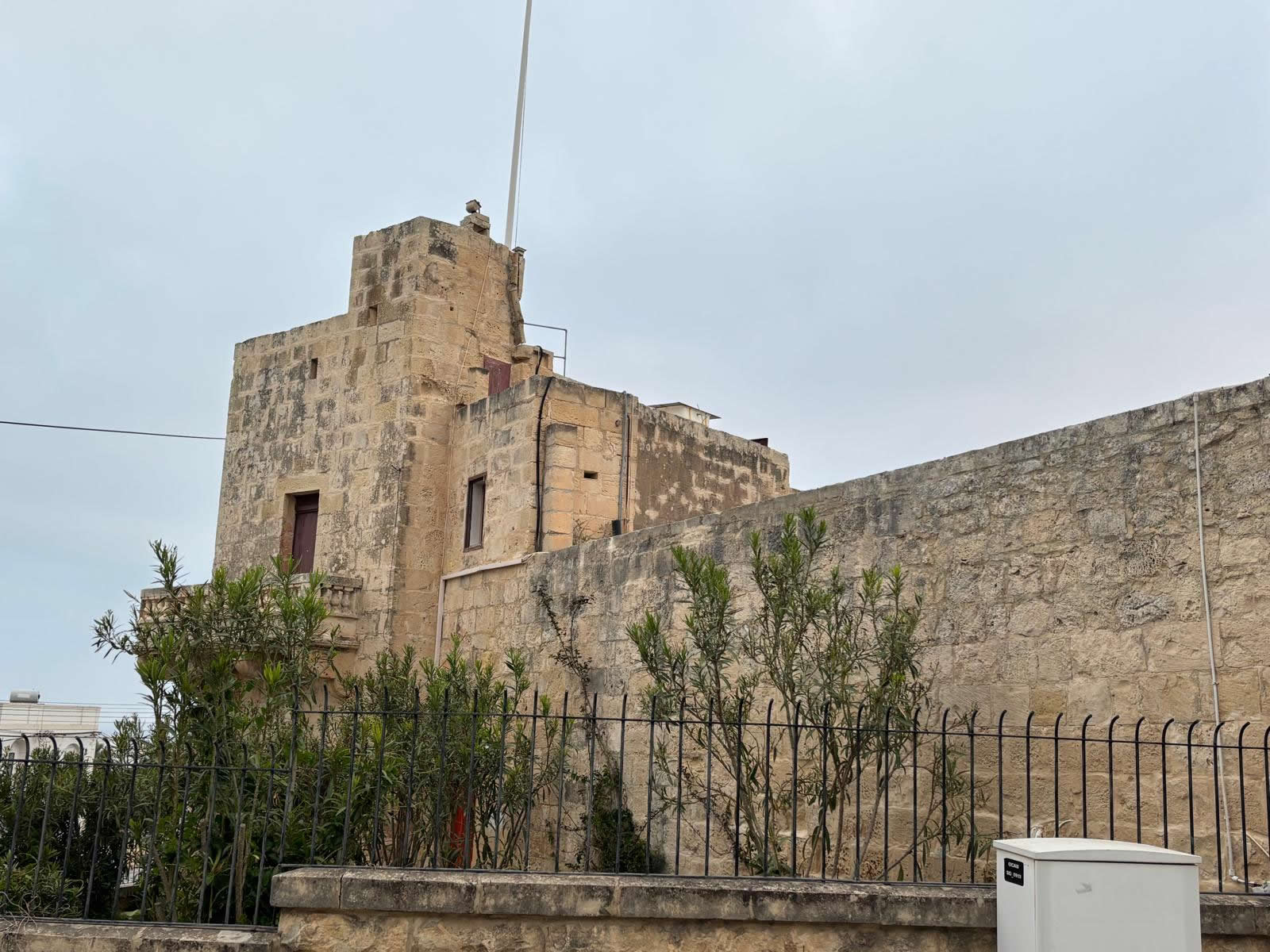
Architectural Features
Torri Lanzon is a classic example of traditional Maltese vernacular architecture. The structure consists of multiple interconnected rooms arranged around a central courtyard, a design that provided both ventilation and security.
- Thick limestone walls for defence and insulation
- Internal courtyard typical of Maltese rural houses
- Elevated and controlled entrance points
- Large hall (formerly stables, now known as the Knights’ Hall)
- Integrated chapel within the complex
These features illustrate the evolution of the building from a simple agricultural residence into a fortified complex capable of serving both domestic and defensive purposes.
Role During World War II
During the Second World War, Torri Lanzon was repurposed as an observation post used to monitor enemy aircraft approaching the island.
Due to its elevated position and solid construction, it was well suited for this role. However, the building suffered significant damage from aerial bombardment, reflecting the broader devastation experienced across Malta during the war years.
Restoration and Modern Use
In 1972, the building was acquired by Robert Gayre, who undertook restoration works to preserve the structure. It was subsequently entrusted to the Military and Hospitaller Order of Saint Lazarus of Jerusalem and inaugurated as its headquarters in 1973.
Today, Torri Lanzon serves as the headquarters of the Order’s Malta commandery and continues to function as a cultural and ceremonial venue. Its restoration ensured the survival of one of Malta’s most important privately built fortified structures.
Historical Significance
Torri Lanzon occupies a unique place within Malta’s architectural and historical landscape. Unlike coastal towers built by the Knights, it represents a privately developed defensive solution rooted in rural life.
Its layered history—from medieval farmhouse to fortified refuge, wartime observation post, and modern heritage site—encapsulates the evolution of Maltese defensive architecture over several centuries.
Frequently Asked Questions
When was Torri Lanzon built?
The structure dates back to the 15th century, originally constructed as a farmhouse.
Why is it called Castello Lanzun?
It is named after Wenzu Lanzun, who lived there during the 1676 plague.
Was it always a defensive tower?
No, it began as a farmhouse and was fortified in 1713 to serve defensive purposes.
Is Torri Lanzon still standing?
Yes, it has been restored and is currently in use as a headquarters and heritage site.
Conclusion
Torri Lanzon stands as one of Malta’s most important examples of a privately built fortified structure, bridging the gap between medieval rural architecture and later defensive needs. Its survival, restoration, and continued use make it a key landmark in understanding the island’s architectural and social history.
For more privately built towers, visit: Privately Built Defensive Towers in Malta