Dolmen and Standing Stones in Sannat, Gozo
The Dolmen of Sannat
Location: The dolmen is situated in the Ta’ Cenc plateau area near Sannat, overlooking Gozo’s southern cliffs.
Date: Generally attributed to the Bronze Age (c. 2500–700 BCE), after the great Neolithic temple-building period.
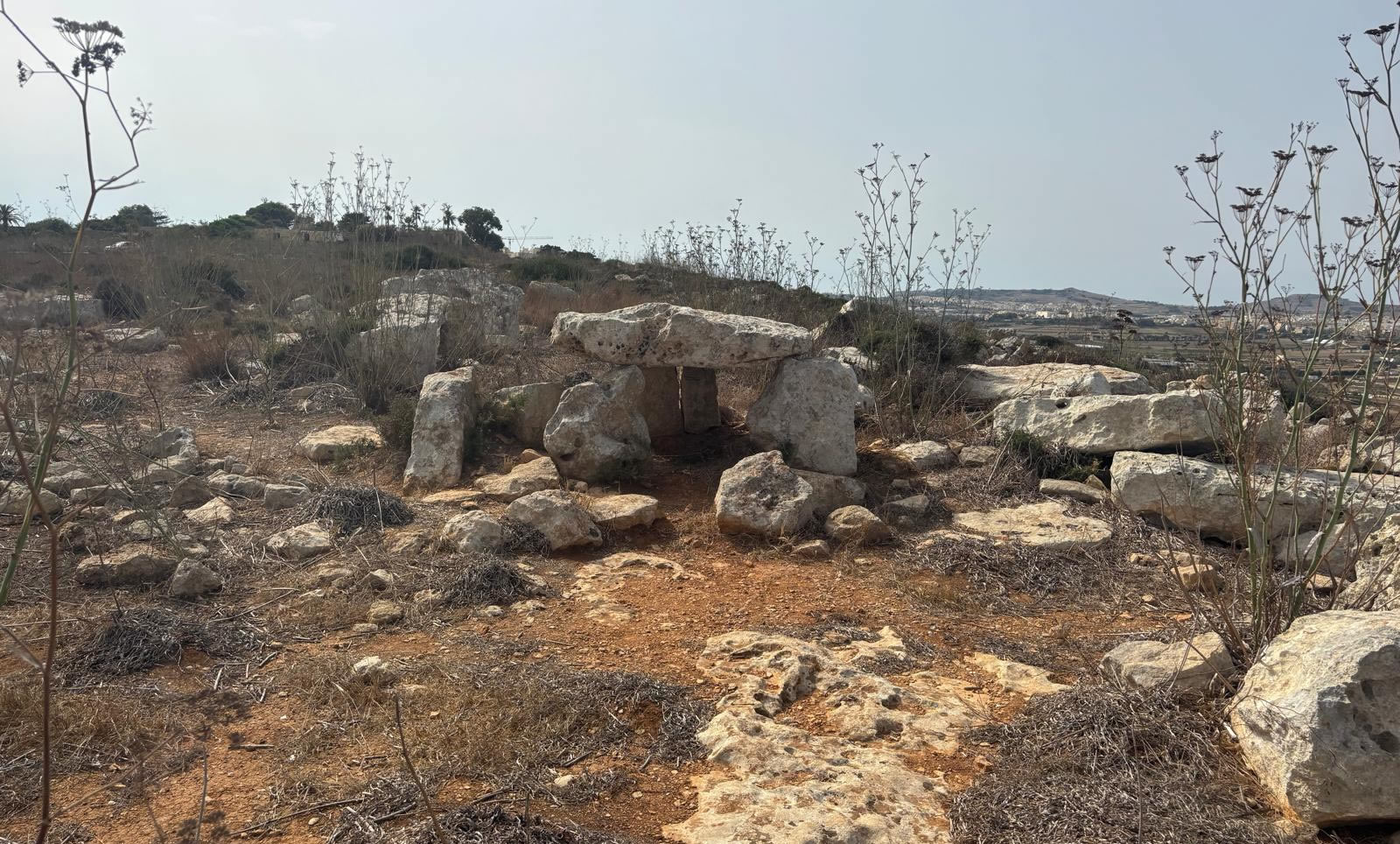
Overview
Borġ l‑Imramma (also written Borġ l‑Imramma / Borġ tal‑Imramma) is situated on the elevated Ta' Ċenċ plateau in the southeast of Gozo, within the modern locality of Sannat. The monument is generally described in guide literature as a "major building of the temple period": an open courtyard (c. 20 m across in many descriptions) surrounded by small circular or D‑shaped chambers, with an entrance passage to the courtyard. The visible remains today are partly collapsed or scattered—some uprights survive in situ while other slabs are fallen or partially buried.
Structure
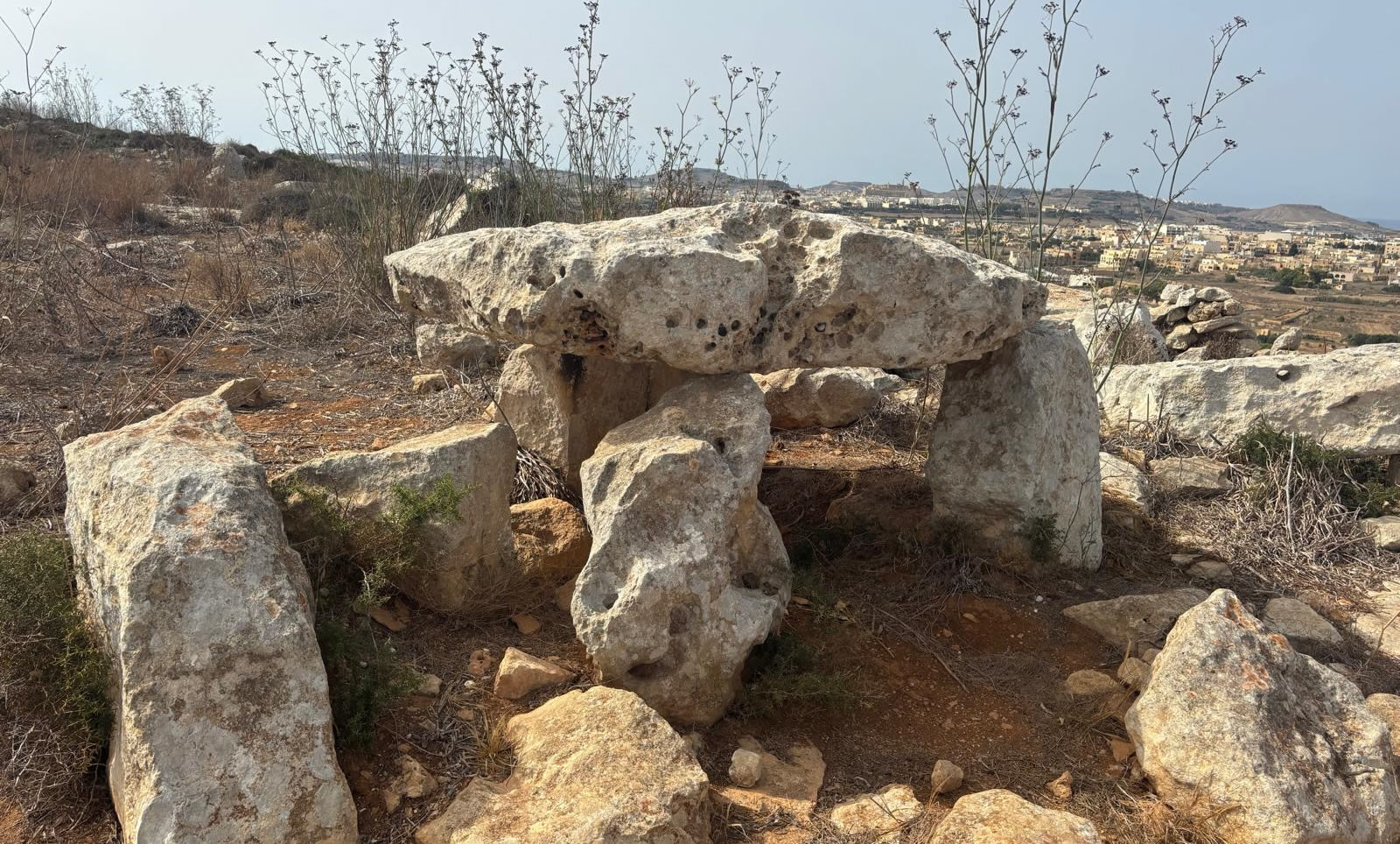
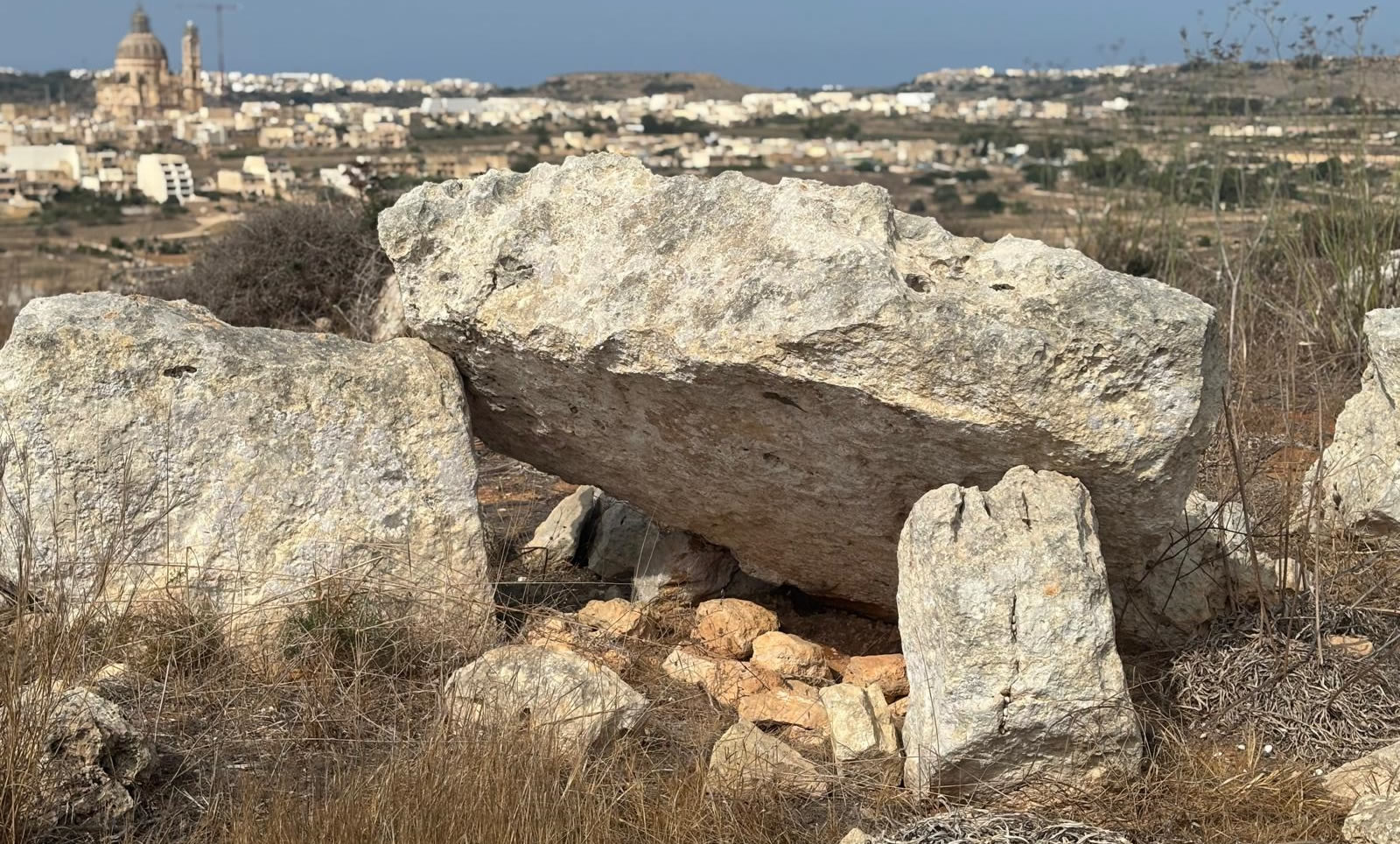
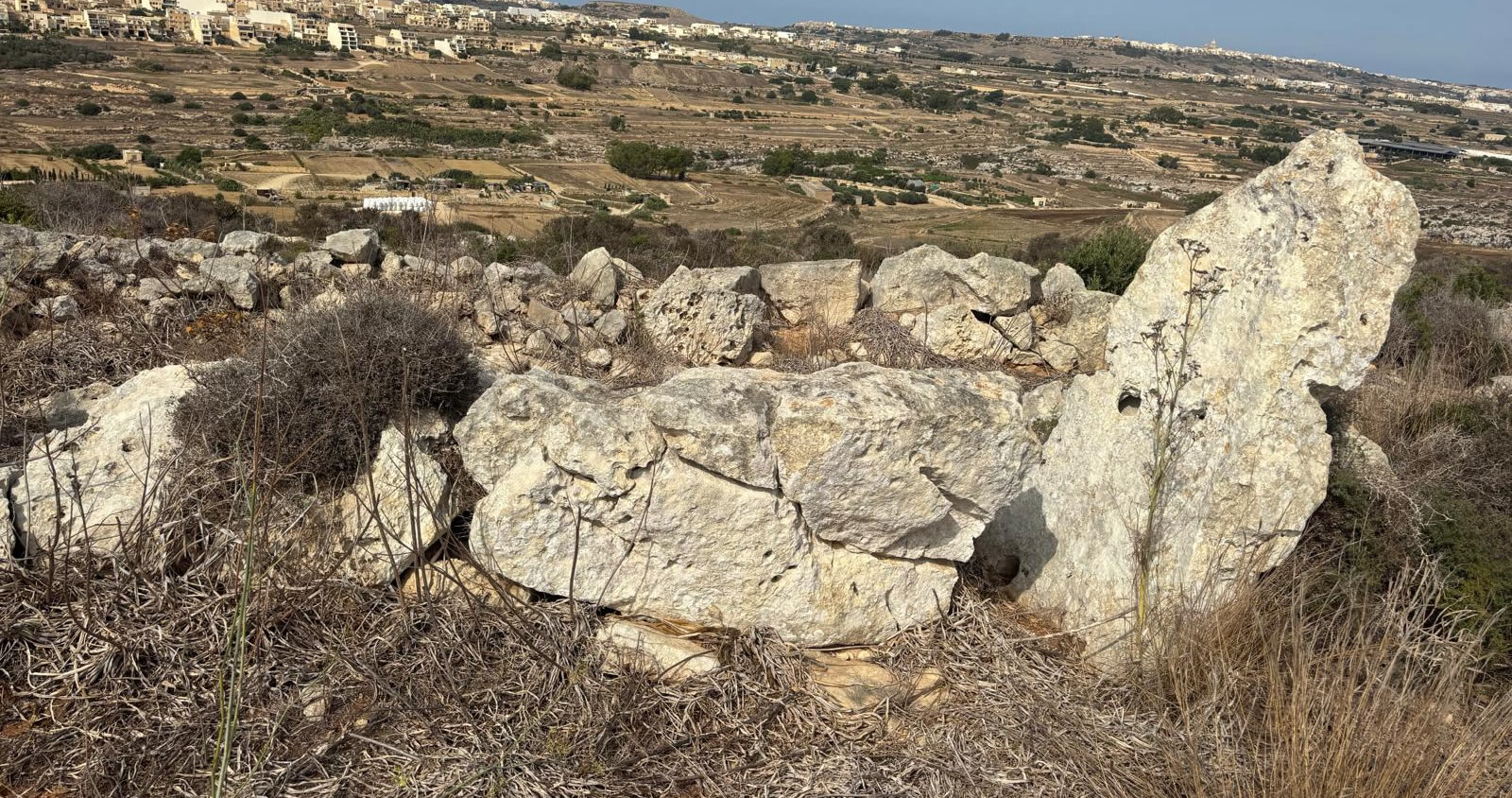
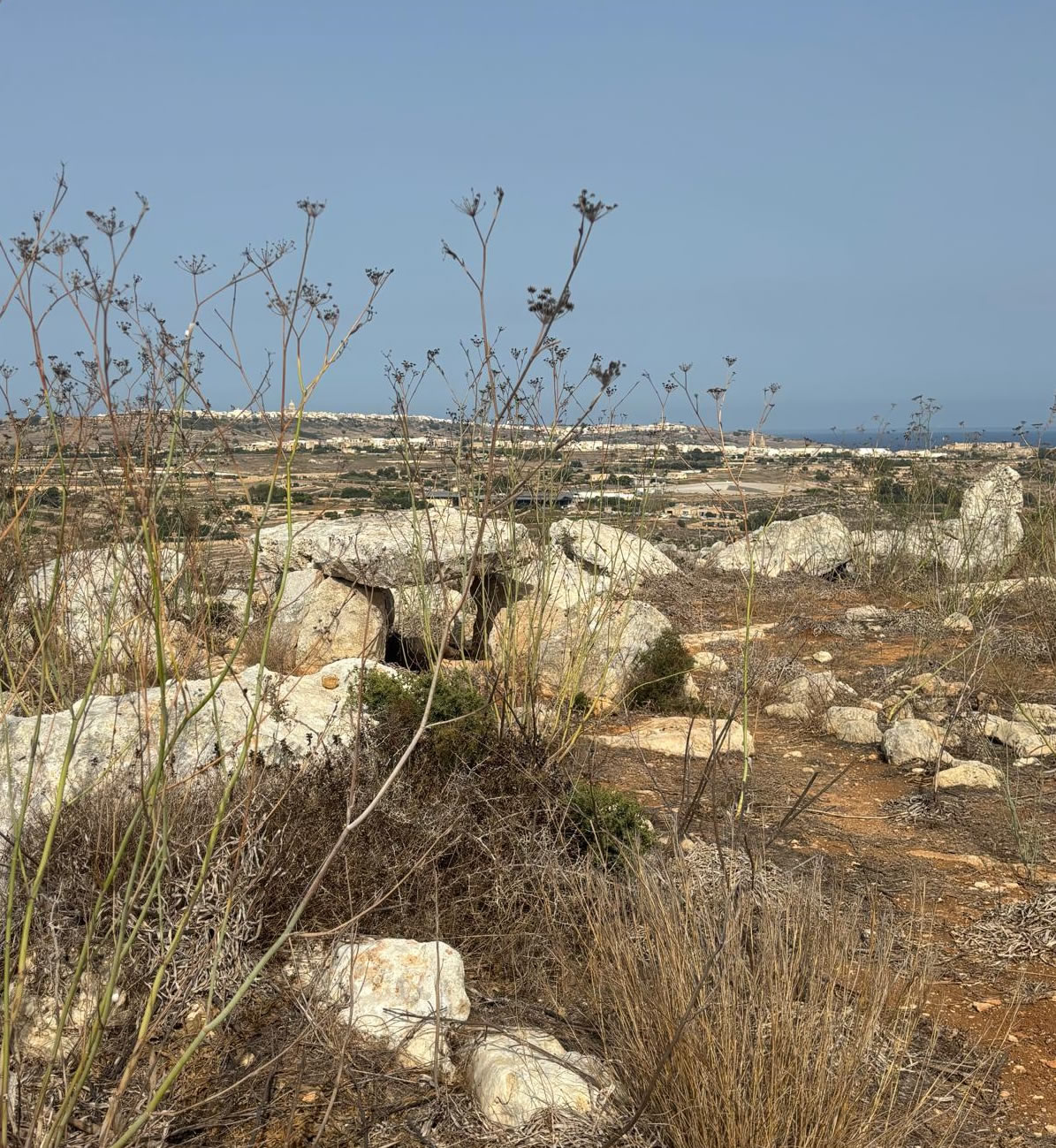
A large horizontal capstone slab supported on upright stones, forming a kind of stone “table”.
These structures are thought to be related to burial or ritual practices, though their exact purpose remains uncertain.
Significance
Dolmens in Malta (and Gozo) are far fewer than the Neolithic temples but are found scattered across the islands (Sannat, Xagħra, Rabat, and Dingli in Malta).
They mark a cultural shift from the temple period to Bronze Age societies, which were less monumentally inclined but still attached importance to megalithic ritual sites.
Interpretation
Most archaeologists believe the dolmen was used as a burial marker or a ritual offering site.
It represents a continuation of megalithic traditions, but in a simpler, smaller scale than the earlier grand temples.
In summary
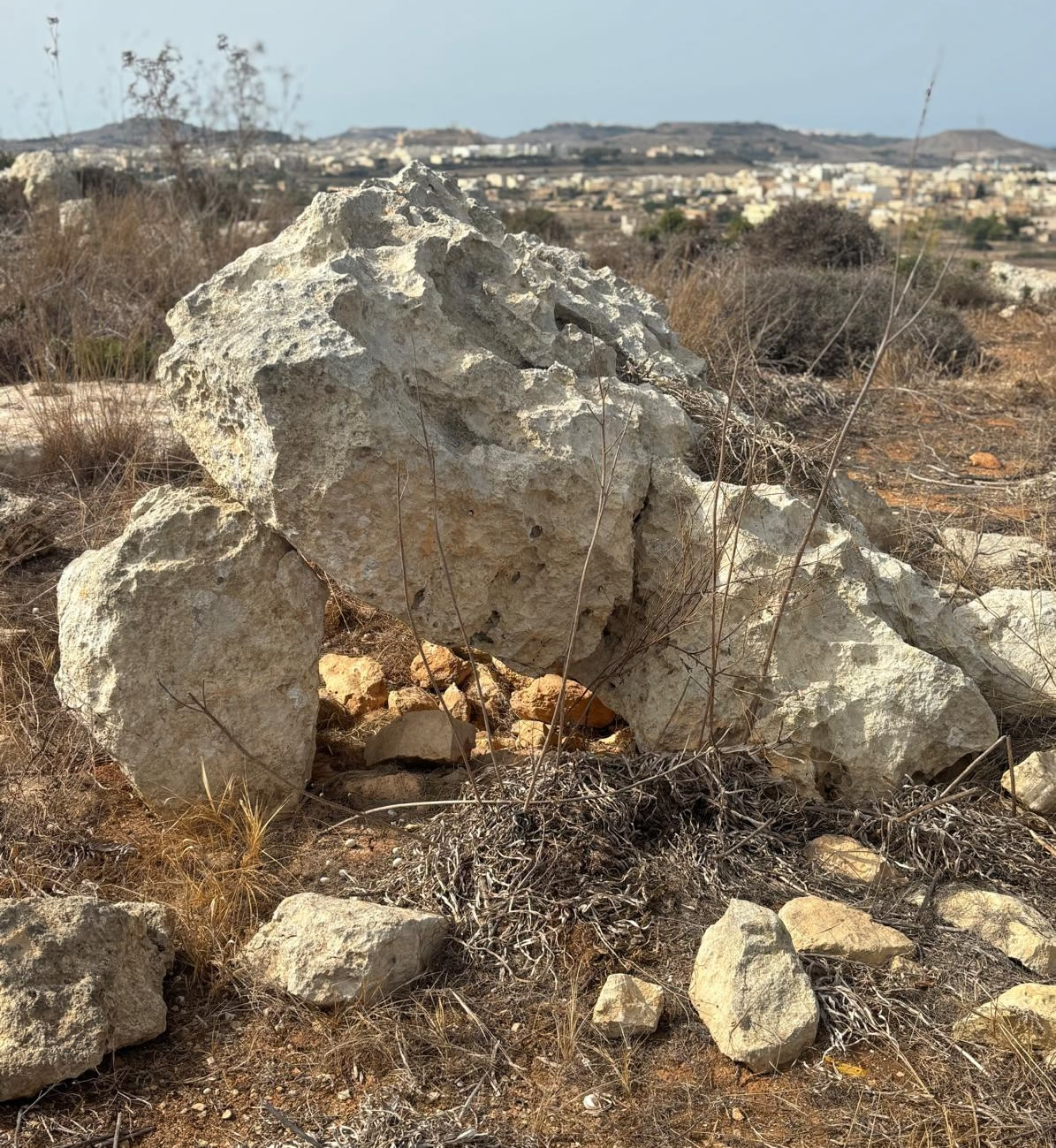
The dolmen and standing stones of Sannat are Bronze Age monuments that represent a later stage of Malta’s megalithic tradition. Unlike the grand temples, they are modest structures—likely linked to burial, ritual, or symbolic marking of the landscape**. They are part of a wider Ta’ Cenc archaeological zone, which also includes cart ruts and ancient burial sites, making it one of Gozo’s richest prehistoric landscapes.
The Standing Stones of Sannat
Description
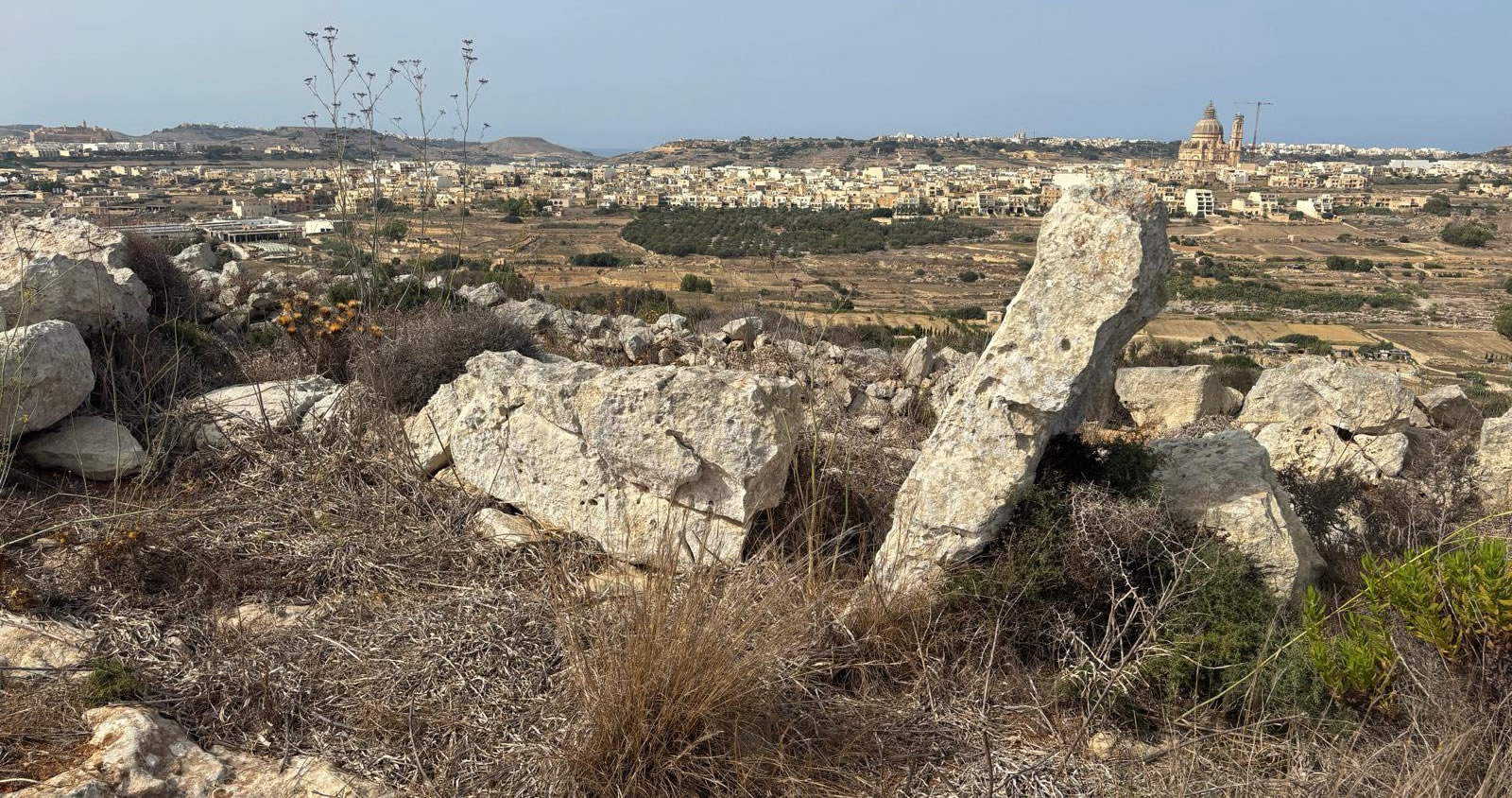
A few isolated upright stone blocks are located near the dolmen.
Unlike the temples (with carefully planned alignments), these stones may have served as markers, boundary indicators, or even remnants of larger structures now lost.
Dating: Bronze Age, contemporary with the dolmen (after 2500 BCE).
Theories
Some suggest they may have been menhirs (monoliths) with ritual or symbolic significance.
Others think they may have been part of funerary landscapes, serving as grave markers.
Archaeological & Cultural Context
The Bronze Age in Malta and Gozo shows fewer large temples, but more defensive sites, dolmens, and scattered menhirs.
The Ta’ Cenc area in Sannat is also rich in cart ruts (parallel tracks cut into the limestone), often linked to prehistoric transport, though their exact function remains debated.
This concentration of dolmen, standing stones, and ruts indicates that Sannat was an important ritual and habitation zone during the Bronze Age.
Present Condition
The Sannat dolmen is still visible on the Ta’ Cenc plateau.
Heritage enthusiasts and local councils have called for better signposting and protection, as many dolmens across Malta and Gozo are poorly preserved or at risk from development.
The site is accessible by foot, and visitors can combine it with hikes across the Ta’ Cenc cliffs a spectacular natural and archaeological landscape.
Nearby points of interest
- Ta' Ċenċ Cliffs and lookout points
- Cart ruts and other low‑visibility megalithic markers on the plateau
- Sannat village attractions and dramatic coastal views
For any formal research, quote or citation, consult primary excavation reports and the National Inventory of the Cultural Property of the Maltese Islands (NICPMI) / Heritage Malta archives.