📍 Location
Location Map Coordinates 36.023308, 14.292859
Location Context: Fort Chambray Outskirts & Intermural Precinct, Għajnsielem, Gozo | Active Period: c. 1800 – Early 20th Century
Topographical Context and the Tripartite Cemetery System
The imposing bastion walls of Fort Chambray, situated dramatically on the cliffs of Għajnsielem overlooking the Gozo Channel, represent one of the final massive defensive works commissioned by the Order of St. John. Conceived by Bailli Jacques François de Chambray in the mid-18th century, the fort’s role shifted dramatically following the arrival of British forces in 1800. Rather than acting as a fortified town for the island's population, the British military administration adapted the fort into a primary garrison outpost, an emergency isolation hospital, and a convalescent depot for troops stationed across the Mediterranean theatre.
With an active military garrison came the inevitable requirement for dedicated, consecrated burial grounds. From the earliest years of the 19th century, British administrators established a tightly arranged tripartite cemetery network at Fort Chambray. Rather than mingling denominations or forcing transport to remote rural fields, the military authorities engineered three separate spaces to handle burials based on religious affiliation and structural necessity: one internal Protestant plot located safe within the bastion walls, and two parallel cemeteries excavated directly out of the massive dry ditches guarding the main entrance of the fort.
Technical Site Specifications & Archival Status
2. Left Outer Ditch Roman Catholic Ground
3. Right Outer Ditch Protestant Ground
1. The Intramural Protestant Burial Ground (Doctor’s Quarters Plot)
The first component of the fort's funerary infrastructure was located inside the main defensive perimeter. Positioned carefully within the upper courtyard near the garrison doctor’s official quarters and the military hospital complex, this small, dignified plot was reserved primarily for high-ranking Protestant officers, British military medical staff, and their immediate family members who succumbed to disease or injury while serving on Gozo.
Its location inside the walls was a deliberate choice reflecting nineteenth-century British social hierarchies and military customs. Placing the graves near the medical quarters ensured they were kept safe from external tampering and remained under the constant gaze of the garrison's guard details. Archival notes describe this space as a classic, small-scale colonial churchyard layout, shaded by sparse trees and walled off from active military drill lines. Monumental structures within this plot included classical Georgian-style stone table tombs and deeply incised globigerina limestone headstones detailing the home parishes of the British officers buried below.
Surviving Archival Transcription Register
The following full dataset represents the complete audited list of 48 (more to follow) recorded burials recovered from the internal garrison courtyard monuments prior to late 20th-century site redevelopment:
Relocated to Santa Maria Cemetery, Xewjika, Graves 109,120,134,135,139 and 140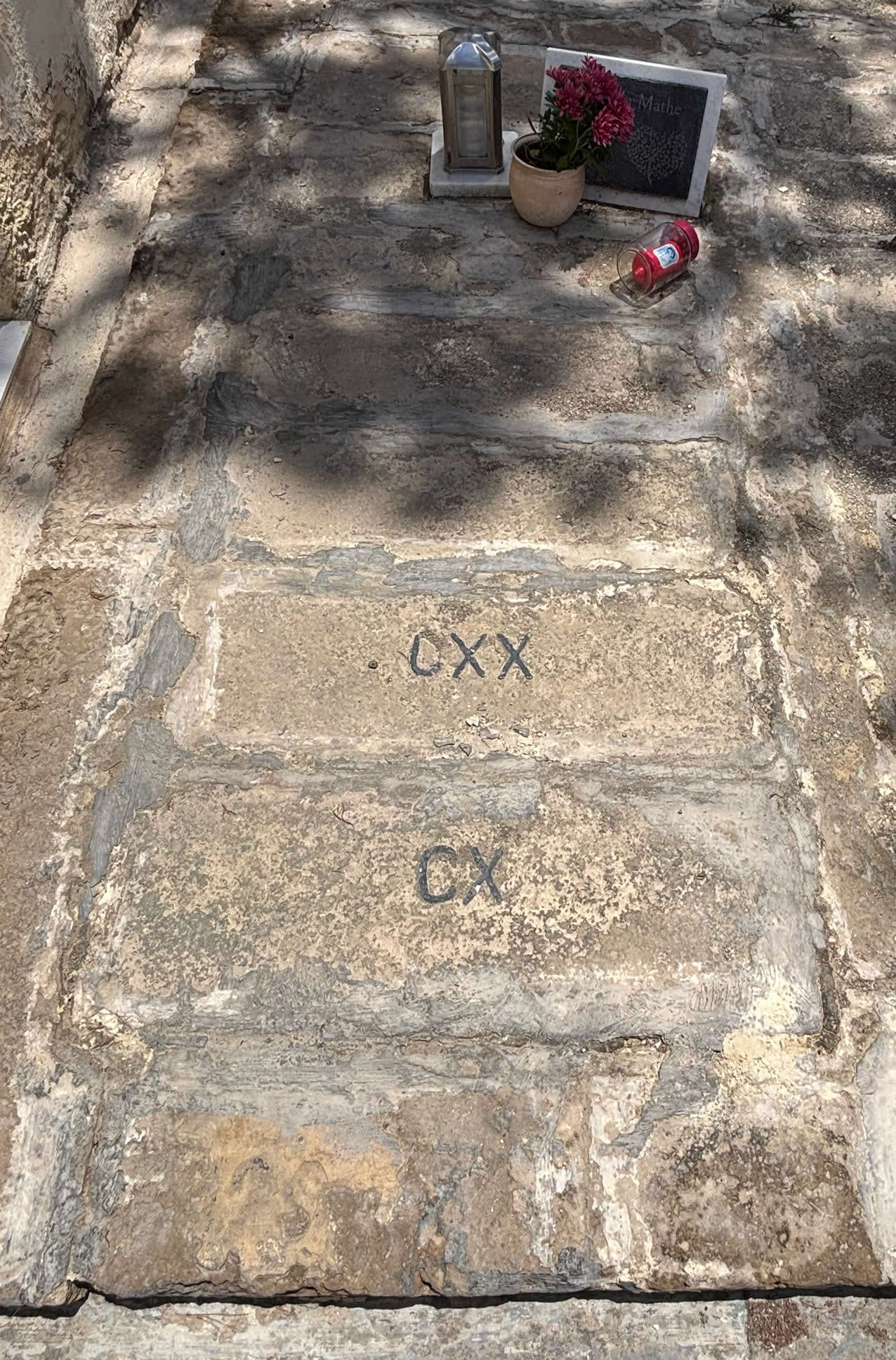 Grave 120 (CXX) |
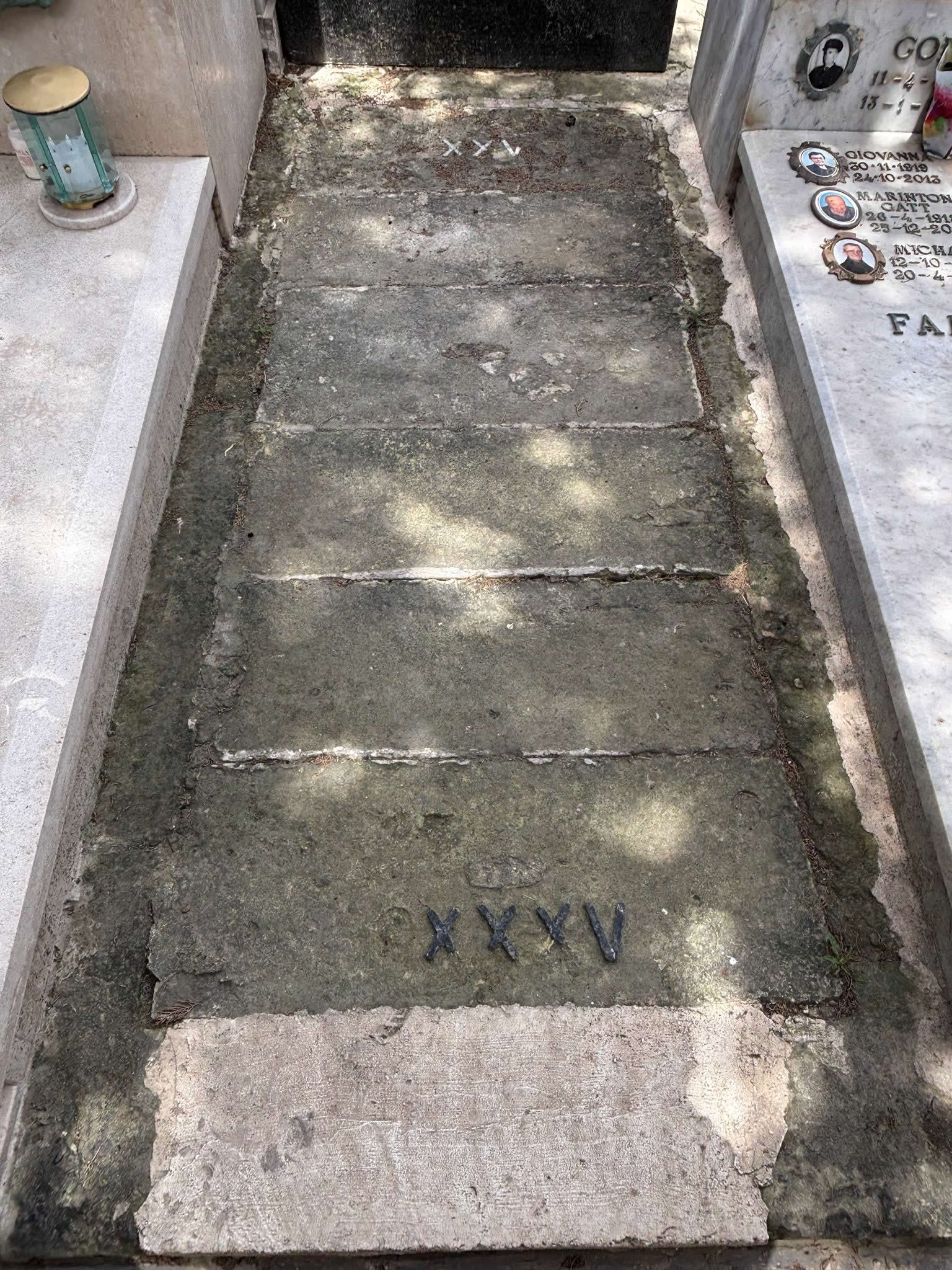 Grave 135 (CXXXV) |
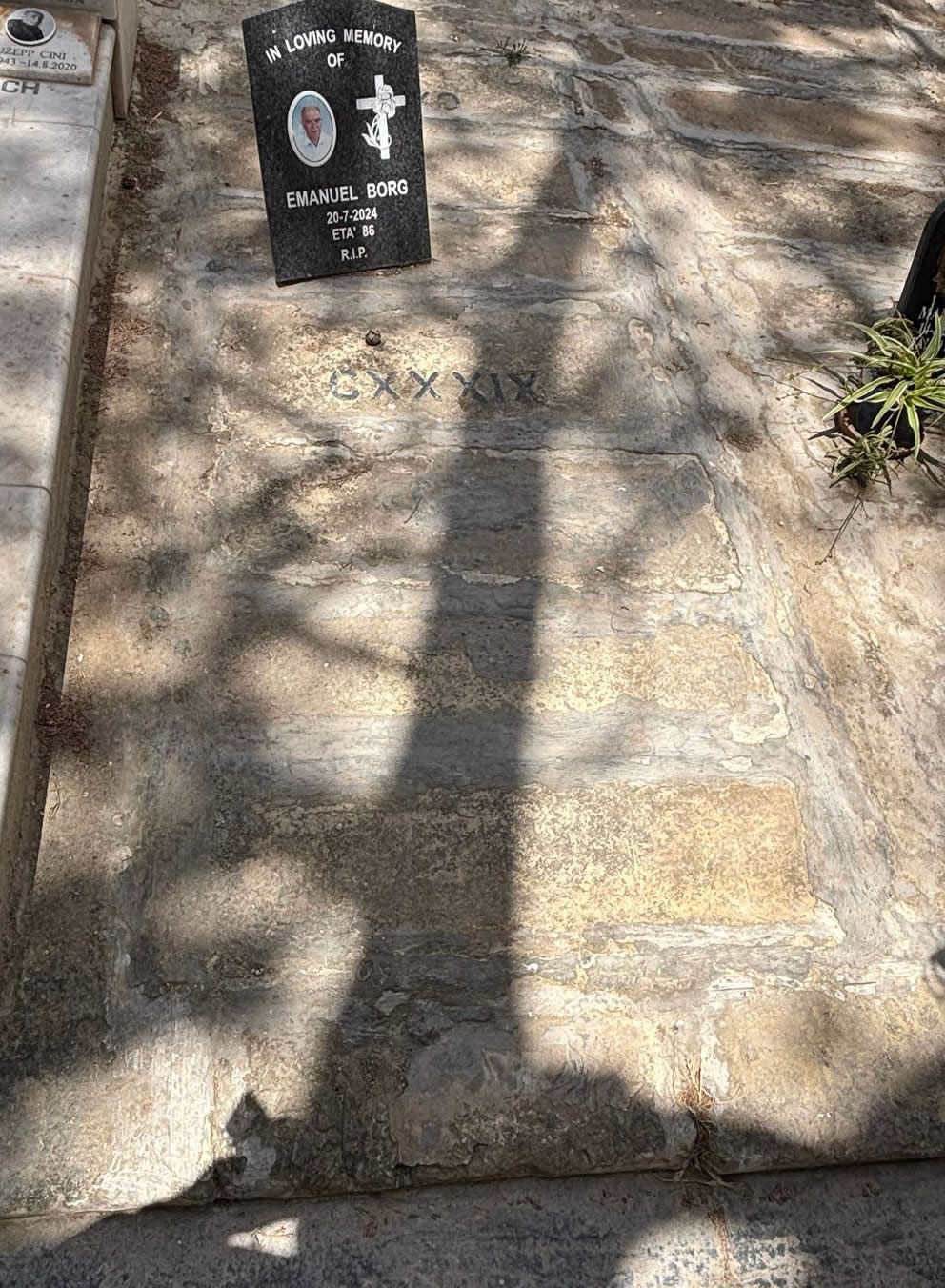 Grave 139 (CXXXIX) |
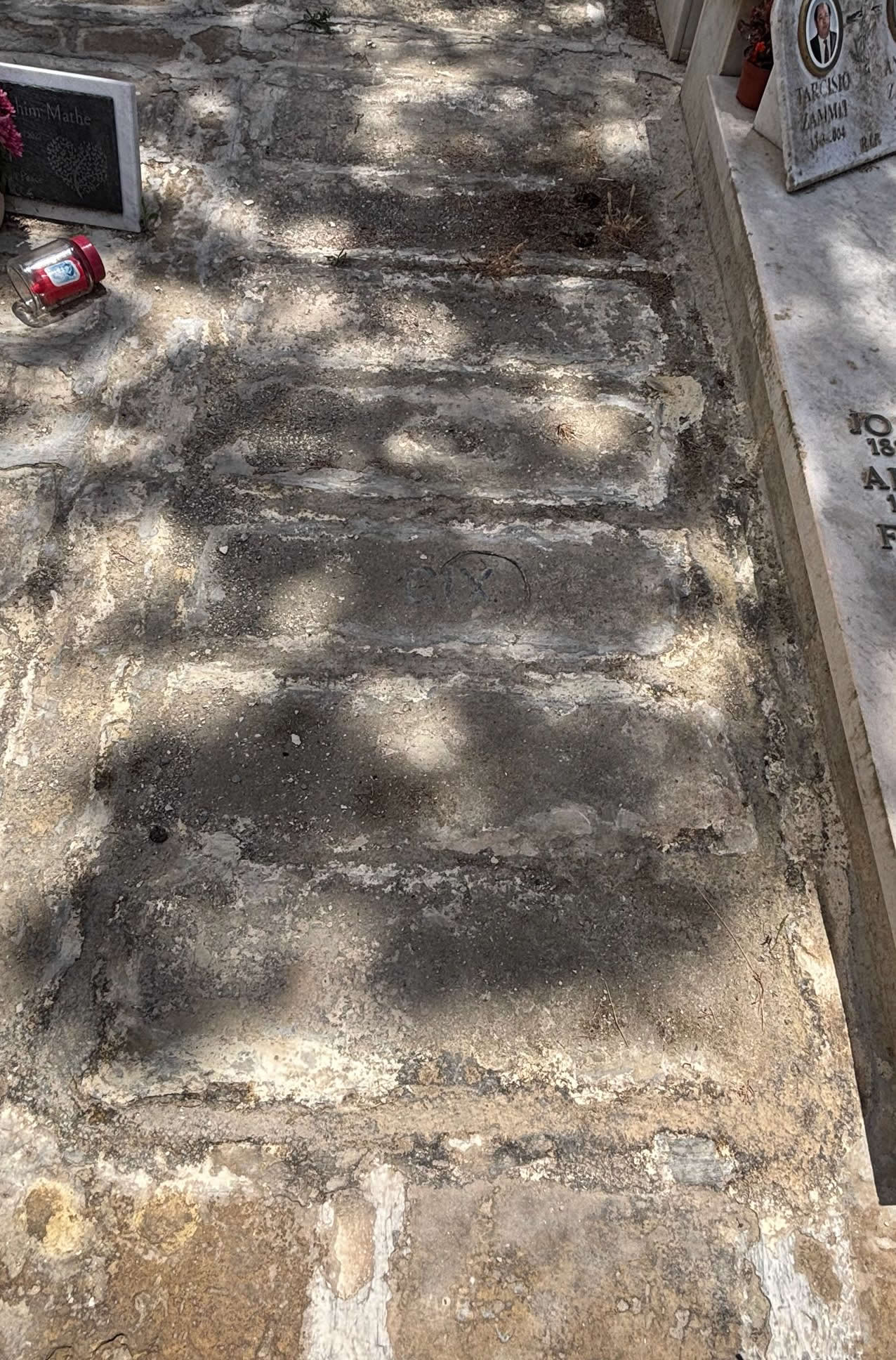 Grave 109 (CIX) |
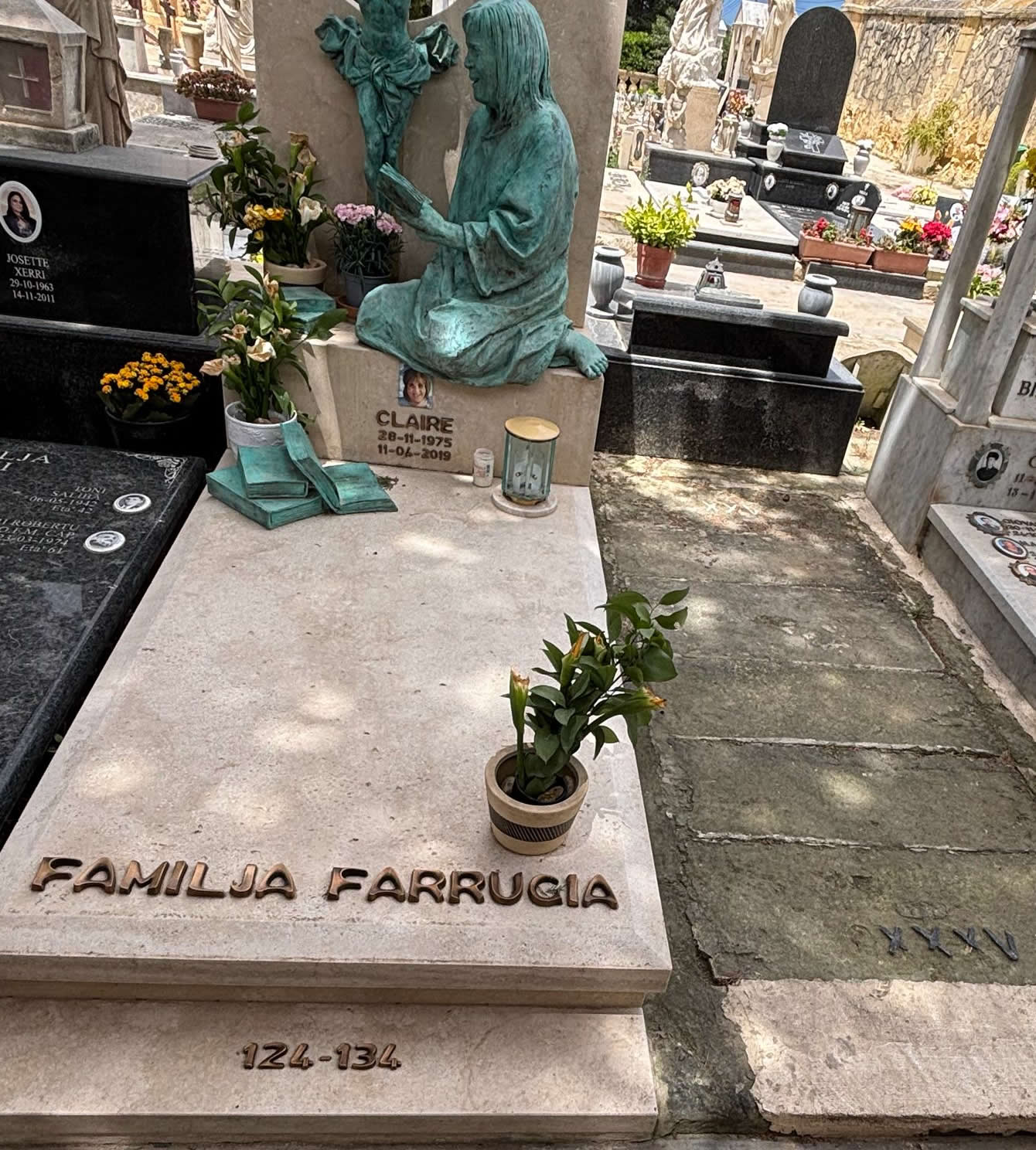 Grave 134 (CXXXIV) |
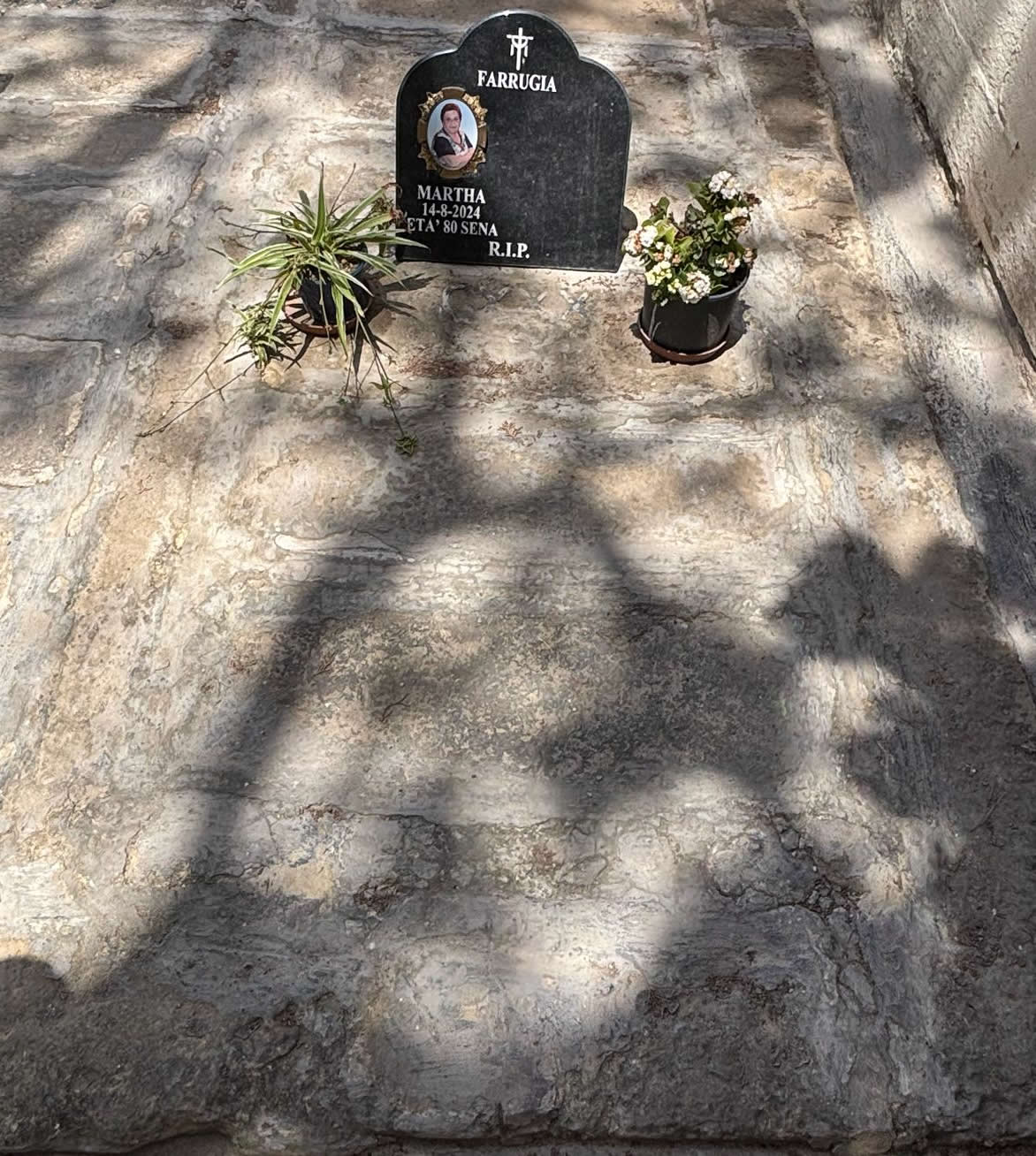 Grave 140 (CXXXX) |
The cemetery was cleared of graves and human remains on 1st July 1991. The Times of Malta, 18th January 1993, printed a letter from the Managing Director of Fort Chambray Ltd., regarding the cemetery.
“ .........In so far as the removal of the remains of members of the British Forces (and others) is concerned, the whole exercise was carried out as follows:
Each single grave was first of all opened and the remains carefully put away, each in a separate container and later re-interred in the cemetery of Santa Maria, near Xewkija in the presence of the Reverend Canon Philip Cousins, Dean of St.Paul's Anglican Pro-Cathedral in Valletta in representation of the Church of England and Fr. Zerafa, the parish priest of Ghajnsielem."
Sadly many tombstones with their sorrowful epitaphs commemorated the death of soldiers and their families whose young lives were terminated by disease in a remote corner of the British empire.
From the artistic point of view, the decorative elements and carvings in the tombstones revealed the delicate skills of Gozitan craftsmen, particularly Vincenzo Chircop of Ghajnsielem.
The different tomb stones have now been set aside for permanent retention and are now lying in a secluded part of the Fort for future identification and a more permanent location.
A pet-cemetery which lies within the the fort's ditch has been planned to be protected."
| Name ↕ | Date of Death ↕ | Age ↕ | Rank / Position | Unit / Association | Notes |
|---|---|---|---|---|---|
| Charles William ABBOTT | 15 May 1904 | 8 months | Son of Lance Corporal G. Abbott | 2nd Battalion, Essex Regiment | Originally buried at the Garrison Cemetery, Fort Chambray, Gozo |
| Thomas ANDREWS | 17th September 1897 | 26 years | Private | Worcestershire Regiment | Originally buried at the Garrison Cemetery, Fort Chambray, Gozo |
| Ann ASHBROOK | November (year unknown) | Unknown | Wife of Gunner George Ashbrook | Royal Artillery | Originally buried at the Garrison Cemetery, Fort Chambray, Gozo |
| W.T. BAILEY | 20 November 1850 | 1 year | Son of Bombardier Bailey | Royal Artillery | Originally buried at the Garrison Cemetery, Fort Chambray, Gozo |
| - BALL | 13 July 1856 | 27 years | Private | 31st (Huntingdonshire) Regiment | Originally buried at Fort Chambray Cemetery |
| Anthony Moore BANKS | 22nd July 1901 | 8 months | Son of Army Schoolmaster Banks | - | Originally buried at the Garrison Cemetery, Fort Chambray, Gozo |
| Josiah BARKER | 21 October 1856 | 24 years | Sergeant | 31st (Huntingdonshire) Regiment | Died of cholera; originally buried at Fort Chambray |
| James BARTLETT | 18th October 1891 | 24 years | Private | 2nd Battalion, Royal Irish Rifles | Originally buried at the Garrison Cemetery, Fort Chambray, Gozo |
| David BARTON | Unknown | Unknown | Private No.2258 | Unknown | Originally buried at Fort Chambray Cemetery |
| Charles Andrews BAYLEY | 13 August 1852 | 70 years | Lieutenant-Colonel | Commanding troops on the island of Gozo | Senior British military officer stationed in Gozo |
| William James BLACK | 1883 | Unknown | Colour Sergeant | 54th (West Norfolk) Regiment | Originally buried at Fort Chambray Cemetery |
| Ernest Thomas BOND | September 1882 | 22 years | Private | Army Hospital Corps, Aldershot | Originally buried at Fort Chambray Cemetery |
| Joseph BRADSHAW | 20 December 1898 | 24 years 11 months | Private No.4756 | D Company, 2nd Battalion Lancashire Fusiliers | Originally buried at Fort Chambray Cemetery |
| William Michael BYRNE | 6th July 1895 | aged 7 months | Son of Lance Corporal Denis Byrne | 2nd, Leinster Regiment | Originally buried at the Garrison Cemetery, Fort Chambray, Gozo |
| Johnnie BYRNE | 15th June 1893 | aged 1 year 10 months | Son of Lance Corporal Denis Byrne | 2nd, Leinster Regiment | - |
| Thomas CLANCY | 3rd June 1895 | 20 years | Private 4034 | A Company, 2nd Leinster Regiment | Originally buried at the Garrison Cemetery, Fort Chambray, Gozo |
| George CLARKE MD | 1 March 1850 | 70 years | Medical Doctor | Unknown | Originally buried at Fort Chambray Cemetery |
| Frank CLAYDON | 20 March 1892 | 23 years | Private | Pompadours | Originally buried at Fort Chambray Cemetery |
| Emily COCKRAM | 8th December 1902 | 32 years | Wife of Sergeant Cockram | Royal Engineers | Originally buried at the Garrison Cemetery, Fort Chambray, Gozo |
| Walter COLL | 30 June 1896 | 24 years | Private | 2nd Battalion Leinster Regiment | Originally buried at Fort Chambray Cemetery |
| Arthur DAINES | 27 September 1897 | 22 years | Private No.8322 | Unknown | Originally buried at Fort Chambray Cemetery |
| John DAVID | 9 October 1849 | 67 years | Deputy Assistant Commissary General | Government Charitable Institutions in Gozo | Served colonial administration in Gozo |
| Gwendolyn Grace DAVIDSON | 19 May 1895 | 15 days | Daughter of Captain Thomas St Clair Davidson | Leinster Regiment | Originally buried at the Garrison Cemetery, Fort Chambray, Gozo |
| DAVIDSON | Unknown | Unknown | Unknown | Leinster Regiment | |
| Anna Maria DEACON | 6 November 1856 | 10 months | Daughter of Sarah and Sergeant-Major Deacon | 31st (Huntingdonshire) Regiment | Originally buried at Fort Chambray Cemetery |
| David EASTON | 11th July 1892 | 23 years | Private 2258 | 2nd, Essex Regiment | Originally buried at the Garrison Cemetery, Fort Chambray, Gozo |
| Henry EASTWOOD | Unknown | Unknown | Unknown | Unknown | Inscription incomplete |
| Edmund FRANCIS | 20 April 1851 | Unknown | Royal Artillery | Fort Chambray Garrison | Died after heart attack while bathing |
| Jas. GARRARD | 17 July 1856 | 25 years | Private | 31st (Huntingdonshire) Regiment | Originally buried at Fort Chambray Cemetery |
| Ann GRIFFITT | 28 July 18** | 67 years | Wife of John Griffitt | Unknown | Date partially illegible |
| James HUNT | Unknown | Unknown | Gunner | 2nd Battalion Royal Artillery | Originally buried at Fort Chambray Cemetery |
| Kate KNEE | 10 September 1898 | 28 years | Wife of Sergeant W. Knee | 2nd Battalion Dorsetshire Regiment | Originally buried at Fort Chambray Cemetery |
| E.C. LAWN | 30 July 1895 | 21 years 3 months | Private | 2nd Battalion Leinster Regiment | Originally buried at Fort Chambray Cemetery |
| Jas. LEAN | 3 August 1856 | 23 years | Private | 31st (Huntingdonshire) Regiment | Originally buried at Fort Chambray Cemetery |
| H.E. LOYDE | 30 August 1856 | 23 years | Private | 31st (Huntingdonshire) Regiment | Originally buried at Fort Chambray Cemetery |
| William MANN | 21 July 1856 | 24 years | Private | 31st (Huntingdonshire) Regiment | Originally buried at Fort Chambray Cemetery |
| George MILLAR | 30 August 1841 | 15 years | Unknown | Unknown | Originally buried at Fort Chambray Cemetery |
| Eugen NARR | 10 April 1888 | 42 years | Unknown | German inscription | Inscription written in German |
| Edward OWENS | 22 July 1856 | 24 years | Private | 31st (Huntingdonshire) Regiment | Originally buried at Fort Chambray Cemetery |
| J. PARR | September 1882 | Unknown | Private | Duke of Cornwall’s Light Infantry | Originally buried at Fort Chambray Cemetery |
| Samuel ROBINSON | 14 August 1856 | 23 years | Private | 31st (Huntingdonshire) Regiment | Originally buried at Fort Chambray Cemetery |
| William SAXTON | 15 November 1849 | 24 years | Bombardier | Captain Tylee's Company, 3rd Battalion Royal Artillery | Originally buried at Fort Chambray Cemetery |
| James SCOTT | 15 January 1886 | 24 years 3 months | Corporal | 1st Battalion Gordon Highlanders | Originally buried at Fort Chambray Cemetery |
| Jos. SELFIELD | 13 January 1857 | 21 years | Private | 31st (Huntingdonshire) Regiment | Originally buried at Fort Chambray Cemetery |
| Emma Mary SHORT | 7 May 1895 | 25 years | Wife of Corporal Michael J. Short | 2nd Battalion Leinster Regiment | Originally buried at Fort Chambray Cemetery |
| Jane SMITH | 3 December 1870 | 1 year | Daughter of W. Smith | Royal Artillery | Age partially illegible |
| Louisa Jane Merdon TREAYS | 15 September 1893 | 31 years | Wife of Edward Treays | H.M. Dockyard Malta | Originally buried at Fort Chambray Cemetery |
| Thomas WILLIAMS | 24 September 18** | 25 years | Private | 2nd Battalion King’s Own Light Infantry | Date partially illegible |
 |  |
The Outer Ditches: Denominational Demarcation outside the Gate
While high-ranking officers and select personnel were granted resting places within the fort, the vast majority of garrison deaths—including rank-and-file infantrymen, laborers, and family dependents—were handled outside the main gates. British engineers took advantage of the massive dry ditches carved out of the solid bedrock directly in front of the main gatehouse. This use of defensive ditches for cemeteries was a common practice across the fortified landscapes of Malta and Gozo, transforming an empty defensive trench into a secure, enclosed boundary for the dead.
Denominational Splitting at the Main Entrance
The spatial design of these outer ditch cemeteries reflected strict religious segregation. When standing directly in front of the main entrance to Fort Chambray and looking inward, the dry ditch split into two distinct sectors: the ditch running to the left flank was designated for Roman Catholic burials, while the ditch running to the right flank was reserved exclusively for Protestants.
The Left Ditch: Roman Catholic Garrison Cemetery
The cemetery on the left side of the main gateway served the Roman Catholic elements of the garrison and the auxiliary forces. This population included Irish infantrymen serving in the British regiments, local Maltese laborers attached to the ordnance departments, and Catholic soldiers from foreign auxiliary corps stationed at the fort during the early nineteenth century. Though located within a military ditch, the ground was formally consecrated by the Gozitan church authorities, operating as a distinct parish-controlled military outpost.
Gravestones in the middle of the ditch on the left of the main entrance
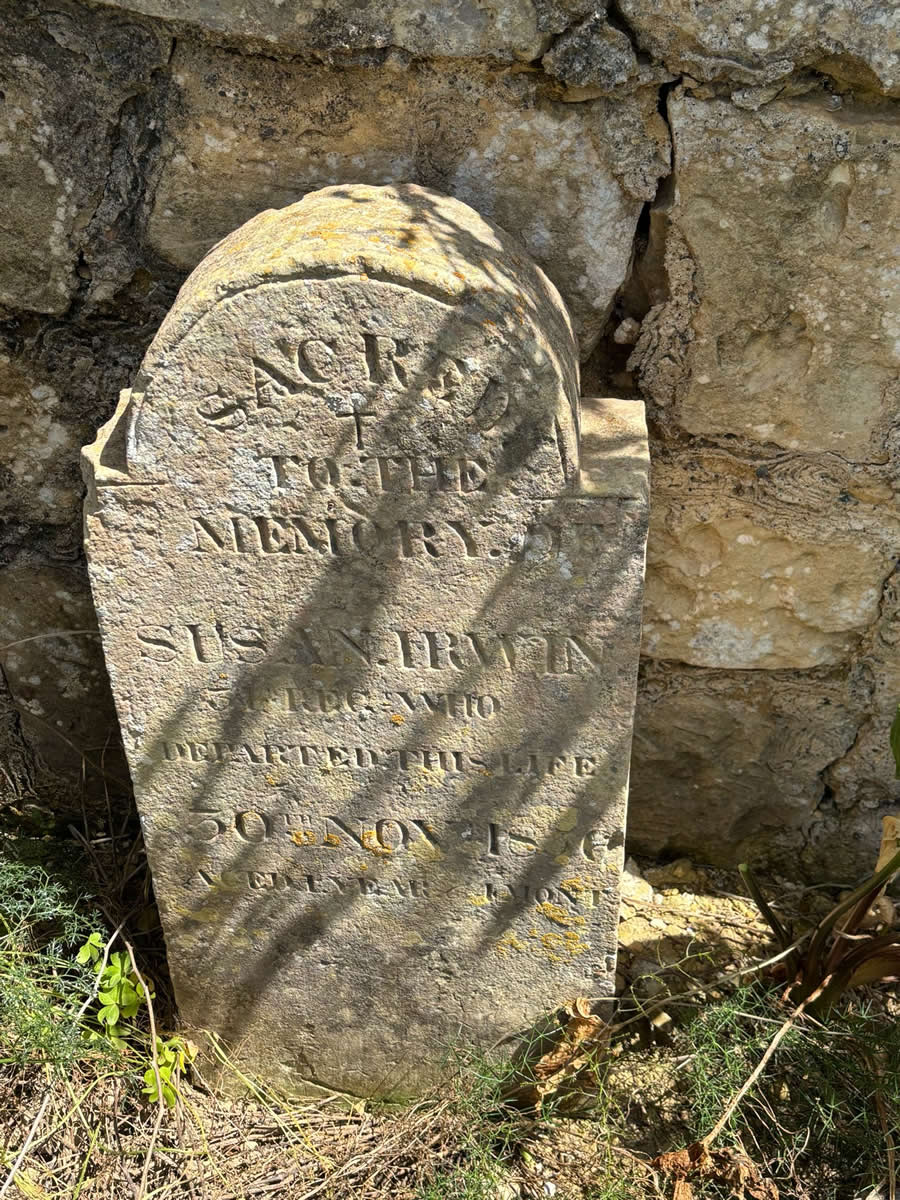 Susan Irwin Died 30th November 1836 Aged 1 year 1 month |
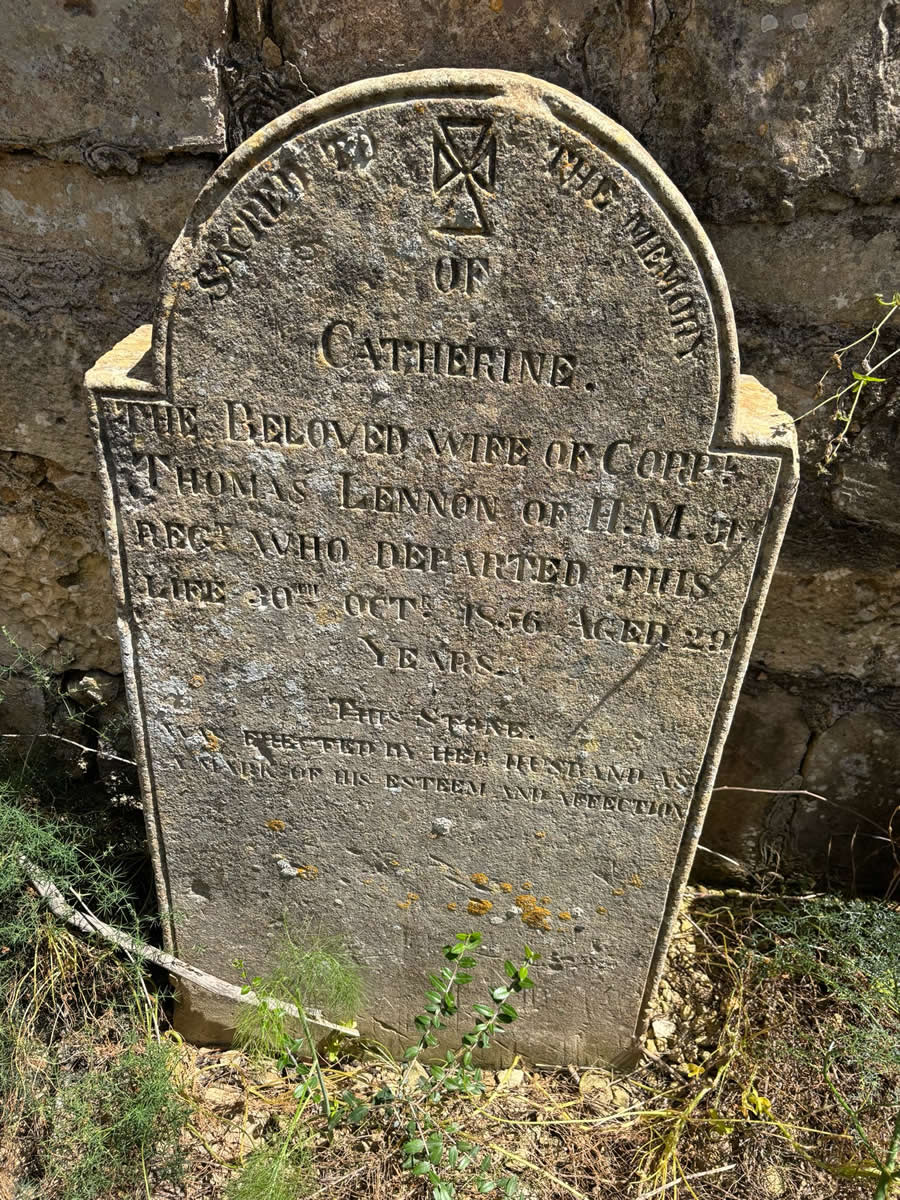 Catherine Lennon wife of Corporal Thomas Lennon Died 10th October 1856 aged 29 |
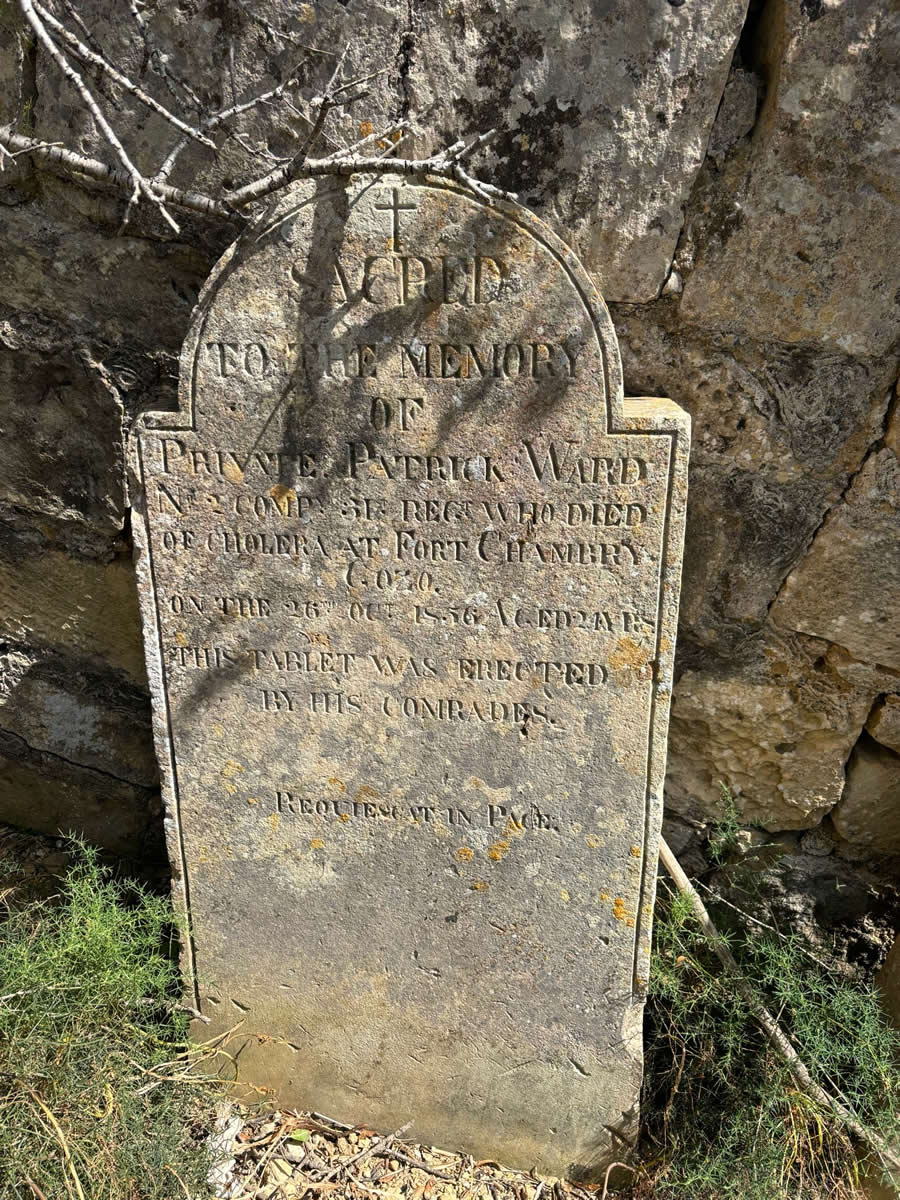 Private Patrick Ward No2 company 31st regiment Died of Cholera 26th October 1856 |
On the base of the outerwall but inside the ditch there are these The burial marker memorials as the original tombstones are no longer there
We found 9 but there may be more as this is quite overgrown
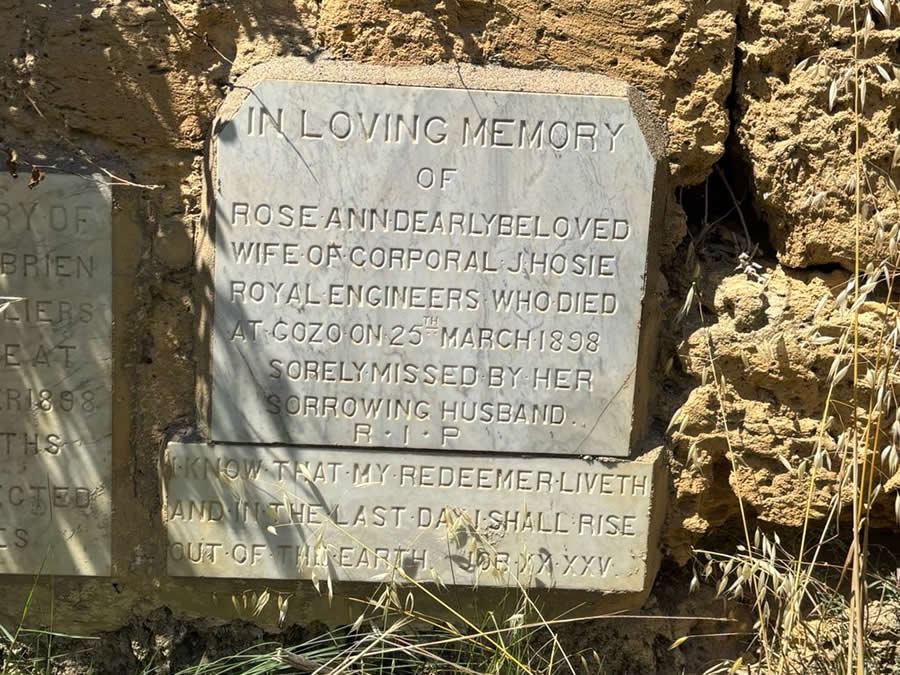 Rose Anne Hosie wife of Corporal J Hosie of the Royal Engineers Died 25th March 1898 |
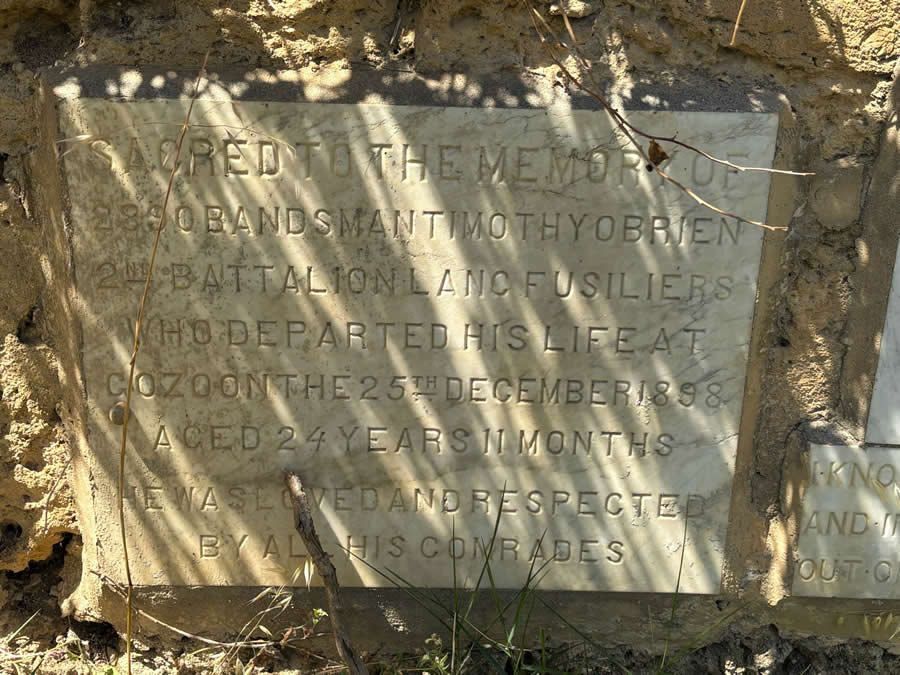 2890 Bandsman Timothy O'Brien 2nd Battalion Lancaster Fusiliers Died 25th December 1898 aged 24 years 11 months |
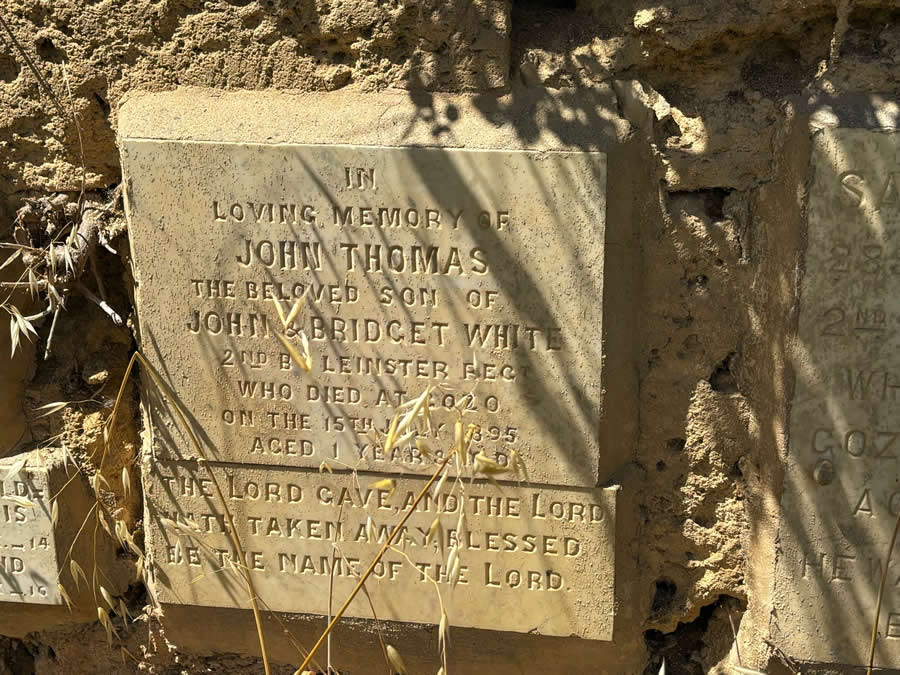 John Thomas White son of John and Bridget White 2nd B Leinster Regiment Died 15th July 1895 aged 1 year ? months |
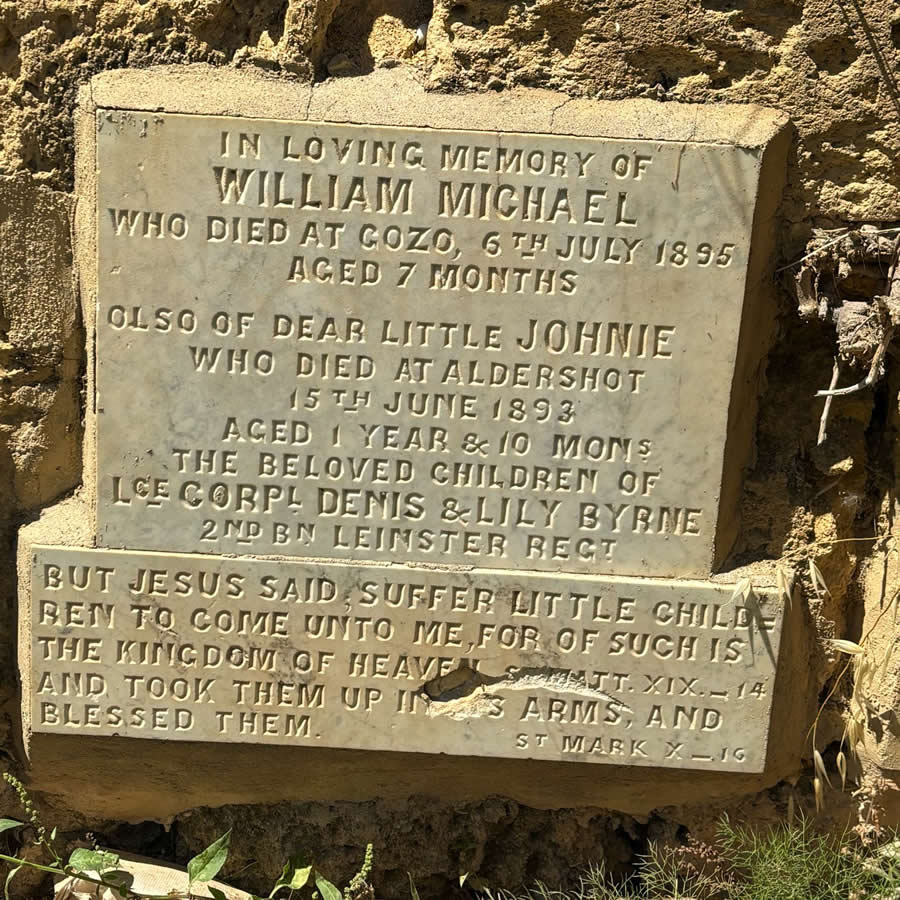 William Michael Byrne died 6th July 1895 aged 7 months and little Johnie who died in Aldershot 15th June 1893 aged 1 year 10 months - children of Lance Corporal Denis and Lily Byrne 2nd Btn Leinster Regiment |
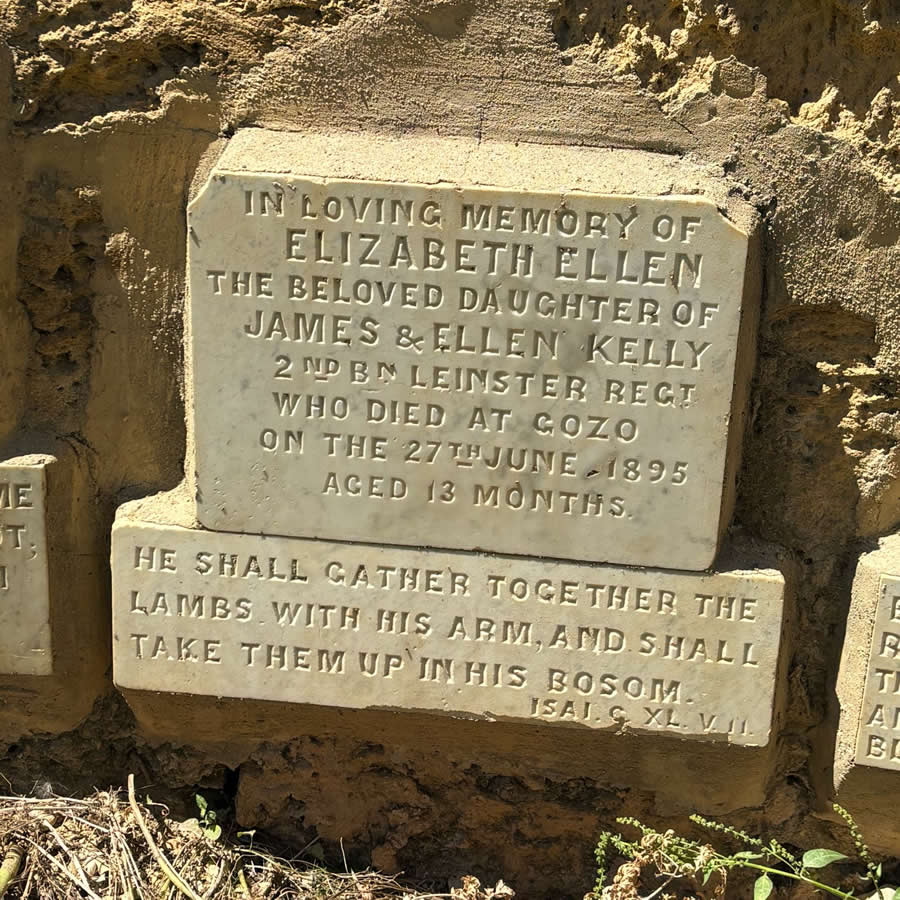 Elizabeth Ellen Kelly died 27th June 1895 aged 1 year 1 month daughter of James and Ellen Kelly, 2nd Btn Leinster Regiment |
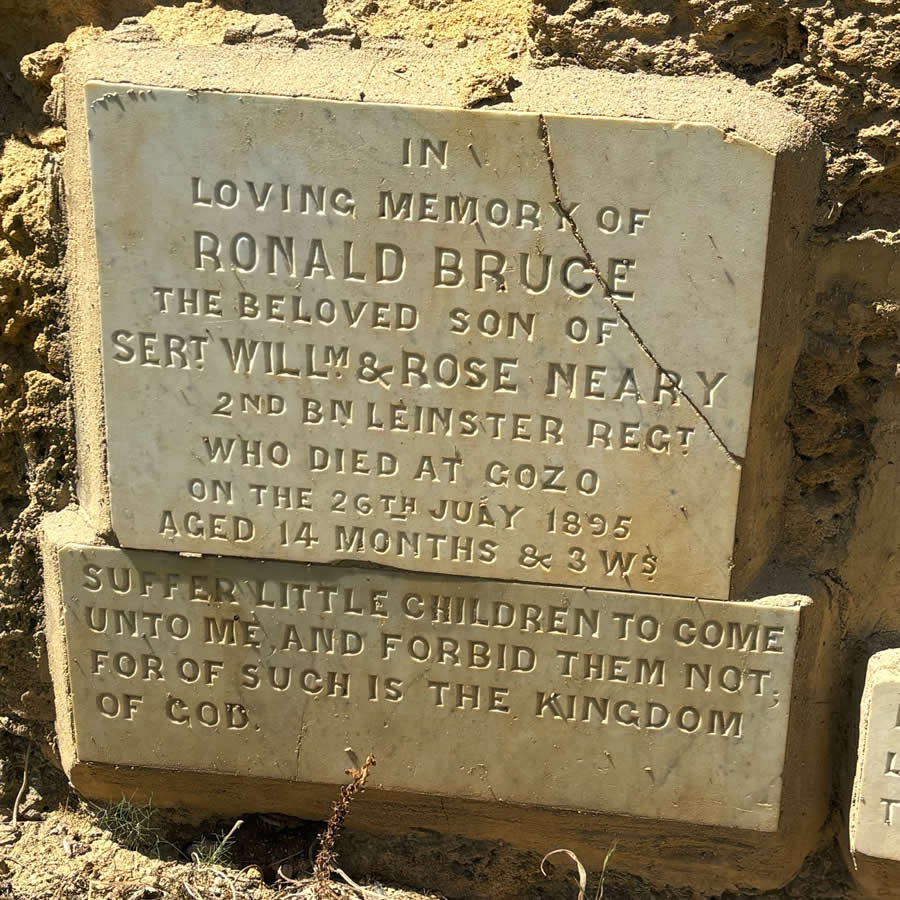 Ronald Bruce died 26th July 1895 aged 1 year 2 months son of William and Rose Bruce 2nd Btn Leinster Regiment |
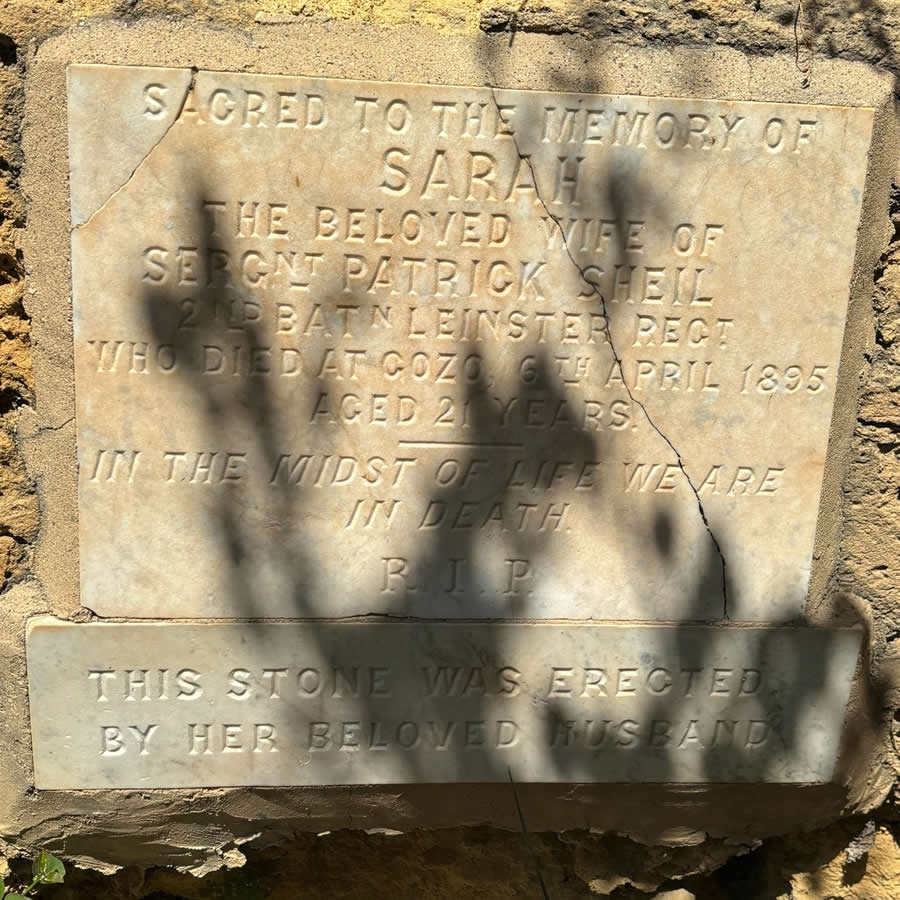 Sarah Sheil Born 1874 Died 6th April 1895 aged 21 wife of Sergeant Patrick Shiel 2nd Btn Leinster Regiment |
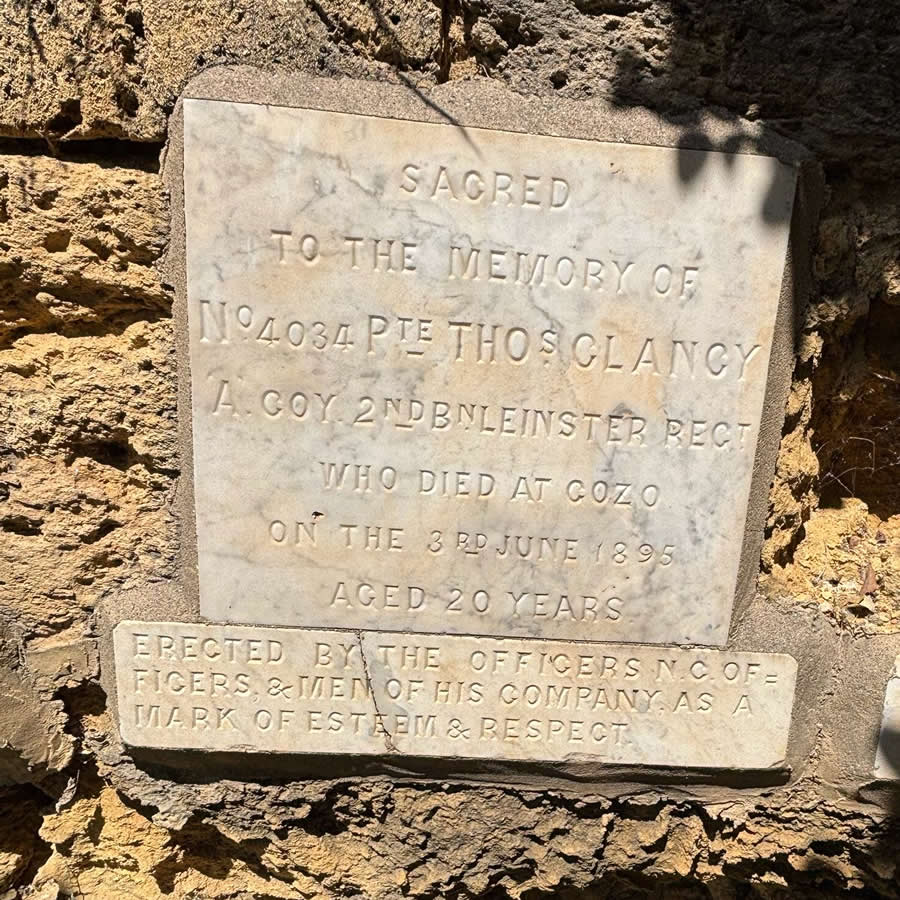 4034 Private Thos Clancy died 3rd June 1895 aged 20 years A Company 2nd Btn Leinster Regiment |
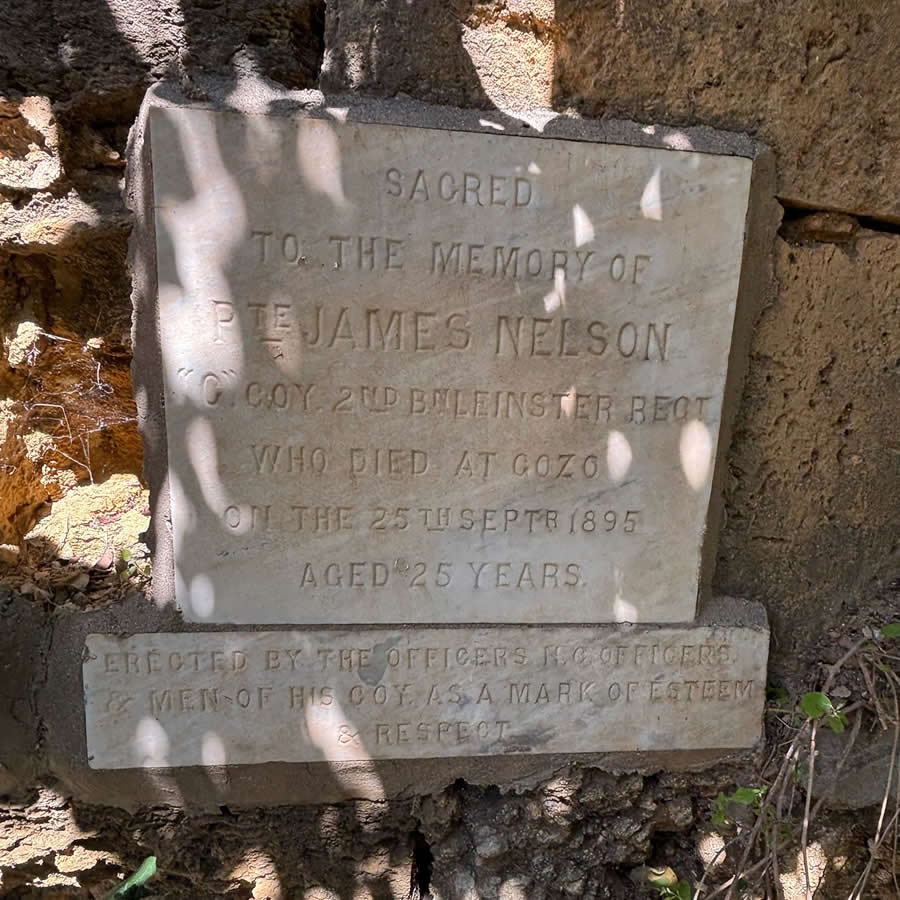 Private James Nelson died 25th September 1895 aged 25 years G Company 2nd Btn Leinster Regiment |
Buried in Ditch against wall of Ravelin
Three of the graves are identified 2 are missing the stones and one was not legible
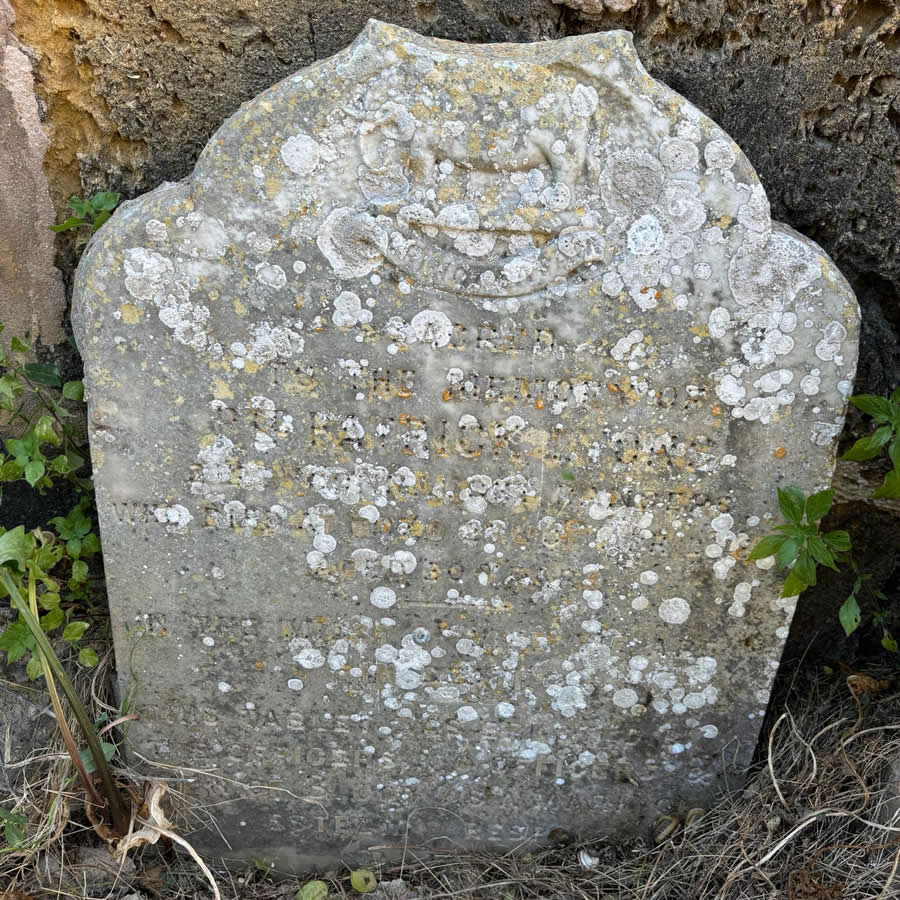 Patrick LYONS Private, 2nd Battalion, Connaught Rangers Born 1864 died 22nd April 1894, aged 30 years |
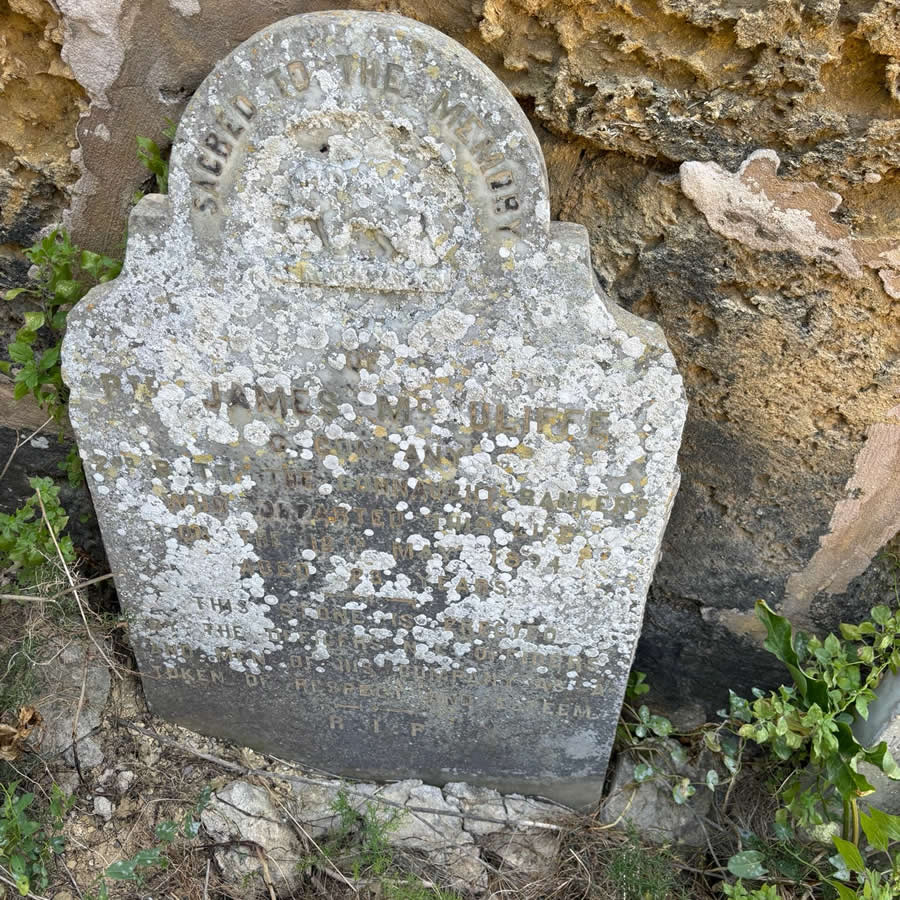 James McAULIFFE Private, C Company, 2nd Battalion, Connaught Rangers Born 1871 died 12th May 1894, aged 23 years |
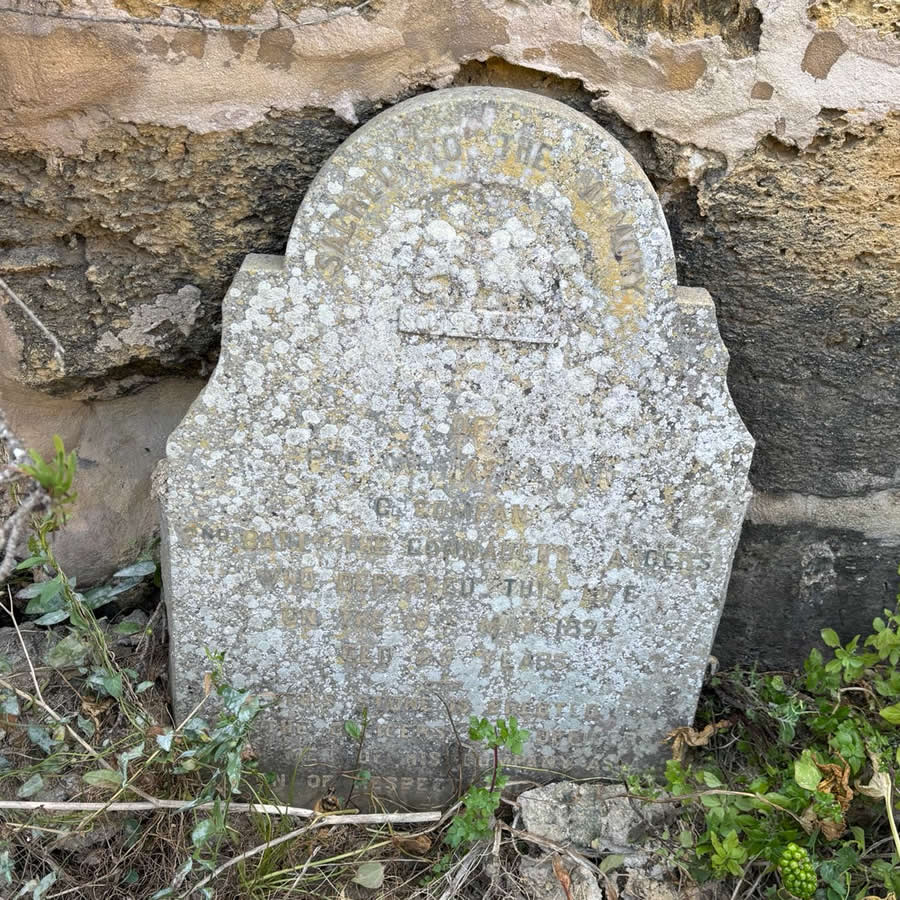 William McCLYNN Private, C Company, 2nd, Connaught Rangers Born 1868 died 10th May 1893, aged 25 years |
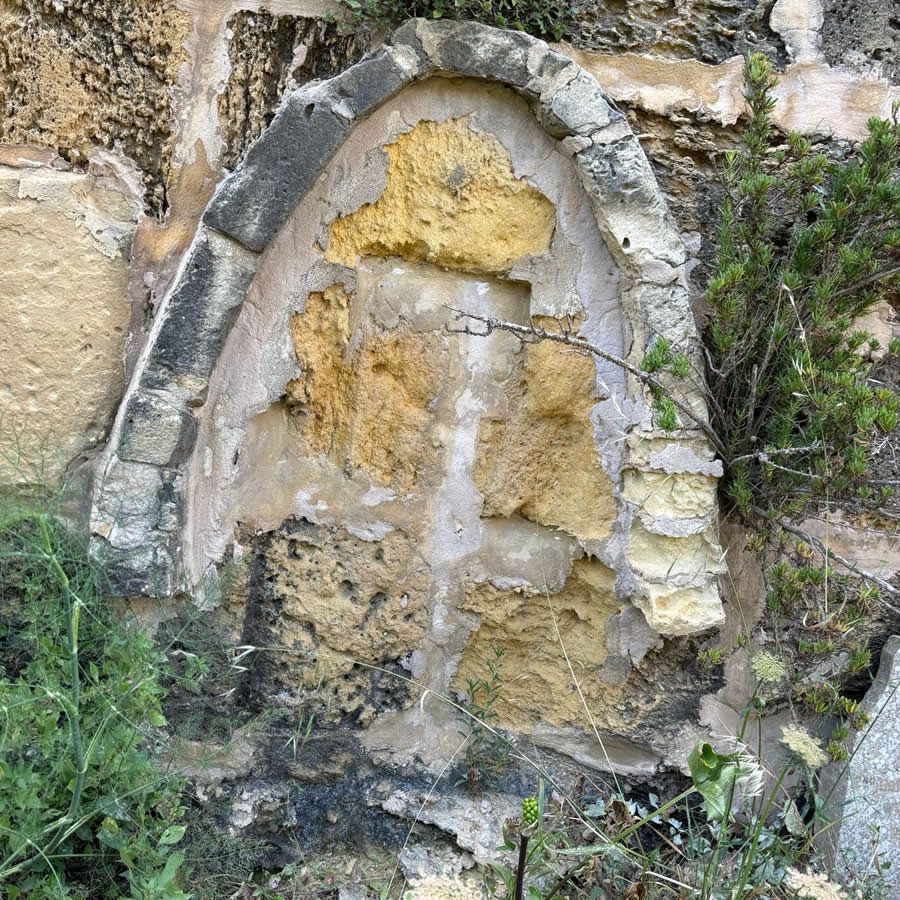 not identified |
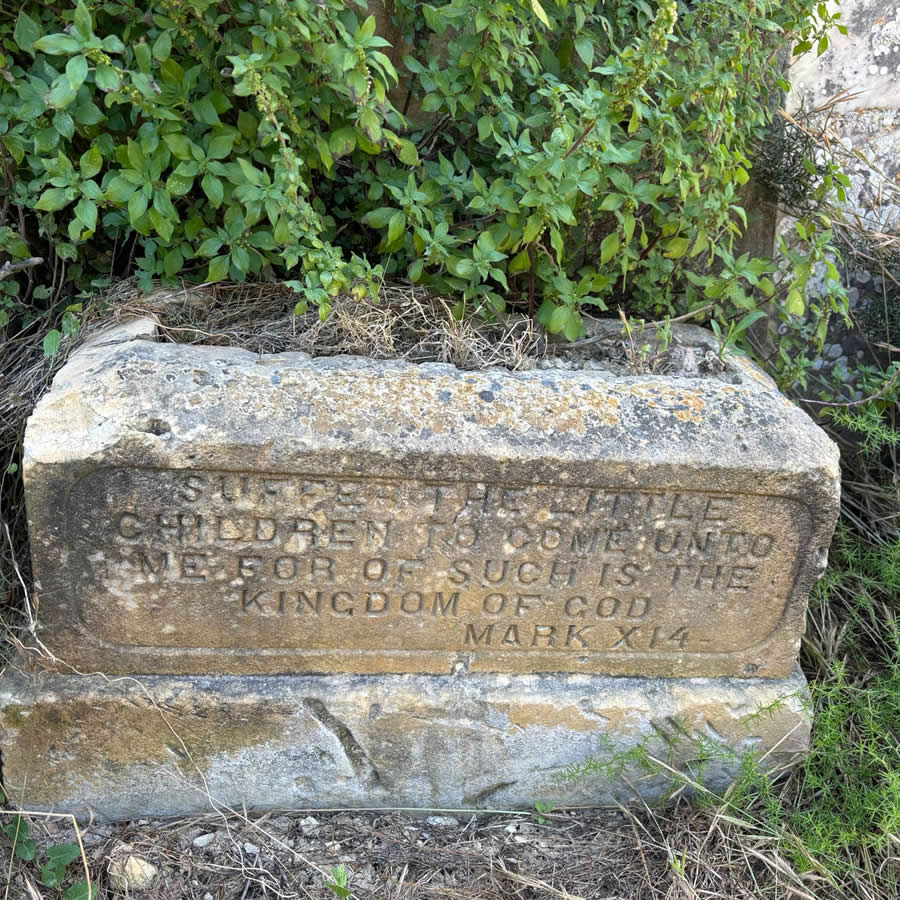 not identified |
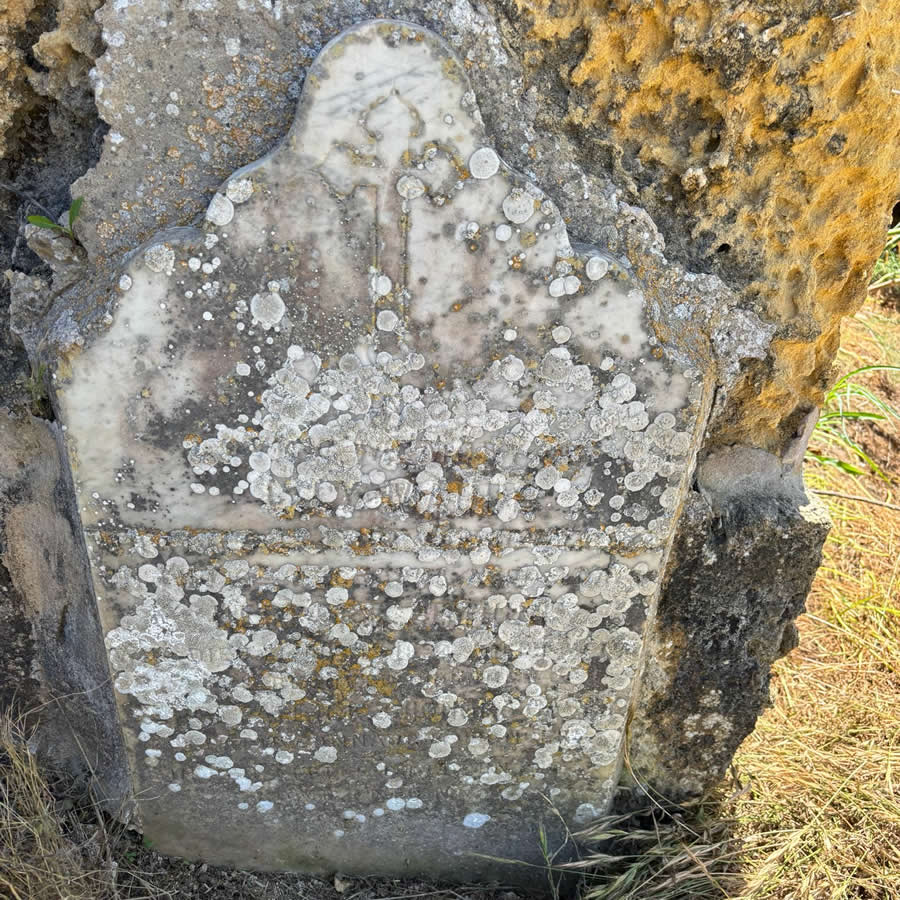 not identified |
The Right Ditch: Protestant Ditch Cemetery
Mirroring the Catholic plot, the right-hand ditch cemetery was used for the burial of non-commissioned officers, private soldiers, and Protestant laborers who could not be accommodated within the elite internal doctor's quarter plot. This graveyard handled the bulk of the casualties during the intense epidemiological outbreaks that swept through the garrison during its periods of heavy use as a recovery hospital.
Field Discovery: In Situ Protestant Ditch Markers
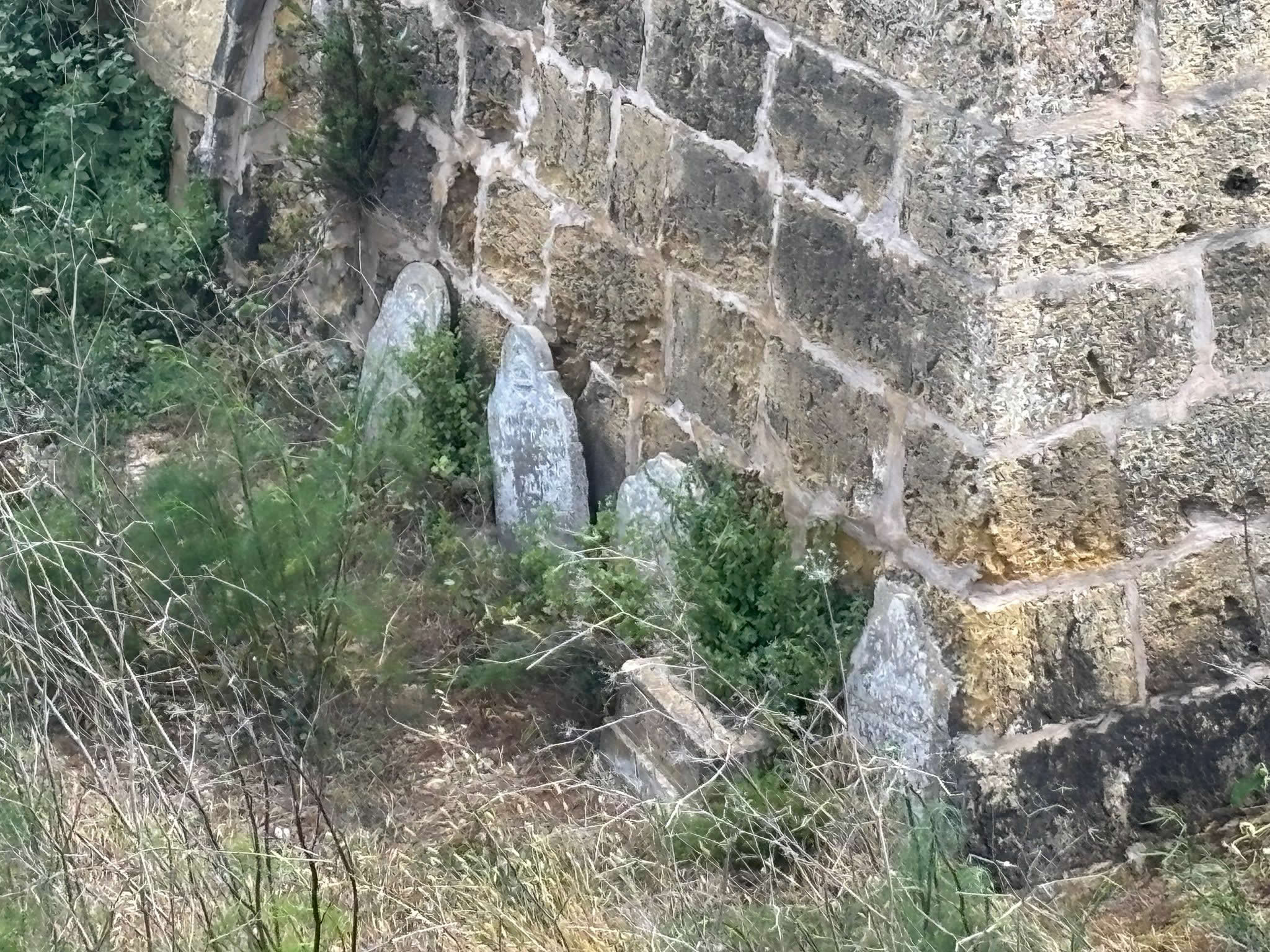
While nineteenth-century records frequently cataloged high-ranking personnel inside the main fort walls, archaeological field mapping has confirmed that structural remnants of these Protestant monuments now occupy the far eastern parameters of the advanced dry moat. Specifically situated on the far right area of the ditch, a considerable distance from the main land-front gatehouse and roughly 50 meters from the historic Connaught Light Battery wall plaque, sits a highly significant surviving marker.
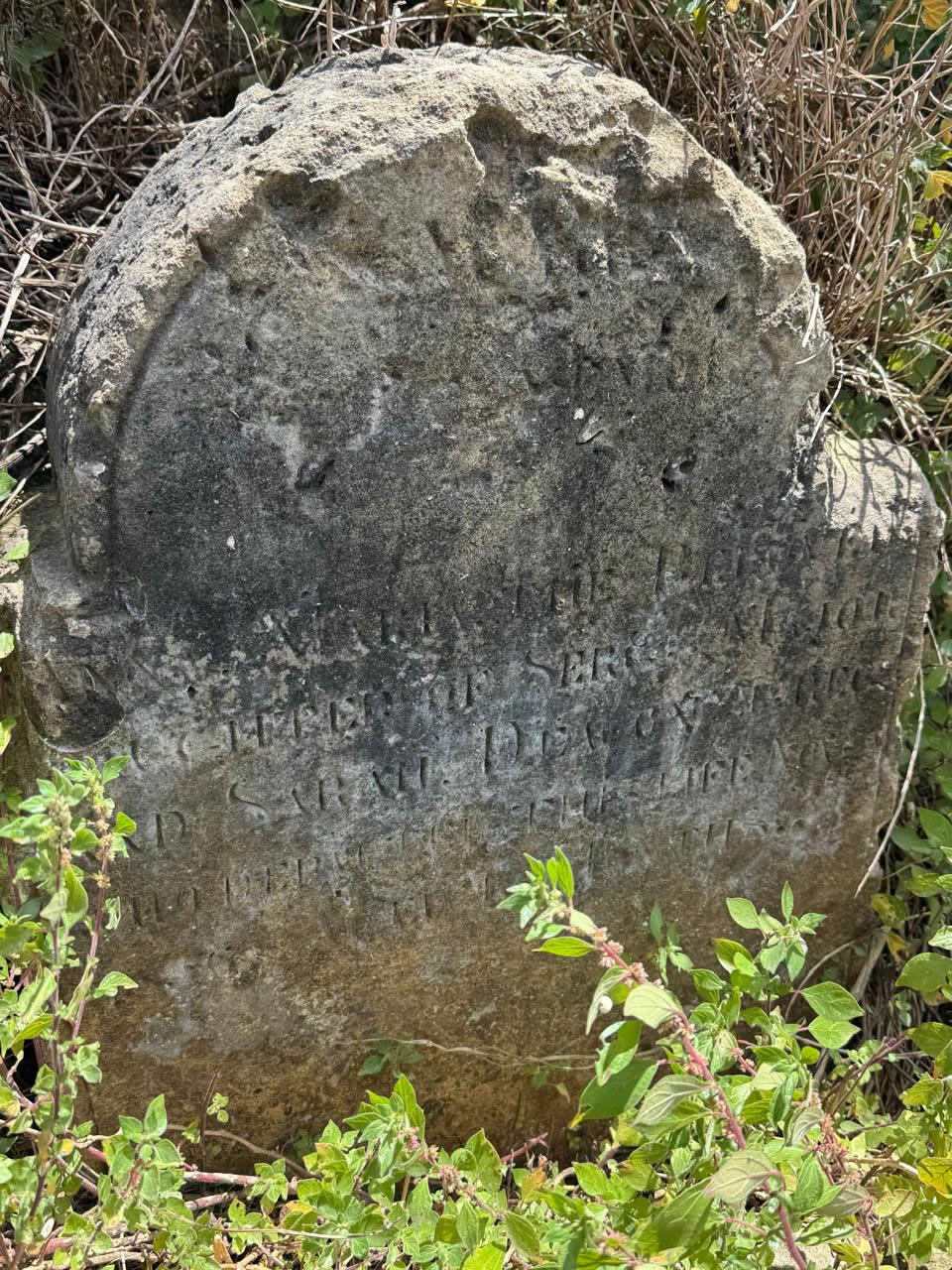
Field Artifact Ref: FC-PD-01
Location: Right Ditch Flank, East Sector (approx. 50m from 1890 Radcliff Plaque)
Condition: In situ among dense brush wood, heavily weathered but architecturally intact.
Photographic documentation from this right-hand sector has successfully deciphered the inscription on this particular limestone headstone. It marks the grave of Anna Maria Deacon, the 10-month-old daughter of Sergeant-Major and Sarah Deacon of the 31st (Huntingdonshire) Regiment, who died during the regional disease waves on November 6, 1856. The physical preservation of this stone among the wild vegetation establishes that while the internal hospital burial grounds were cleared during later redevelopments, select monuments were carefully shifted down into the defensive right trench, directly aligning with the strict denominational segregation enforced by the garrison's engineers.
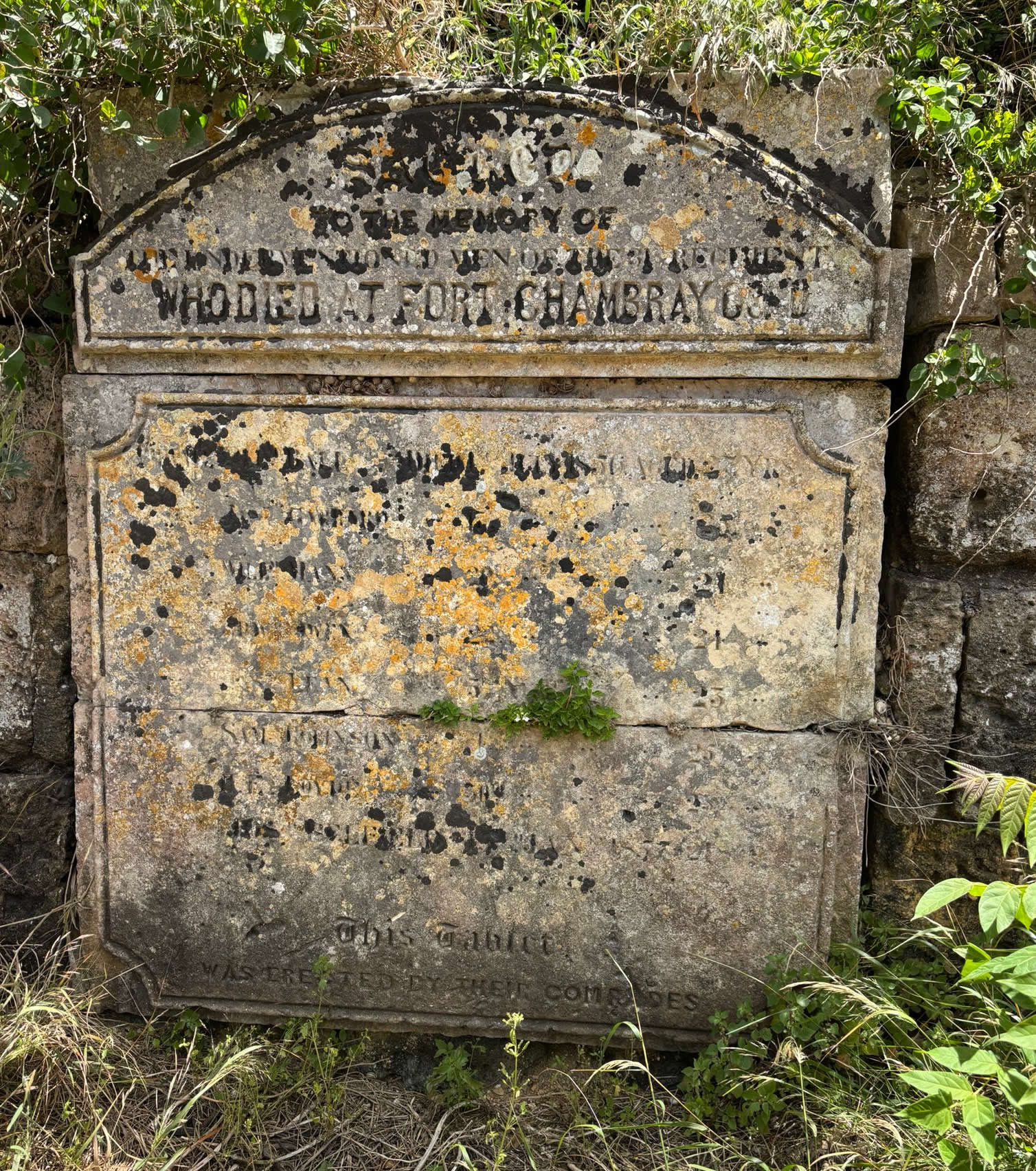
The 31st Regiment Collective Memorial Tablet
Resting directly against the towering limestone main wall of the fort, a mere 10 meters from the far right boundary of the dry ditch, lies the grand structural centerpiece of the Protestant garrison ground. This large, multi-tiered commemorative tablet was custom-commissioned and paid for by the active infantrymen of the 31st (Huntingdonshire) Regiment to mark the catastrophic loss of their comrades during the mid-nineteenth-century epidemiological waves.
Critical Research Alignment: The location of this monument is incredibly vital for the structural mapping of the site. It visually confirms that the list of individual names traditionally attributed to the inner hospital yard actually shares a deep physical link with the right ditch trench. The date profile perfectly encapsulates the tragic summer and autumn months of 1856, when cholera and dysentery swept through the close quarters of the Gozo barracks, taking the lives of young men aged almost exclusively between 21 and 27 years old.
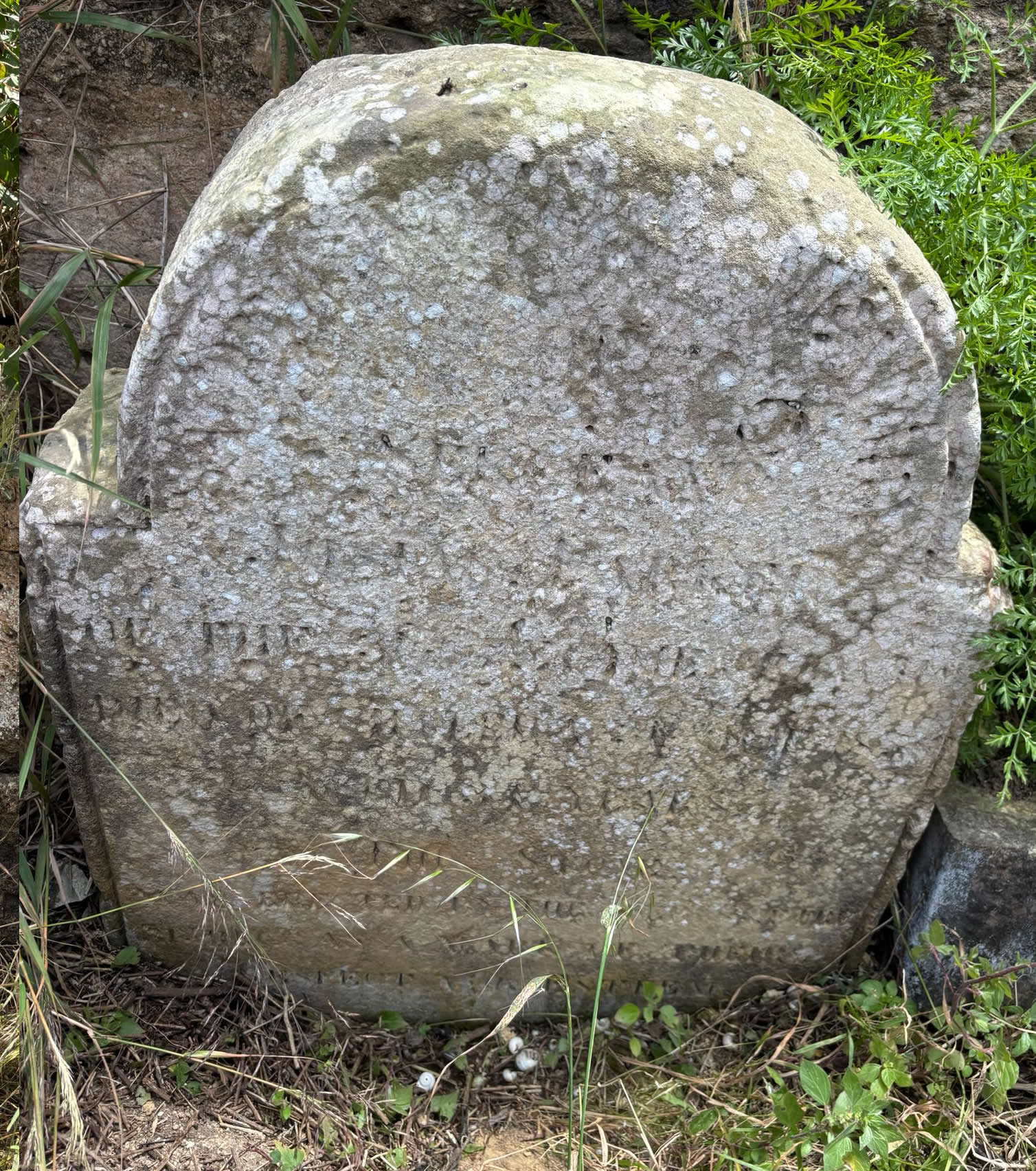
The 31st Regiment Plot Boundary Marker
Discovered just several meters to the right of the larger wall tablet, and resting nearly against the far outer edge of the ditch perimeter, is a secondary matching limestone headstone. While the larger monument functioned as the detailed register panel for the deceased, this smaller, round-topped stone served as the official regimental dedication marker designating the physical boundaries of the 31st Regiment's collective burial plot.
Field Analysis: The presence of this second marker confirms that the 31st Regiment didn't just put up a single plaque; they formally established an organized, self-contained military cemetery sector inside the right ditch. The text is beautifully egalitarian, emphasizing that it was paid for collectively by everyone from the high-ranking "Officers" down to the rank-and-file "Privates" to honor the tight bonds of camaraderie forged during their tragic 1856 deployment on Gozo.
The Connaught Light Battery Commemorative Wall Plaque
While the internal garrison cemetery records provide deep genealogical insight into the personal tragedies of the troops stationed on Gozo, surviving physical fragments from the fort walls bridge the gap between human mortality and military engineering. A notable example is a broken, weathered globigerina limestone commemorative plaque recovered from the defense perimeter walls near the former garrison quarters.
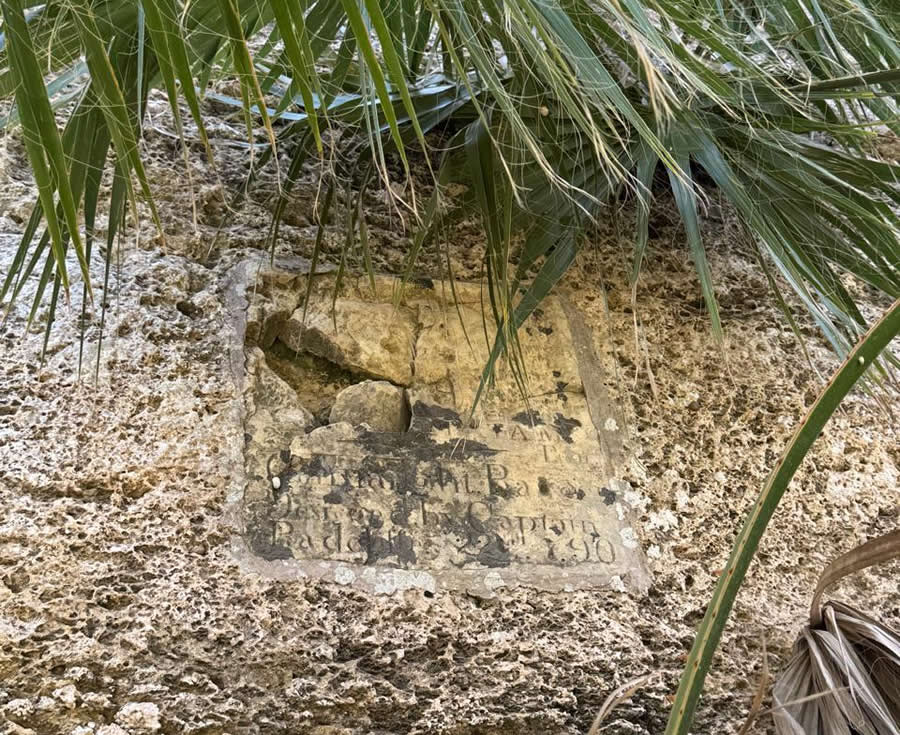
Though fractured on its upper-left quadrant, the inscription can be fully transcribed and authenticated by cross-referencing late-Victorian Royal Engineer archives from the Mediterranean command:
Socio-Military Context & Technical Analysis
This structural artifact is highly significant to the history of the garrison for several reasons:
- The Engineer Profile: The initials "R.E." designate the Royal Engineers. This plaque documents the structural modernization designs drafted by Captain William Frederick Radcliff, R.E., during his tour of duty on the Maltese islands.
- Late-Victorian Tactical Overhaul: The date **1890** marks the precise historical window wherein the British War Office heavily modified the obsolete mid-18th-century French fortifications of Fort Chambray. The installation of "Light Batteries" (rapid-fire breech-loading artillery) was engineered to protect the strategic Gozo Channel from fast-moving, steam-powered ironclad warships.
- Regimental Associations: The term "Connaught" physically ties the construction of this battery to either the legendary Connaught Rangers (an Irish infantry regiment heavily deployed within the Mediterranean command) or directly honors the Duke of Connaught, who served as the Commander-in-Chief of British forces in Malta around this exact decade.
This plaque acts as an essential contextual anchor for eMalta researchers. It proves that the peak mortality waves documented in the intramural burial register coincided precisely with intensive, heavy labor campaigns undertaken by infantry regiments and engineer units to rebuild the fort’s outer bastions before the dawn of the twentieth century.
Chronological Use, Epidemiological Waves, and Later Conversion
The busiest periods for all three cemeteries coincided with moments of intense regional conflict and medical emergencies across the Mediterranean. Throughout the nineteenth century, as British troops rotated through active combat zones in Egypt, the Crimea, and the Ionian Islands, the hospital at Fort Chambray received thousands of sick and wounded soldiers. Diseases like malaria, cholera, and yellow fever caused sudden, sharp spikes in the mortality rate, forcing quick, back-to-back burials within both the outer ditch grids and the internal grounds.
By the dawn of the twentieth century, the fort's strategic importance declined, and its role shifted away from an active garrison. The cemeteries were closed to new burials as municipal and centralized public health cemeteries took over across Gozo. During the mid-to-late twentieth century, the complex entered a period of severe neglect. The headstones weathered rapidly under the salt-laden sea winds, and vegetation overran the ditches, hiding the old military markers from view.
The Late 20th Century Destruction and Modern Remnants
The most catastrophic chapter for the Fort Chambray cemeteries occurred during the late twentieth and early twenty-first centuries. As large parts of the fort's interior and surrounding ditches were rezoned for modern luxury residential developments, villas, and swimming pool complexes, the fragile archaeological layers of the burial grounds were largely destroyed or completely cleared. Heavy machinery reshaped the ditches, and the internal hospital and doctor's quarter zones were heavily modified to accommodate modern upscale housing blocks.
During these clearance works, many of the surviving British headstones and monumental fragments were uprooted. While a handful of historic markers were rescued by heritage groups or shifted to alternative memorial walls, the physical graves themselves were entirely cleared, earning this tripartite complex its permanent place within the "Destroyed and Lost" register of the eMalta historical ledger.
eMalta Destroyed and Lost Funerary Heritage Registry
To view our complete geographic documentation of Malta’s lost, built-over, or radically cleared historical burial landscapes, explore these linked investigative pages across our network:
- Cemetery Hub: Cemeteries of Malta and Gozo (Master Index Map)
- Plague Cemetery Hub: Historical Plague & Cholera Cemeteries of Malta and Gozo (Master Index Map)
- The Intramural Counterpart: St. Gregory’s Church and Parvis Burial Vaults, Żejtun
- The Lost Urban Footprint: The Clearances of the 1813 Infetti Alleys, Birkirkara
- The Harbor Ditch Precedent: The Msida Bastion Historic Garden of Rest, Floriana