📍 Location
Location Map Coordinates 35.851448, 14.512603
Introduction to Għaxaq's Final Resting Place
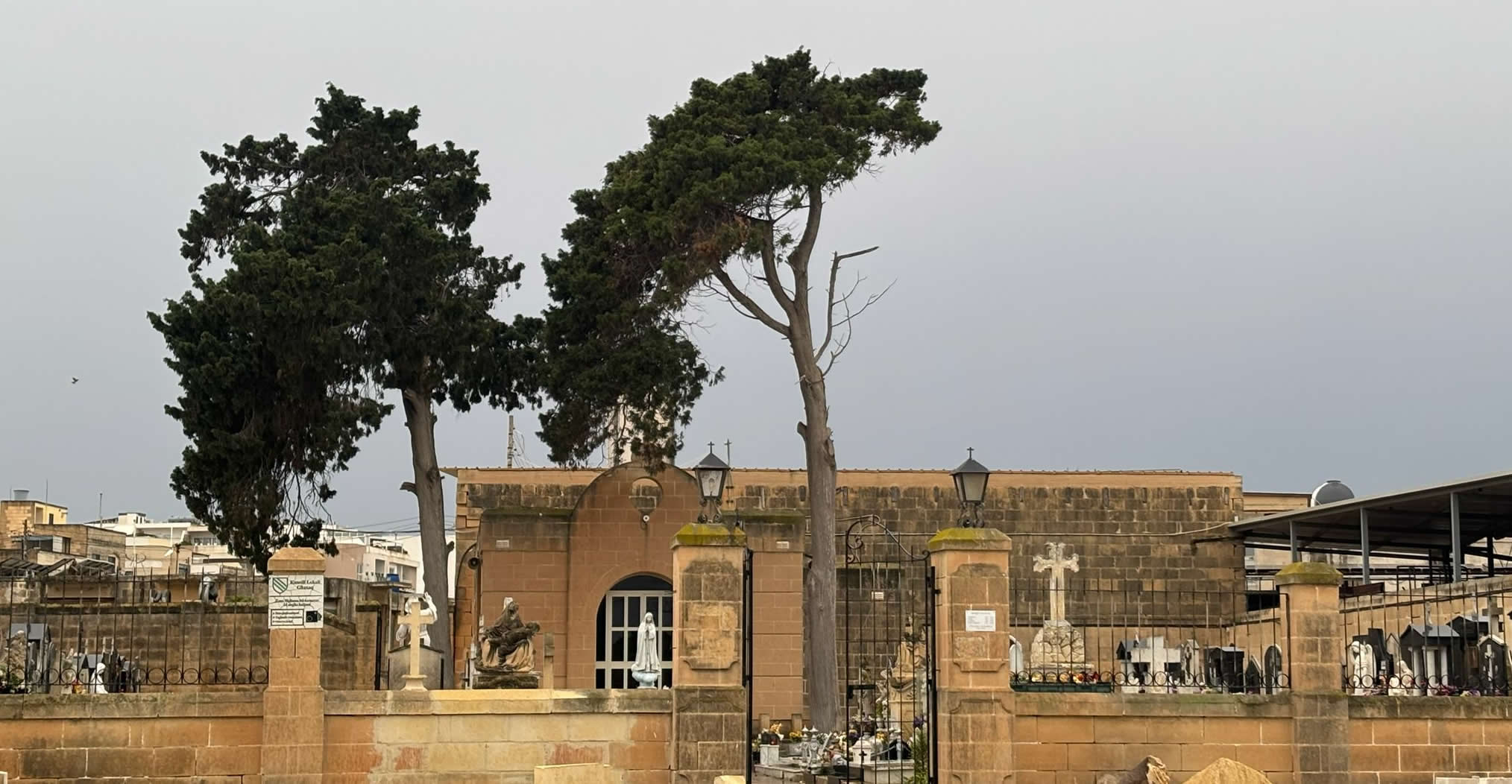
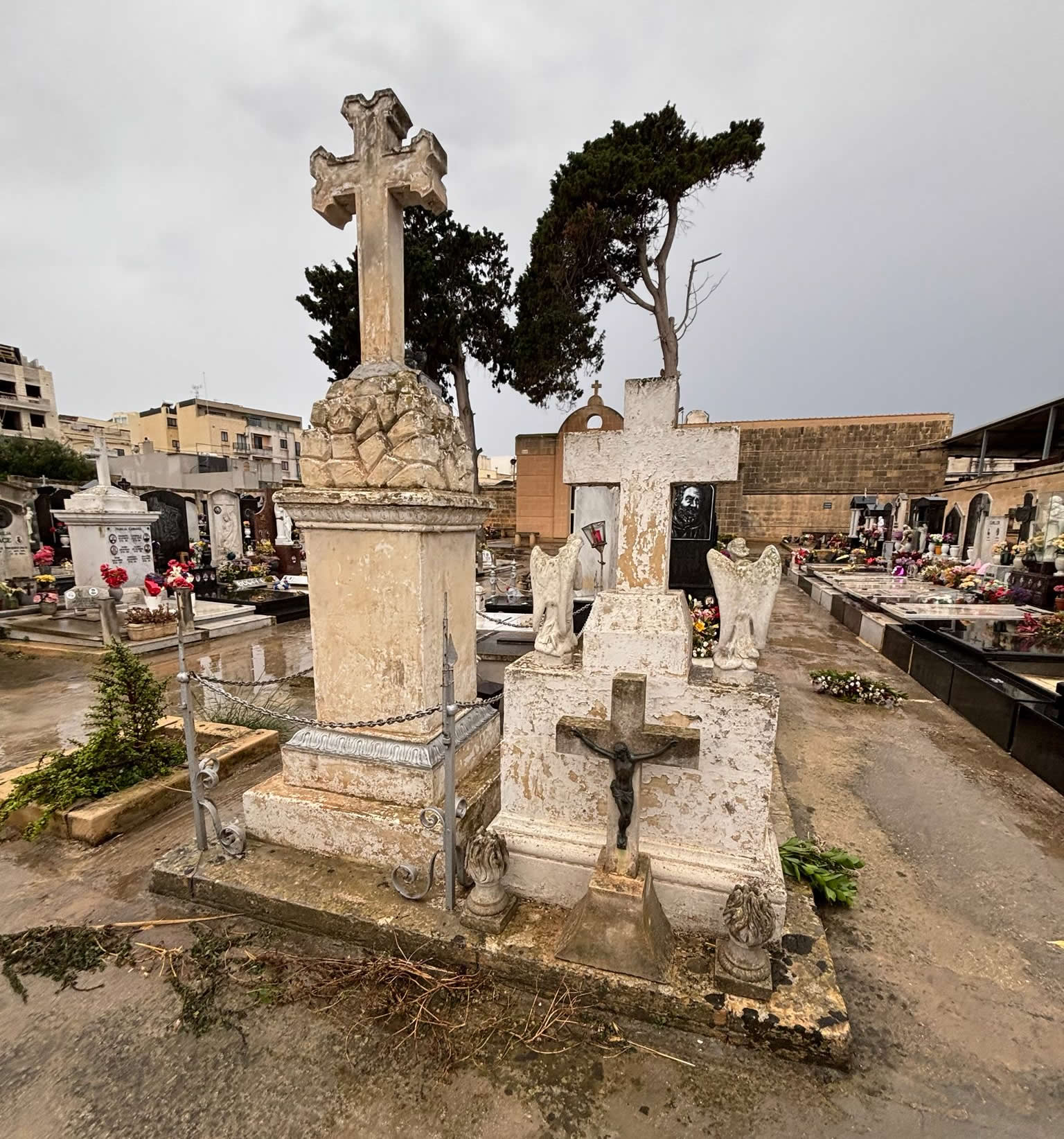
Set slightly back from the dense architectural nucleus of the traditional village core, the Għaxaq Parish Cemetery (known colloquially to locals as Iċ-Ċimiterju ta' Ħal Għaxaq) stands as a monumental physical archive of the community’s ancestral lineages. Marked by its characteristic perimeter walls, weathered globigerina limestone markers, and central ceremonial chapel space, this site represents much more than a functional final resting place. It serves as a visual timeline of a traditional Maltese village navigating the massive socio-religious and administrative shifts of the 19th and 20th centuries.
For centuries, the settlement of Għaxaq functioned as an agrarian outpost deeply connected to neighboring parishes. As the community blossomed into an independent entity, its civic infrastructure expanded in tandem. The establishment of this dedicated extramural cemetery space was a vital part of that transition, balancing the population’s deeply rooted Catholic funereal rites with the strict public sanitation policies introduced during the British colonial administration of the Maltese islands.
Historical Foundations: From Crypt Burials to Extramural Grounds
To contextualize the development of the Għaxaq Cemetery, one must look closely at the older practices of intramural burial that dominated the Maltese islands for generations. Prior to the mid-19th century, the inhabitants of Għaxaq sought burial in immediate proximity to the sacred. The most coveted resting places were the crypts directly underneath the beautiful Baroque Parish Church of the Assumption (consecrated in May 1784 after fifty years of construction by the villagers) or within the small floors of rural chapels like St. Lucy’s Chapel (built originally in 1535) and St. Philip’s Chapel.
Burial beneath church floors was deeply woven into the spiritual fabric of the Maltese. It was believed that interring a body near altars and religious relics provided the departed soul with proximity to continuous prayers and divine mercy. However, as the population of Għaxaq scaled upward throughout the early 1800s, this traditional layout created major municipal challenges. Church vaults became dangerously overcrowded, and the continuous reopening of stone slabs inside enclosed worship spaces compromised indoor air quality.
The turning point arrived following the severe public health disasters that shook Malta under early British rule, most notably the devastating 1813–1814 Bubonic Plague and the subsequent 1837 Asiatic Cholera outbreak. These horrific epidemics overwhelmed the traditional church crypt networks, forcing the government to intervene. The newly formed sanitary committees, influenced by contemporary medical theories regarding "miasma" (the belief that foul odors from decomposing organic matter spread pestilence), drafted legislative mandates that completely banned church crypt burials. Every village parish in Malta was systematically ordered to establish an extramural cemetery located completely outside its residential boundaries.
Requisition, Architecture, and Spatial Construction
The selection of the site for Għaxaq's cemetery followed strict environmental criteria set by colonial engineers. The plot selected at coordinates 35.865761, 14.490218 sat perfectly outside the residential perimeter of the town. This location was chosen to allow the prevailing winds to sweep across open agricultural terrain away from family homes, minimizing any perceived "miasma" risk while ensuring that natural water tables feeding village wells remained completely uncontaminated.
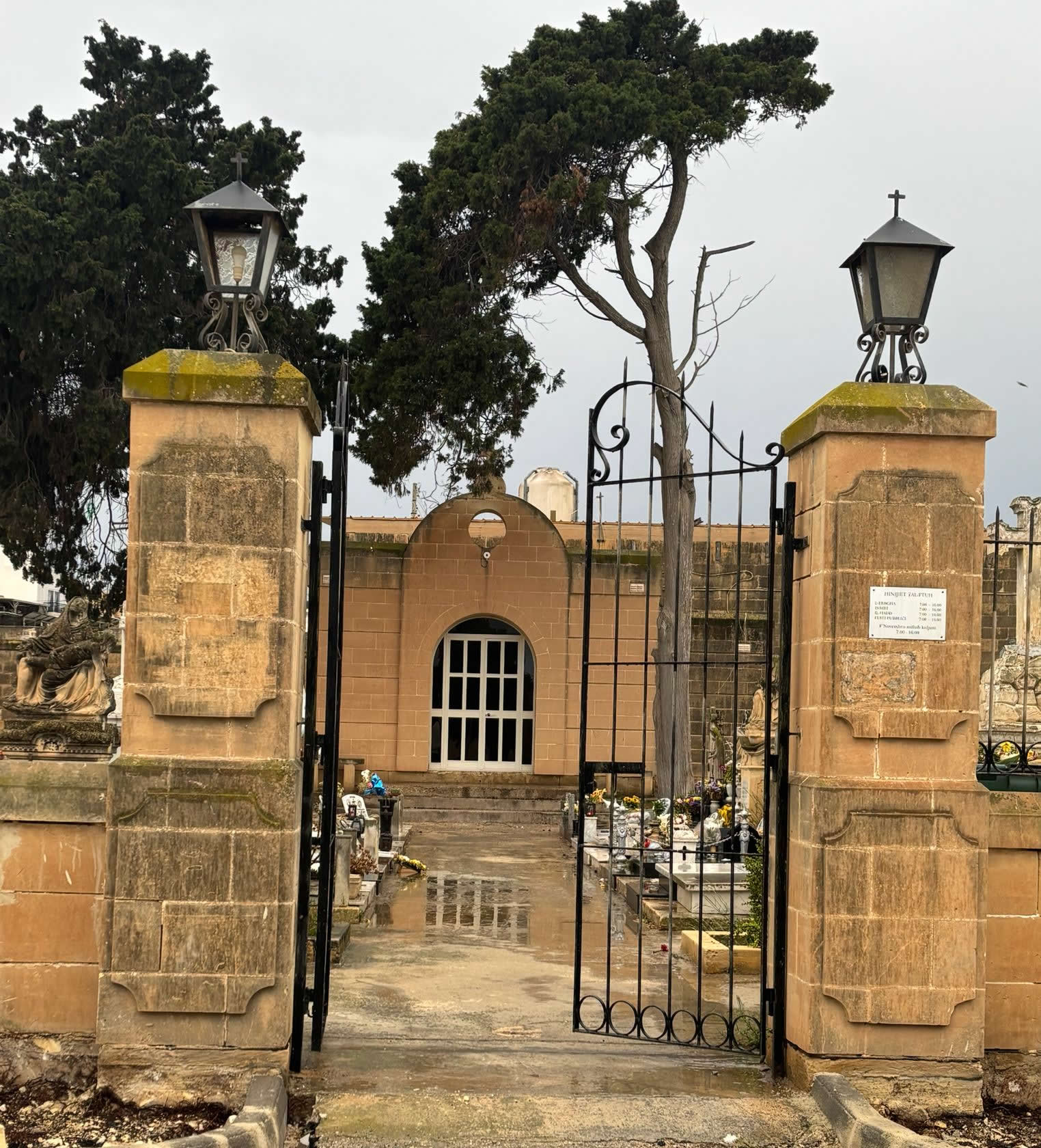
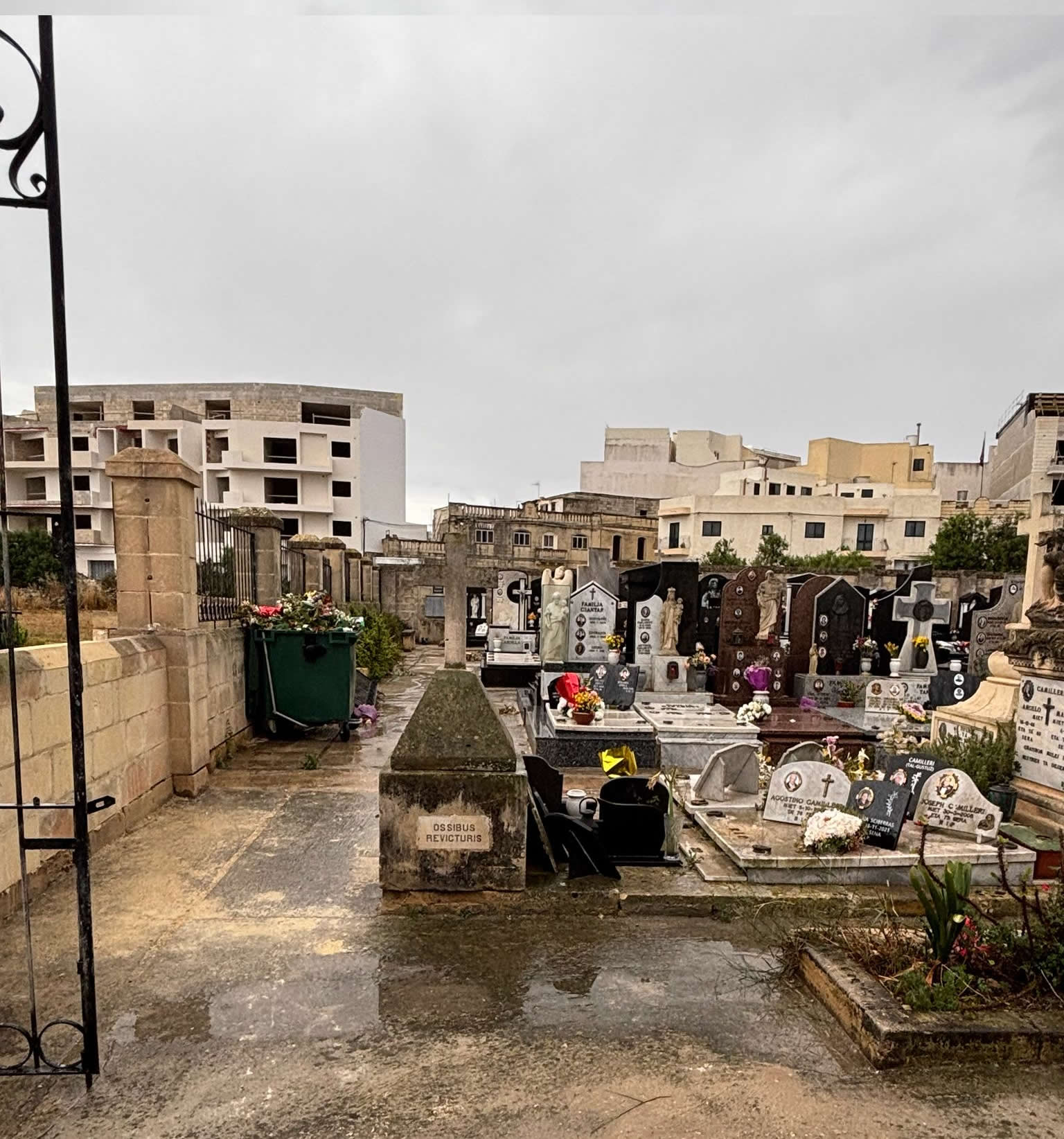
Architecturally, the Għaxaq Cemetery follows a classical, orderly symmetric format that grew highly popular across southern Europe during the Victorian period. The perimeter features tall, robust walls made of locally quarried globigerina limestone (ġebla tal-franka). These high barriers were not merely decorative; they were legally mandated to create a clear border of isolation (a clausure setup) between the living community and the resting dead.
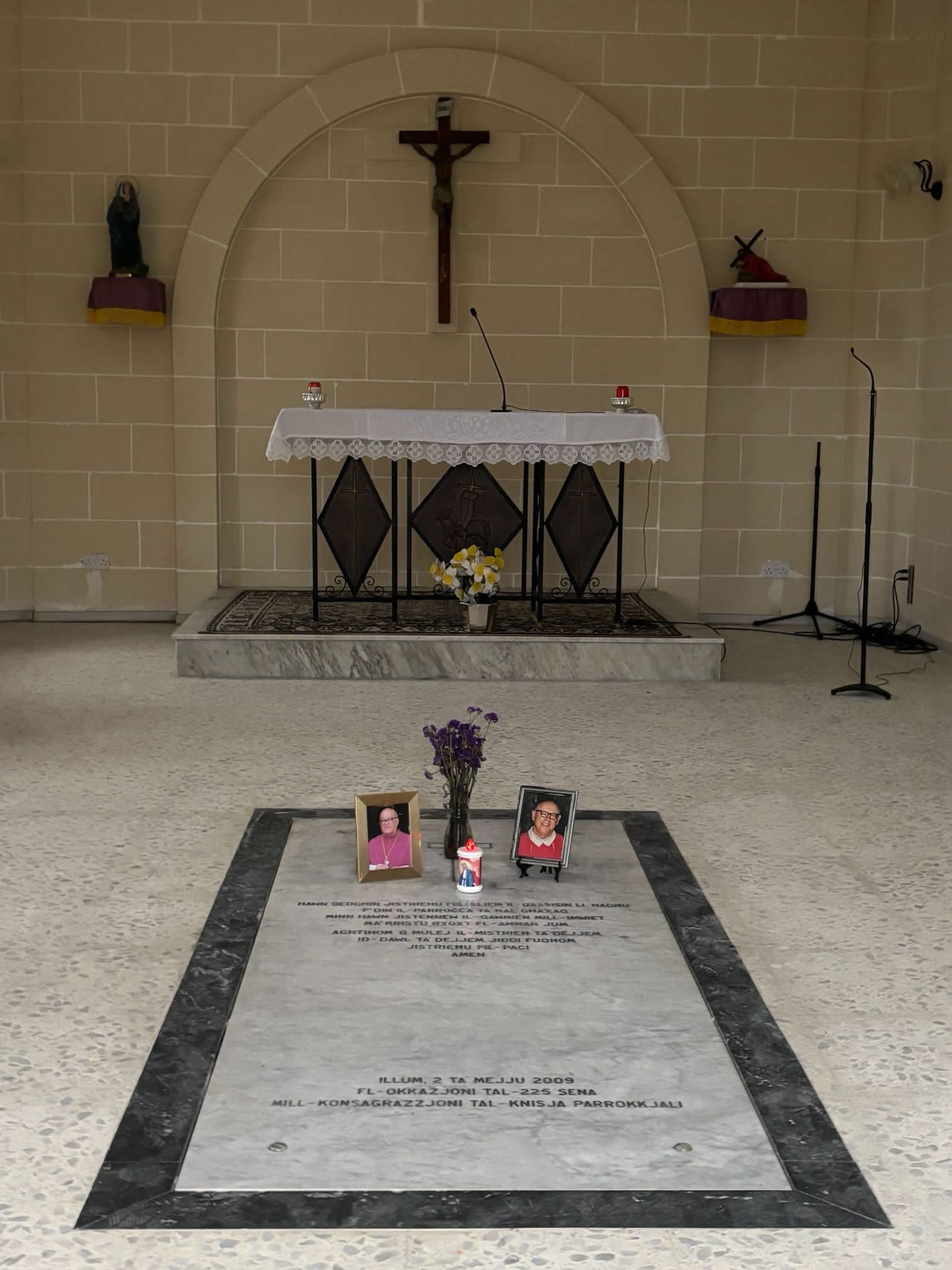
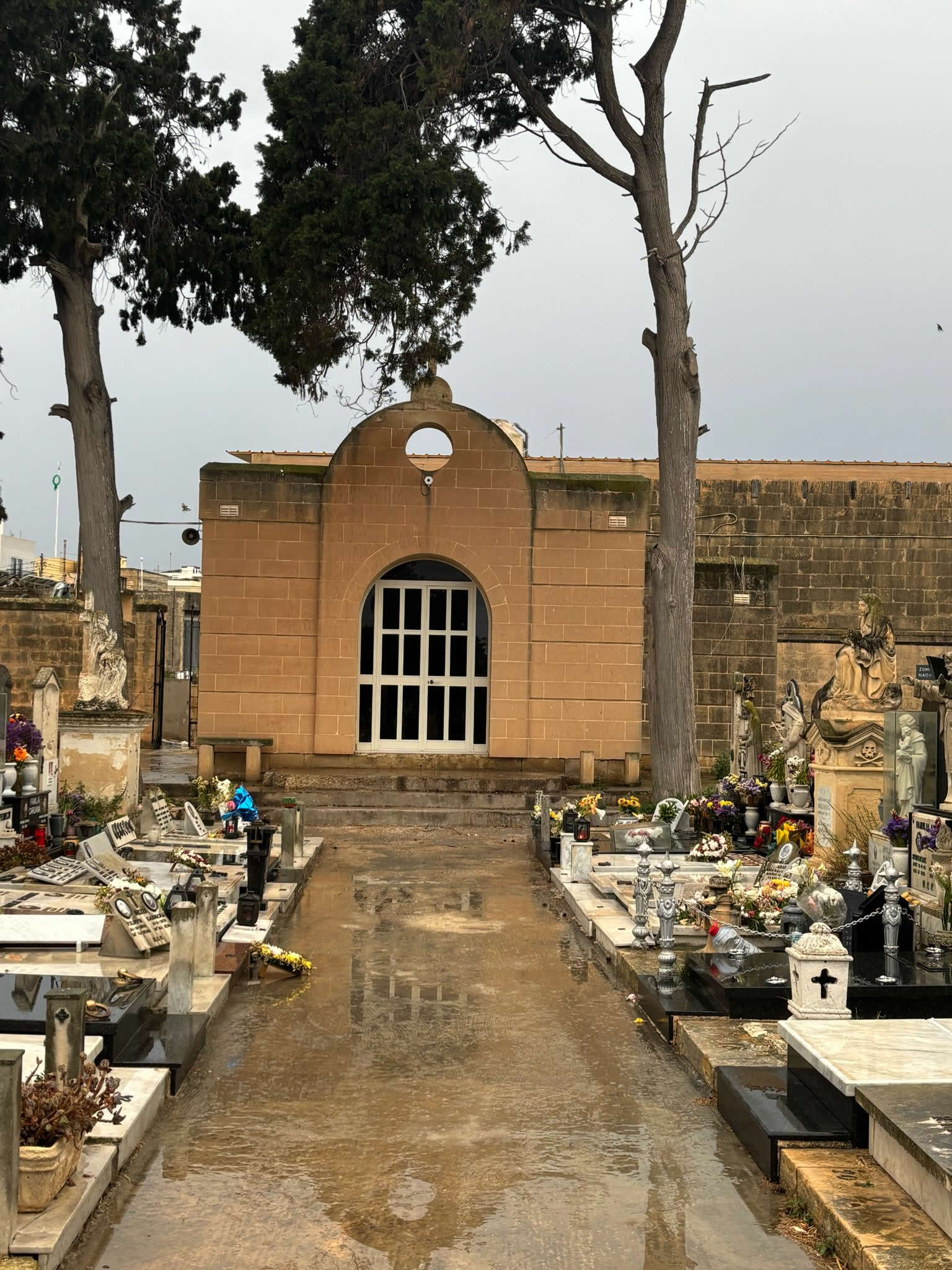
The entry gate acts as a dignified transition point, featuring an elegant arch flanked by clean pilasters. Inside, the grounds are organized into a strict grid layout, with gravel paths flanking rows of family grave plots. This geometric precision stood in stark contrast to the chaotic, unmapped burials characteristic of older church vaults. At the focal center of the main axis stands the cemetery chapel, built to facilitate final committal prayers and the traditional Roman Catholic liturgy for the dead before interment.
Funerary Iconography: A Story of Transition
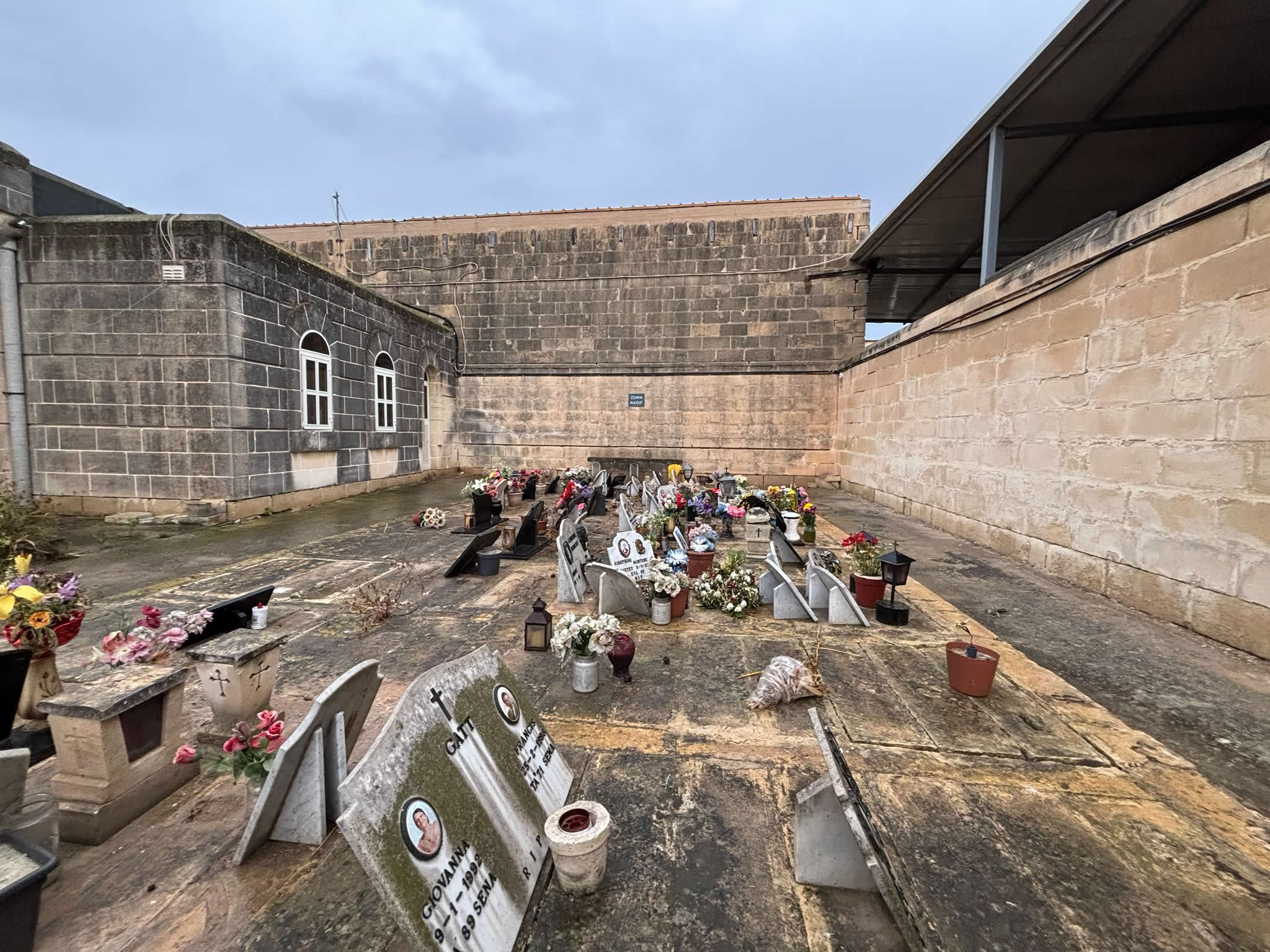
A meticulous visual audit of the older grave markers inside the Għaxaq Cemetery highlights a captivating cultural blending. While older, mid-19th-century markers often feature classic, sobering reminders of mortality—such as sandglasses, extinguished torches, and veiled urns modeled after British Victorian mourning patterns—they exist side-by-side with deeply traditional Maltese Catholic themes. Intricate stone reliefs of souls surrounded by the cleansing flames of Purgatory (l-erwieħ) are common, reflecting the community’s enduring spiritual devotion to praying for the dead.
Comparative Analysis: Għaxaq vs. Regional Epidemic Clausure
For historians utilizing the eMalta database, it is essential to distinguish between a multi-generational village parish cemetery like Għaxaq's and the specialized emergency epidemic sites found elsewhere in the southern region. While communities like Luqa built emergency containment fields for isolated outbreaks, Għaxaq’s ground was planned from its inception as a permanent civic landscape designed to grow organically alongside the village population over centuries.
The following structural matrix illustrates the distinct operational and design differences between the multi-generational Għaxaq Parish grounds and the nearby single-event emergency enclosures:
| Comparative Metric | Għaxaq Parish Cemetery (This Site) | The 1814 Luqa Plague Cemetery (Triq Ta' Qormi) | The 1850 Luqa Cholera Cemetery (Valletta Road) |
|---|---|---|---|
| Primary Function | Continuous, multi-generational community burials and family grave plots. | Emergency mass burial of casualties from the 1813–1814 bubonic plague wave. | Rapid containment burial ground for exactly 13 casualties of the 1850 cholera flash outbreak. |
| Spatial Design | Symmetrical grid layout with wide gravel pathways and a central monumental chapel. | Closed military-style compound built hastily along old agricultural borders. | Minimalist, roadside sanitary enclosure designed strictly for rapid body drop-off. |
| Funerary Symbols | Diverse Victorian mourning motifs, personal family headstones, and Purgatory reliefs. | Baroque warning art, featuring a prominent carved stone skull and crossbones above the entry. | Utilitarian, clean neoclassical pediment completely stripped of all macabre death iconography. |
| Administrative Era | Established under British civil-parochial collaborative zoning programs. | Constructed under the strict, absolute military rule of Governor Thomas Maitland. | Managed via clinical quarantine mandates from the early statutory General Board of Health. |
| Linked Database Profiles | Active Documentation Page | View 1814 Profile » | View 1850 Profile » |
Restoration Projects and Modern Preservation
As an active open-air heritage landscape, the Għaxaq Cemetery faces unique preservation demands. Being exposed to the elements for well over a century, the local soft globigerina limestone elements have suffered from natural erosion caused by wind-driven rain and variations in humidity. In particular, the intricate sculptural reliefs on the oldest family markers have shown signs of surface flaking, a condition known locally as marda tal-ġebel (stone disease).
To mitigate this deterioration, collaborative preservation initiatives have been enacted over the years involving the local parish fabric committees, civic heritage groups, and regional restoration directorates. These campaigns focus on using non-invasive cleaning methods to safely remove biological growth, black crusts, and atmospheric soot from the monumental gateway and chapel walls. Mortar joints are systematically raked out and repointed using traditional, breathable lime-and-sand mixtures, completely avoiding modern cement-based compounds which trap destructive moisture within the historic stone structure.
Today, the cemetery functions smoothly as both an active sacred landscape and a highly valuable historical resource. It remains a key focal point for the community during the annual commemorative season of All Souls' Day (Iċ-Ċelebrazzjoni tal-Mejtin Kollha) in early November. During this time, families gather to whitewash graves, place fresh flowers, and light thousands of votive candles, transforming the solemn landscape into a vibrant space of collective memory and cultural continuity.
Frequently Asked Questions (FAQ)
Where is the Għaxaq Parish Cemetery located?
The cemetery is situated on the quiet rural outskirts of Għaxaq in the South Eastern Region of Malta, precisely mapped at geographic coordinates 35.851448, 14.512603. It sits comfortably outside the historical residential core to satisfy early public health zoning laws.
Why was this cemetery built outside the village core?
The site was built outside the village center following early 19th-century British sanitation laws. These regulations permanently banned the ancient practice of burying bodies within church vaults to prevent overcrowding and eliminate public health risks associated with the spread of contagious epidemics.
Does the Għaxaq Cemetery contain any plague or cholera pits?
No, the Għaxaq Cemetery was planned as a multi-generational parish graveyard for regular civic burials. It differs fundamentally from specialized emergency sites, like the 1814 or 1850 epidemic compounds found in nearby Luqa, which were built strictly to isolate contagious bodies during single-event crises.
Is the interior accessible to tourists and genealogists?
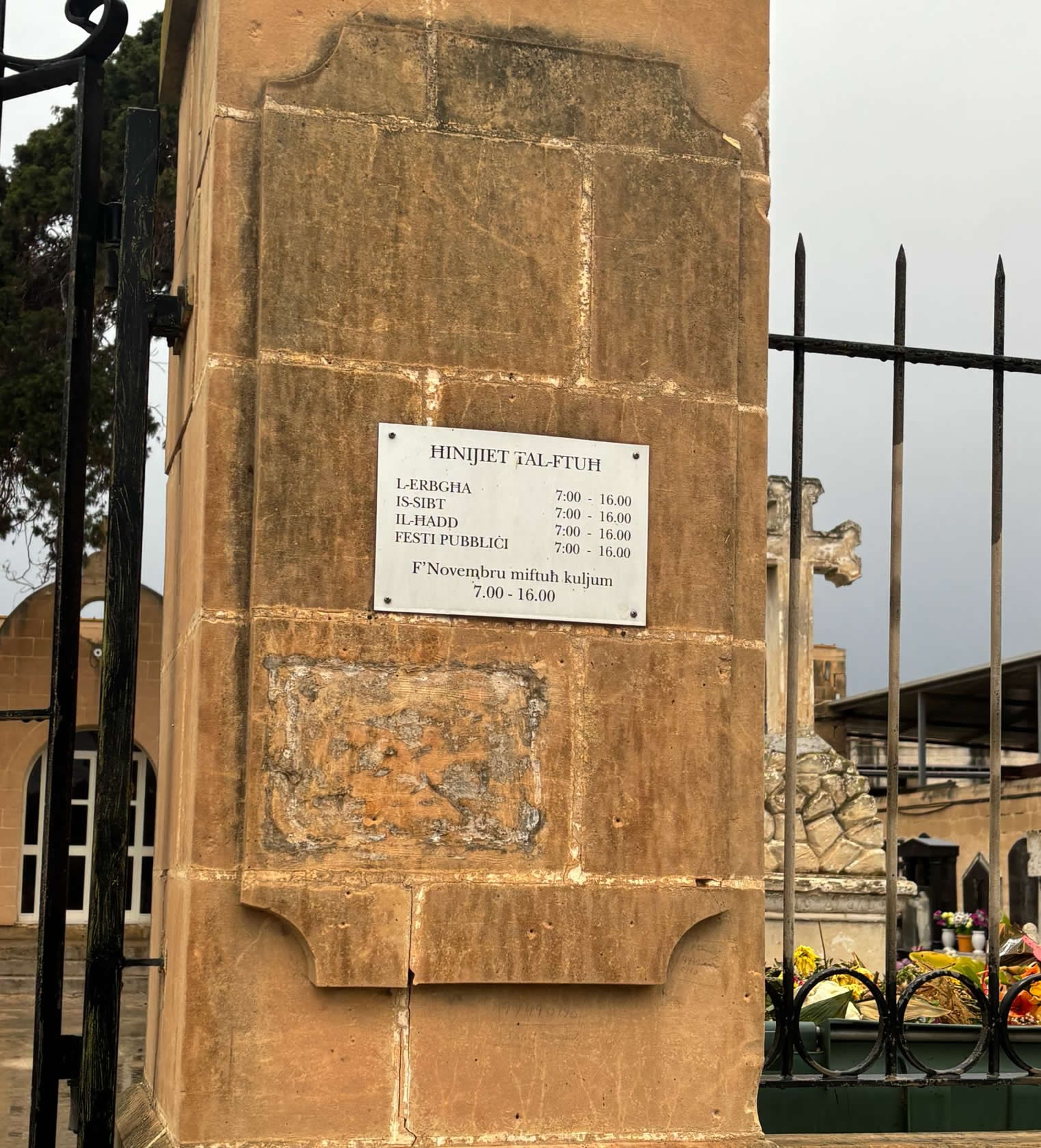
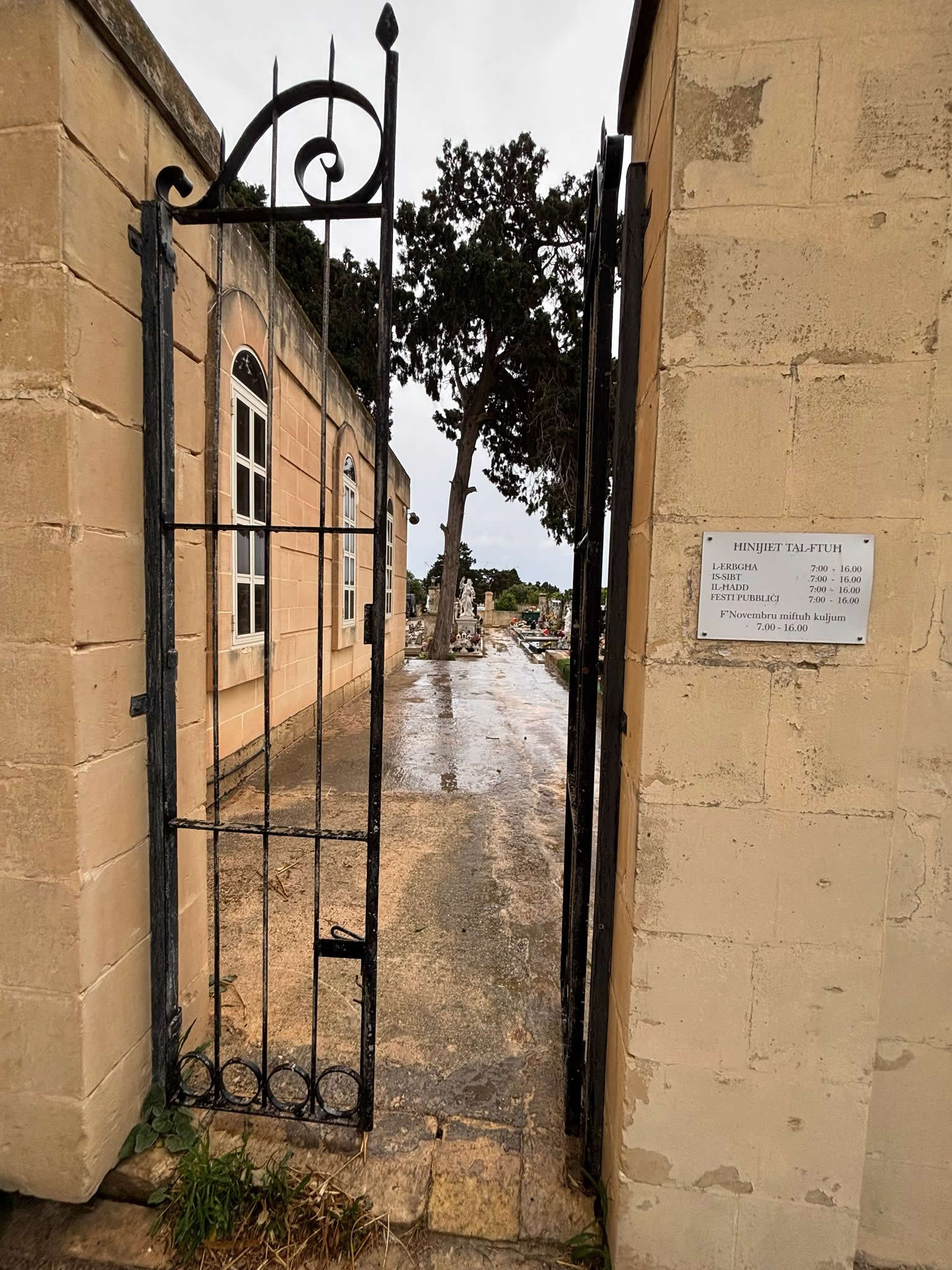
The cemetery is a sacred, functioning space open primarily during designated liturgical times, morning mass services, and special commemorative periods such as All Souls' Week in November. Visitors are requested to maintain absolute respect, silence, and decorum when researching gravestones or tracking family histories.