📍 Location
Location Map Coordinates 35.859716, 14.560116
A privately built fortified tower and watermill complex dating to the Knights of St John period in Malta
Introduction
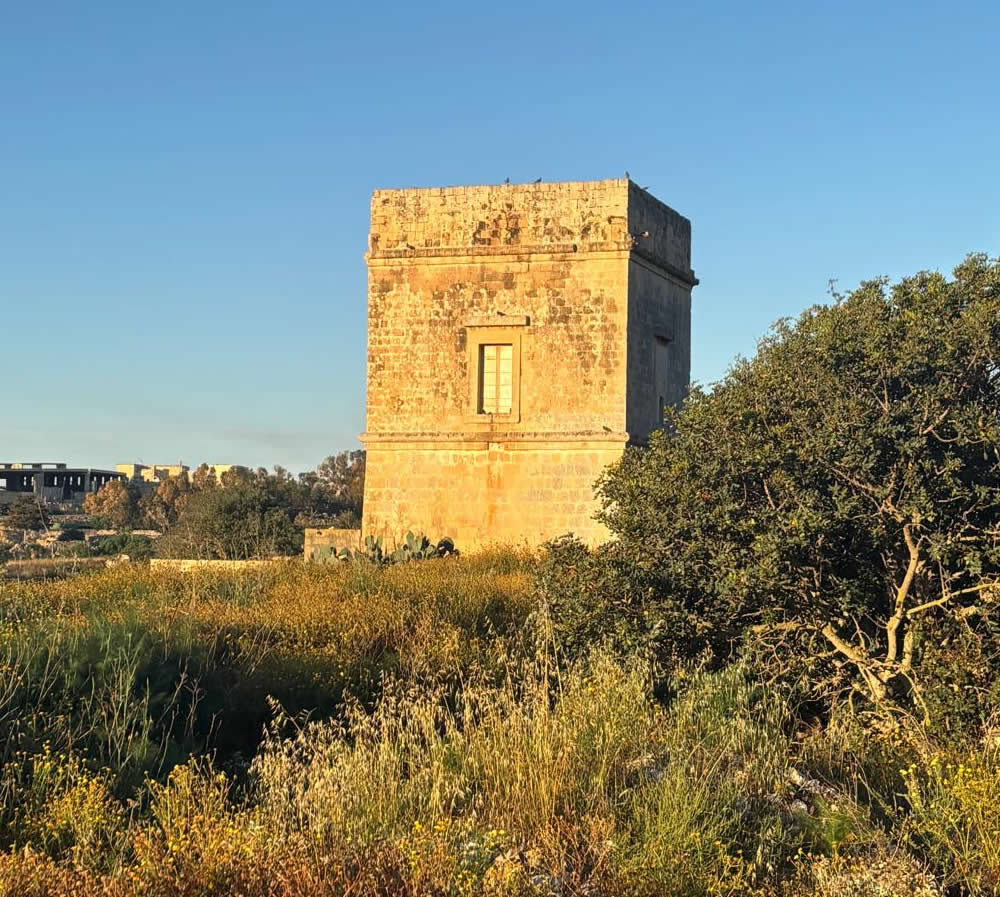
Torri tal-Buttar, located in Marsascala in the southeastern region of Malta, is a historically significant fortified structure believed to date back to the period of the Knights of St John (16th–17th century). Situated at coordinates 35.859716, 14.560116, the tower represents a rare example of privately constructed defensive architecture combined with agricultural and industrial functions.
Unlike official coastal watchtowers built by the Order, Torri tal-Buttar is believed to have been constructed as a privately fortified rural residence, likely intended to protect agricultural land, water resources, and milling operations in the Marsascala valley area.
Historical Background
The Marsascala region has been inhabited since antiquity, with archaeological evidence suggesting Roman agricultural activity, water management systems, and early settlement patterns. During the Knights of St John period, the area became strategically important due to its proximity to St Thomas Bay and potential landing zones for Ottoman or pirate raids.
It is within this defensive landscape that Torri tal-Buttar emerged. Historical interpretations suggest it was part of a wider network of privately funded fortified structures built by wealthy landowners who sought to protect rural estates from coastal incursions.
The structure is sometimes associated with 16th–17th century construction phases, although exact dating remains uncertain due to limited archival documentation.

Architecture and Construction Features
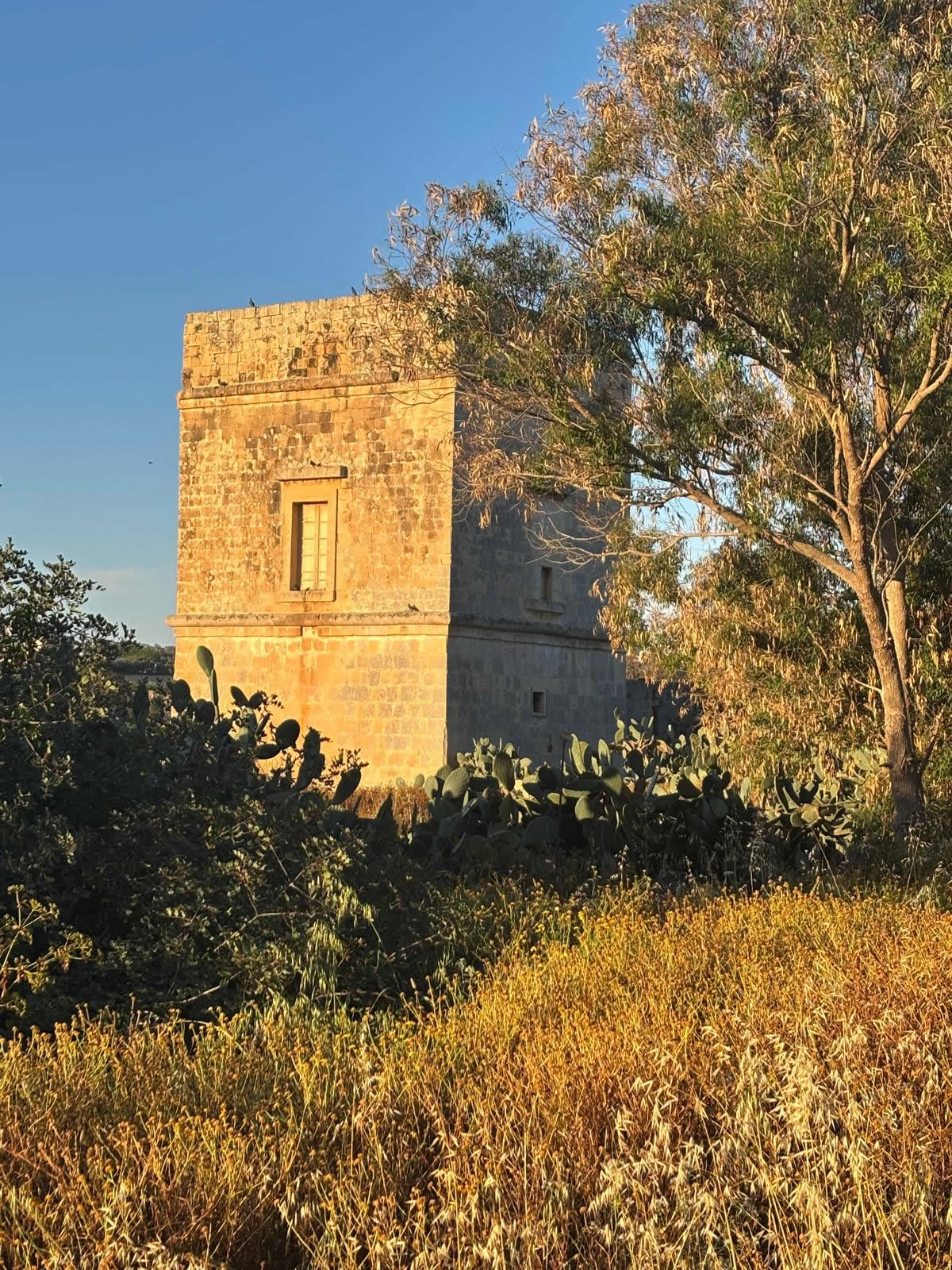
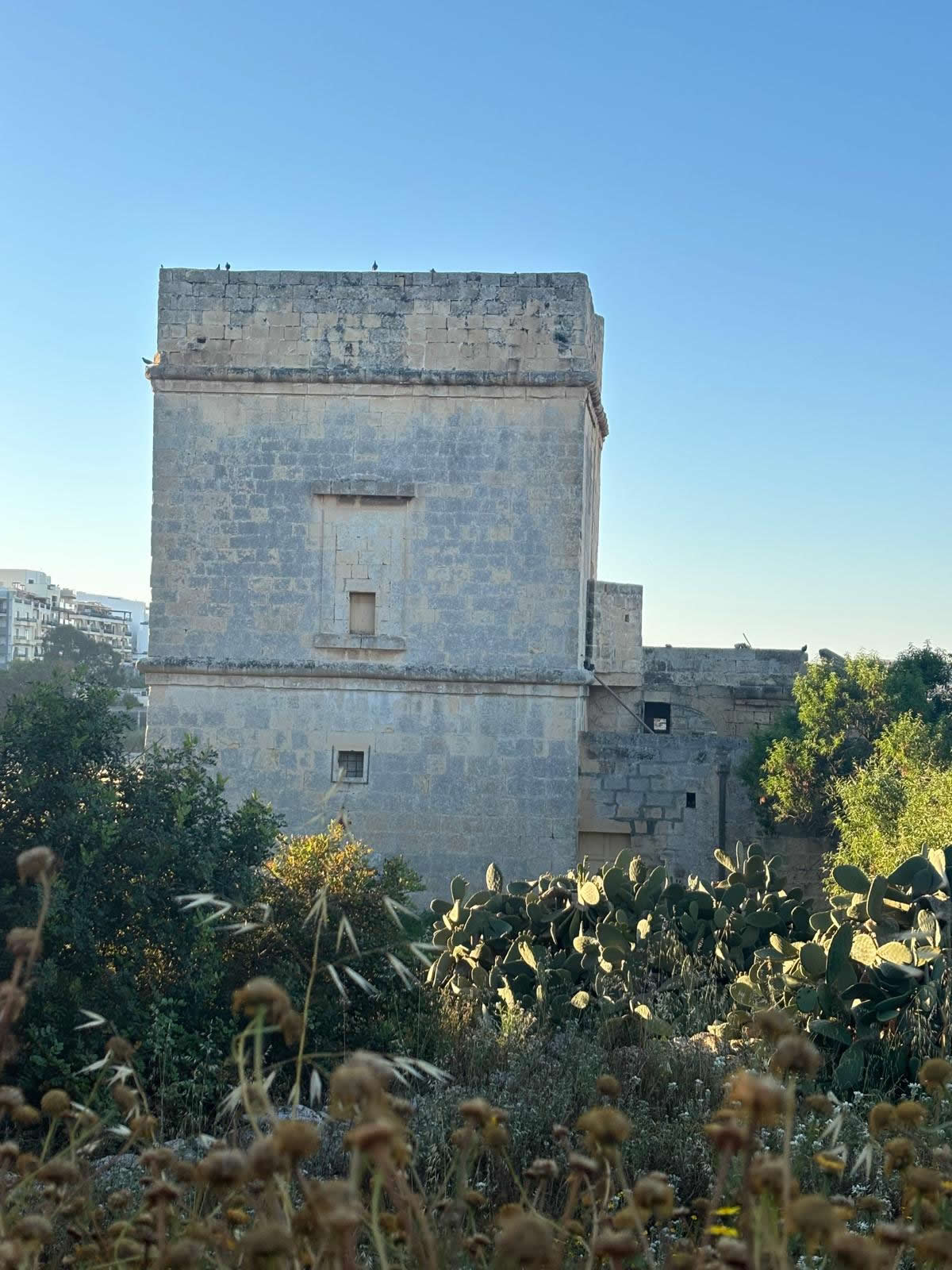
Torri tal-Buttar exhibits characteristics typical of Maltese vernacular fortification blended with functional agricultural design. The structure is built from local limestone and demonstrates defensive as well as utilitarian planning.
- Thick limestone defensive walls typical of Knights-era construction
- Elevated access system believed to have included a drawbridge mechanism
- Slit openings consistent with defensive surveillance and protection
- Integration of a watermill system (sienja tal-miexi) for agricultural processing
The presence of water-powered milling equipment is particularly significant, as it suggests the site functioned not only as a defensive tower but also as an economic production centre, likely supporting nearby farmland.

Watermill and Industrial Function
One of the most remarkable features of Torri tal-Buttar is the survival of a traditional watermill system integrated within the structure. This type of mechanism, known locally as a sienja tal-miexi, was used to harness water flow for grinding grain or supporting agricultural processing.
Such systems are rare in Malta today, and Torri tal-Buttar is considered one of the better-preserved examples of a combined defensive and industrial heritage site. The dual-purpose nature of the tower reflects the economic ingenuity of rural Maltese estates during the late medieval and early modern periods.
Military and Strategic Importance
While not part of the official network of Knights’ coastal towers, Torri tal-Buttar is strategically located inland but within proximity of St Thomas Bay, an area historically vulnerable to seaborne attacks.
Marsascala itself was subject to Ottoman raids, including a notable 1614 attack in nearby coastal zones. Following such incursions, local landowners increasingly invested in fortified rural residences to protect agricultural assets and rural populations.
The tower’s defensive design reflects this climate of insecurity, combining residential, agricultural, and protective functions in a single fortified complex.
Later Use and Historical Evolution
Over time, Torri tal-Buttar transitioned away from its defensive role as Malta’s political and military landscape changed. During the British period, the need for private rural fortifications diminished significantly as coastal defence systems were centralised under military control.
The structure likely continued to serve agricultural purposes, with the watermill system remaining relevant for local production for an extended period. Eventually, as industrial milling technologies modernised, the site’s functional importance declined.
Restoration and Heritage Status
In recent decades, Torri tal-Buttar has been recognised as an important part of Malta’s privately built heritage landscape. It has been catalogued within national heritage scheduling systems due to its architectural uniqueness and surviving watermill features.
Conservation awareness has increased around such structures, particularly those combining domestic, agricultural, and defensive elements. The tower remains a key example of Malta’s layered rural fortification history.
Related structures can be explored on the Privately Built Towers of Malta index.
Modern Significance
Today, Torri tal-Buttar contributes to Malta’s broader heritage narrative, illustrating how rural communities adapted to geopolitical threats through architectural innovation. It also highlights the blurred boundary between private estate architecture and military necessity in early modern Malta.
Its survival offers valuable insight into:
- Rural defensive strategies in Malta
- Private investment in fortification during the Knights period
- Integration of industrial water systems in heritage architecture
- Evolution of Marsascala’s rural landscape
Frequently Asked Questions (FAQ)
Where is Torri tal-Buttar located?
It is located in Marsascala, Malta at coordinates 35.859716, 14.560116.
When was Torri tal-Buttar built?
It is believed to date to the 16th–17th century during the Knights of St John period, though exact dating is uncertain.
Was Torri tal-Buttar a military tower?
It was likely a privately built fortified structure combining residential, defensive, and agricultural functions rather than an official Knights tower.
What is special about Torri tal-Buttar?
It contains a rare surviving watermill system integrated into a fortified tower, making it unique among Maltese rural heritage sites.
For more privately built towers, visit: Privately Built Defensive Towers in Malta