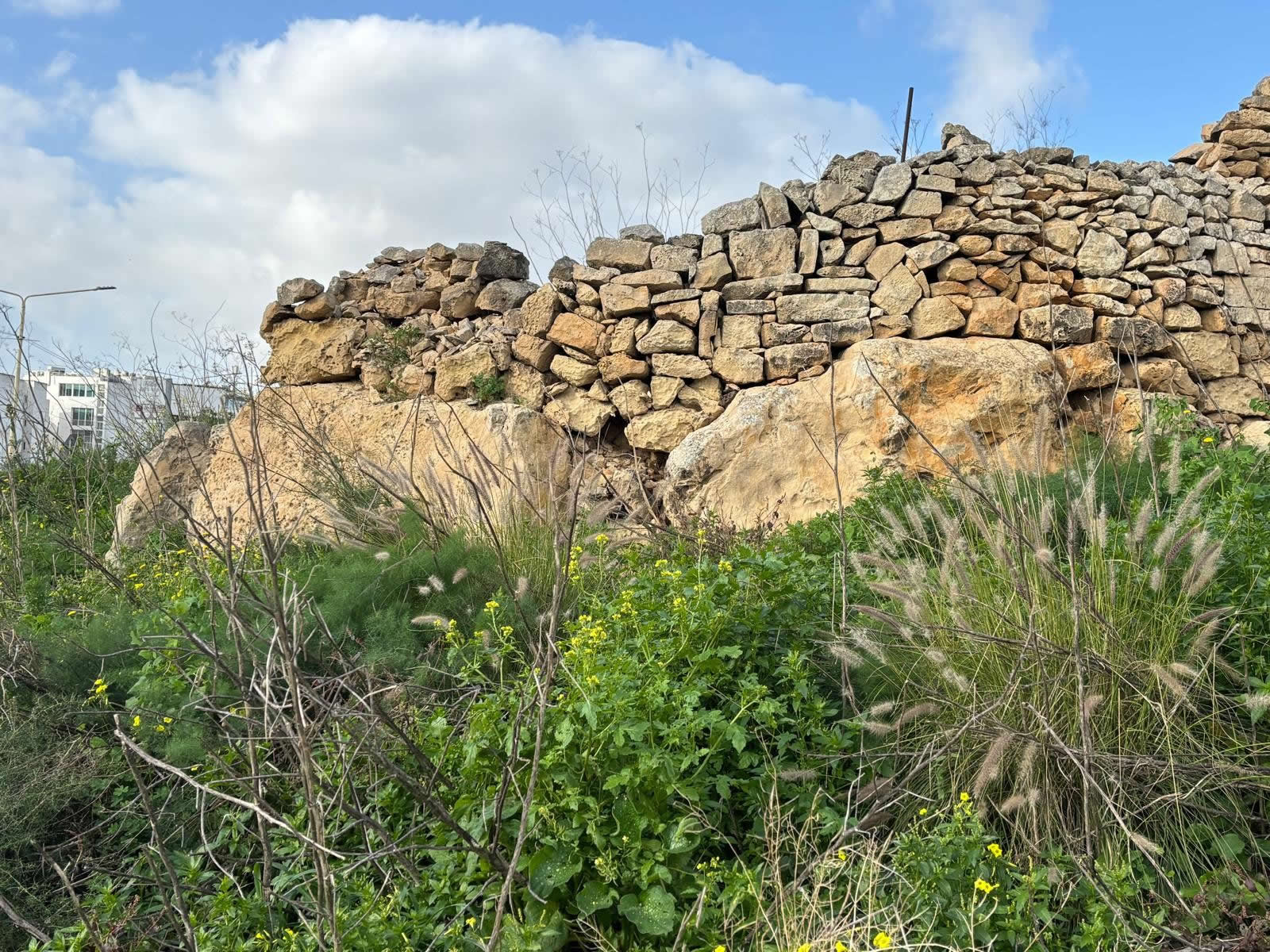
What is Ta’ Raddiena?
Ta’ Raddiena is a small cluster of large limestone blocks forming a short wall-like line beside the Iklin/Birkirkara bypass. It is frequently described as “temple remains”, but unlike Malta’s major temple complexes (Ħaġar Qim, Mnajdra, Tarxien, etc.), Ta’ Raddiena is fragmentary—closer to an isolated megalithic wall than a complete plan.
Location & setting
- Coordinates:
35.904635, 14.463011 - Area: Ta’ Raddiena, near Iklin (limits), along the Birkirkara bypass corridor
- Visibility: roadside; easy to miss because it blends into the limestone landscape
Full history (discovery, recording, and interpretations)
1) Background: Malta’s megalithic landscape
Malta’s best-known prehistoric monuments are the megalithic temples, built across several phases in the Neolithic (roughly 3600–2500 BCE). Beyond the UNESCO-listed temples, the islands also preserve fragmentary and less-studied megalithic remains—often found during modern construction or roadworks.
2) Why Ta’ Raddiena matters
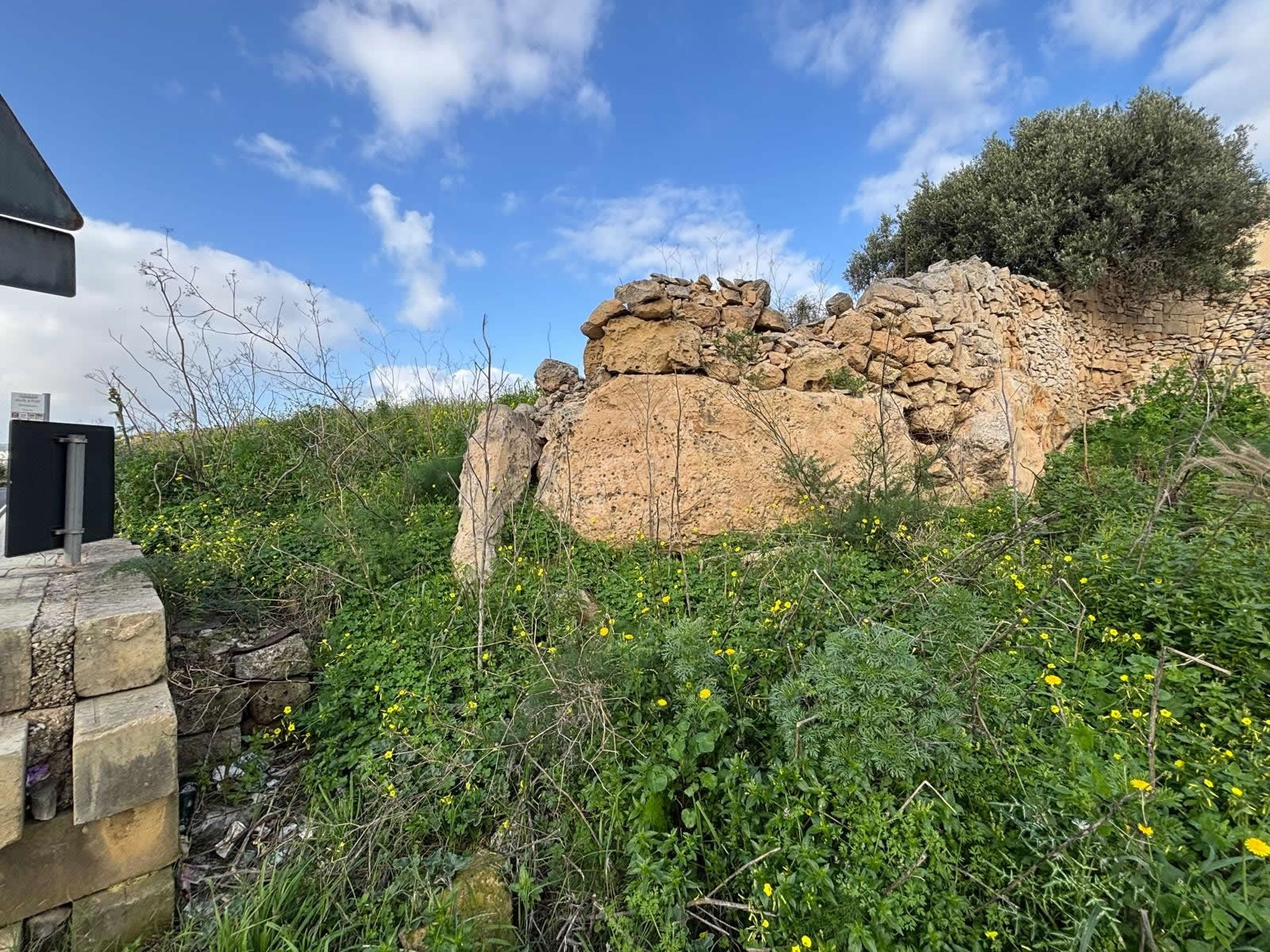
In Iklin, prehistoric remains occur unusually close together. A University of Malta field-note article about the nearby L-Iklin megalithic site remarks that “the exterior wall of a megalithic temple is still standing at Ta’ Raddiena”, and suggests this clustering could indicate wider prehistoric activity in the area.
3) 1986: roadworks and archaeological study
Secondary summaries note that Ta’ Raddiena was examined during works on the Birkirkara bypass in 1986, with large megaliths left visible after the road project. Pottery sherds reported from excavation have been used to suggest a Bronze Age date for activity associated with the remains—one reason scholars and local historians are careful about calling it a “Neolithic temple” with certainty.
4) Temple fragments, reused blocks, or something else?
With only a short wall segment and a few major blocks remaining, Ta’ Raddiena sits in the “hard-to-classify” category. Possibilities raised in heritage discussions include:
- Temple-period fragment: a surviving section of an outer wall from a megalithic structure.
- Later prehistoric reuse: megaliths reused or re-set in later phases (including the Bronze Age).
- Disturbed site: a once-larger complex reduced by farming, quarrying, and modern development.
The most accurate description for visitors is therefore: “megalithic remains / megalithic wall, possibly temple-related.”
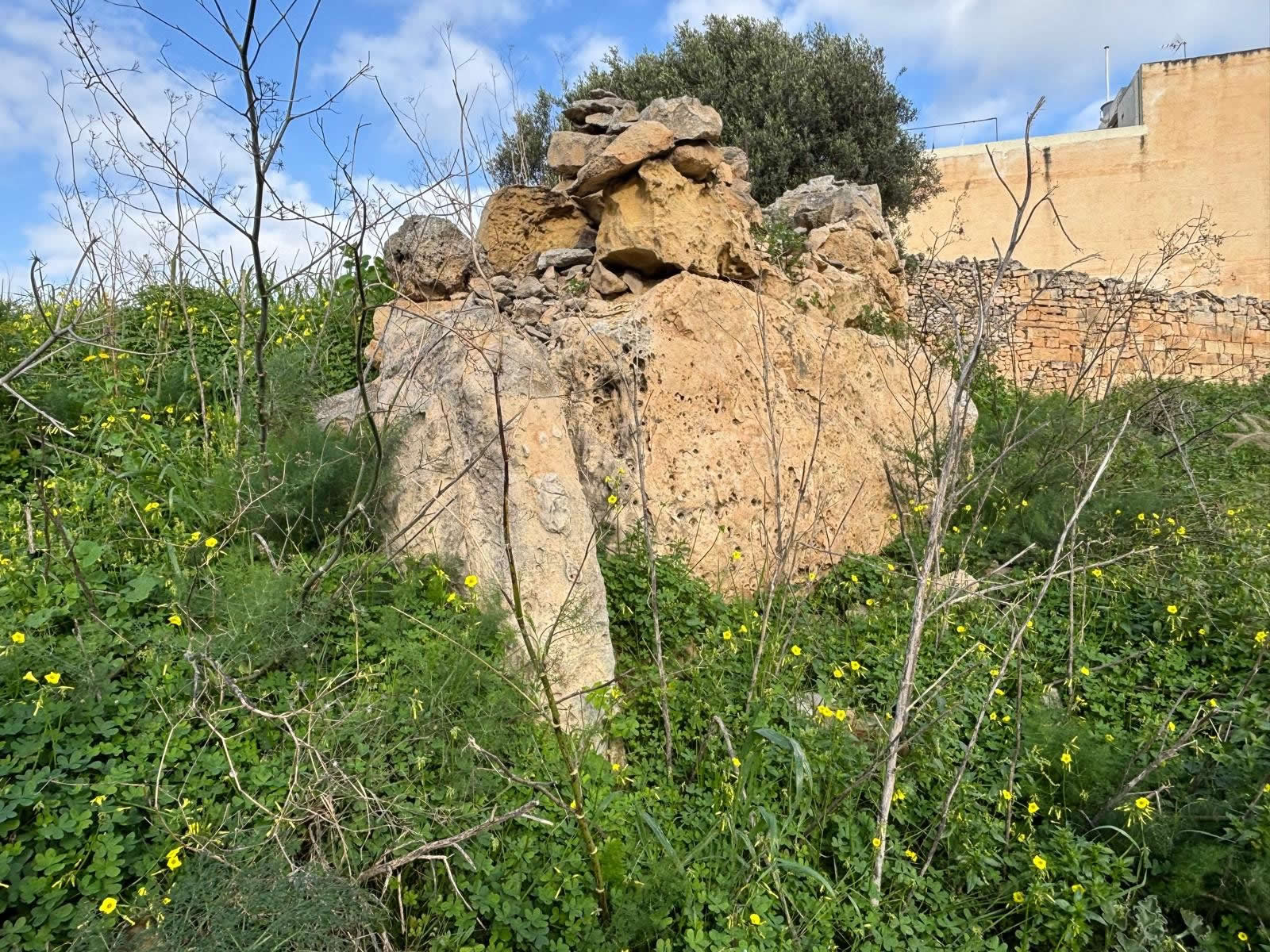
What you can see today
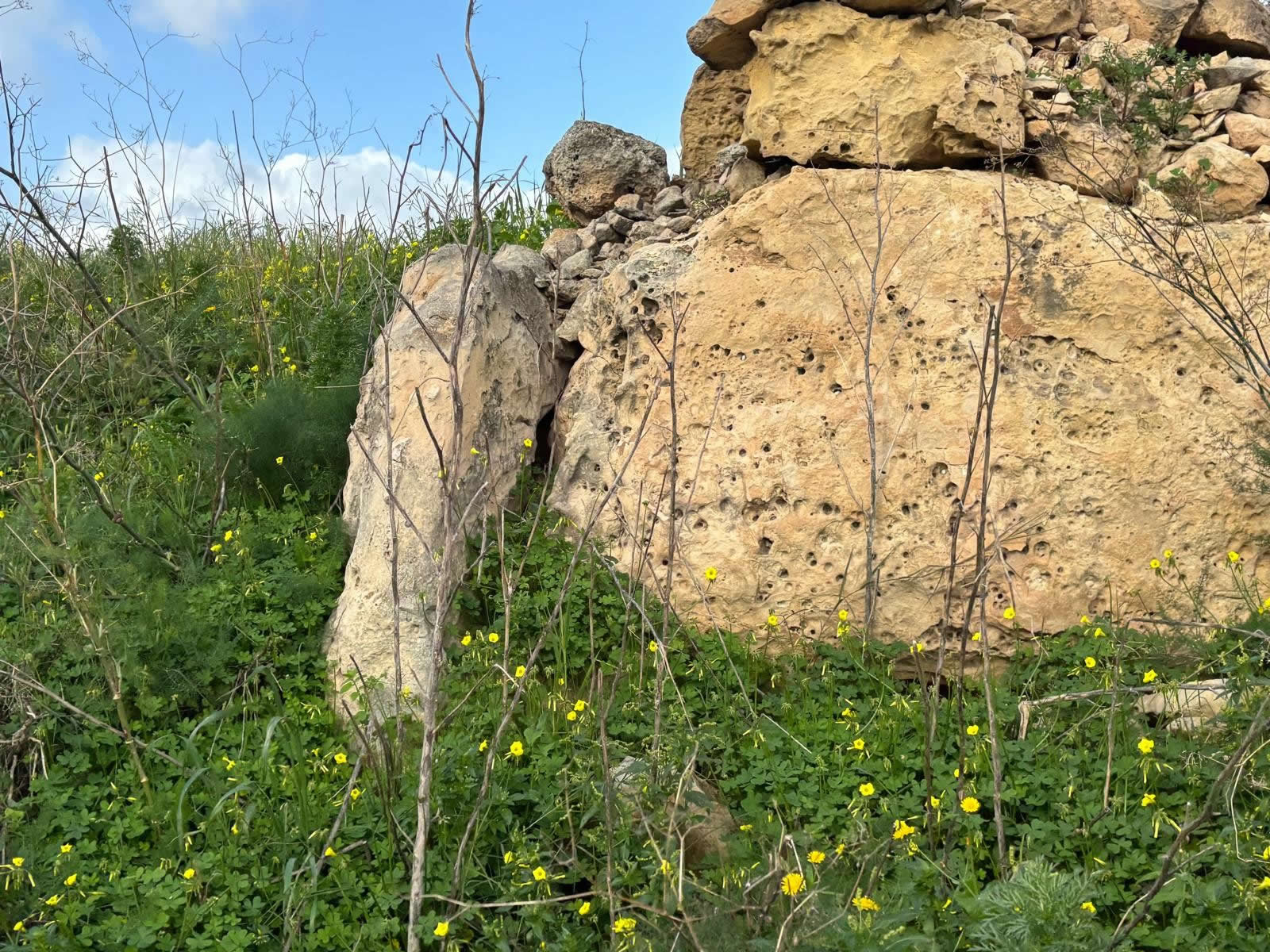
Visitors can still observe large upright and recumbent limestone blocks forming a short alignment beside the road. The stones are best appreciated as part of Malta’s broader prehistoric “stone landscape”, where small remnants can survive in surprising places.
How to visit responsibly
- Safety first: this is a roadside stop, not an open-air museum—view only from safe pavements/verges.
- No climbing: avoid stepping onto stones; it accelerates erosion and risks damage.
- Leave no trace: do not move stones, place objects, or scrape limestone for “souvenirs”.
- Photography: early morning/late afternoon light reveals texture in the limestone blocks.
Nearby heritage
- Megalithic Temple sites (hub)
- Iklin village guide
- St Michael’s Chapel (Iklin)
- Cart ruts in Malta (hub)
FAQ
Is it really a “temple”?
The label is commonly used, but the surviving remains are fragmentary and interpretations vary. “Megalithic remains” is the safest wording.
Is there an entrance fee?
No—this is a roadside heritage remnant, not a ticketed site.