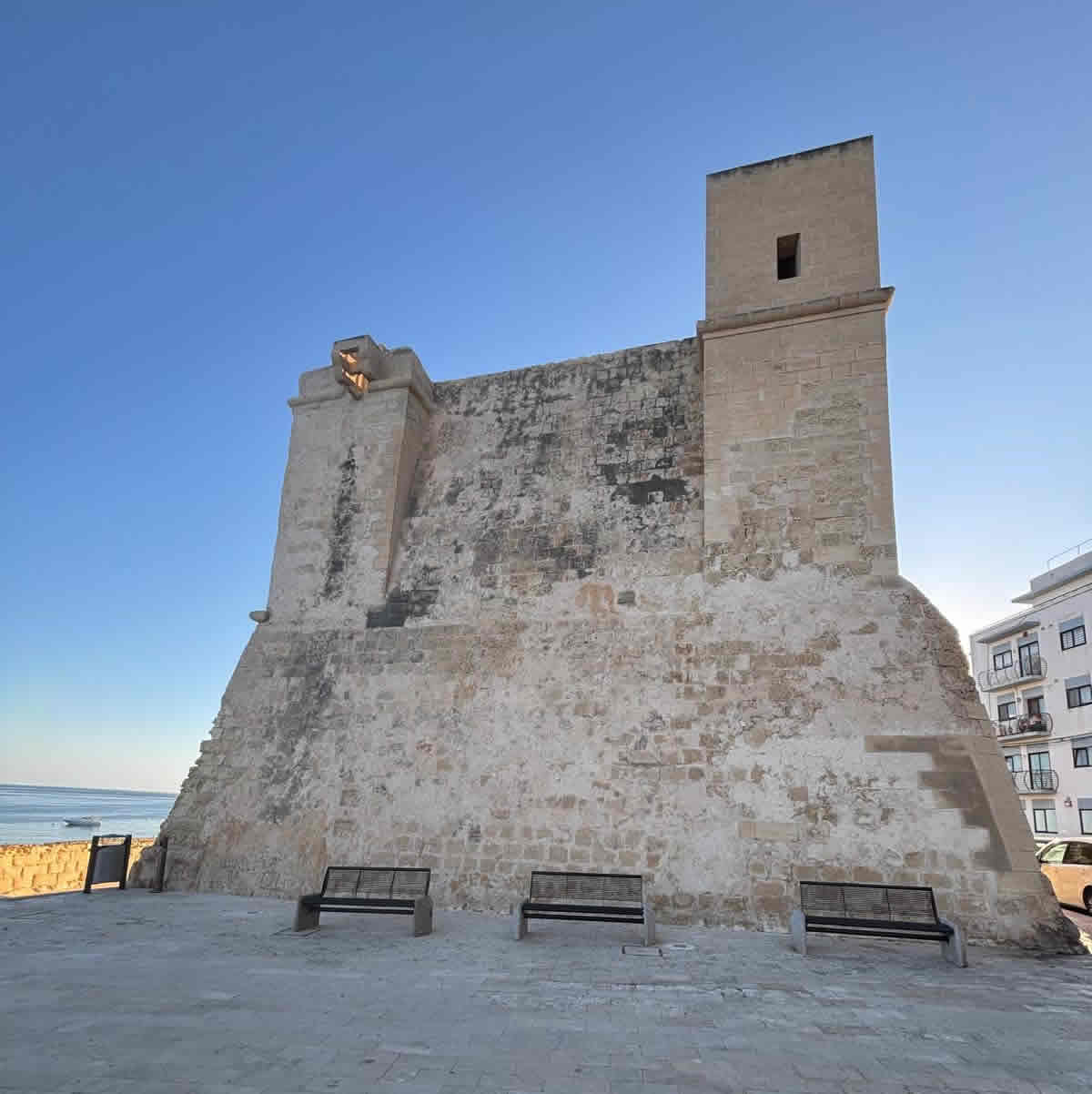
Built in 1610, under Grand Master Alof de Wignacourt, as the first coastal watchtower in Malta.
Financed personally by Wignacourt, who gave his name to it.
It became the prototype for later coastal towers across Malta, Gozo, and Comino.
🎯 Strategic Role
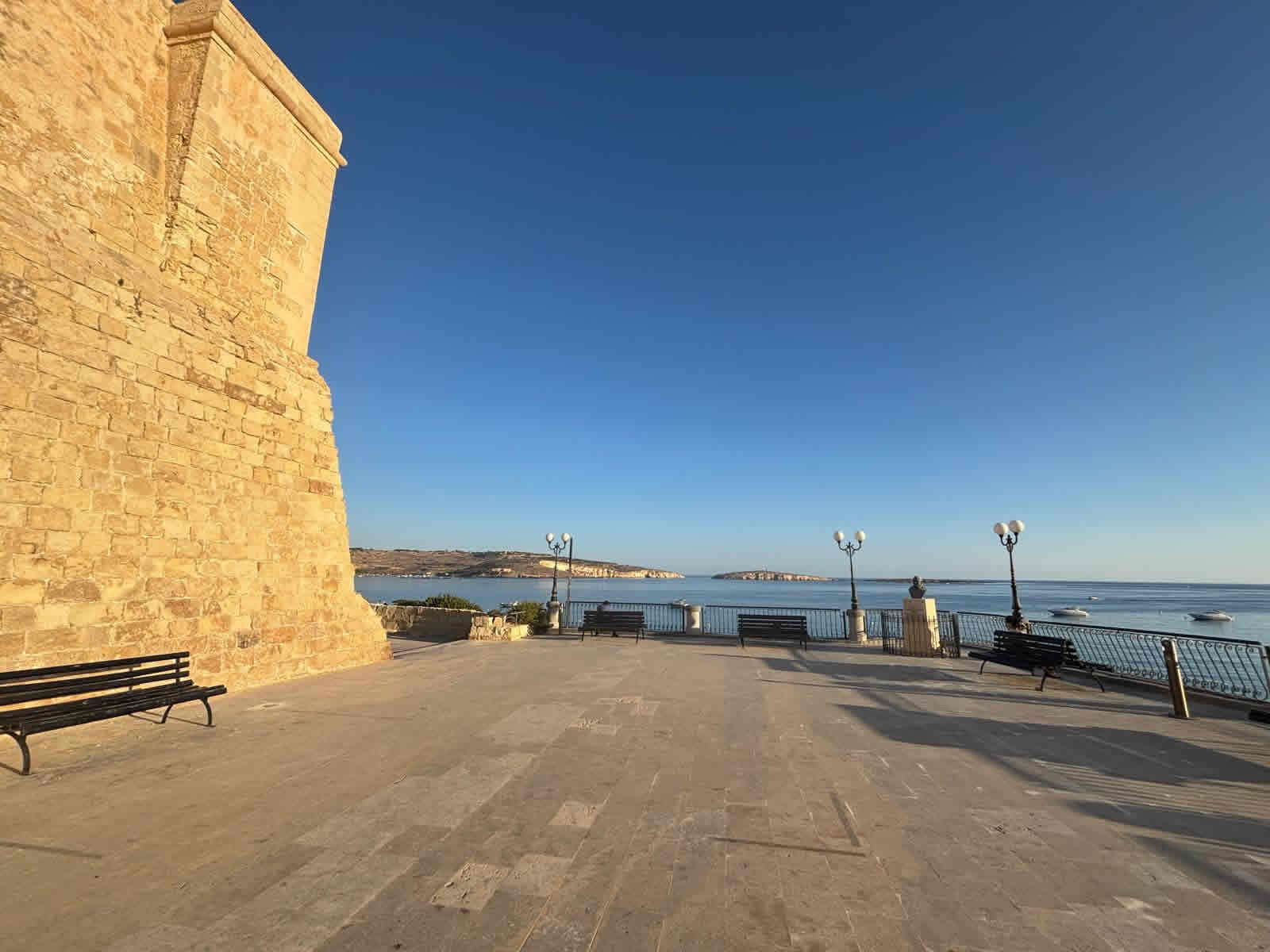
St Paul’s Bay was an important landing site — historically linked to St Paul’s shipwreck tradition.
The tower’s purpose:
Guard the bay and anchorage from Ottoman and Barbary corsair raids.
Act as an early warning station, relaying signals inland.
Provide shelter for soldiers and store weapons.
This concept proved so effective that more towers (Wignacourt, Lascaris, De Redin) were built in later decades.
🏗️ Architecture & Design
Stronger and bulkier than the later De Redin towers.
Features:
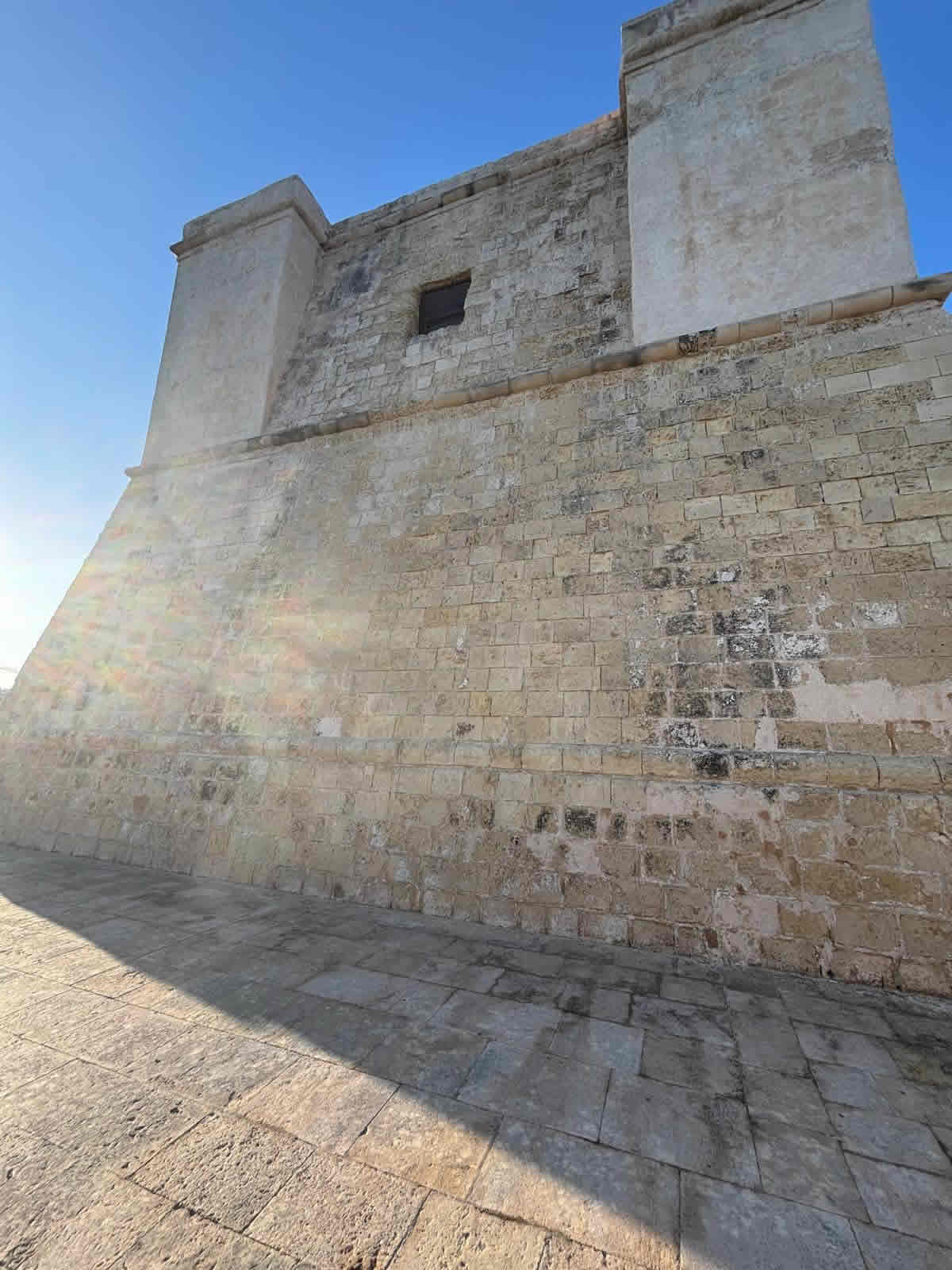
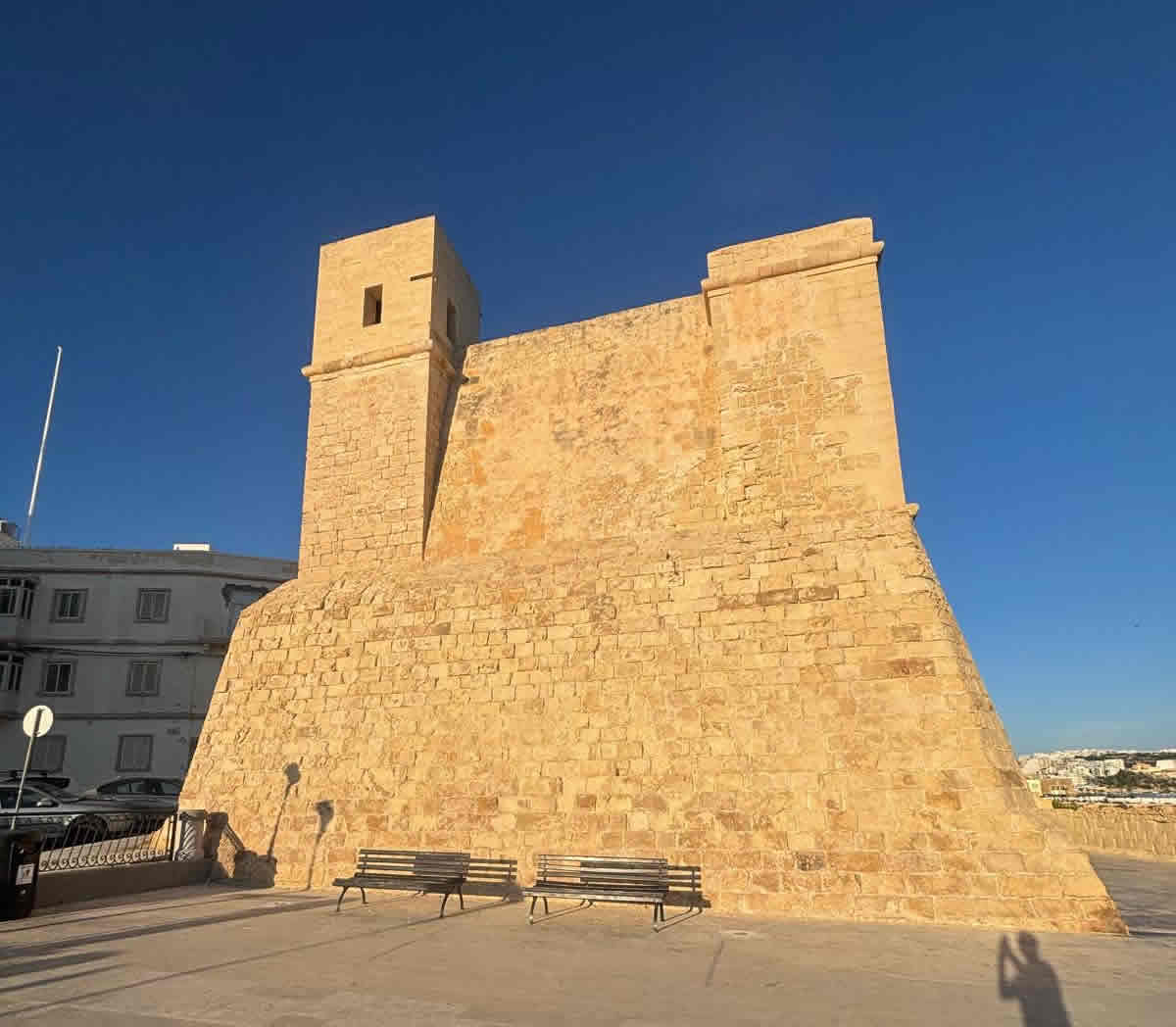
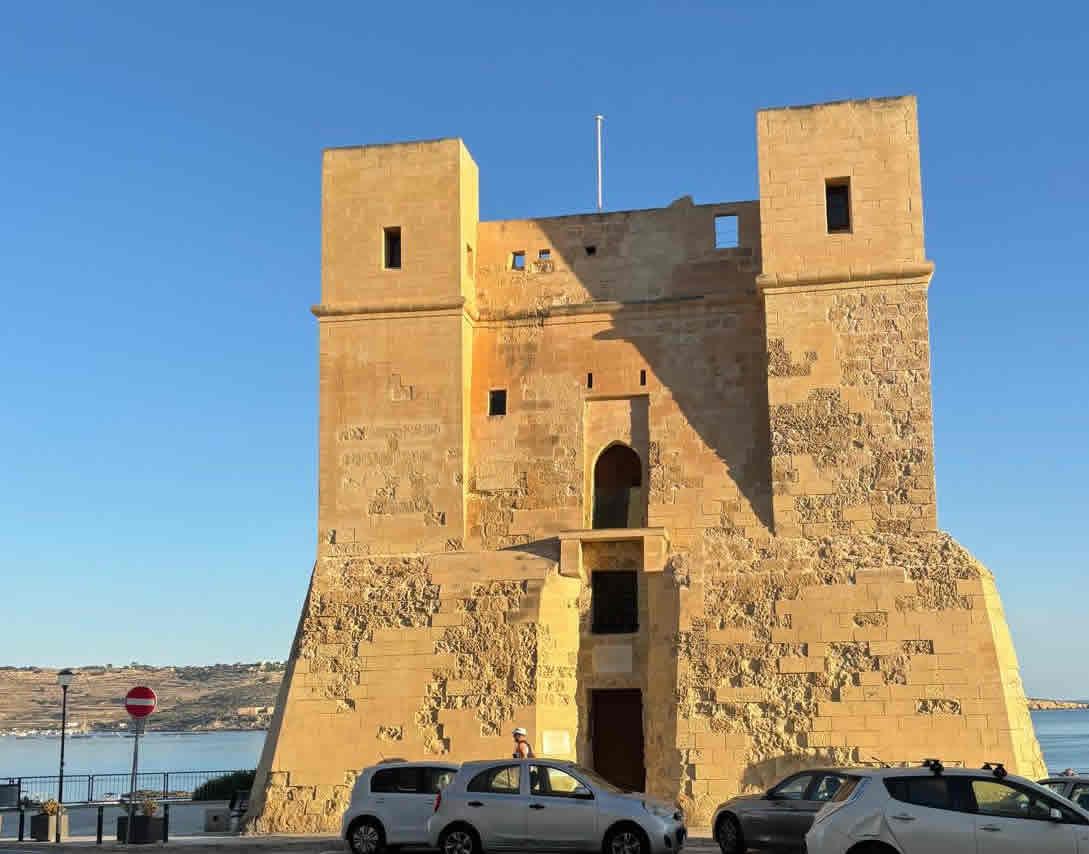
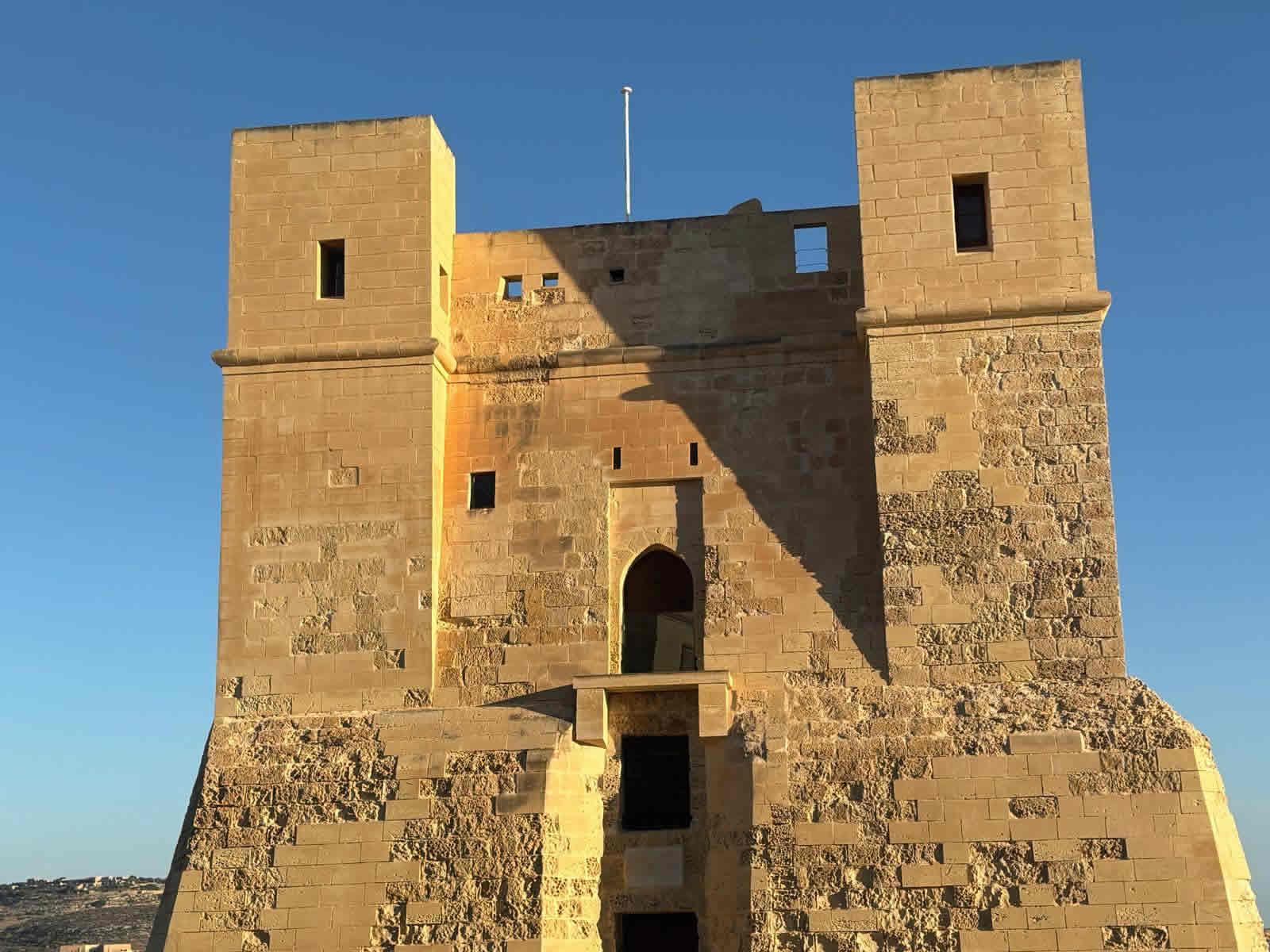
Square plan with thick limestone walls.
Two floors and a roof platform with parapet.
Vaulted interior rooms for garrison use.
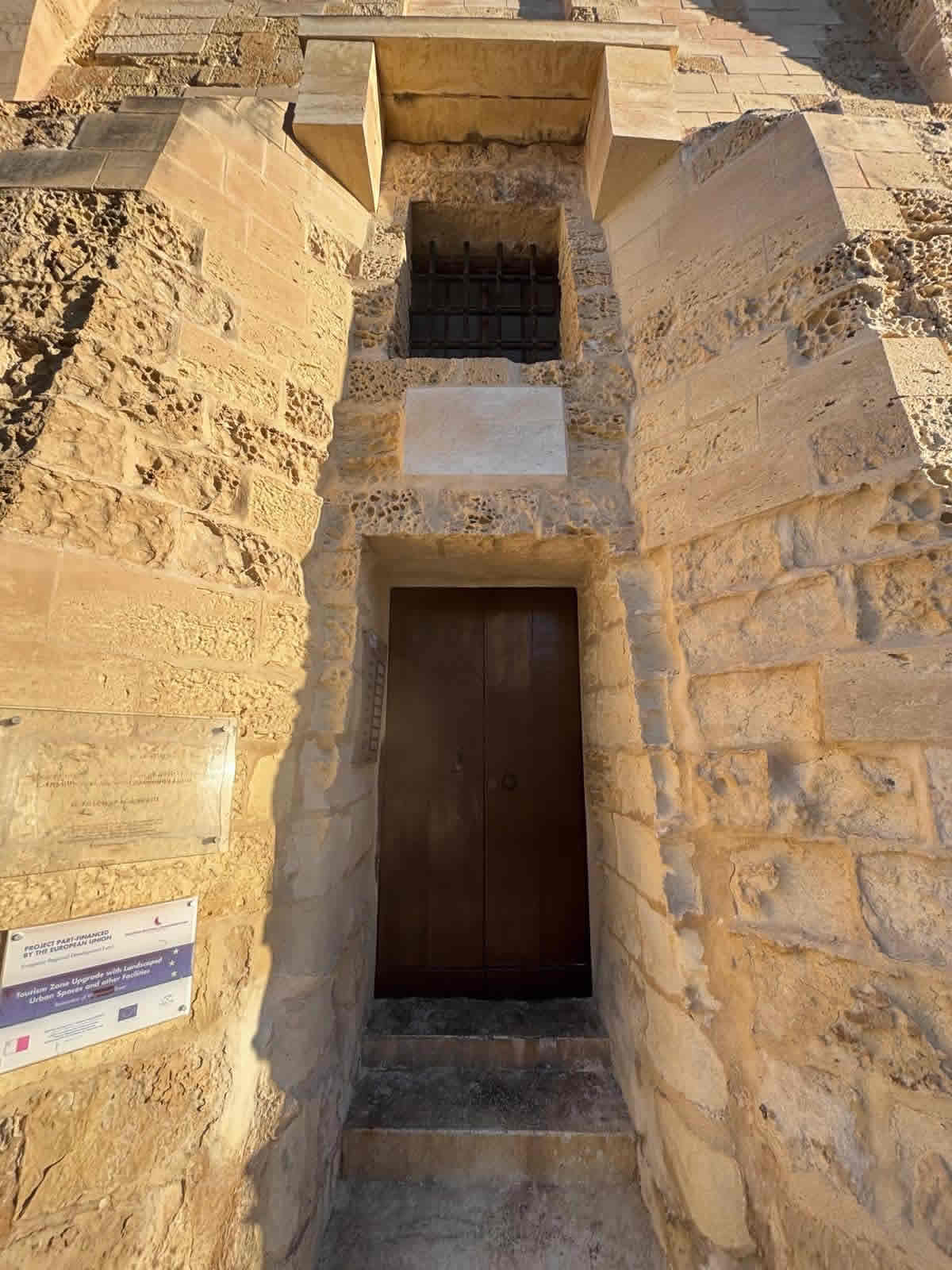
Raised entrance, accessed originally by ladder or drawbridge.
Equipped with cannon on the roof and small arms for the garrison.
Garrison typically consisted of a bombardier and 4–6 soldiers.
⚔️ Historical Use
17th–18th centuries: Maintained by the Order of St John as part of Malta’s growing coastal defense network.
It signalled to other posts by fires at night and smoke by day.
1798–1800 (French occupation): The tower was held by the French but saw little action during the Maltese uprising.
19th century (British period): Continued as a lookout but eventually lost military relevance as new fortifications were built.
⚠️ Decline & Restoration
By the 20th century, the tower had fallen into disrepair.
In 1925, it was listed on Malta’s Antiquities List, giving it legal protection.
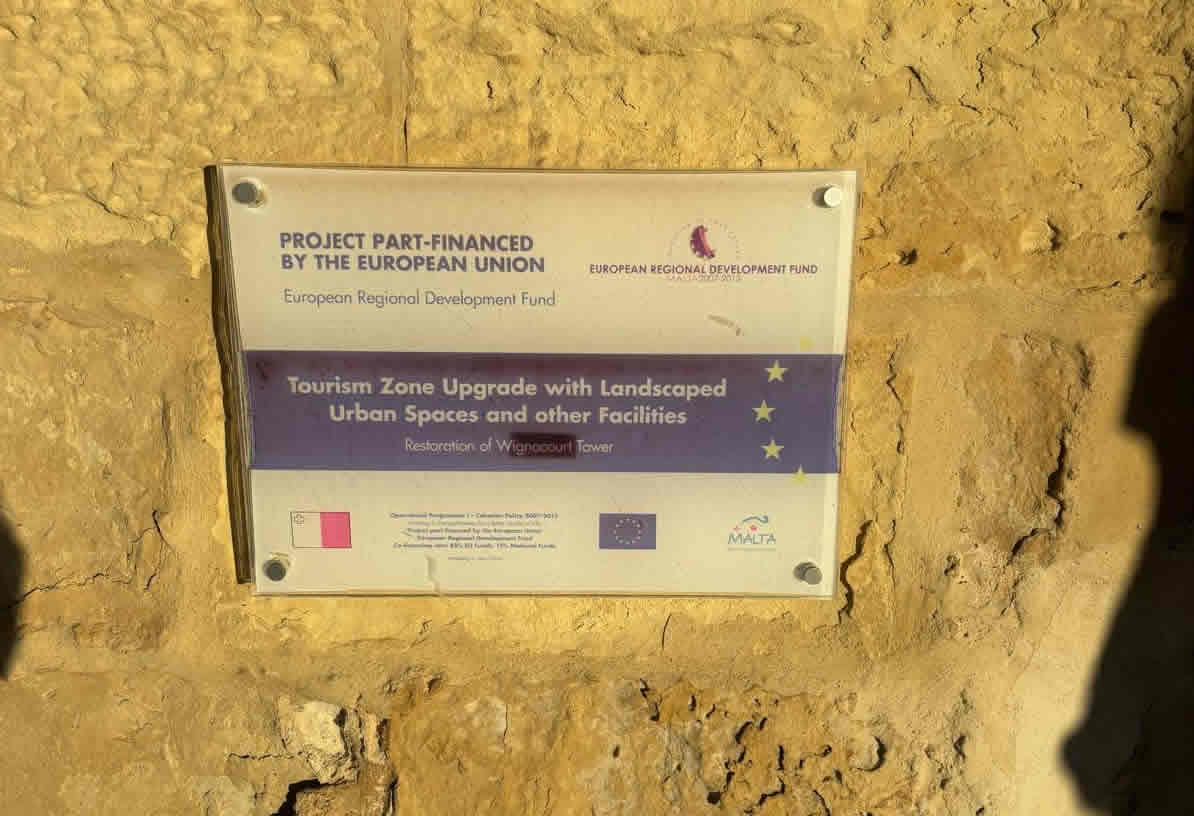
Restoration works began in the late 20th century, stabilizing the structure.
Today, it is restored and preserved as a small museum of coastal defense.
🌍 Present Day
Managed as a heritage site by the Local Council and Din l-Art Ħelwa.
Houses exhibits on coastal defense and the history of Wignacourt’s tower system.
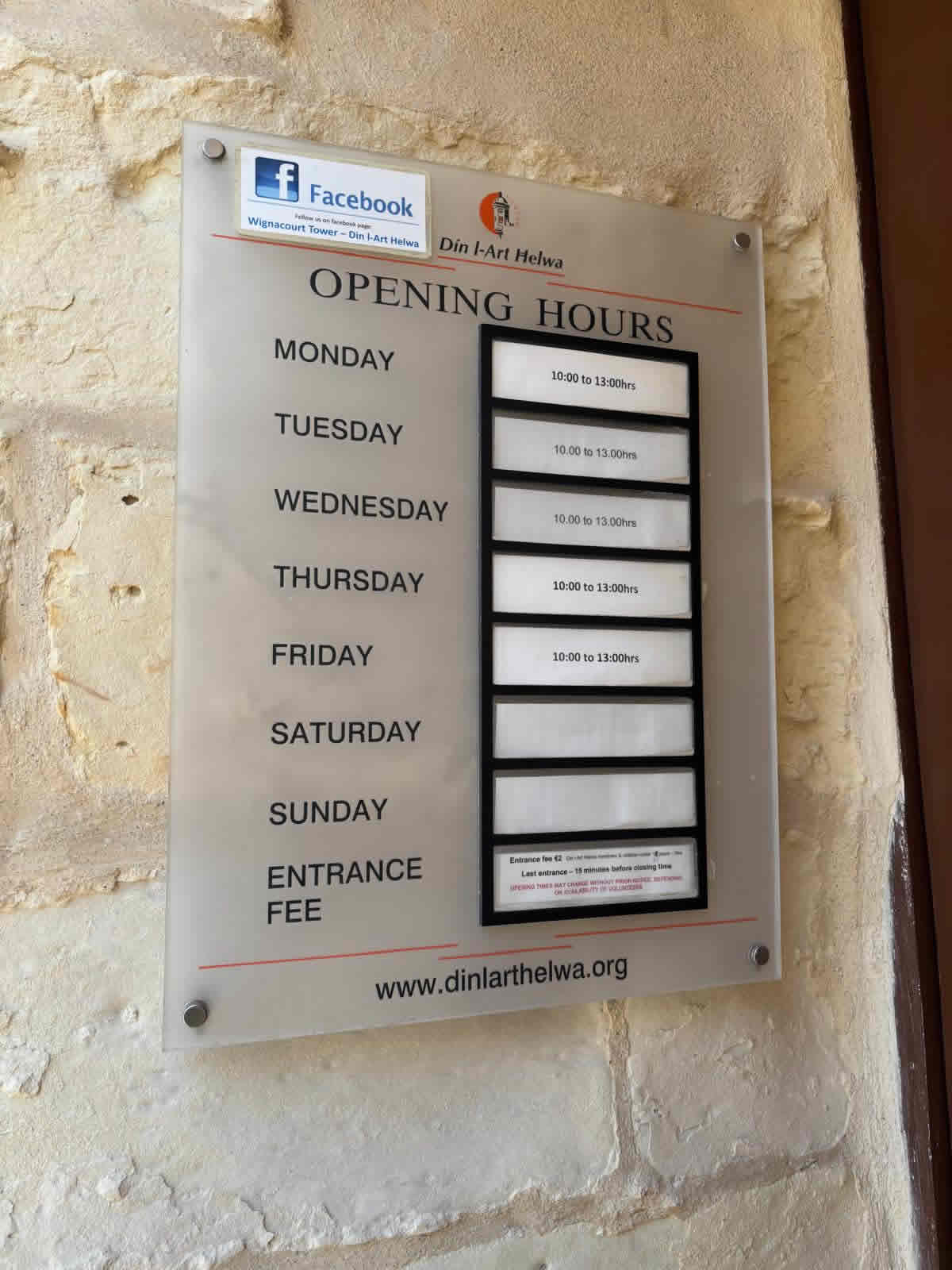
Open to the public on certain days.
Remains a landmark of St Paul’s Bay and an enduring symbol of Malta’s early coastal defense system.
🗂️ Quick Facts
Feature
Detail
Name
Wignacourt Tower (Torri Wignacourt)
Built
1610
Builder
Knights of St John, Grand Master Alof de Wignacourt
Location
St Paul’s Bay, Malta
Type
Coastal watchtower (Wignacourt type)
Height
~12 m
Purpose
Guard St Paul’s Bay, early warning
Later uses
Military outpost, museum
Status
Restored, open as a heritage site
Significance
First coastal watchtower in Malta
✅ Summary:
The Wignacourt Tower of St Paul’s Bay, built in 1610, was the first coastal watchtower of the Knights of St John in Malta. Funded by Grand Master Wignacourt himself, it guarded St Paul’s Bay and pioneered a defensive strategy that shaped Malta’s coastal fortifications for centuries. Today, restored and preserved, it serves as a museum and historic landmark.
Research & Documentation
Researcher: Paul Berman
Last Updated: 2026
This page forms part of eMalta's ongoing documentation of the historical,
cultural and religious heritage of Malta and Gozo.
Information has been compiled through site visits, field research,
historical publications, archival records, maps, plans and other
reference sources.
All locations that currently exist featured on eMalta have been personally visited and documented. Where historic sites no longer exist, information has been
researched from archival sources and contemporary records.
Images used on eMalta include original photography as well as historical
illustrations, maps and photographs reproduced with permission from
archives, institutions and copyright holders where applicable. Individual
image credits and archive reference numbers are provided where available.
St. Paul's Bay Wignacourt Tower
Constructed in 1610 under Grand Master Alof de Wignacourt, this bastioned watchtower is the oldest surviving coastal defence post on the Maltese Islands. Built to safeguard the northern coastline from sudden corsair incursions, it stood as the sole major fortification in the north until St. Agatha's Tower was built nearly 40 years later.
Today, this historic landmark is preserved and operated as a museum of fortifications by
Din l-Art Ħelwa (The National Trust of Malta),
who completely saved the structure from decades of abandonment.
Frequently Asked Questions
Q: Can you go inside the Wignacourt Tower in St. Paul's Bay?
A: Yes. The tower has been fully restored and operates as a museum showcasing historical fortifications, weapons, and models of Malta's coastal defense network. It is open to visitors on select days, managed by volunteers from Din l-Art Ħelwa.
Q: Why is it called the Wignacourt Tower?
A: The tower is named after Grand Master Alof de Wignacourt, who ruled the Order of St. John between 1601 and 1622. He personally funded the construction of Malta's first network of major coastal fortresses to defend bays where enemy troops could easily land.
Q: When was the St. Paul's Bay Wignacourt Tower built?
A: Construction began in 1610, and its first stone was officially blessed on November 7th of that year. It holds the title of being the very first coastal tower built by the Knights of St. John along the Maltese shoreline.
Q: How much does it cost to visit the tower museum?
A: Entry to the Wignacourt Tower museum is generally free, though small donations are highly encouraged to help the NGO Din l-Art Ħelwa cover ongoing maintenance and structural preservation costs.