📍 Location
Location Map Coordinates 35.920054, 14.442481
Introduction
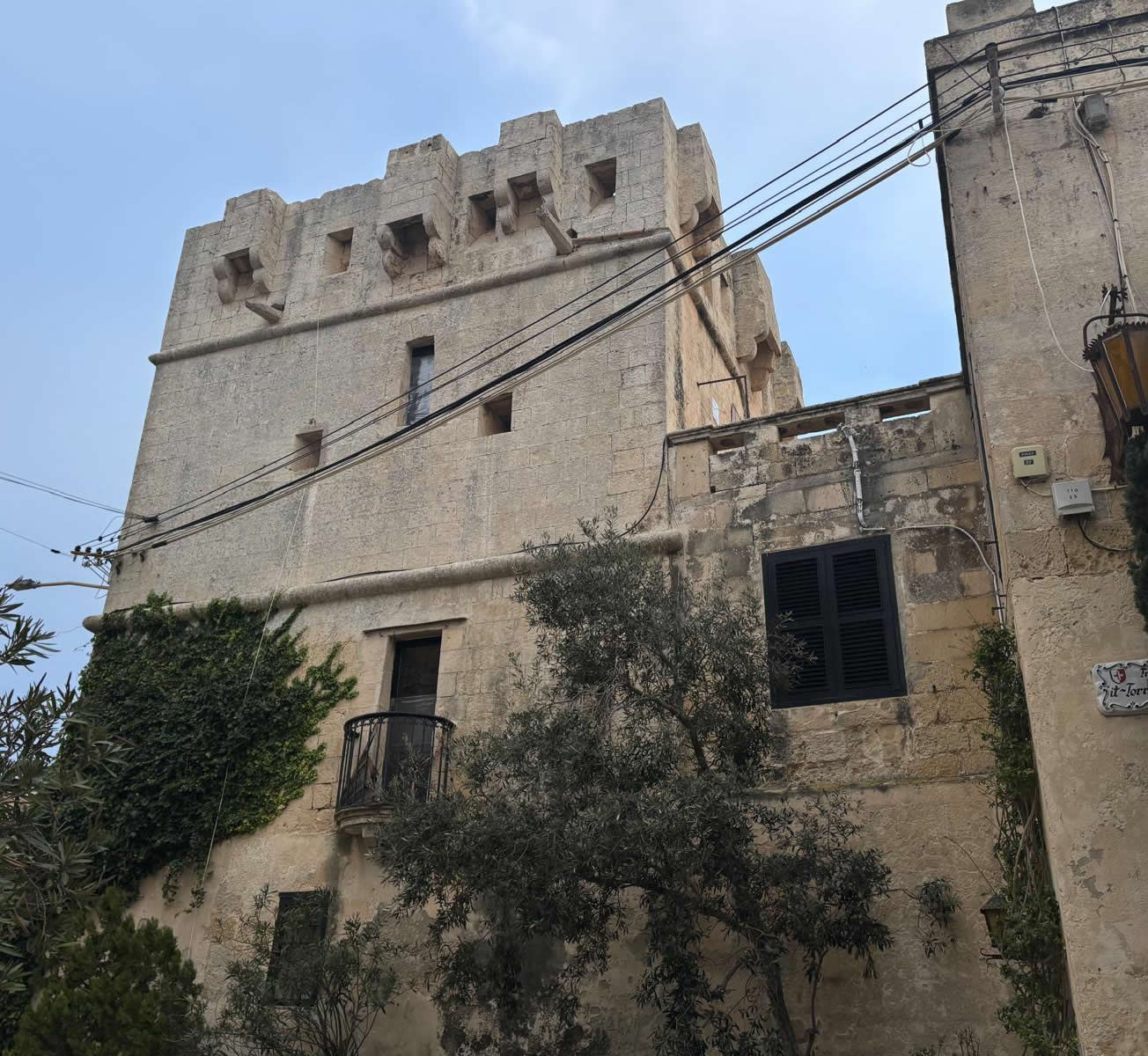
Gauci Tower, also known as Torri Gauci, is one of the earliest surviving fortified residential towers in Malta. Located in Naxxar, this remarkable structure dates to before 1548, placing it among the oldest examples of inland defensive architecture on the island.
Built by the Gauci family, the tower reflects a period when Malta faced constant threats from corsair raids. Its construction represents a private initiative to protect family estates, predating many of the more organised defensive systems later developed by the Order of Saint John.
Historical Background
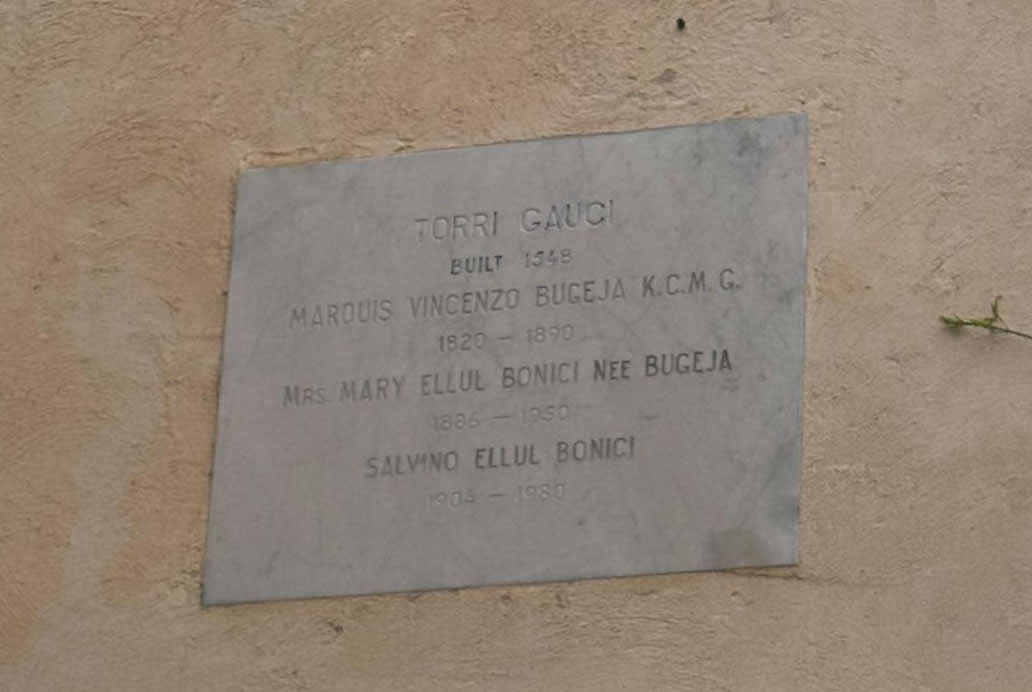
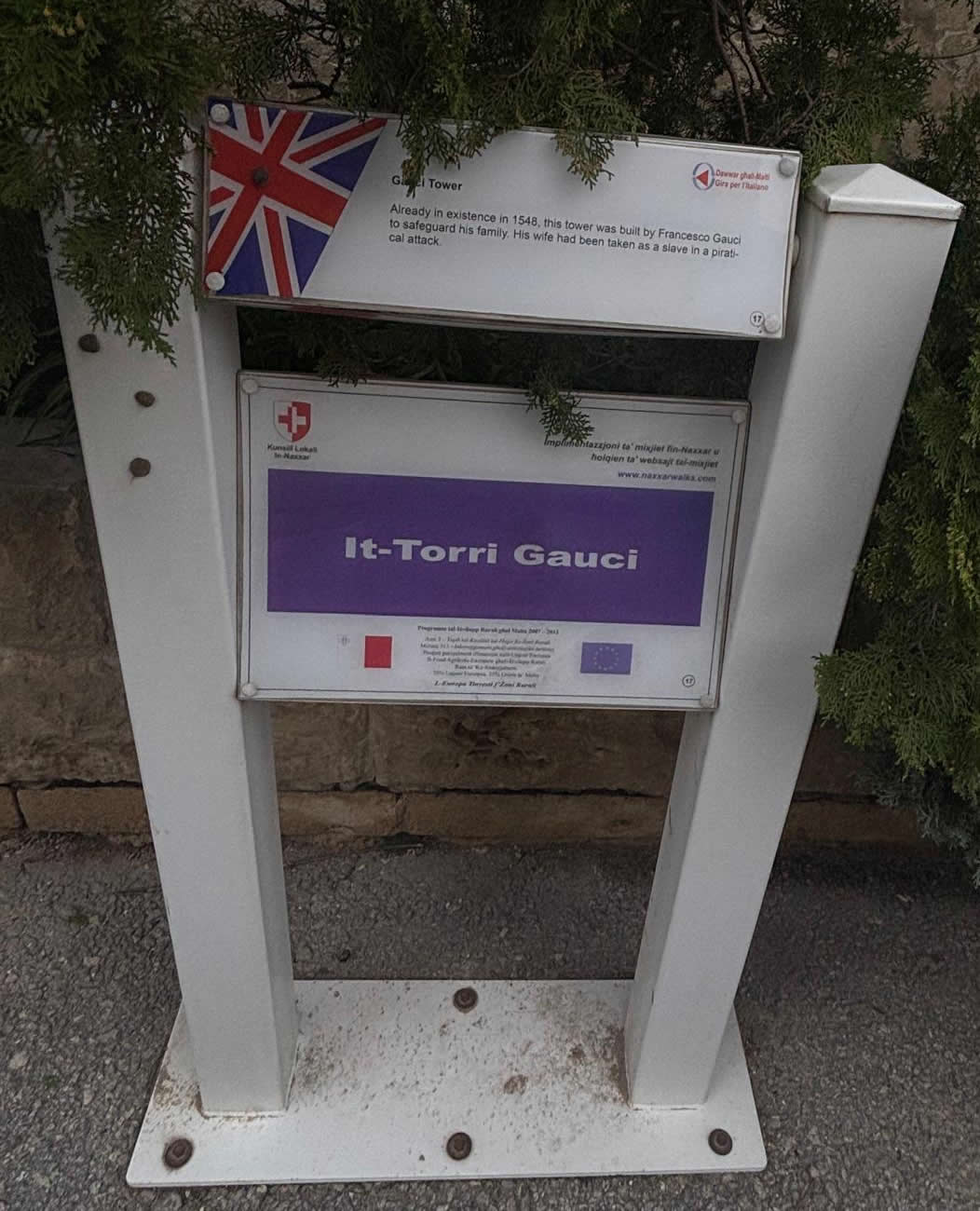
Gauci Tower was constructed by Francesco Gauci sometime before 1548, at a cost of approximately 400 scudi.
This period was characterised by instability and frequent attacks along the Maltese coast. Wealthy families often took responsibility for their own protection by constructing fortified residences such as Gauci Tower.
In 1548, the Order of Saint John attempted to requisition the tower to house the Captain of the Naxxar militia. However, Francesco Gauci successfully petitioned against this decision, and the tower was returned to his family on 16 May 1548.
Following this dispute, the Knights constructed a separate structure nearby, known as the Captain’s Tower, to serve their military needs.
Role in Malta’s Early Defence System
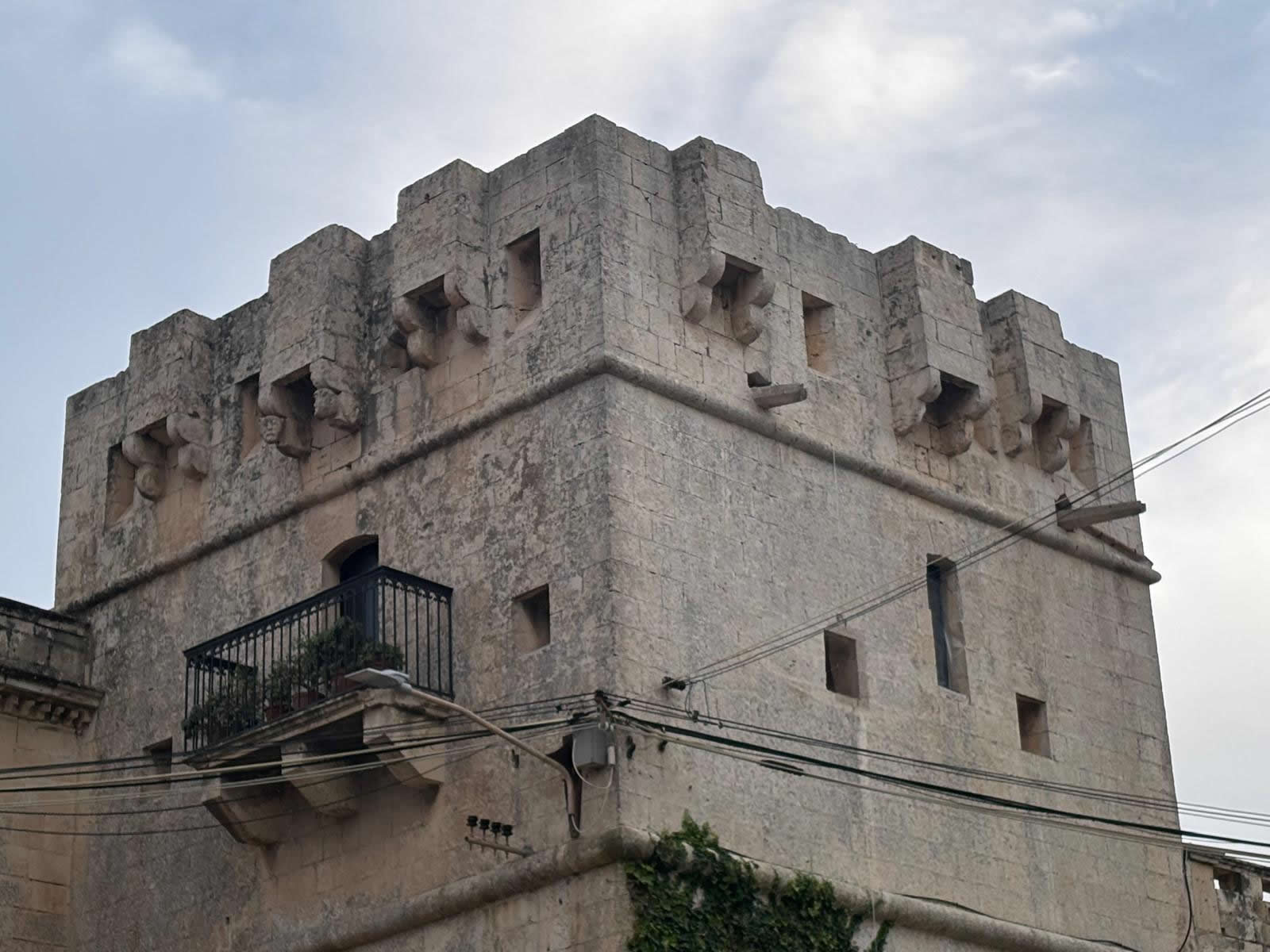
Although privately owned, Gauci Tower played a significant role in Malta’s early defensive landscape. Positioned inland, it functioned as a lookout point and refuge, contributing to a wider network of surveillance across central Malta.
Historical sources indicate that both Gauci Tower and nearby fortifications were active during the Great Siege of 1565, highlighting their strategic importance.
This inland defensive system complemented coastal fortifications, ensuring that threats could be detected and communicated across the island.
Architecture and Construction
Design and Layout
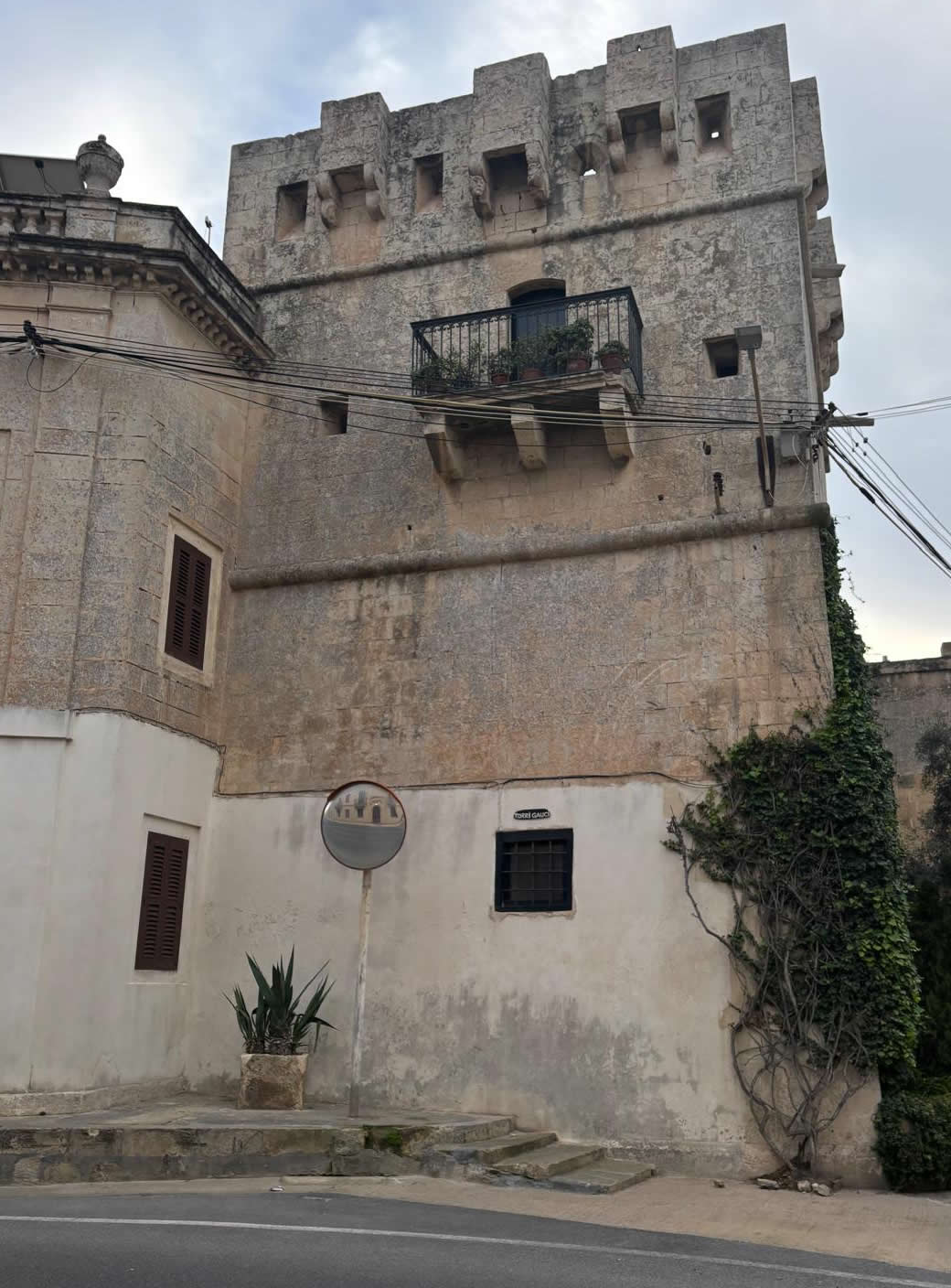
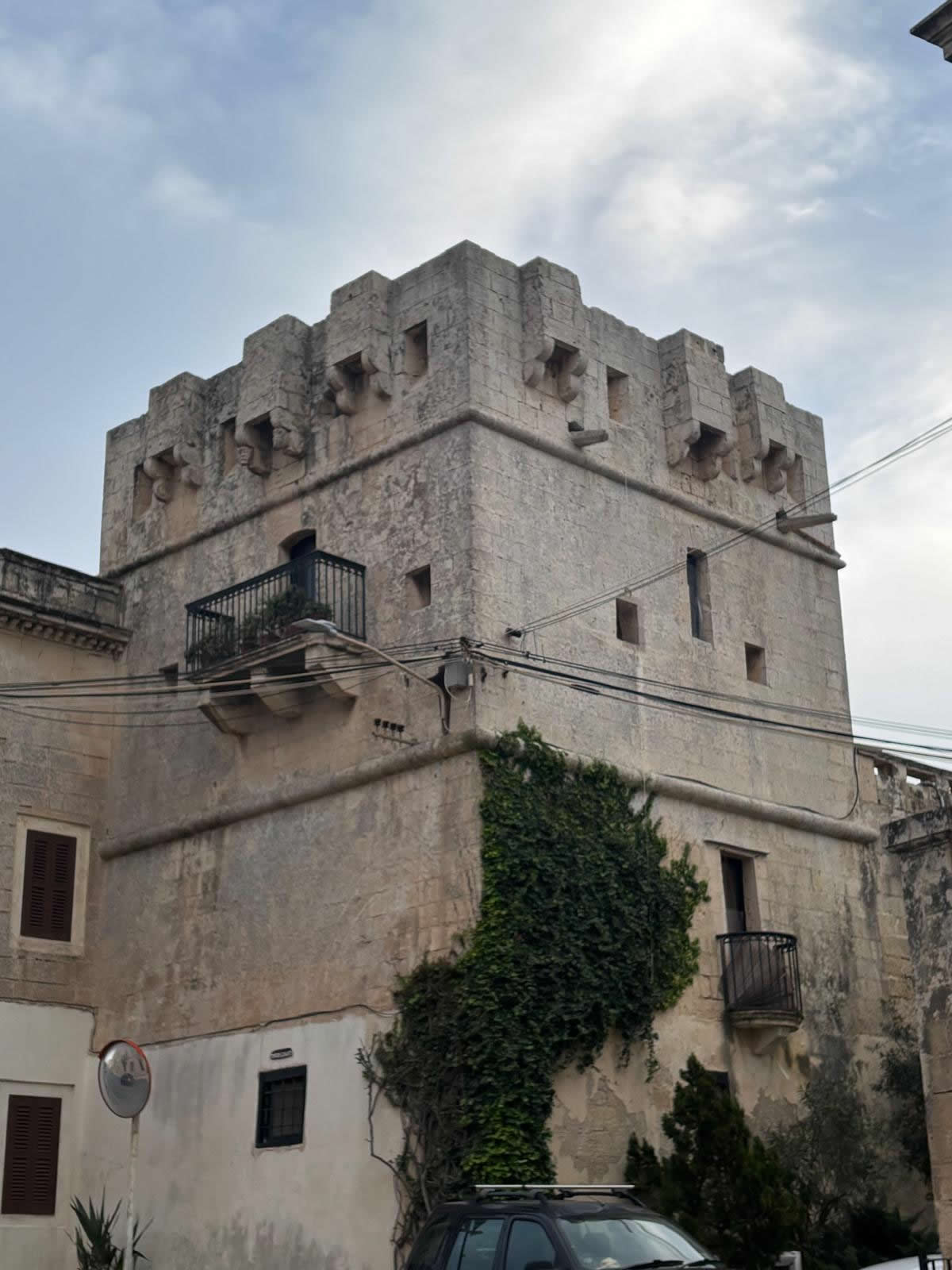
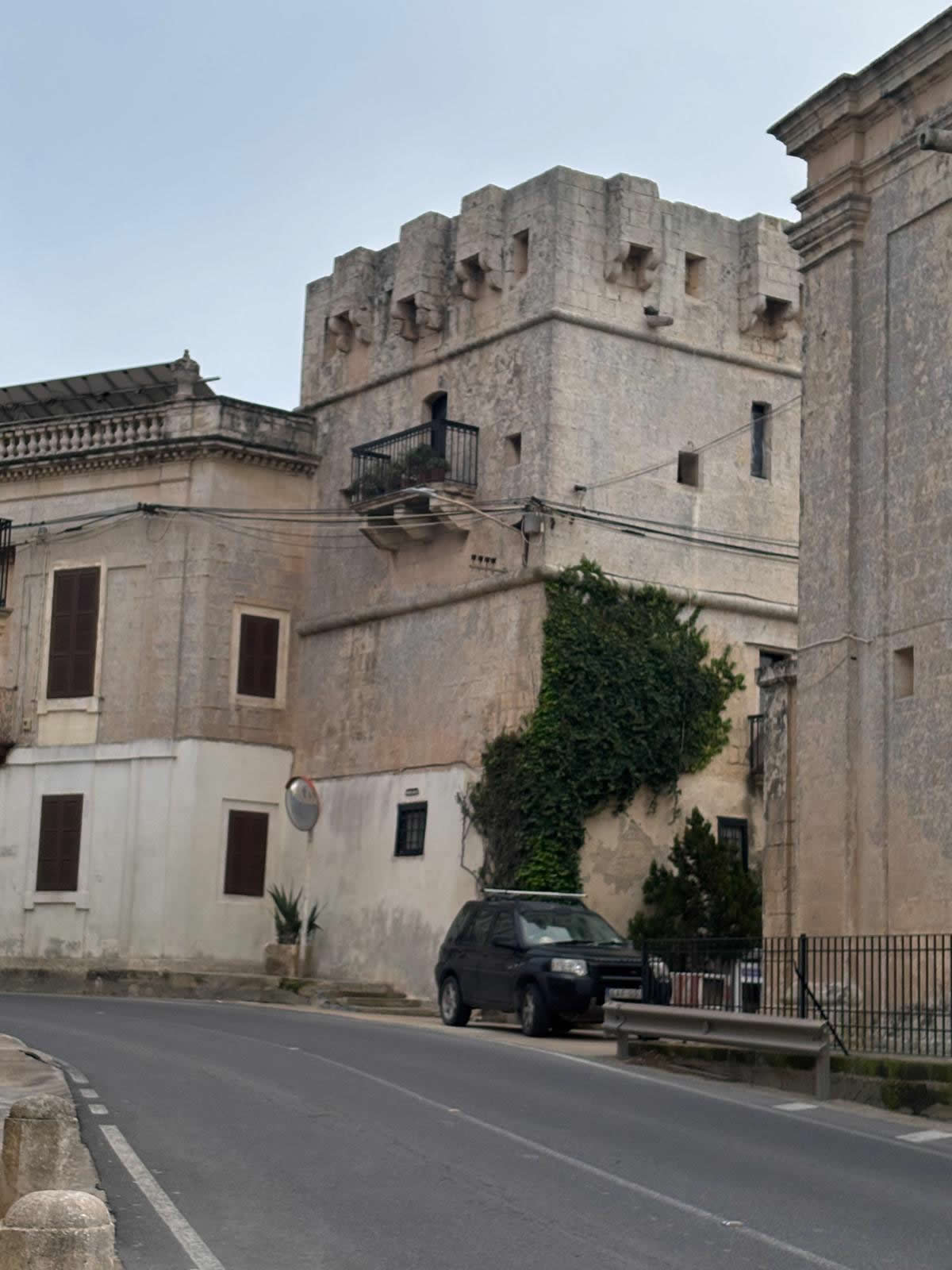
Gauci Tower is a compact, square-shaped structure built from local limestone. Its design reflects the practical requirements of defence while maintaining elements of residential comfort.
The tower consists of two main levels, with the lower section slightly more pronounced, providing additional structural strength.
Defensive Features
Despite its relatively small size, Gauci Tower incorporates several defensive elements:
- Box machicolations along the roofline for vertical defence
- Musketry loopholes for firing weapons
- Narrow vision slits for surveillance
- High parapet walls for protection
These features demonstrate the dual function of the tower as both a residence and a defensive stronghold.
Attached Residence
Adjacent to the tower is a townhouse also constructed by the Gauci family. This structure formed part of a larger residential complex, reflecting the family’s status and the importance of the site.
Later History
By the late 17th century, Gauci Tower had lost much of its original defensive importance as Malta’s fortification system evolved. During this period, a chapel dedicated to Saint Paul was built in front of the tower in 1696.
This transformation reflects a broader shift from purely defensive use to a more residential and community-oriented function.
Preservation and Heritage Status
Gauci Tower is today recognised as an important cultural monument. It has been scheduled as a Grade 1 national monument, ensuring its protection under Maltese heritage laws.
The adjoining residence is also protected, highlighting the historical significance of the entire complex.
Current Condition and Use
The tower remains in good condition and retains many of its original architectural features. However, it is privately owned and not open to the public.
Its location within the urban fabric of Naxxar allows it to remain visible and appreciated as part of the town’s historical landscape.
Architectural Significance
Gauci Tower stands out as one of Malta’s earliest examples of fortified residential architecture. Its design illustrates the transition from medieval defensive structures to more refined early modern fortifications.
Its combination of defensive features and residential elements reflects the realities of life in 16th-century Malta, where security and domestic life were closely intertwined.
Relationship to Nearby Sites
Gauci Tower is closely linked to other historic structures in Naxxar, including the nearby Captain’s Tower and various chapels. Together, these buildings form a network that illustrates the evolution of Malta’s defensive and religious landscape.
Visiting Information
- Location: Naxxar, Malta
- Coordinates: 35.920054, 14.442481
- Access: External viewing only
- Status: Grade 1 National Monument
Conclusion
Gauci Tower (Torri Gauci) is a remarkable testament to Malta’s early defensive architecture and the role of private families in safeguarding their estates. Built before 1548, it represents one of the island’s oldest surviving fortified residences.
Its historical significance, architectural integrity, and enduring presence in Naxxar make it an essential part of Malta’s cultural heritage.
Frequently Asked Questions
When was Gauci Tower built?
It was built before 1548 by Francesco Gauci.
What was its purpose?
It served as a fortified residence to protect against corsair raids.
Is it open to the public?
No, it is privately owned and not accessible.
Why is it important?
It is one of Malta’s earliest inland defensive towers and a Grade 1 protected monument.