📍 Location
Location Map Coordinates 35.855972, 14.558370
Introduction
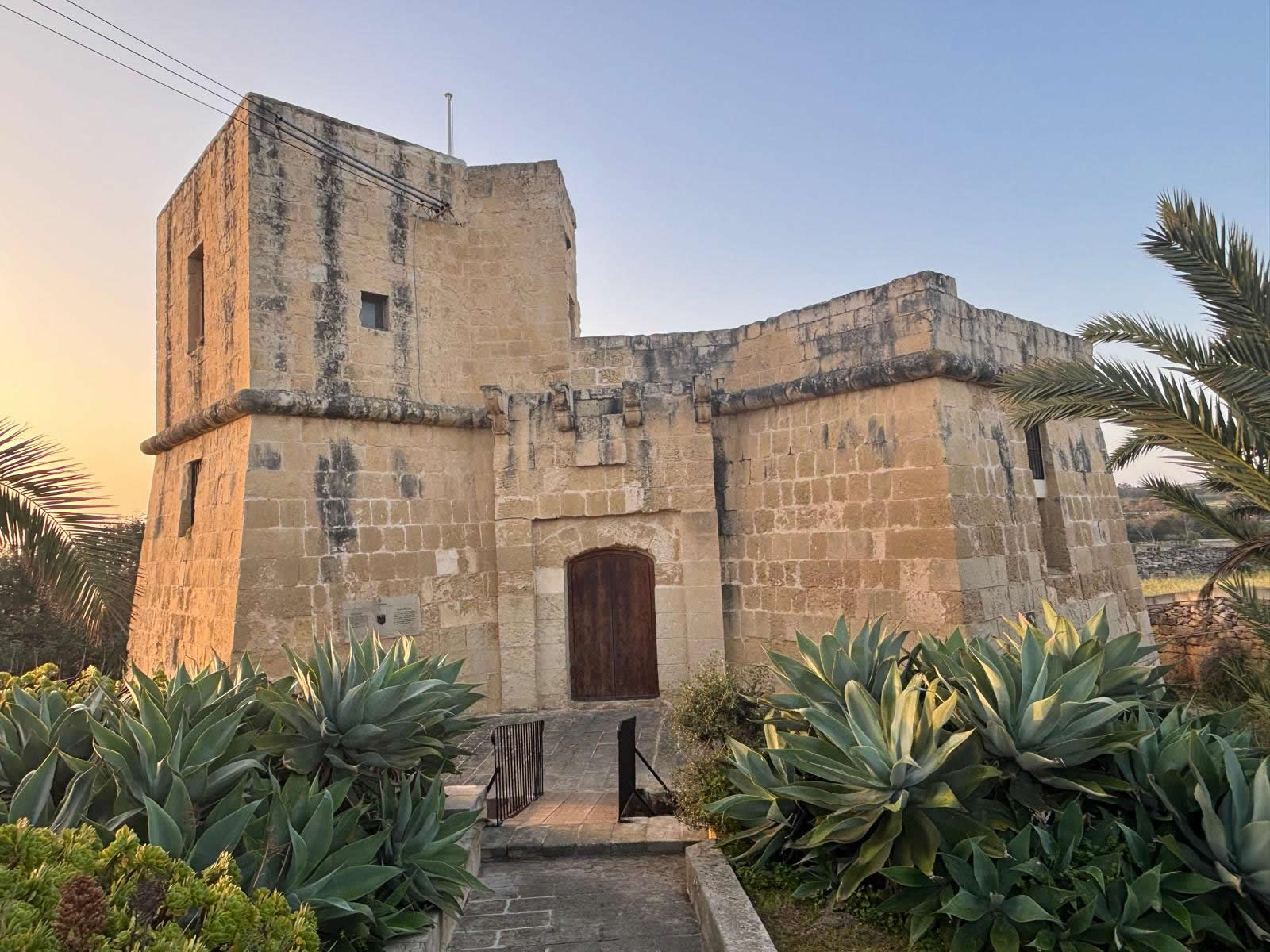
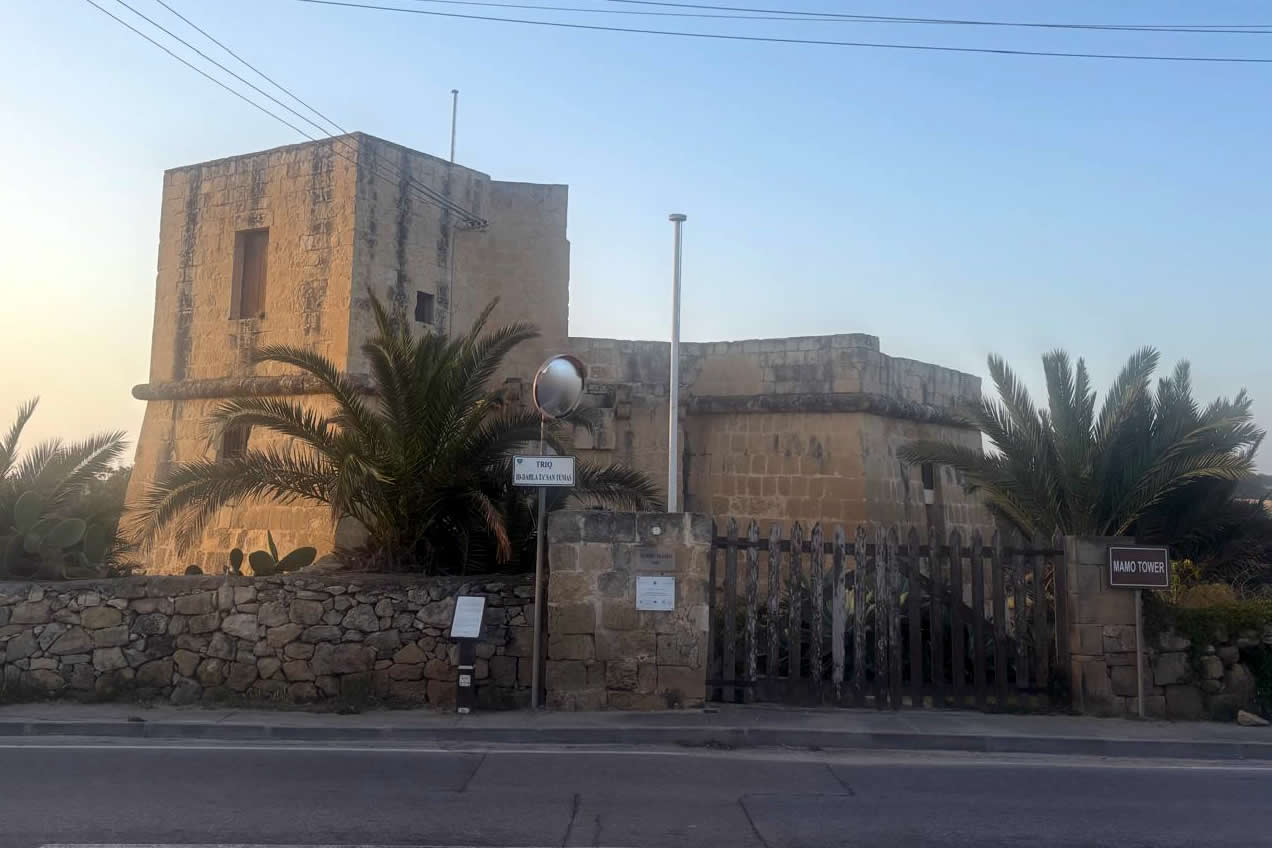
Mamo Tower is one of the most distinctive and architecturally unique fortified residences in Malta. Located on elevated ground overlooking St Thomas Bay in Marsascala, the tower was constructed in 1657 by the Mamo family. Unlike the official coastal towers built by the Knights of St John, this structure represents a private initiative to safeguard agricultural land and rural communities from frequent pirate incursions.
Its unusual star-like geometry, combined with its hybrid defensive and residential design, makes it a remarkable example of vernacular military architecture in Malta. The tower remains a key landmark in Marsascala and is closely linked to the nearby Chiesa di San Gaetano, which was built by the same family in the same year.
Historical Background
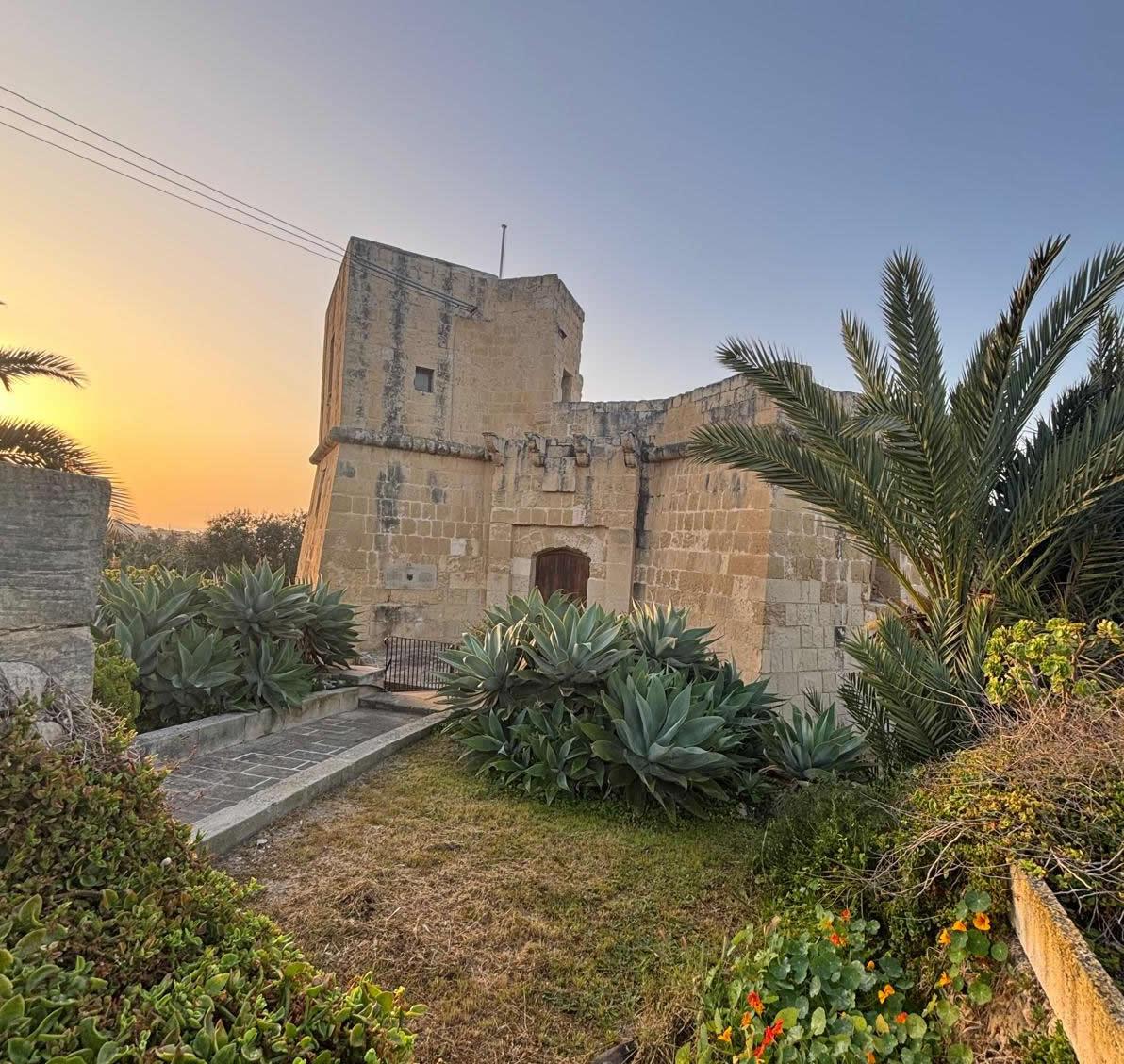
The mid-17th century was a period marked by persistent threats from Barbary corsairs who frequently raided the Maltese coastline. Although the Order of Saint John had established an extensive coastal defence system, rural estates remained vulnerable.
In response, the Mamo family—skilled builders who also worked on projects for the Knights—constructed Mamo Tower in 1657 as a fortified residence.
The tower was initiated by Gregorio Mamo and completed by his son Giorgio. Their expertise in military construction is evident in the building’s robust design and strategic location overlooking St Thomas Bay, a known landing point for raiders.
Construction and Architecture
Unique Design
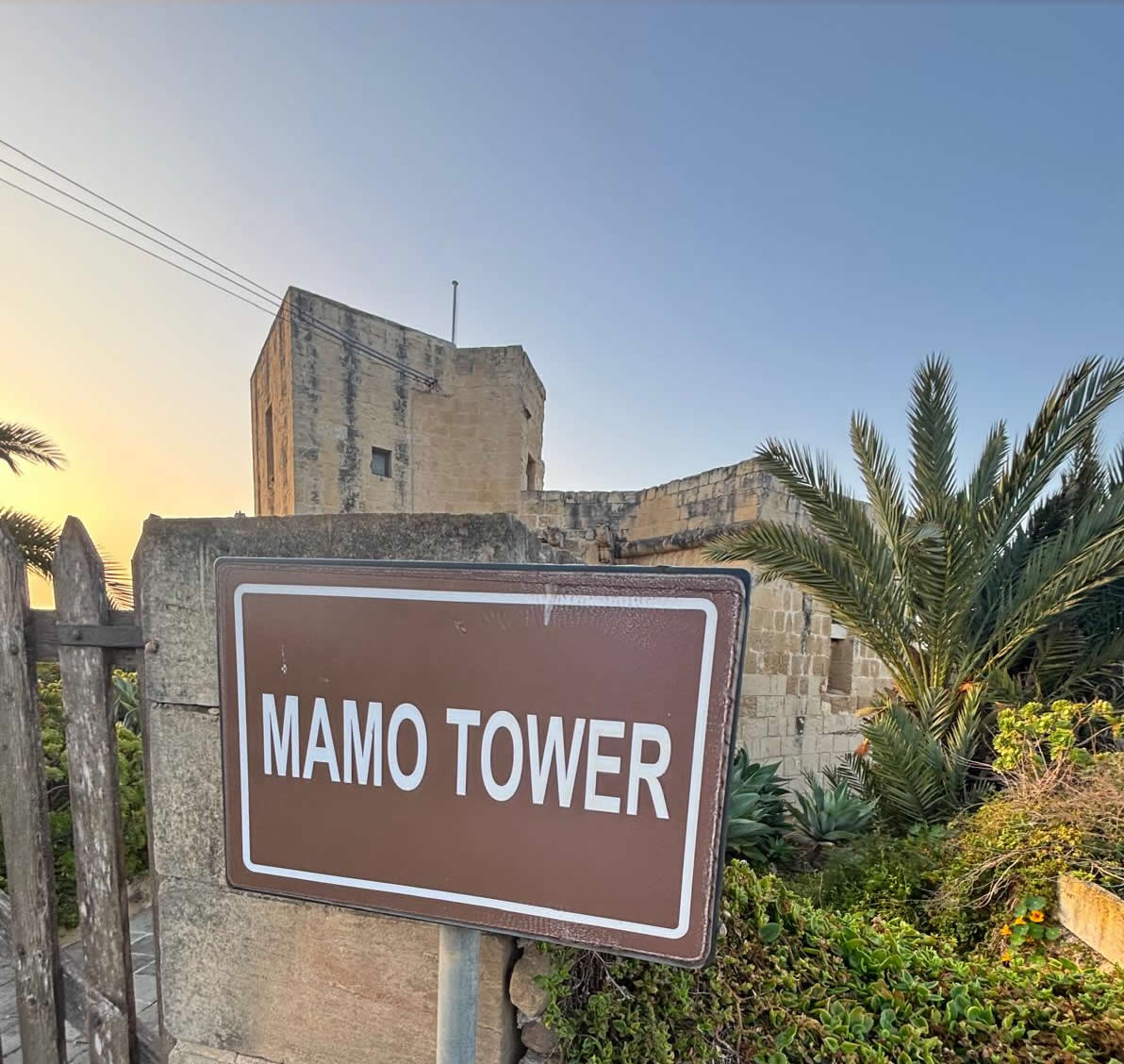
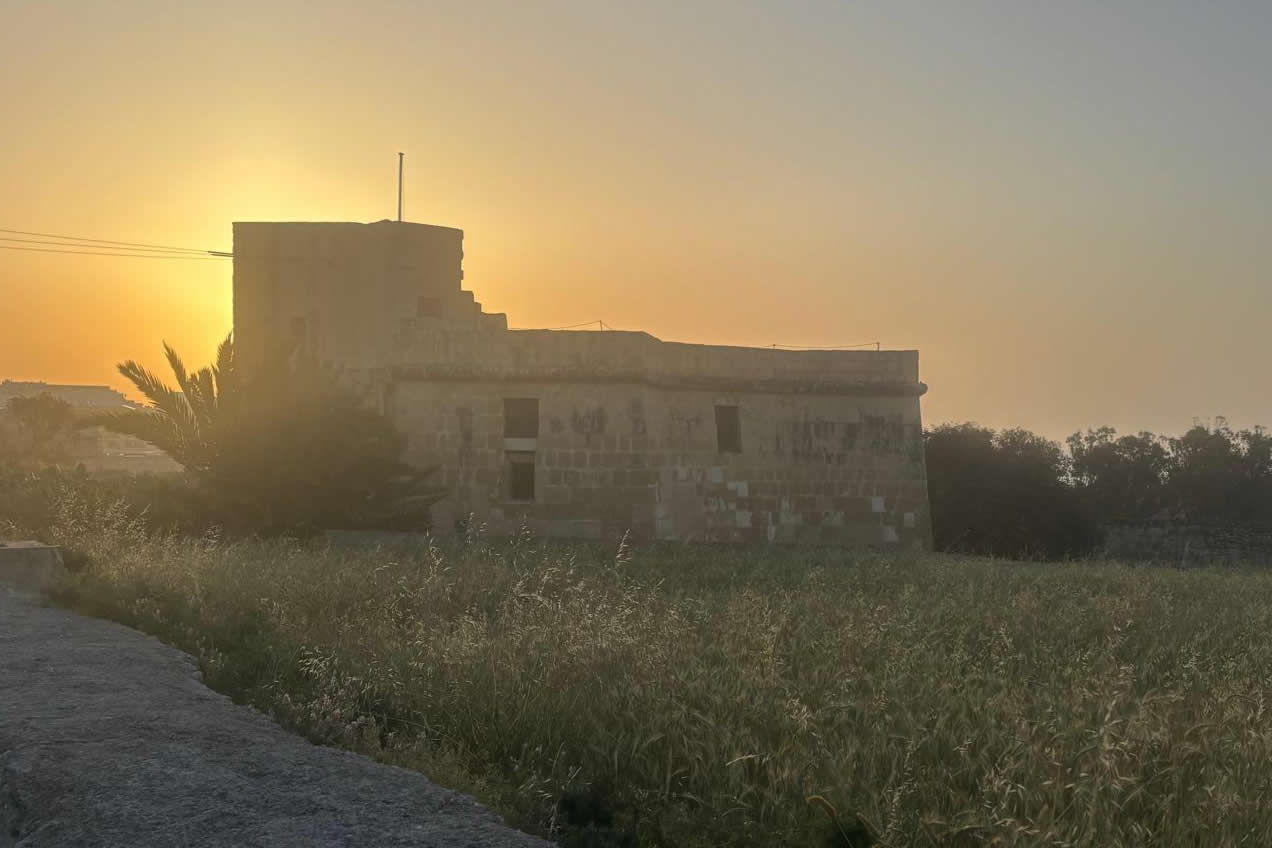
Mamo Tower is particularly notable for its rare 16-sided plan, forming a shape reminiscent of a St Andrew’s Cross. This design is unique among Maltese towers and reflects a combination of aesthetic ambition and defensive practicality.
The structure is built from local limestone and consists of a central circular hall with four projecting arms, each containing additional rooms. This layout provided both structural strength and compartmentalised living spaces.
Defensive Features
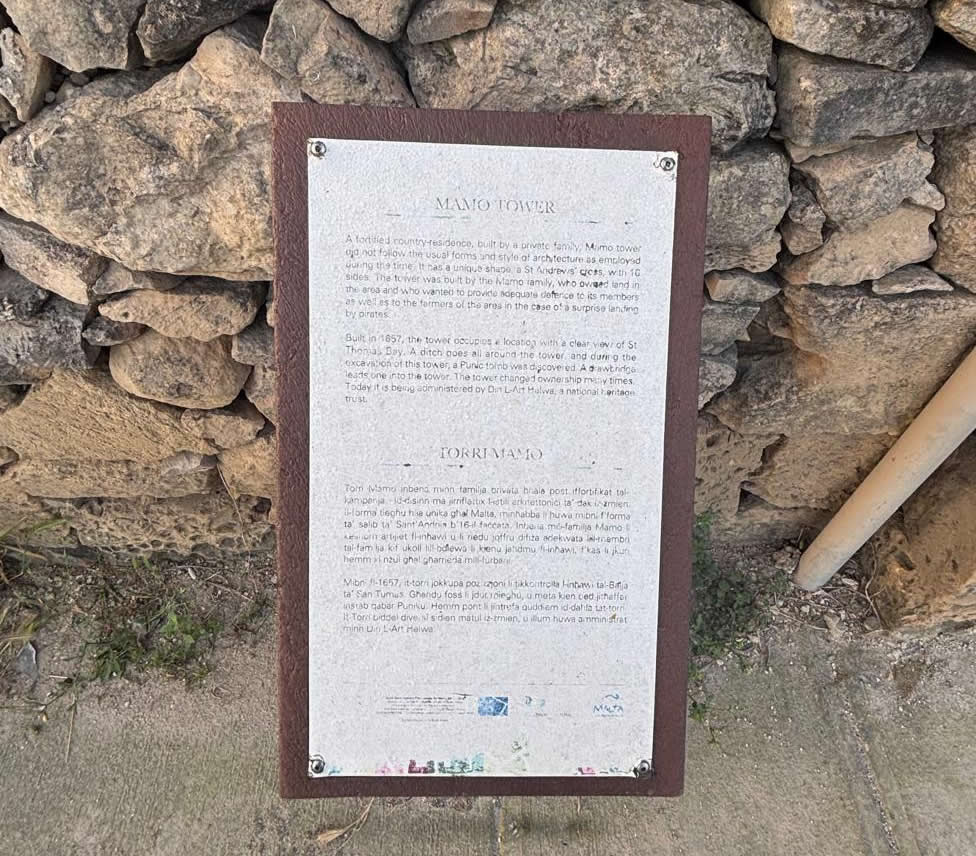
Although not a military fortification in the strict sense, the tower incorporated several defensive elements:
- A surrounding dry ditch approximately 2 metres deep
- A former drawbridge providing controlled access
- Thick masonry walls designed to withstand attack
- An elevated position for surveillance of the coastline
Interestingly, the tower lacks traditional musketry loopholes, suggesting that it was designed primarily as a refuge rather than a combat structure.
Interior Layout
The interior features a domed central hall described as “bombproof,” surrounded by smaller rooms extending along the arms of the structure. A staircase leads to the roof, which offers extensive views of Marsascala and the surrounding countryside.
The upper level was left unfinished, possibly due to changing needs or financial constraints.
Archaeological Discoveries
During the excavation of the surrounding ditch, workers uncovered a Phoenician or Roman tomb, indicating that the site had been occupied long before the construction of the tower.
This discovery highlights the deep historical layering typical of Malta, where structures from different eras often overlap within the same location.
The Chapel of Saint Cajetan
Approximately 50 metres from the tower stands the Chapel of Saint Cajetan (San Gaetano), also built in 1657 by the Mamo family.
The chapel reflects the religious devotion of the family and served the spiritual needs of both the residents and nearby farmers. Together, the tower and chapel form a cohesive estate complex combining defence, residence, and worship.
Role in Coastal Defence
Although privately constructed, Mamo Tower played a complementary role in Malta’s coastal defence system. Contemporary accounts indicate that it was integrated into the broader defensive network and even flew the flag of the Order of Saint John.
The tower could shelter up to 80 people during a raid, making it an important refuge for the surrounding rural population.
Later Ownership and Use
Over the centuries, Mamo Tower passed through various owners, including Lord Strickland, a prominent Maltese political figure.
In 1925, the tower was officially included in Malta’s Antiquities List, recognising its cultural and historical importance.
World War II
During World War II, the British military requisitioned the tower and converted it into a regional headquarters. Defensive modifications included the construction of a pillbox and machine gun positions on the roof.
These additions reflect the continued strategic importance of the site even in the modern era.
Post-War Period
After the war, the tower returned to private use and was occupied as a residence until 1987, when structural deterioration made it unsuitable for habitation.
Restoration and Preservation
Mamo Tower was later entrusted to Din l-Art Ħelwa, the National Trust of Malta, which undertook extensive restoration works between 1994 and 1995.
These efforts included:
- Repair of deteriorated limestone masonry
- Installation of flooring and lighting
- Removal of wartime additions such as the pillbox
- Stabilisation of structural elements
The restoration successfully preserved the tower’s historical character while making it accessible to visitors.
Present-Day Use
Today, Mamo Tower is managed as a heritage site and is open to the public on selected days. It is occasionally used for cultural events and historical re-enactments, helping to bring Malta’s past to life.
Its commanding views and unique architecture make it a popular attraction for both locals and tourists exploring Marsascala.
Architectural Significance
Mamo Tower stands apart from other Maltese towers due to its hybrid nature and distinctive geometry. While official towers built by the Knights followed standardised designs, this structure reflects a more experimental and personalised approach.
Its combination of defensive capability, residential comfort, and aesthetic uniqueness makes it one of Malta’s most important examples of privately built fortifications.
Visiting Information
- Location: Marsascala, overlooking St Thomas Bay
- Coordinates: 35.855972, 14.558370
- Access: Open on selected days
- Nearby Sites: St Thomas Bay, San Gaetano Chapel
Conclusion
Mamo Tower is a remarkable testament to Malta’s history of resilience and adaptation. Built in 1657 as a fortified residence, it reflects the realities of life in a vulnerable coastal region while showcasing the ingenuity of its builders.
Today, as a restored heritage site, it continues to offer valuable insights into Malta’s architectural and social history, standing as a symbol of the island’s enduring cultural legacy.
Frequently Asked Questions
When was Mamo Tower built?
It was built in 1657 by the Mamo family.
What is its architectural style?
A fortified residence with a unique 16-sided plan.
Is it related to San Gaetano Chapel?
Yes, both were built by the same family in the same year.
Can visitors enter the tower?
Yes, it is open on selected days under heritage management.