📍 Location
Location Map Coordinates 35.880579, 14.396763
The St Agatha Complex in Rabat, Malta, located at coordinates 35.880579, 14.396763, is one of the most historically layered religious and archaeological sites on the Maltese Islands. Comprising a church, underground crypt, extensive catacombs, and a museum, the complex provides a unique insight into over two millennia of continuous human activity, from Roman burial traditions to early Christianity and later ecclesiastical development.
Situated within the historic town of Rabat, just outside Mdina, the complex reflects the transformation of Malta from the Roman city of Melite into a centre of early Christian worship and devotion.
Overview of the St Agatha Complex
The site is composed of four interconnected elements, each representing a different historical period:
- Church of St Agatha – a later structure built above the sacred site
- Crypt of St Agatha – a medieval underground sanctuary with frescoes
- St Agatha Catacombs – extensive Roman burial complexes
- St Agatha Museum – collections of artefacts spanning multiple eras
Together, these components form a continuous narrative of religious life in Malta, spanning from antiquity to the present day.
Early Origins: Roman and Punic Periods
The earliest phase of the site dates back to the 2nd and 3rd centuries AD, when the catacombs were established as underground burial grounds outside the Roman city of Melite, in accordance with Roman law.
The catacombs extend over approximately 4,100 square metres and contain hundreds of tombs, reflecting a diverse population that included pagans, Jews, and early Christians.
These underground spaces were not only burial sites but also places where early Christian communities gathered, leaving behind significant archaeological evidence of religious practices and beliefs.
The Crypt of St Agatha
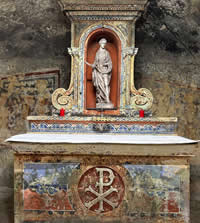 |
At the heart of the complex lies the Crypt of St Agatha, traditionally associated with the early Christian martyr who is believed to have taken refuge in Malta during the persecutions of the Roman Empire in the mid-3rd century. Originally a small natural chamber, the crypt was expanded during the medieval period and adorned with frescoes, some dating to the 12th century, with later additions in the 15th century. The crypt became a place of veneration, linking Malta to the wider narrative of early Christian martyrdom. |
The Church of St Agatha
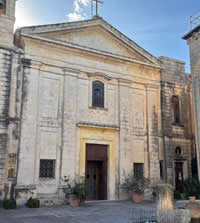 |
The church above the crypt represents a later phase of development, reflecting the formalisation of worship at the site. Built over time, it demonstrates the transition from underground devotion to structured ecclesiastical architecture. Its presence reinforces the enduring importance of the location as a sacred site across centuries. |
The Catacombs
The St Agatha Catacombs are among the most significant archaeological features of the complex. They consist of interconnected underground passages lined with tombs of various types, including family graves and communal burial spaces.
Distinctive features include:
- Rock-cut corridors and burial niches
- Decorated tombs with frescoes
- Agape tables used for commemorative meals
These elements provide valuable insight into funerary customs and early Christian rituals in Malta.
The Museum
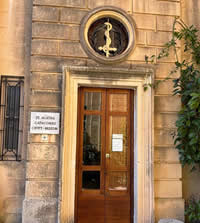 |
The St Agatha Museum complements the archaeological site by displaying artefacts discovered in the catacombs and surrounding areas.
The museum enhances understanding of the site by connecting material culture with the historical context of the complex. Highlights include:
|
Explore the St Agatha Sites
Cultural and Religious Importance
The St Agatha Complex represents one of Malta’s most important sites for understanding:
- The spread of early Christianity
- Roman burial traditions
- The evolution of sacred spaces
Its combination of archaeological, religious, and cultural elements makes it a key destination for both researchers and visitors.
Location
Location: Rabat, Malta
Coordinates: 35.880579, 14.396763
Conclusion
The St Agatha Complex stands as a remarkable example of continuity in Maltese history, where layers of faith, burial practices, and community life converge. From ancient catacombs to a functioning church and museum, the site offers a comprehensive view of Malta’s religious heritage across centuries.
Frequently Asked Questions
What is included in the St Agatha Complex?
The complex includes a church, crypt, catacombs, and museum.
How old is the site?
The earliest elements date back to the 2nd–3rd century AD.
Why is it important?
It provides key evidence of early Christianity and Roman burial practices in Malta.