Introduction
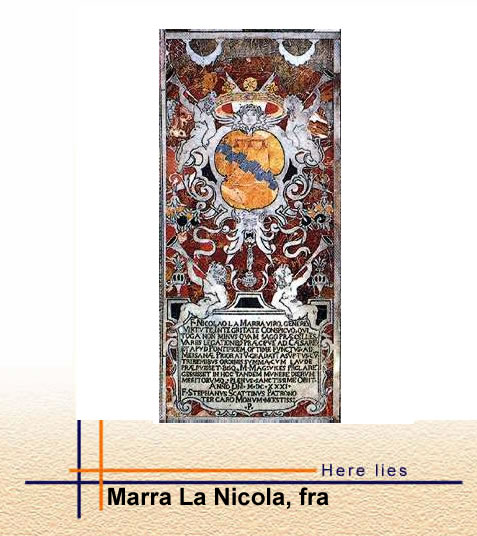
The tomb of Fra Nicola Marra is one of the many richly decorated Baroque funerary monuments that form the remarkable marble floor of St John’s Co-Cathedral in Valletta. It commemorates a knight of the Order of St John and reflects the artistic and cultural traditions of the Order during its rule in Malta.
Who Was Fra Nicola Marra?
Fra Nicola Marra was a member of the Order of St John, the military-religious order that governed Malta between 1530 and 1798. As indicated by the title “Fra,” he was a professed knight who had taken religious vows while also serving within the administrative or military structure of the Order.
The surname “Marra” suggests Italian origin, possibly from southern Italy, a region strongly represented within the Order through the Italian Langue. Knights from these regions often played key roles in both military campaigns and administrative governance.
Historical Context
St John’s Co-Cathedral served as the conventual church of the Order and became the burial place of many of its knights. The marble tomb slabs covering the floor form a unique artistic ensemble, each one reflecting the identity, rank, and achievements of the individual commemorated.
The tomb of Fra Nicola Marra belongs to this tradition, combining heraldry, symbolism, and inscription to preserve his memory.
Description of the Tomb
Central Heraldic Shield
The tomb features a prominent coat of arms at its centre, enclosed within an ornate Baroque frame. The shield is surrounded by elaborate scrollwork and decorative motifs typical of the period.
The heraldic design represents the identity and lineage of Fra Nicola Marra, emphasising his noble background and affiliation with the Order.
Baroque Ornamentation
The tomb is richly decorated with intricate carvings, including:
- Floral and vegetal patterns
- Flowing scrollwork
- Symbolic figures and ornamental details
These elements reflect the Baroque artistic style that flourished in Malta under the Knights of St John.
Symbolic Elements
Like many tombs within the cathedral, the design incorporates symbolic references to mortality and faith. These may include stylised skulls, bones, or liturgical objects, serving as reminders of the transient nature of life and the hope of salvation.
Latin Inscription
The lower panel contains a Latin inscription, which typically records the name, rank, and achievements of the deceased. While partially worn, it clearly identifies Fra Nicola Marra and confirms his status within the Order.
Symbolism and Interpretation
The tomb embodies several key themes central to the identity of the Knights of St John:
- Faith: Represented through religious imagery and inscriptions
- Nobility: Expressed through heraldic elements
- Service: Reflecting the knight’s role within the Order
- Mortality: Baroque reminders of death and eternal life
Together, these features create a visual narrative of the knight’s life and spiritual journey.
Location Within the Cathedral
The tomb is part of the extensive marble floor of St John’s Co-Cathedral, which contains hundreds of similar monuments. These tombs are arranged according to rank and Langue, reflecting the hierarchical structure of the Order.
While exact placement varies, tombs of knights such as Fra Nicola Marra are typically found within the nave or side aisles.
Artistic and Cultural Significance
The tomb of Fra Nicola Marra contributes to the cathedral’s reputation as one of the finest examples of Baroque art in Europe. The combination of craftsmanship, symbolism, and historical context makes it an important part of Malta’s cultural heritage.
Preservation
Today, the tomb is preserved as part of the national heritage of Malta. Conservation efforts ensure that the intricate marble work and inscriptions remain visible despite centuries of wear.
Visitor Information
Visitors to St John’s Co-Cathedral can view the tomb as part of the cathedral’s extraordinary collection of funerary monuments.
Location: Valletta, Malta
Church: St John’s Co-Cathedral
Conclusion
The tomb of Fra Nicola Marra stands as a testament to the artistic, religious, and social traditions of the Order of St John. Through its elaborate design and symbolic richness, it preserves the legacy of a knight whose life was dedicated to faith and service.
As part of the remarkable marble floor of St John’s Co-Cathedral, it continues to captivate visitors and scholars alike, offering insight into Malta’s unique historical heritage.