Introduction
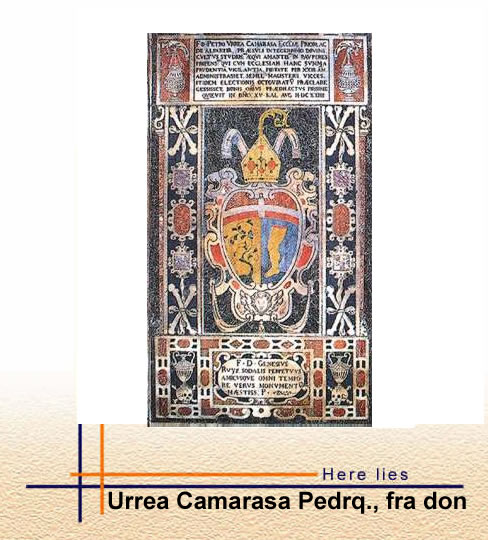
The tomb of Fra Don Pietro Urrea Camarasa is one of the most distinctive funerary monuments within St John’s Co-Cathedral in Valletta. It commemorates a high-ranking member of the Order of St John who held both religious and administrative authority during the height of the Order’s presence in Malta.
Who Was Fra Don Pietro Urrea Camarasa?
Fra Don Pietro Urrea Camarasa was a prominent knight of the Order of St John. His titles, as recorded on the tomb, include:
- Prior of the Church (Ecclesiae Prior)
- Bailiff of Calabria (Baillius Calabriae)
- Member of the Order of St John of Jerusalem
These roles indicate that he was among the highest-ranking ecclesiastical figures within the Order. As Prior, he was responsible for overseeing the spiritual life of the conventual church, while his position as Bailiff placed him in charge of an important territorial division of the Order in Europe.
Historical Context
During the 17th and 18th centuries, the Order of St John governed Malta and developed Valletta into a fortified capital rich in religious and artistic heritage. St John’s Co-Cathedral served as the Order’s conventual church and became the burial place for many of its most distinguished members.
Tombstones within the cathedral were not merely burial markers but statements of status, faith, and identity. The tomb of Urrea Camarasa reflects this tradition through its elaborate design and prominent symbolism.
Description of the Tomb
Heraldic Elements
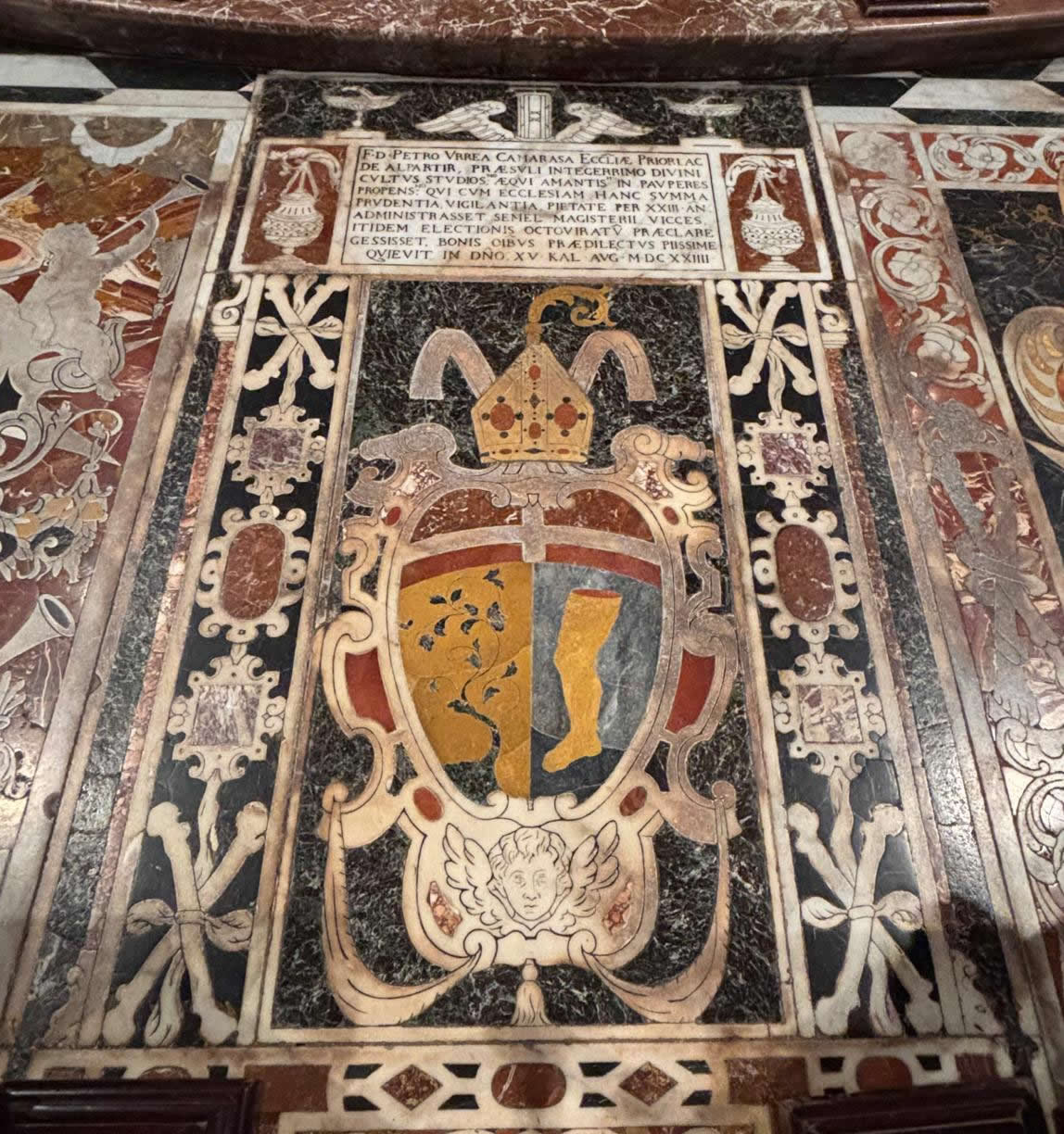
At the centre of the tomb is a richly decorated coat of arms divided into two sections. One side features heraldic motifs associated with the Urrea family, while the other incorporates Christian symbolism, reflecting both noble lineage and religious devotion.
Bishop’s Mitre
Above the coat of arms is a raised bishop’s mitre, a rare feature among the tomb slabs in the cathedral. This symbol signifies high ecclesiastical authority and confirms his role as Prior.
Decorative Motifs
The tomb is surrounded by intricate Baroque ornamentation, including floral designs and symbolic imagery. These elements are typical of the period and serve both decorative and spiritual purposes.
Latin Inscription
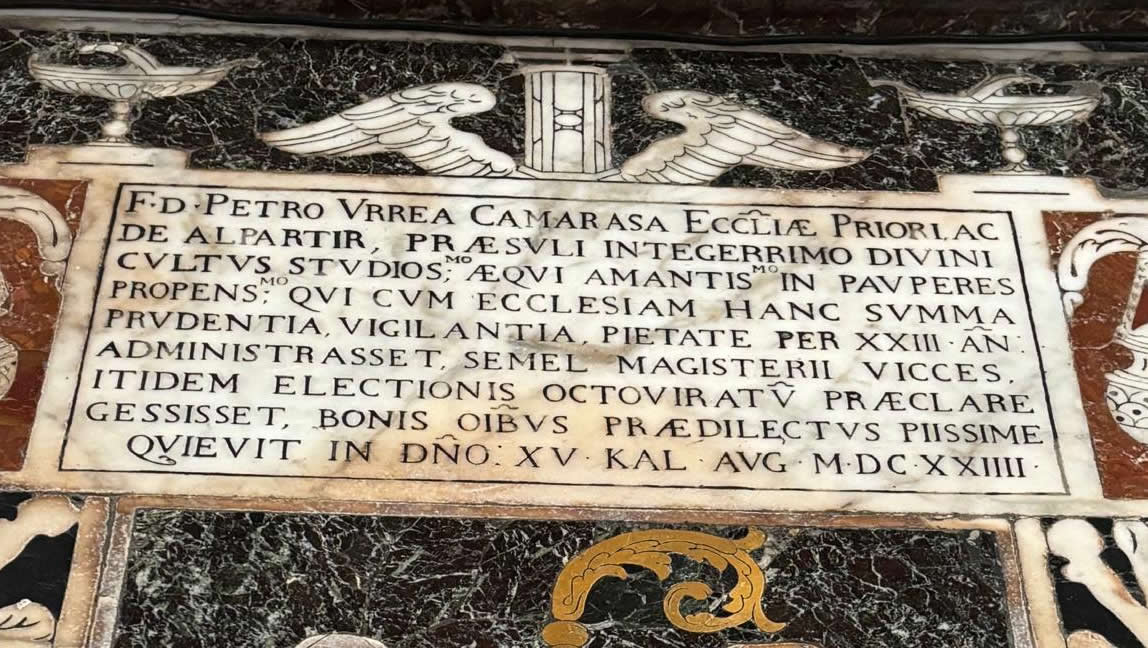
The inscription identifies him as:
“Fra Petrus Urrea Camarasa, Ecclesiae Prior ac Calabriae Baillius…”
This formal Latin text records his titles and affiliation with the Order, ensuring his legacy within the cathedral.
Symbolism and Meaning
The tomb reflects several key themes central to the Order of St John:
- Faith: Expressed through religious symbols and inscriptions
- Nobility: Highlighted by heraldic elements
- Mortality: Typical Baroque reminders of death and salvation
- Authority: Indicated by the mitre and titles
Together, these elements create a powerful visual representation of his life and status.
Location Within the Cathedral
The tomb is situated within St John’s Co-Cathedral, which contains hundreds of marble tomb slabs forming a unique decorative floor. Its style and importance suggest that it occupies a prominent position among the burial sites of senior members of the Order.
Artistic and Cultural Significance
The tomb is an excellent example of Maltese Baroque funerary art. The combination of heraldry, sculpture, and inscription demonstrates the artistic sophistication achieved in Malta during the rule of the Knights of St John.
It also contributes to the cathedral’s reputation as one of the most richly decorated religious buildings in Europe.
Preservation
Like other tomb slabs in St John’s Co-Cathedral, the tomb of Urrea Camarasa is carefully preserved as part of Malta’s national heritage. Conservation efforts ensure that the intricate details and inscriptions remain visible for future generations.
Visitor Information
Visitors to St John’s Co-Cathedral can view the tomb as part of the cathedral’s extensive collection of funerary monuments. The site is one of Malta’s most visited historical attractions.
Location: Valletta, Malta
Church: St John’s Co-Cathedral
Conclusion
The tomb of Fra Don Pietro Urrea Camarasa stands as a testament to the power, faith, and artistic legacy of the Order of St John in Malta. Through its elaborate design and symbolic richness, it preserves the memory of a figure who played a significant role in the religious and administrative life of the Order.
For visitors and historians alike, it offers a fascinating glimpse into the hierarchy and culture of one of Europe’s most influential religious orders.