Grand Masters’ Crypt – St John’s Co-Cathedral, Valletta, Malta
Home » St John’s Co-Cathedral » Grand Master Jean de la Vallette
Introduction
Grand Master Frà Jean Parisot de la Vallette is one of the most celebrated figures in Maltese and European history. As the 49th Grand Master of the Order of St John, he is best remembered for leading the Knights and the Maltese people to victory during the Great Siege of Malta in 1565 — a defining moment that halted Ottoman expansion in the Mediterranean.
His legacy extends beyond military triumph. He founded the city of Valletta in 1566, Malta’s present-day capital, which still bears his name. Today, he lies buried in the Grand Masters’ Crypt beneath St John’s Co-Cathedral, symbolically resting at the heart of the city he created.
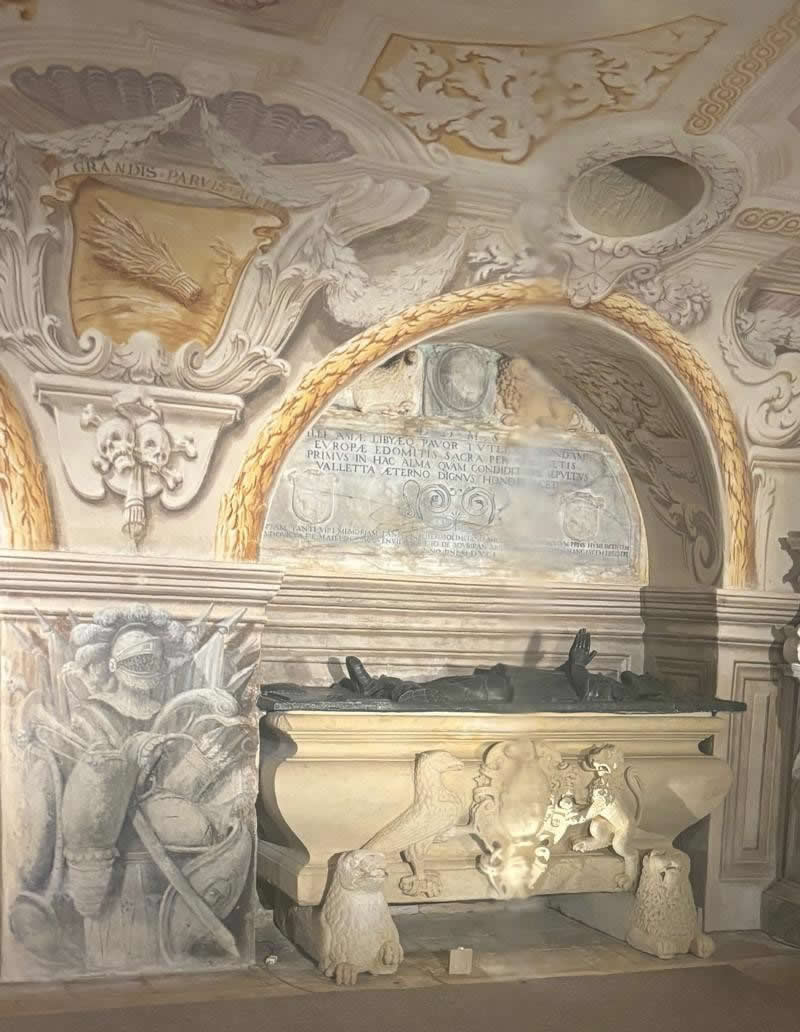
Early Life and Entry into the Order
Jean Parisot de la Vallette was born in 1494 into a noble French family in the region of Quercy. From a young age, he entered the Order of St John, dedicating his life to religious and military service.
He joined the Order around 1514 and participated in the defence of Rhodes against Ottoman forces in 1522. Following the loss of Rhodes, he accompanied the Knights during their years of displacement before their eventual settlement in Malta in 1530.
Throughout his early career, he gained a reputation for discipline, courage, and resilience. He served in naval campaigns, was captured and enslaved by corsairs for a period, and later rose to become Captain General of the Order’s fleet in 1554.
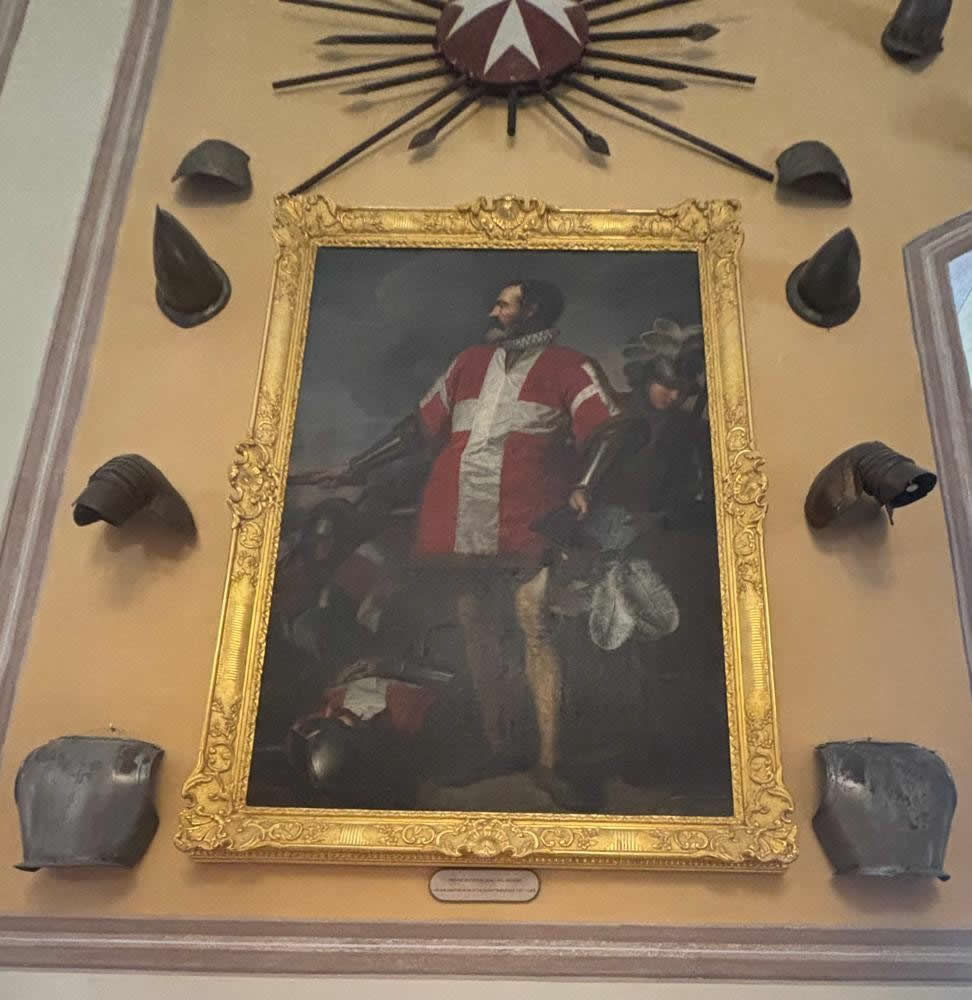
Grand Masters Palace, Valletta
Election as Grand Master (1557)
On 21 August 1557, Jean Parisot de la Vallette was elected Grand Master of the Order of St John. His leadership came at a time when the Ottoman Empire posed a serious threat to Malta and the wider Mediterranean.
He immediately began strengthening Malta’s defences, reorganising the Order’s resources, and preparing for what he believed would be an inevitable large-scale invasion.
The Great Siege of Malta (1565)
The defining event of La Vallette’s life was the Great Siege of Malta in 1565. A massive Ottoman force, numbering tens of thousands of troops, arrived to capture the island and eliminate the Knights of St John.
Despite being heavily outnumbered, La Vallette led the defence with extraordinary determination and strategic skill. The siege lasted from May to September 1565 and is widely regarded as one of the greatest sieges in history.
Under his command:
- Fort St Elmo held out far longer than expected
- The fortified cities of Birgu and Senglea resisted repeated assaults
- The Knights and Maltese population fought with remarkable resilience
The eventual Ottoman withdrawal marked a decisive victory that elevated La Vallette to legendary status across Europe.
Founding of Valletta (1566)
Following the victory, La Vallette recognised the need for a new fortified city that could withstand future attacks. In 1566, he personally laid the foundation stone of Valletta on Mount Sciberras.
The city was designed as a modern fortified capital, featuring bastions, palaces, auberges, and a conventual church. It became one of the most advanced fortified cities in Europe and a symbol of the Order’s strength.
Valletta was later named in his honour and remains Malta’s capital to this day.
Death and Initial Burial (1568)
Grand Master Jean de la Vallette died on 21 August 1568 in Malta, exactly eleven years after his election.
According to his wishes, he was initially buried in the Church of Our Lady of Victories — the first building constructed in Valletta and closely associated with the victory of the Great Siege.
Transfer to St John’s Co-Cathedral Crypt
In 1579, during the magistracy of Grand Master Jean de la Cassière, La Vallette’s remains were transferred to the newly built Conventual Church of St John.
Today, he rests in the Grand Masters’ Crypt beneath St John’s Co-Cathedral — the spiritual and ceremonial heart of the Order in Malta.
The Tomb and Monument
La Vallette’s tomb is one of the most historically significant monuments within the crypt. His sarcophagus, crafted in yellow sandstone, is located beneath the presbytery in a prominent position.
The Latin inscription on his tomb celebrates him as:
- The defender of Malta and Europe
- The founder of Valletta
- A leader of exceptional courage and faith
His burial in the crypt reflects his status as one of the greatest Grand Masters in the history of the Order.
Legacy and Historical Importance
Jean Parisot de la Vallette’s legacy is immense. His leadership during the Great Siege of Malta not only preserved the Order but also changed the course of European history by halting Ottoman expansion.
His founding of Valletta established a capital that would become a centre of military, cultural, and religious life in the Mediterranean.
He is remembered as:
- A military strategist of exceptional ability
- A devout and disciplined Knight
- The founder of Malta’s capital city
His name lives on through Valletta itself, ensuring his place in history remains permanent.
Visiting the Grand Masters’ Crypt
Visitors to St John’s Co-Cathedral can explore the Grand Masters’ Crypt and see the resting place of Jean de la Vallette.
The crypt offers a profound historical experience, connecting visitors with the leaders who shaped Malta’s destiny.
For more information:
Frequently Asked Questions
Who was Jean de la Vallette?
He was the Grand Master who led Malta to victory during the Great Siege of 1565.
When was Valletta founded?
Valletta was founded in 1566 following the Great Siege.
Where is he buried?
He is buried in the Grand Masters’ Crypt beneath St John’s Co-Cathedral.
Why is he important?
He is one of Malta’s greatest historical figures and the founder of its capital city.