Introduction
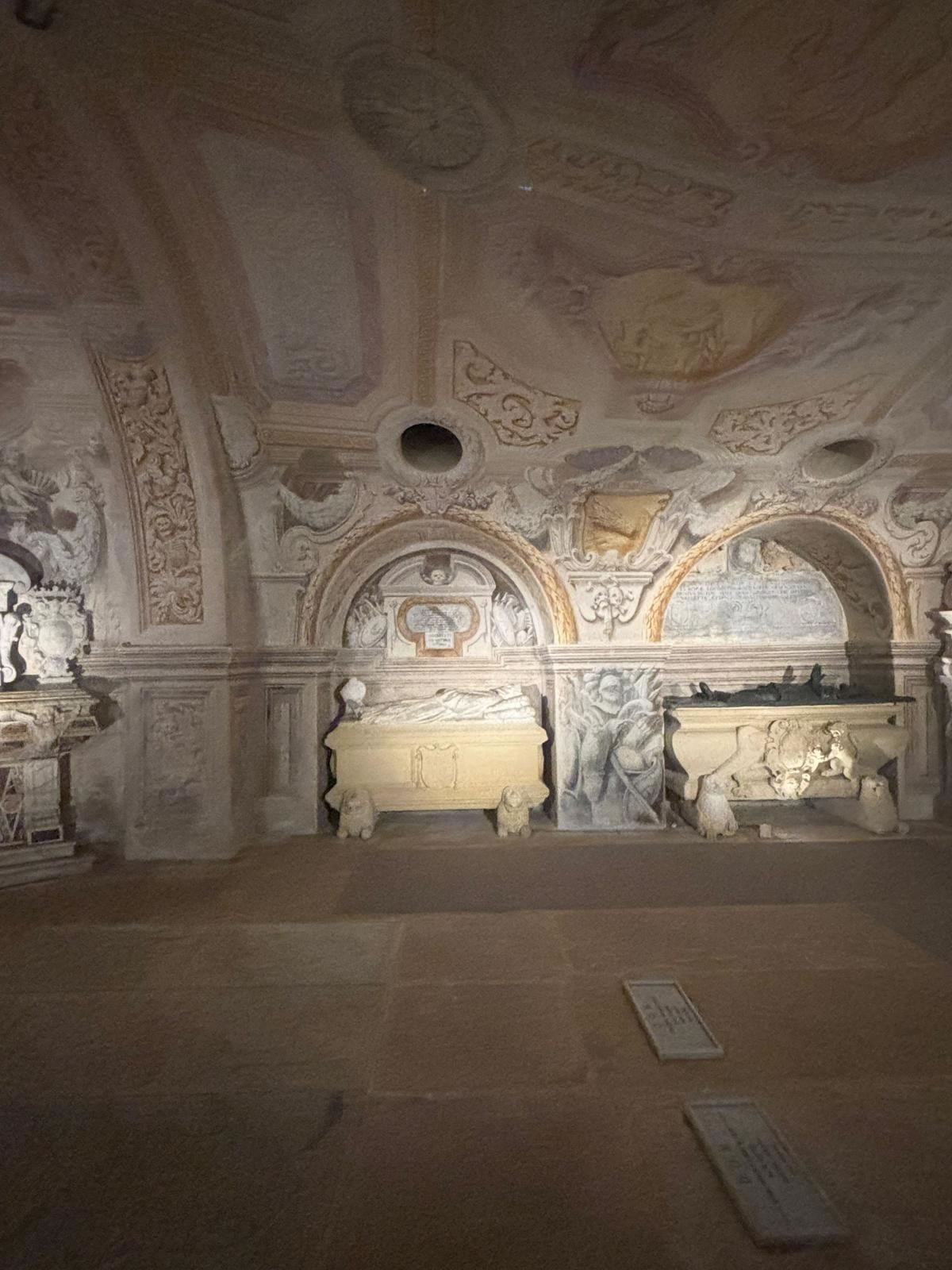
The Grand Masters’ Crypt beneath St John’s Co-Cathedral in Valletta is one of the most historically significant burial sites in Malta. Hidden beneath the richly decorated interior of the Co-Cathedral, this subterranean chamber serves as the final resting place of the early leaders of the Order of the Knights of St John. It is not merely a crypt but a symbolic space that reflects the origins, power, and legacy of the Order that shaped Malta’s history.
Historical Background
The crypt was constructed during the building of St John’s Co-Cathedral in the late 16th century, shortly after the Knights of St John established Valletta as their new capital following the Great Siege of 1565.
As the conventual church of the Order, St John’s became the spiritual and ceremonial centre of the Knights. The decision to create a burial crypt beneath the church reflected both religious tradition and the desire to honour the Grand Masters who governed the Order.
From the early years of the Order’s presence in Malta, the most prominent leaders were interred within this crypt, establishing it as a place of prestige and reverence.
Construction and Architectural Features
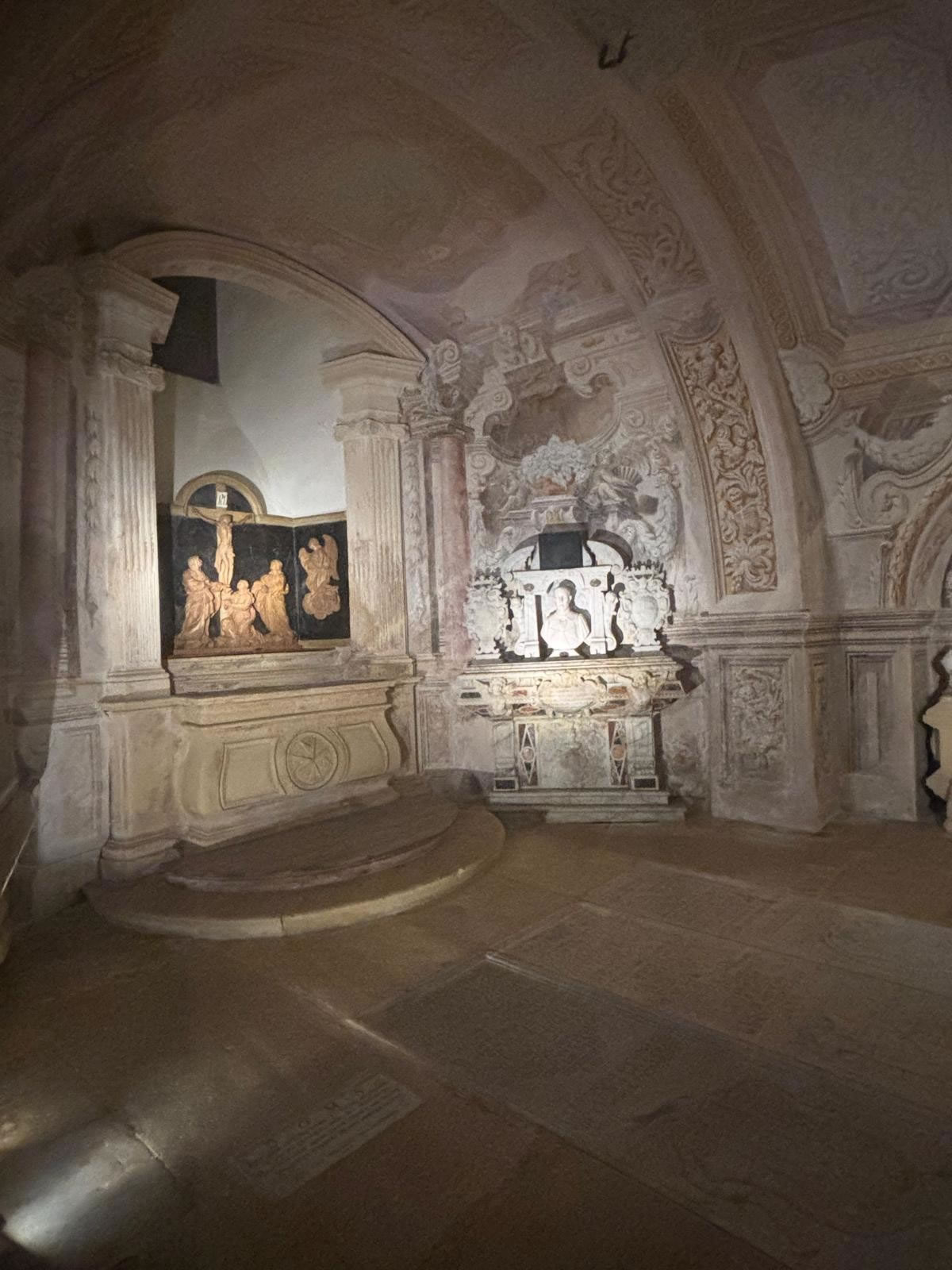
The Grand Masters’ Crypt is located beneath the choir and high altar of the Co-Cathedral. It is a vaulted subterranean chamber carved from Malta’s characteristic globigerina limestone, using ashlar masonry techniques typical of the period.
The structure reflects both functional and symbolic purposes. Architecturally, it provides a stable and secure environment for burial. Symbolically, its position beneath the altar reinforces the connection between faith, sacrifice, and remembrance.
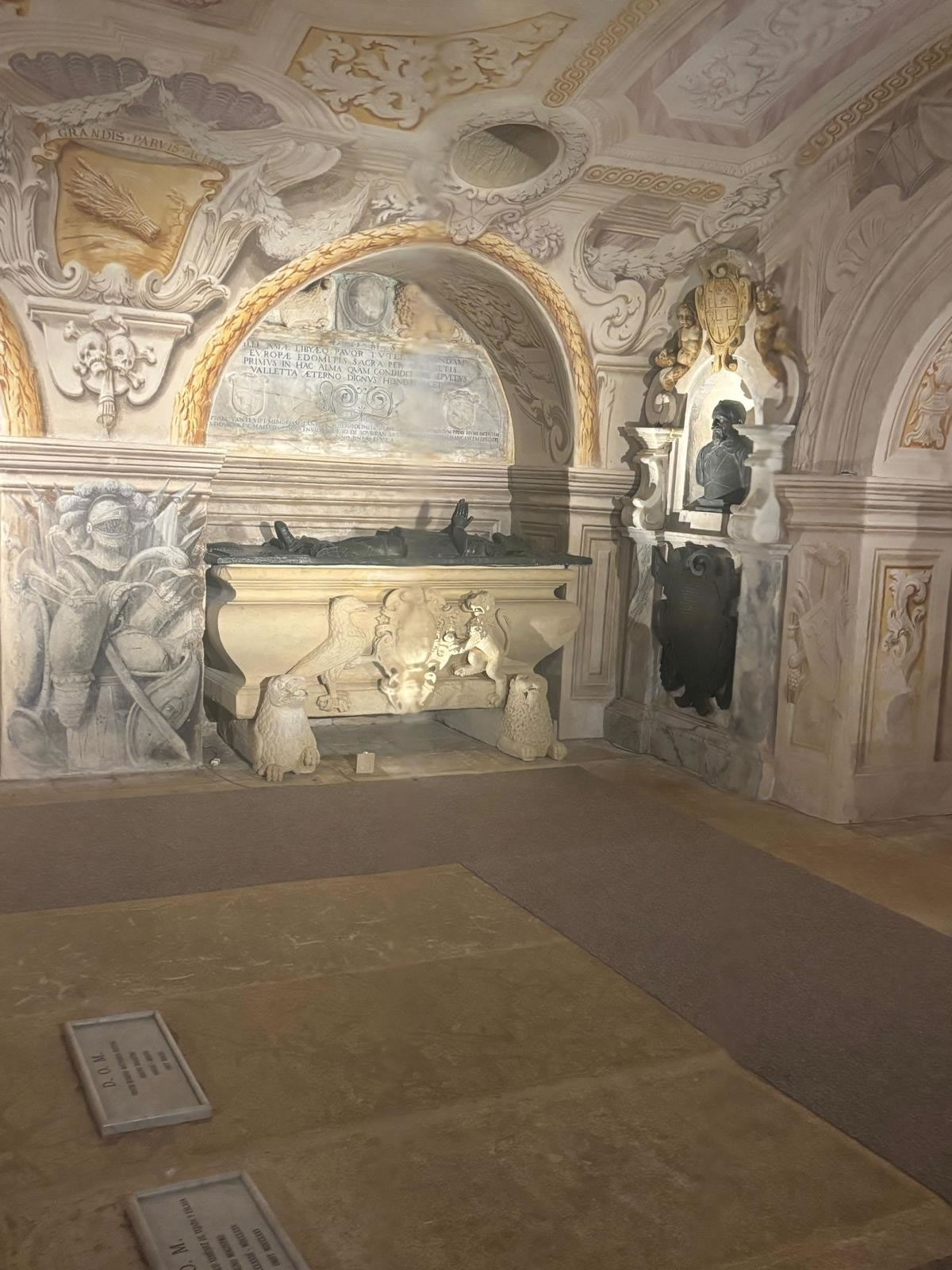
The interior includes:
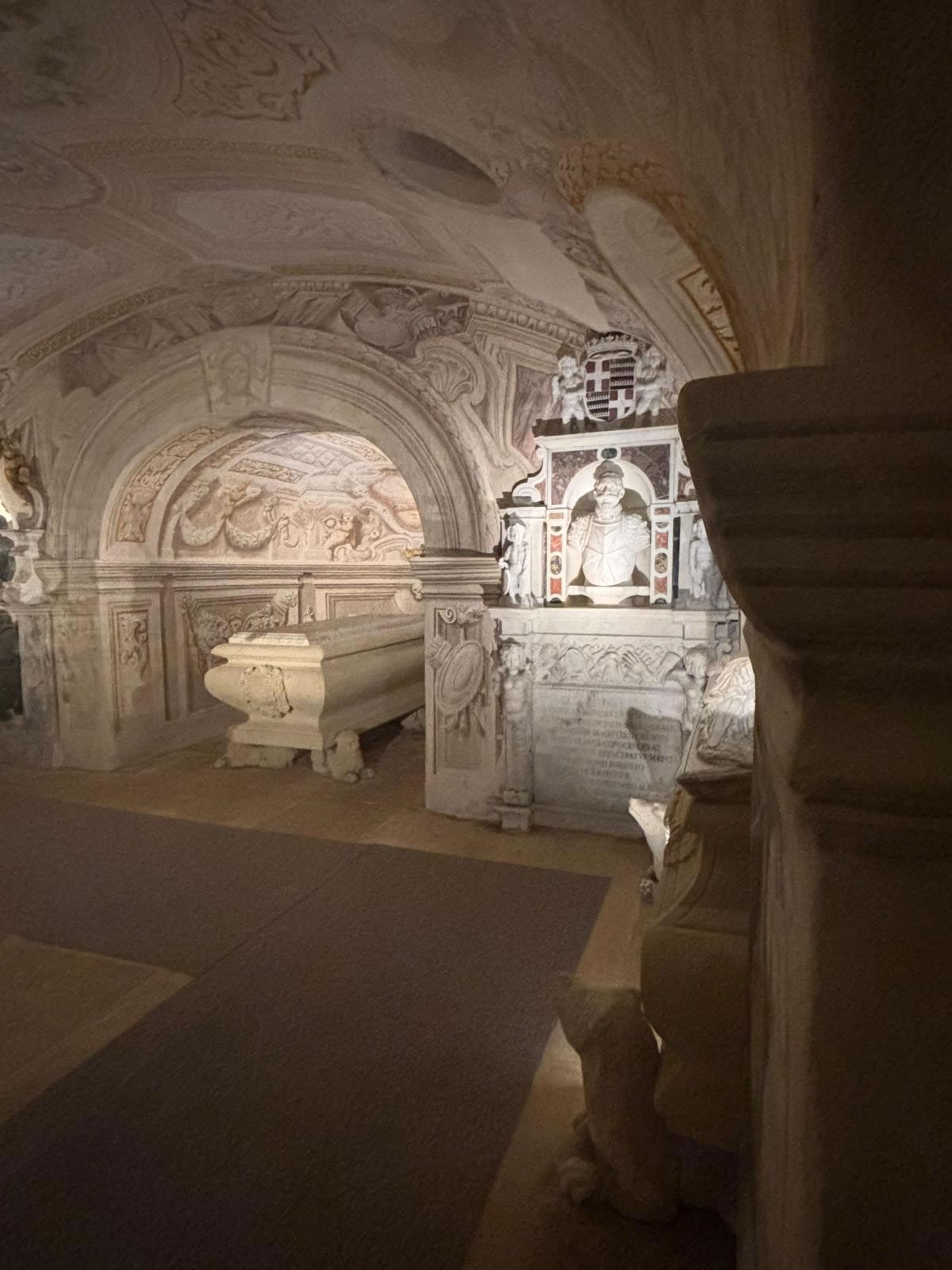
- Stone sarcophagi and tomb structures
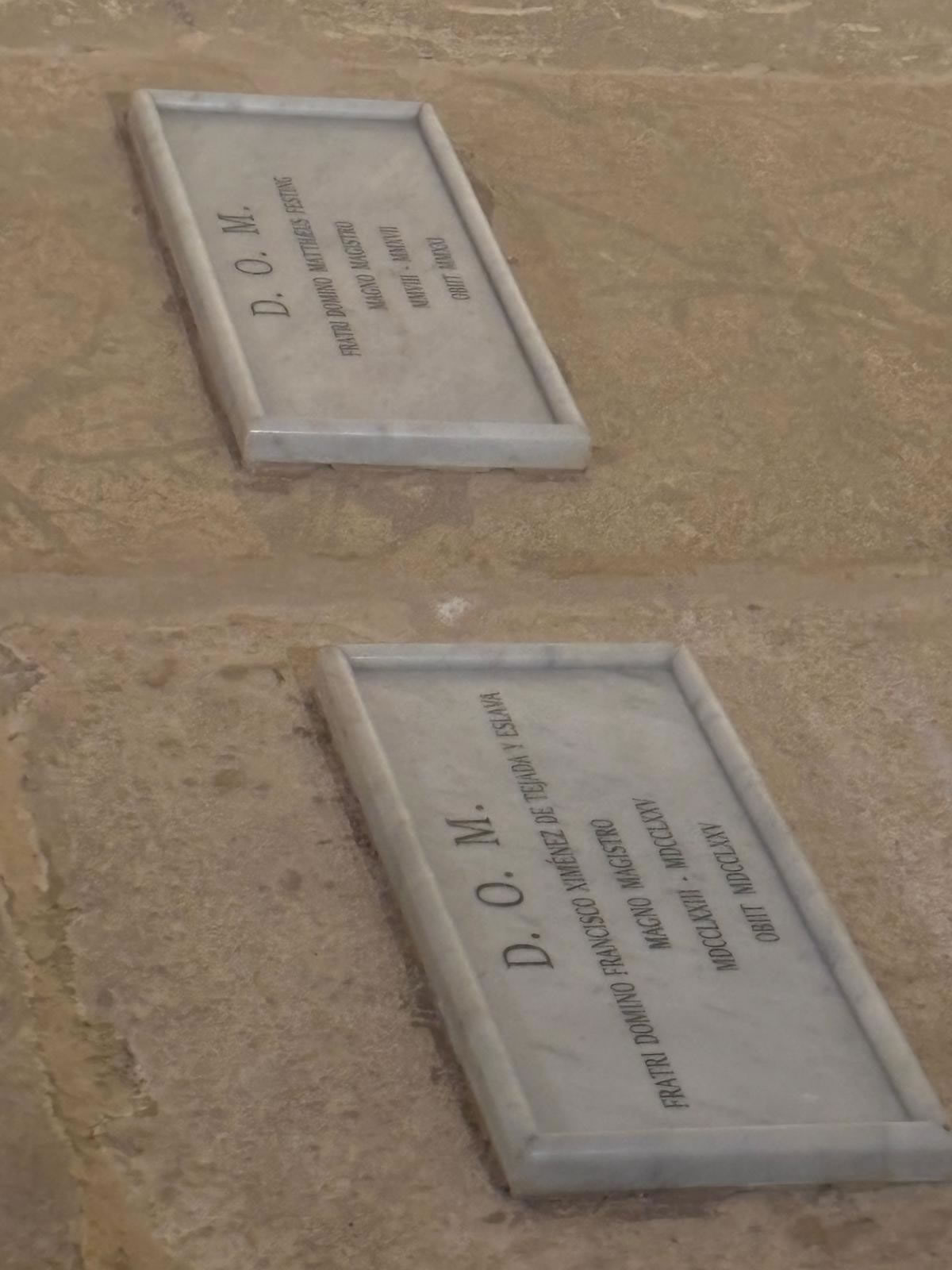
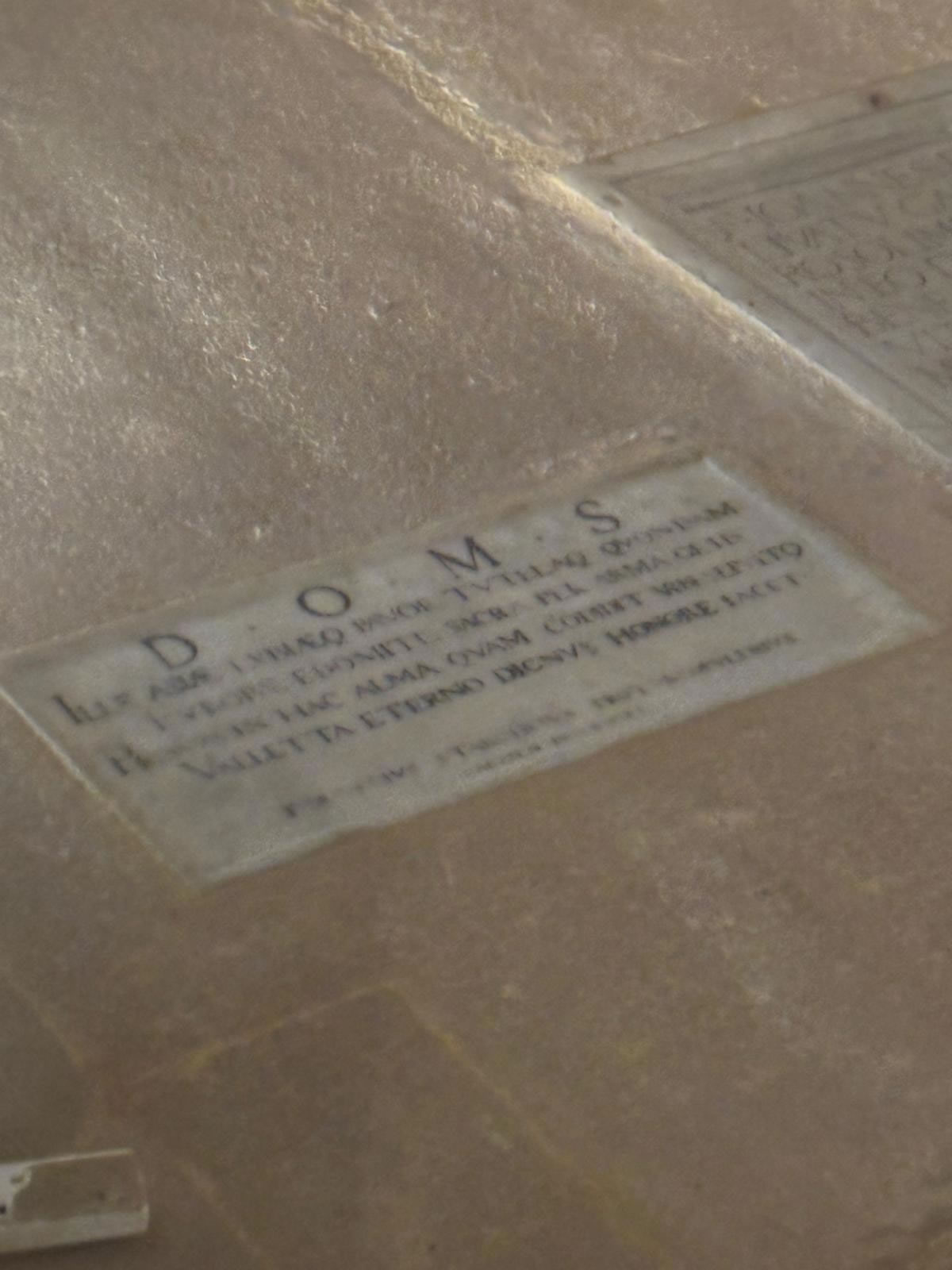
- Marble floor slabs with inscriptions
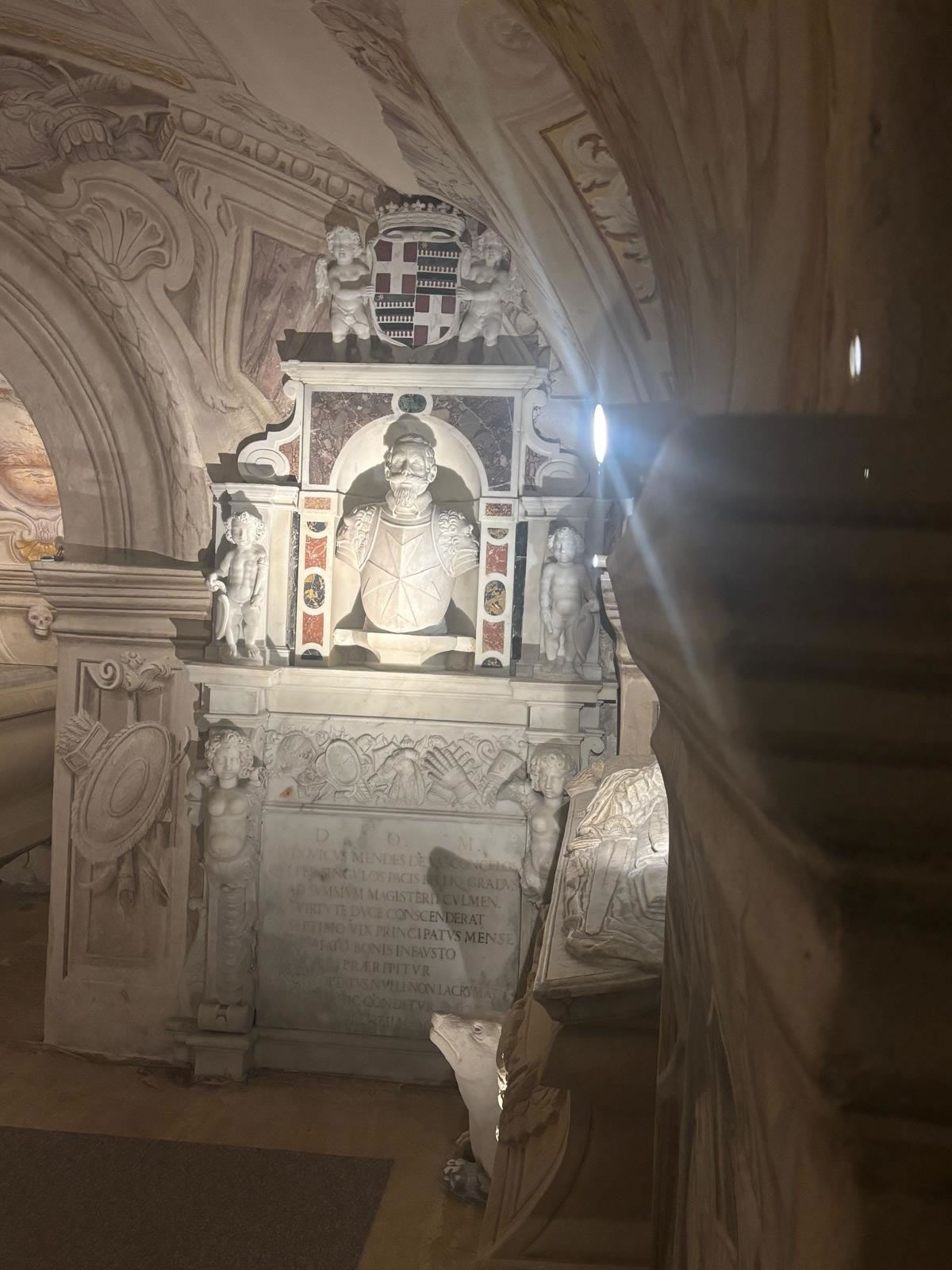
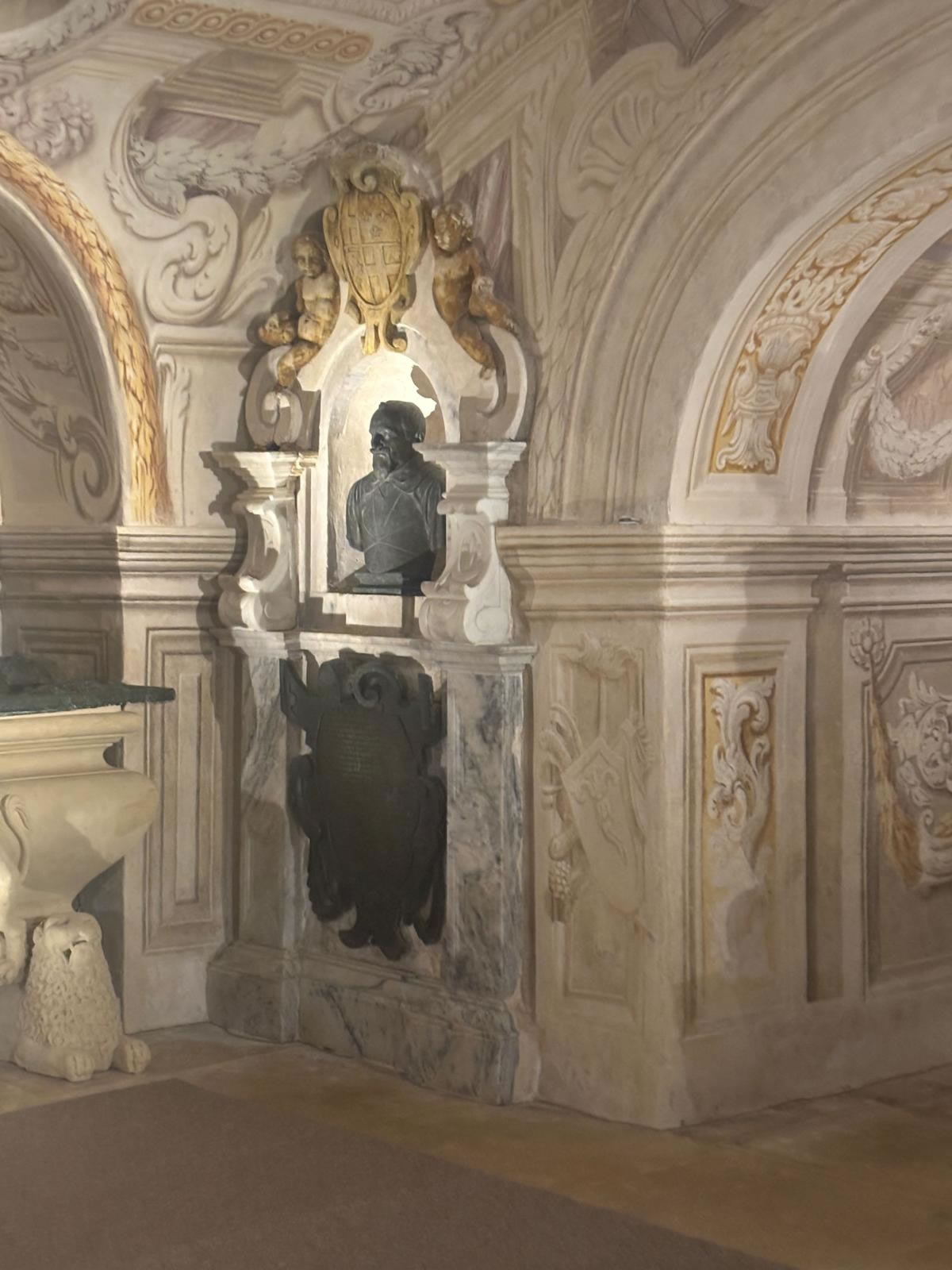
- Commemorative monuments and busts
These elements combine to create a solemn yet artistically rich funerary space.
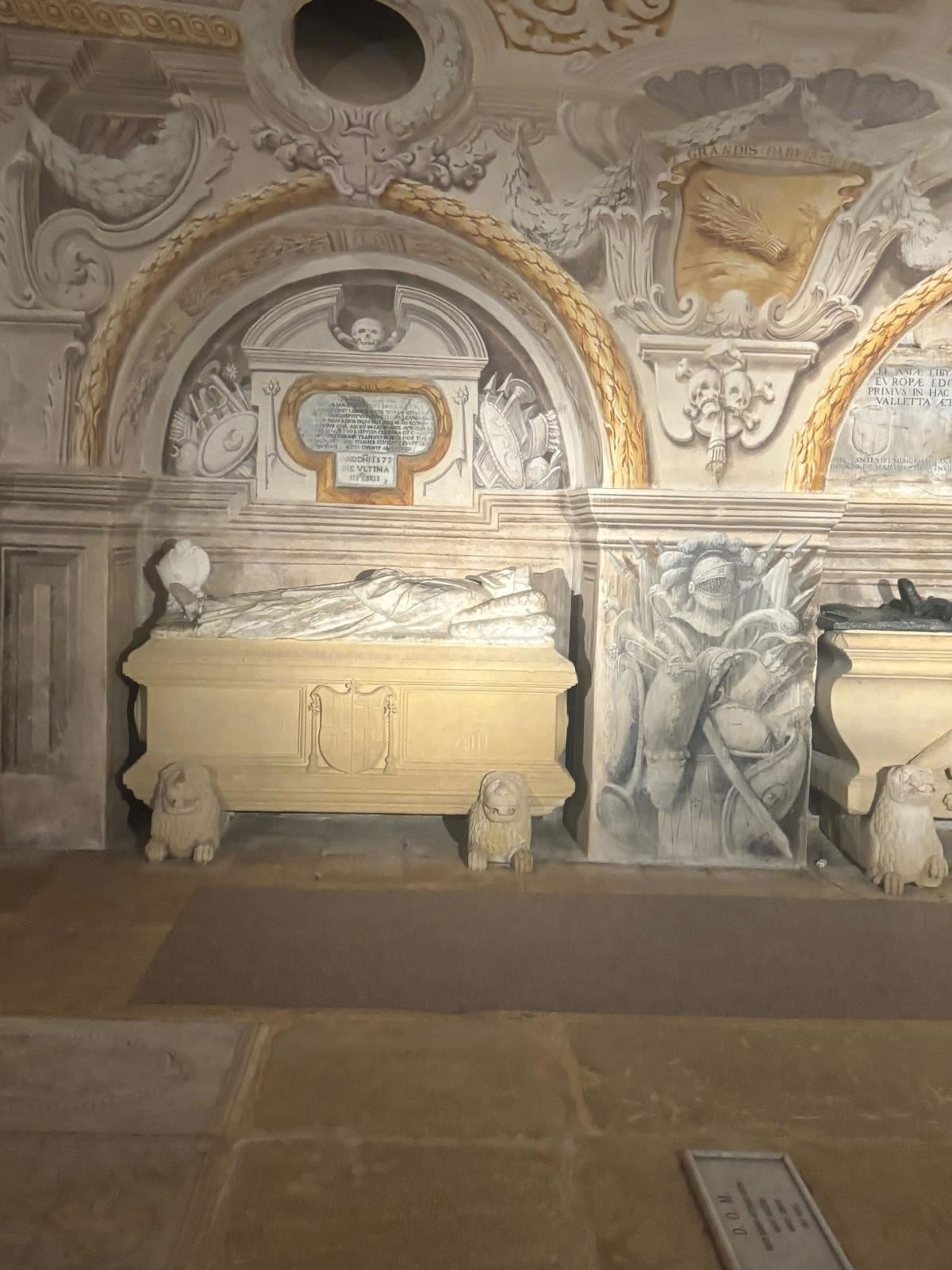
Artistic Decoration and Frescoes
One of the most remarkable features of the crypt is its decorative programme. The ceiling and walls are adorned with frescoes dating from the early 18th century, attributed to the Italian artist Niccolò Nasoni.
Executed using the buon fresco technique, these paintings feature a subdued palette and a trompe-l'œil style that enhances the architectural illusion of the space. The iconography reflects themes of mortality, resurrection, and divine judgement.
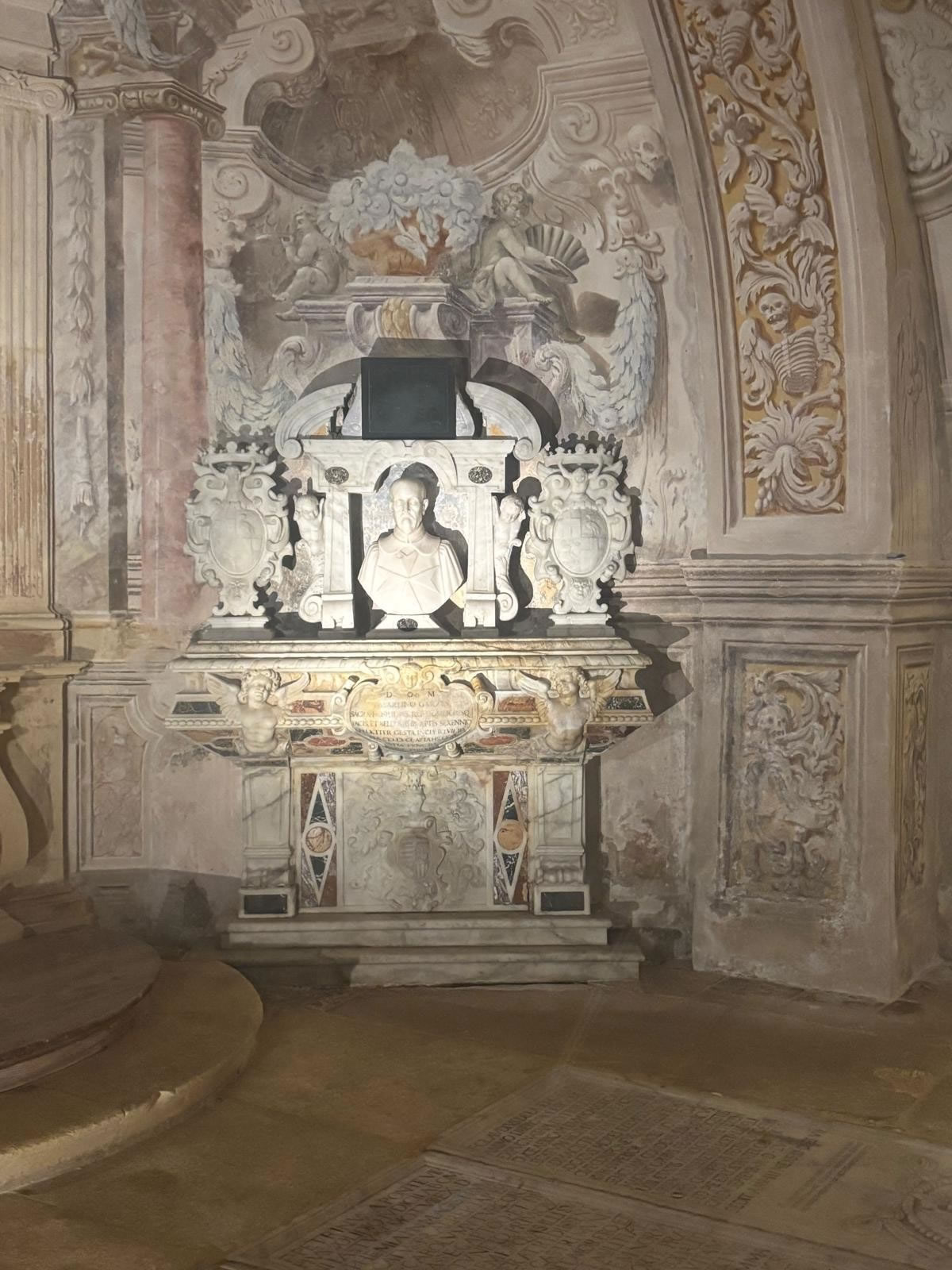
Motifs within the crypt include:
- Skeletons and funerary symbols
- War trophies representing the Order’s military role
- Old Testament scenes symbolising sacrifice and redemption
The artistic programme is deliberately restrained yet deeply symbolic, aligning with the funerary nature of the crypt.
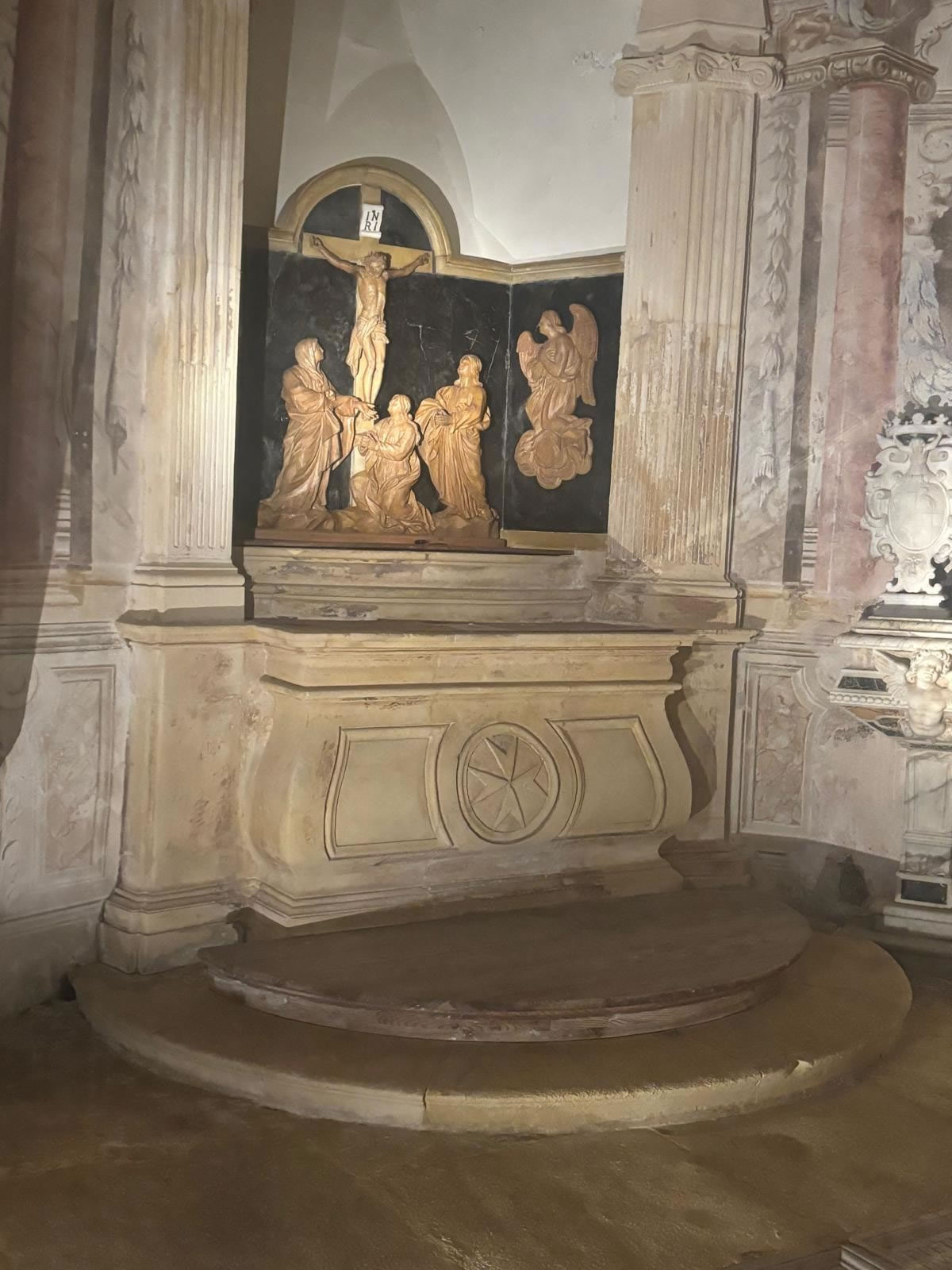
Who is Buried in the Grand Masters’ Crypt
The crypt contains the remains of the earliest Grand Masters of the Order of St John, covering the period from the early 16th century to the early 17th century.
The list of individuals buried here are:
- Grand Master Frà Pietro del Monte
- Grand Master Frà Juan de Homedes
- Grand Master Frà Pietro del Ponte
- Grand Master Frà Claude de la Sengle
- Grand Master Frà Martino Garzes
- Grand Master Frà Philip de Villiers L’Isle Adam
- Grand Master Frà Jean Parisot de la Vallette
- Grand Master Frà Alof de Wignacourt
- Grand Master Frà Jean l’ Evesque de la Cassière
- Grand Master Frà Luis Mendes de Vasconcelos
- Grand Master Don Frà Hugo de Loubenx Verdala
- Grand Master Francisco Ximénez de Texada
- Grand Master Fra Matthew Festing 2021
In total, the crypt houses the remains of twelve Grand Masters who ruled the Order during its formative period in Malta and one who was buried here in 2021.
There are also these in the crypt
- Papal Brief in Marble of Pope Gregory XIII
- Poem by Frà Oliver Starky
Later historical accounts suggest that additional burials may have occurred, including an unmarked grave attributed to Grand Master Ximenes, and more recently the burial of Grand Master Fra’ Matthew Festing in 2021—the first interment in over two centuries.
Historical Significance
The Grand Masters’ Crypt is not only a burial site but a repository of Malta’s national history. The individuals interred here were instrumental in shaping the island’s political, military, and cultural development.
Figures such as Jean de Valette played pivotal roles in defending Malta during the Great Siege of 1565 and in founding the city of Valletta. Others contributed to the development of infrastructure, art, and religious institutions across the island.
The crypt therefore represents a convergence of personal legacy and collective memory, embodying the achievements and influence of the Knights of St John.
Restoration and Conservation
Over time, the crypt suffered from environmental damage, particularly due to fluctuations in temperature and humidity that affected both the stonework and frescoes.
A major restoration project began in 2007 and continued for over a decade, culminating in the reopening of the crypt in 2020. The project cost approximately €500,000 and was undertaken by the St John’s Co-Cathedral Foundation.
Key conservation measures included:
- Stabilisation of wall paintings
- Cleaning and restoration of stone tombs
- Installation of environmental control systems
- Improved lighting and visitor access
These efforts ensured the long-term preservation of the crypt and allowed it to be reopened to the public after many years of restricted access.
Modern Use and Visitor Experience
Today, the Grand Masters’ Crypt forms part of the visitor experience at St John’s Co-Cathedral, one of Malta’s most visited cultural landmarks. The crypt can be viewed through a specially designed access point, allowing visitors to appreciate its historical and artistic features while ensuring preservation.
The space remains a place of reverence, reflecting its original purpose as a burial site. Occasional ceremonies and special events, such as the funeral of Grand Master Festing, highlight its continued ceremonial significance.
Visitors are encouraged to approach the site with respect, recognising its importance both as a heritage monument and as a sacred space.
Relationship with St John’s Co-Cathedral
The Grand Masters’ Crypt is intrinsically linked to St John’s Co-Cathedral, which served as the conventual church of the Knights of St John. While the cathedral above is renowned for its Baroque splendour, the crypt below offers a more solemn and introspective experience.
Together, they represent two complementary aspects of the Order’s identity: the grandeur of public worship and the humility of final rest.
Conclusion
The Grand Masters’ Crypt beneath St John’s Co-Cathedral stands as one of Malta’s most important historical and cultural sites. Through its architecture, artworks, and burials, it preserves the legacy of the Knights of St John and their enduring impact on the island.
As both a burial place and a monument, the crypt offers a unique insight into Malta’s past, making it an essential destination for anyone seeking to understand the island’s rich heritage.