Introduction
The Oratory of St John’s Co-Cathedral in Valletta is one of the most historically and artistically significant spaces within the cathedral complex. While the main nave of the Co-Cathedral dazzles with Baroque splendour, the Oratory offers a more focused and intimate environment, housing some of the most important masterpieces of Western art, most notably works by Caravaggio.
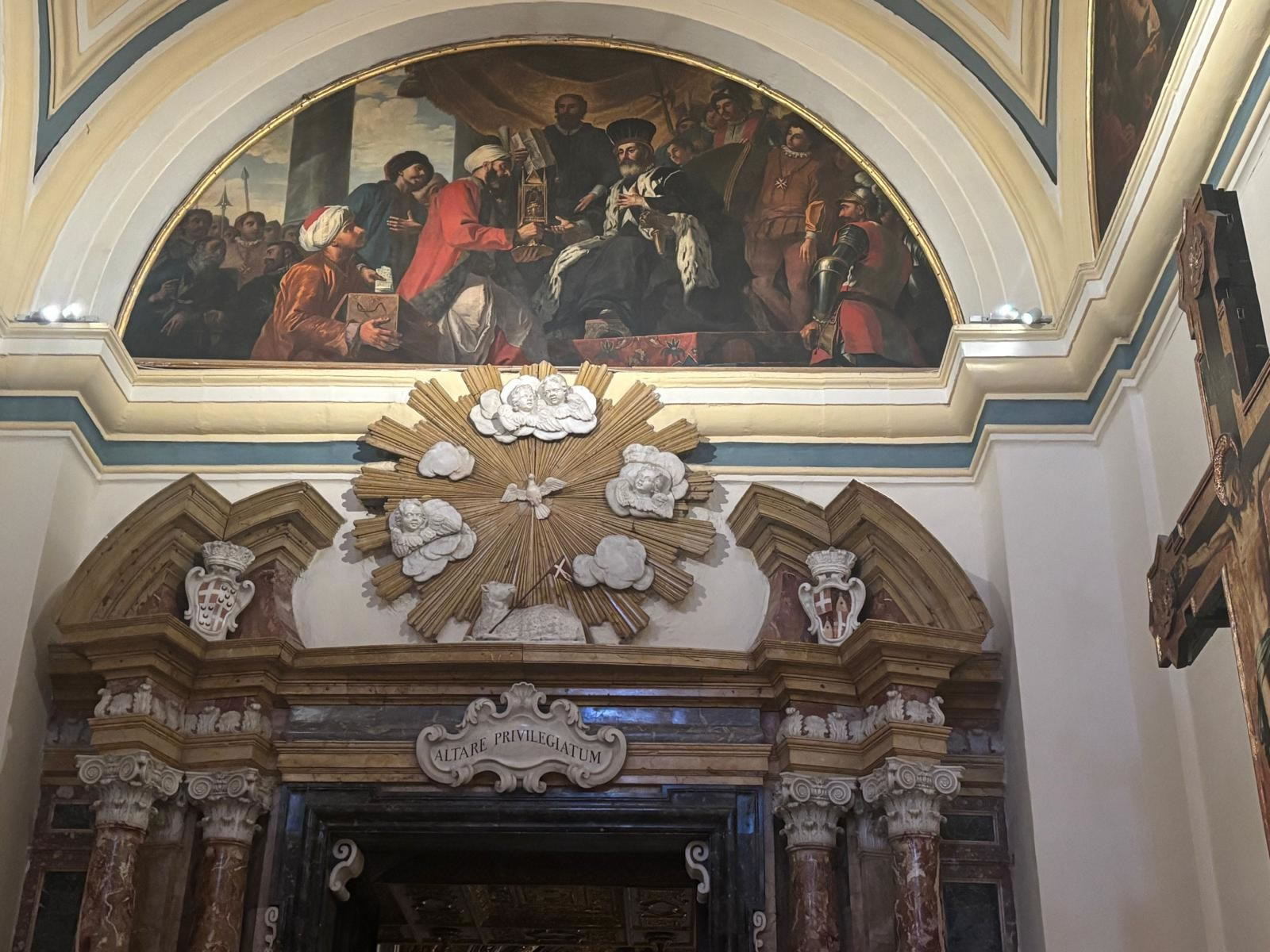
This sacred and ceremonial space reflects the spiritual life of the Knights of St John, combining devotion, ritual, and artistic patronage. Today, it stands as one of Malta’s foremost cultural treasures.
Construction and Early Development
The Oratory was constructed in the late 16th century and completed by 1603. It was originally intended as a place of devotion and meditation for young novices of the Order of St John.
Unlike the main church, which served large congregations and formal ceremonies, the Oratory provided a more private setting for prayer and reflection. It was also used by the Confraternita della Misericordia, a religious confraternity associated with charitable works and spiritual activities.
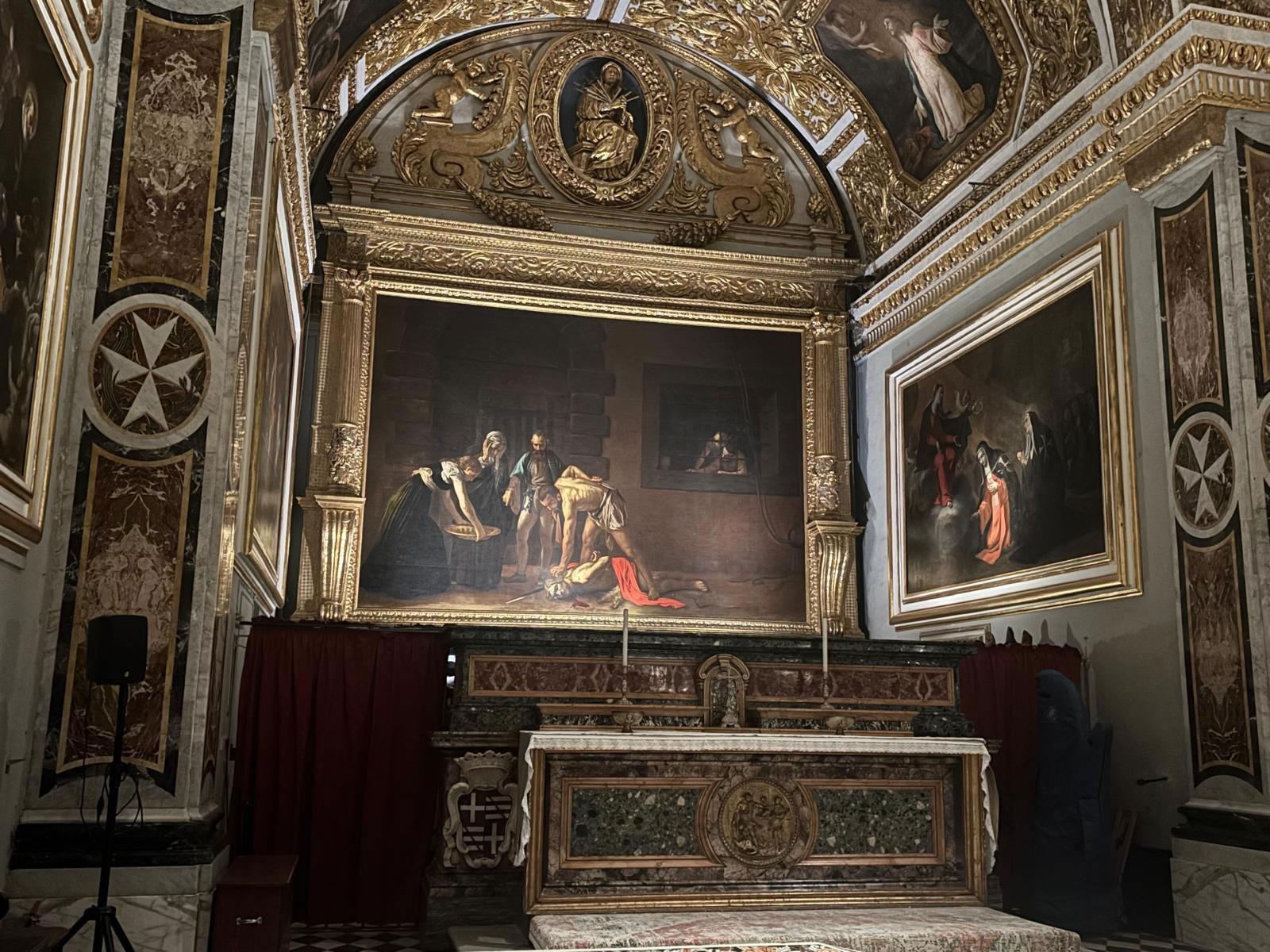
The Oratory quickly became an important ceremonial space. It hosted significant events such as the investiture of Knights and religious gatherings linked to the feast of the Beheading of St John the Baptist, celebrated on 29 August.
Caravaggio and the Oratory
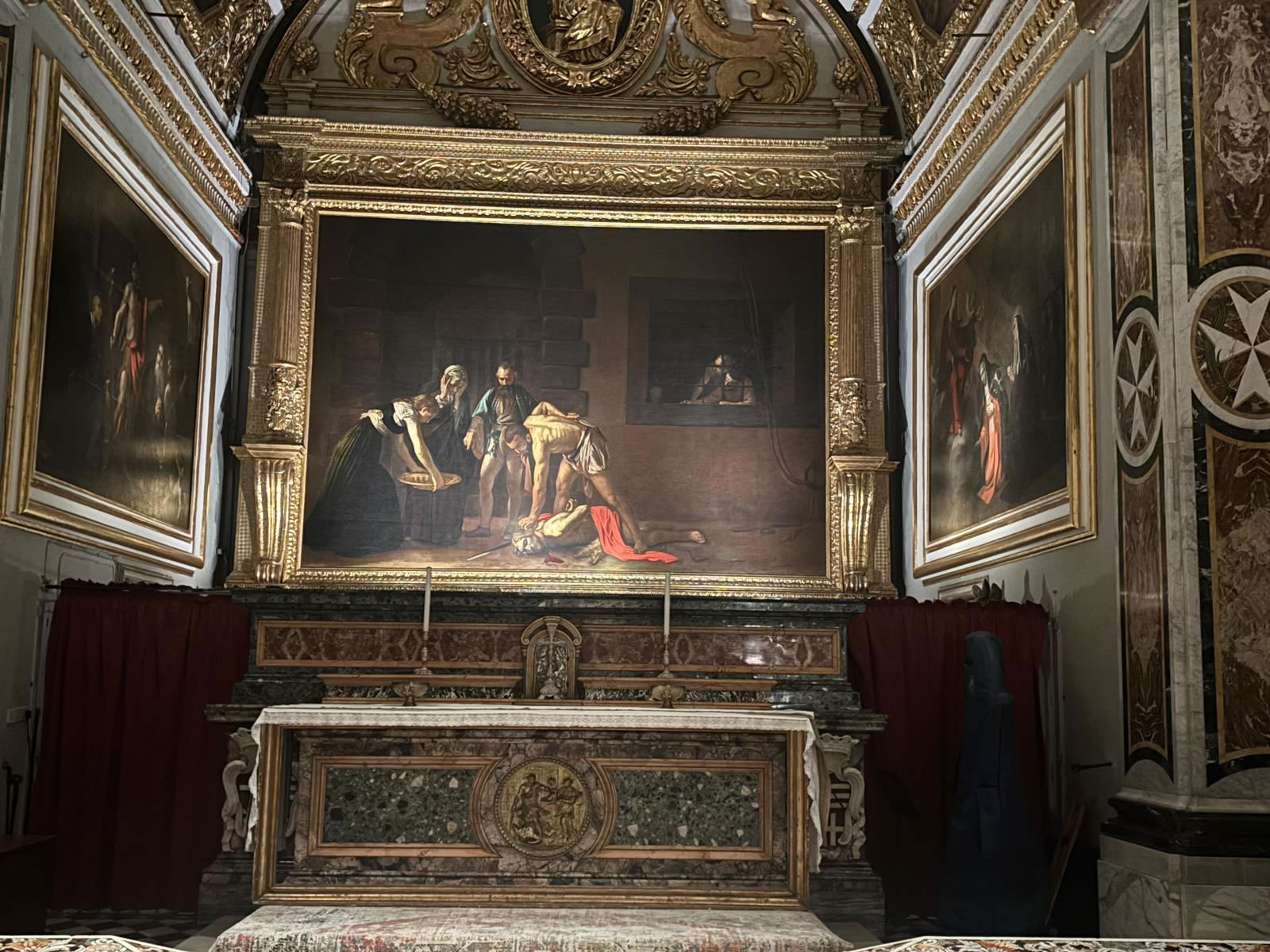
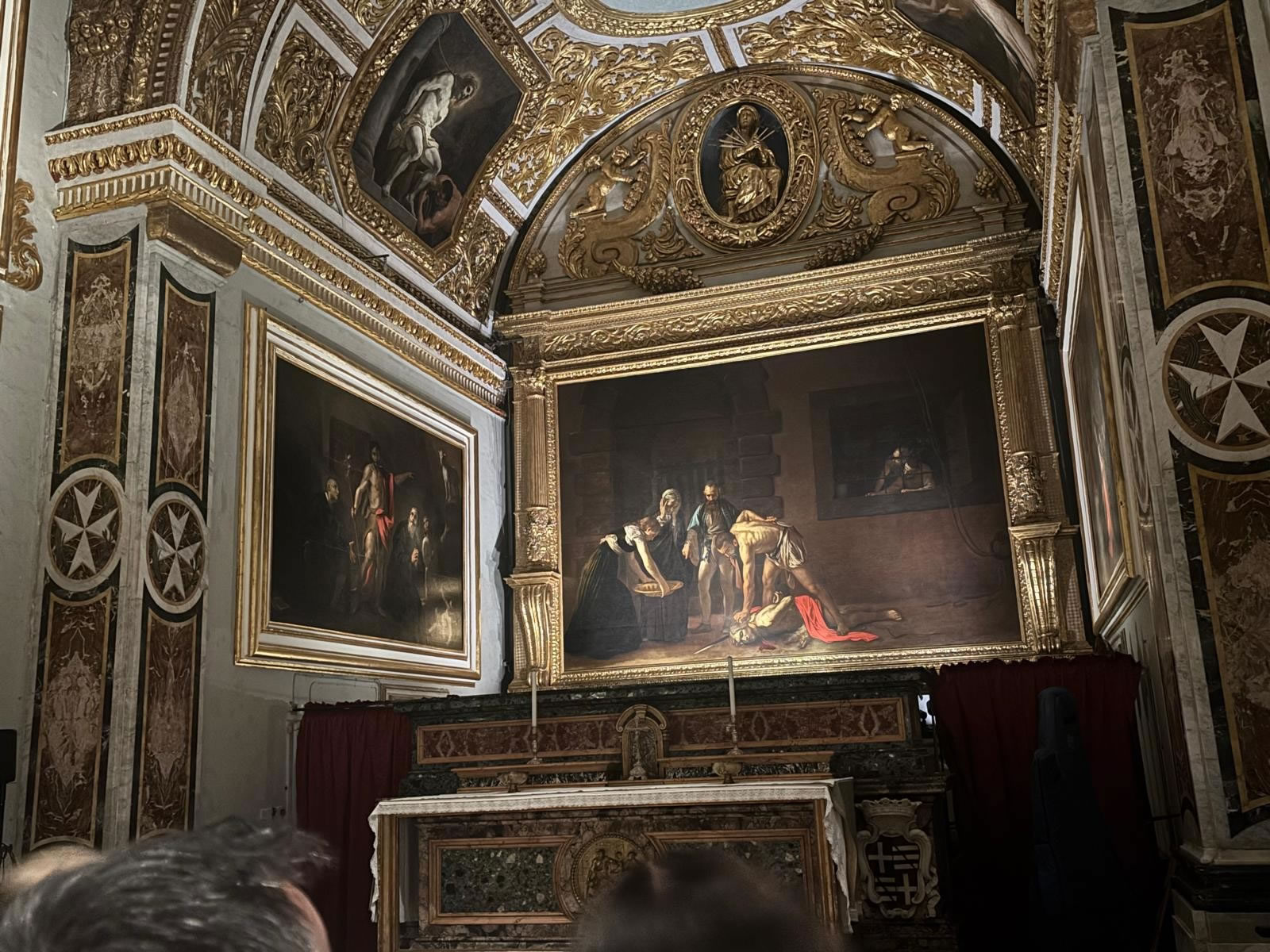
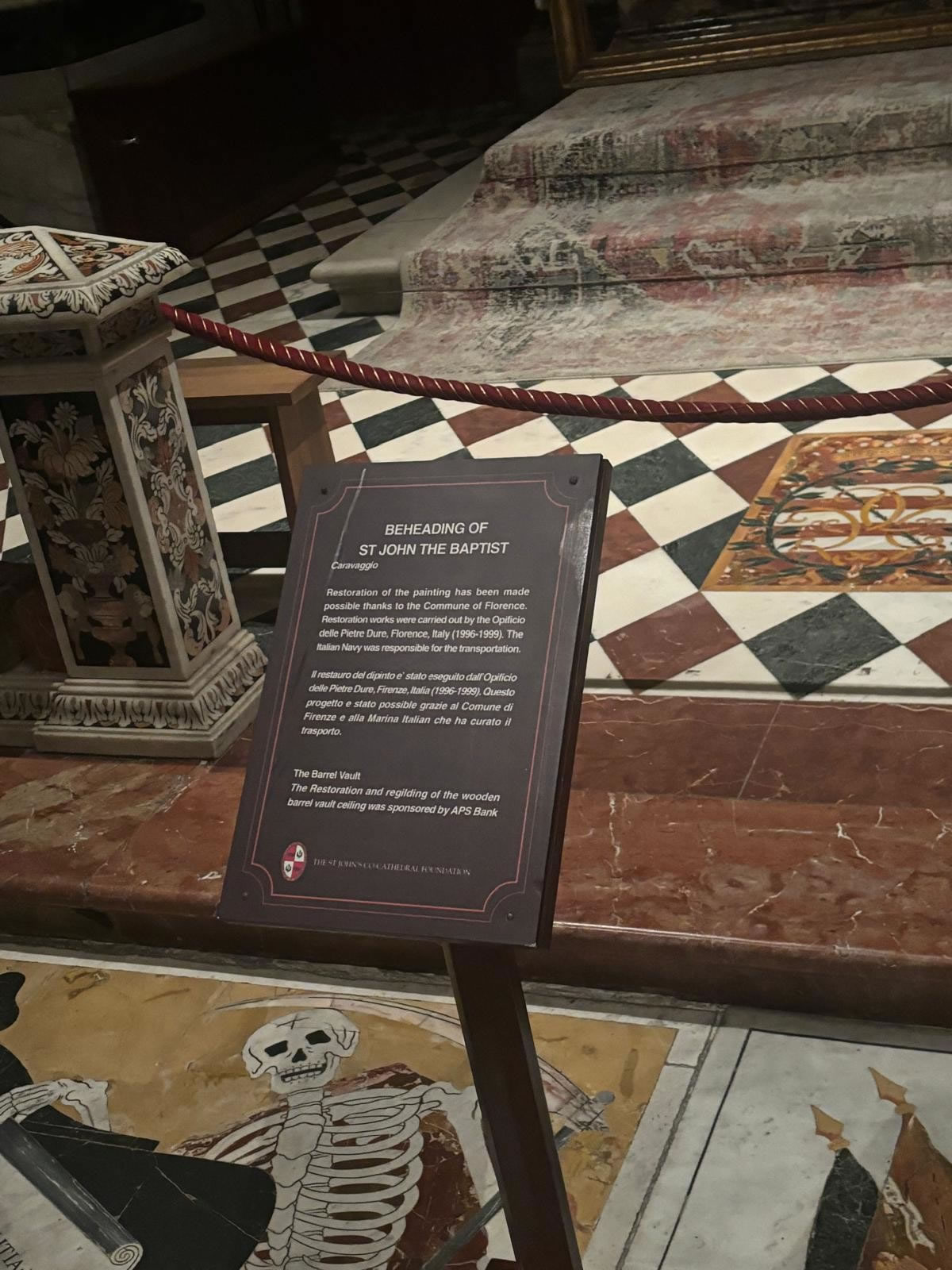
The Oratory is most famous for housing Caravaggio’s monumental painting The Beheading of Saint John the Baptist, completed in 1608. This masterpiece is widely regarded as one of the greatest works in Western art and remains the largest painting ever created by the artist.
The painting was specifically commissioned for the Oratory by the Knights of St John, reinforcing the importance of the space within the Order’s spiritual and artistic programme.
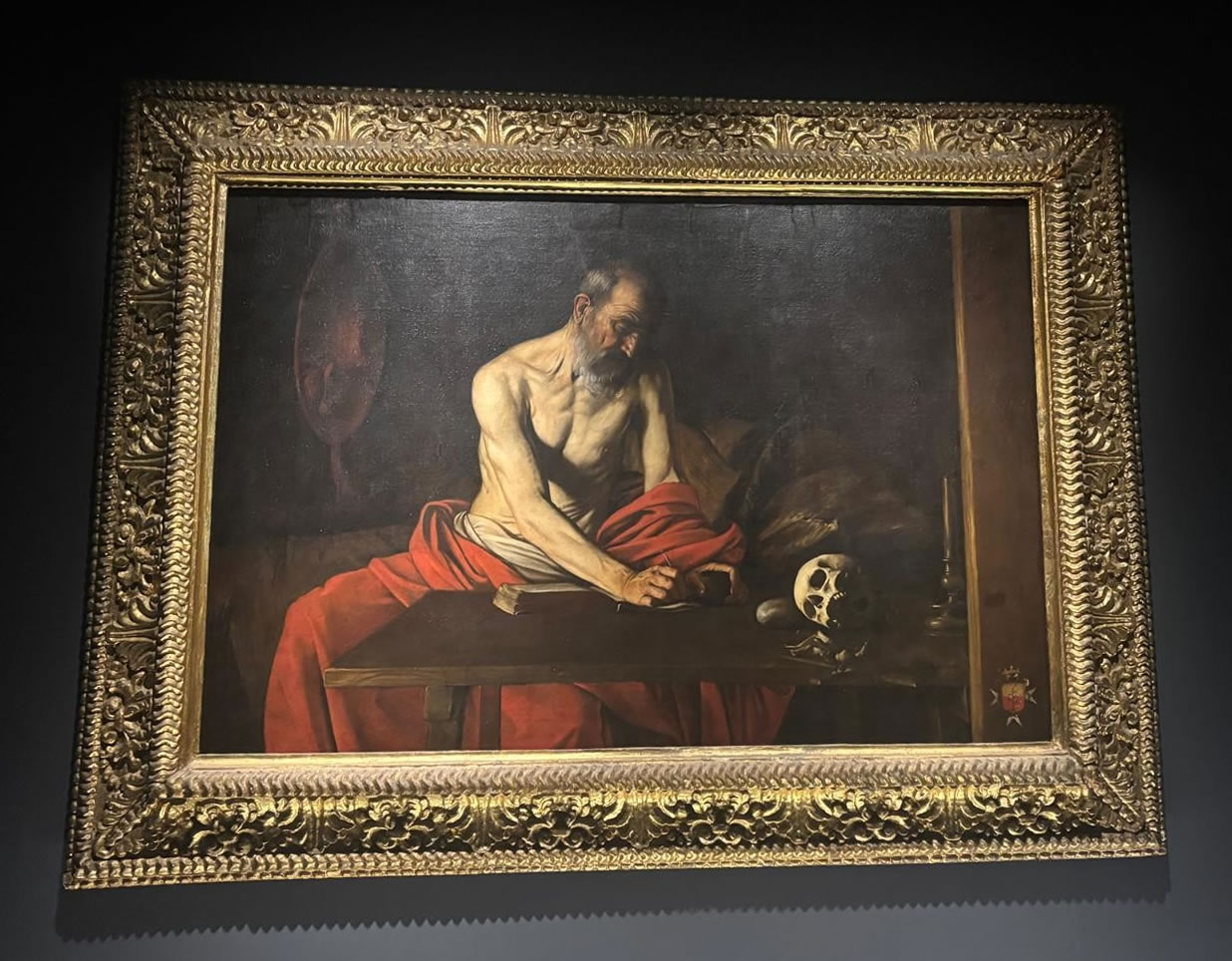
Caravaggio also painted St Jerome Writing during his time in Malta, another significant work now associated with the Oratory and its adjoining spaces.
The Oratory is also historically linked to a dramatic episode in Caravaggio’s life. In December 1608, following his arrest and escape from imprisonment, the artist was formally expelled from the Order in a ceremony held in this very space, in front of his own painting.
Architectural Features
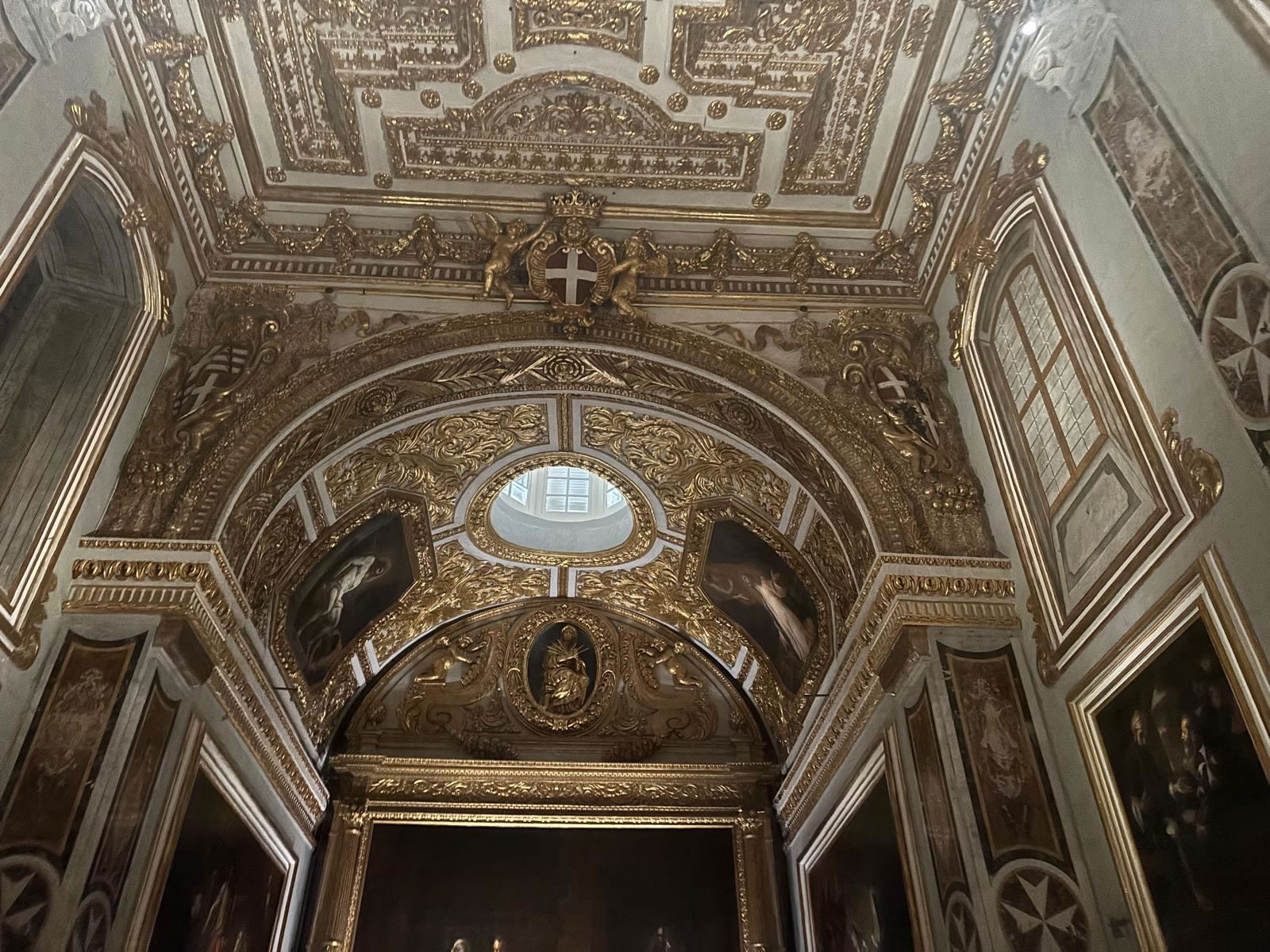
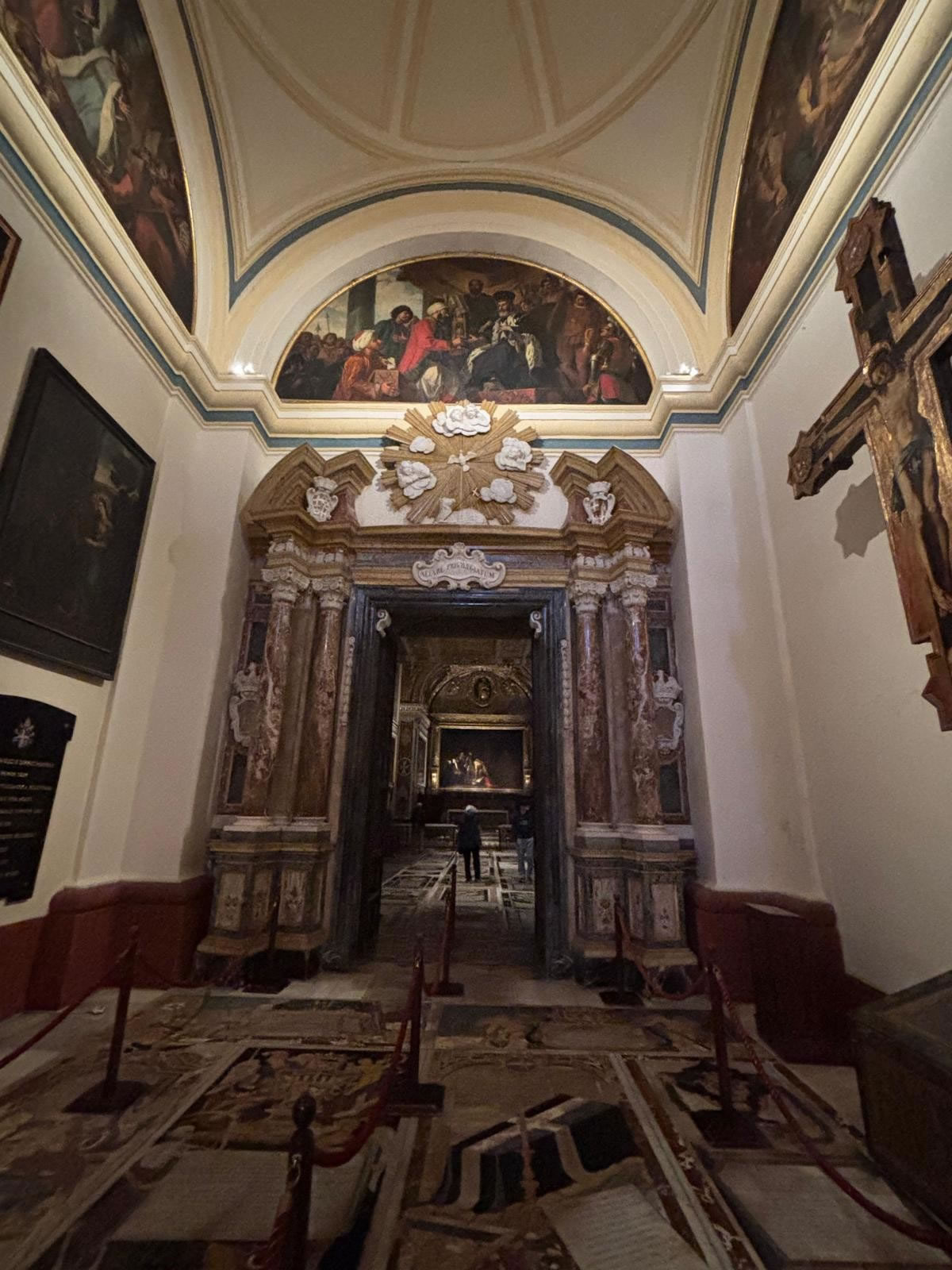
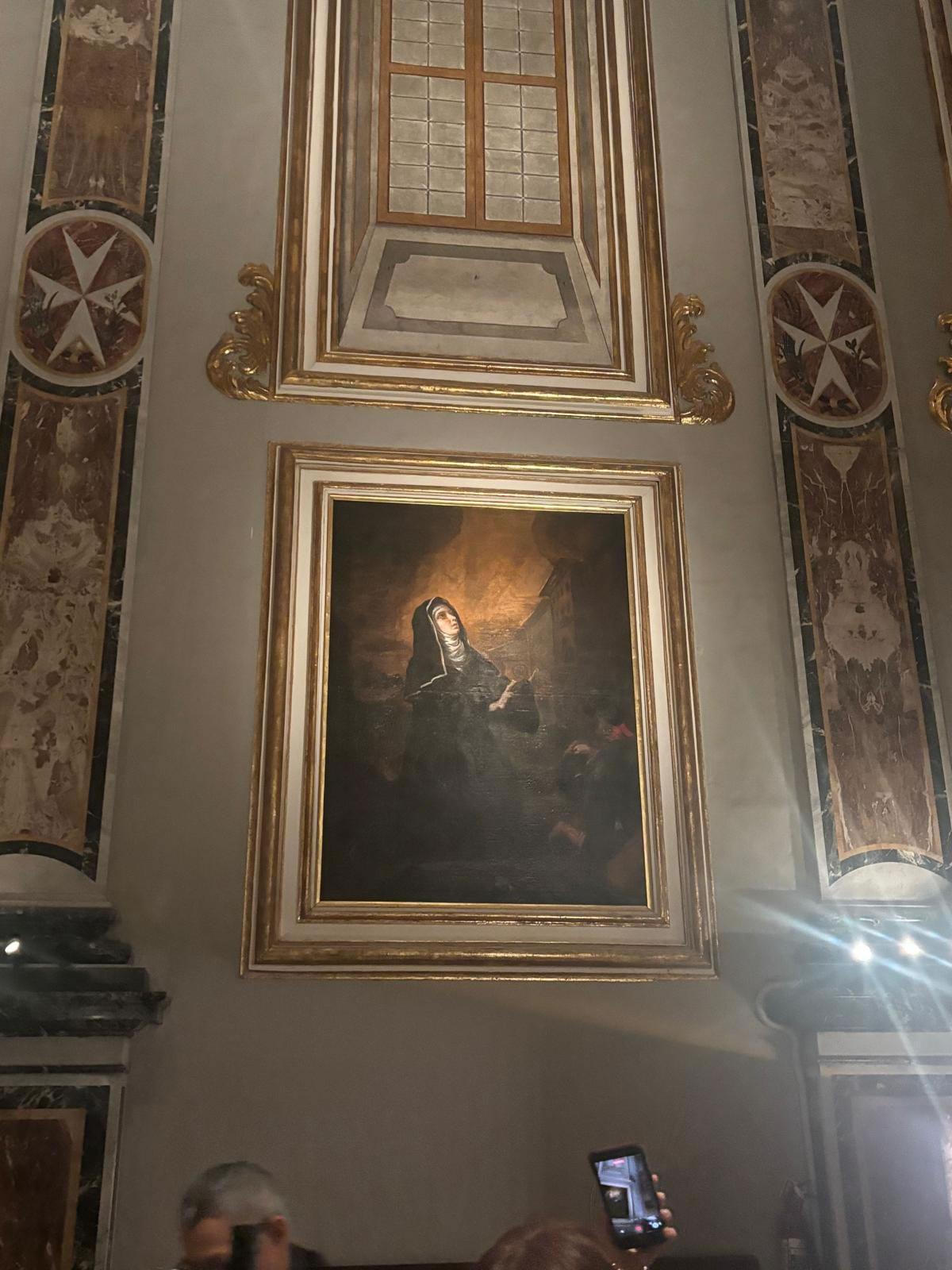
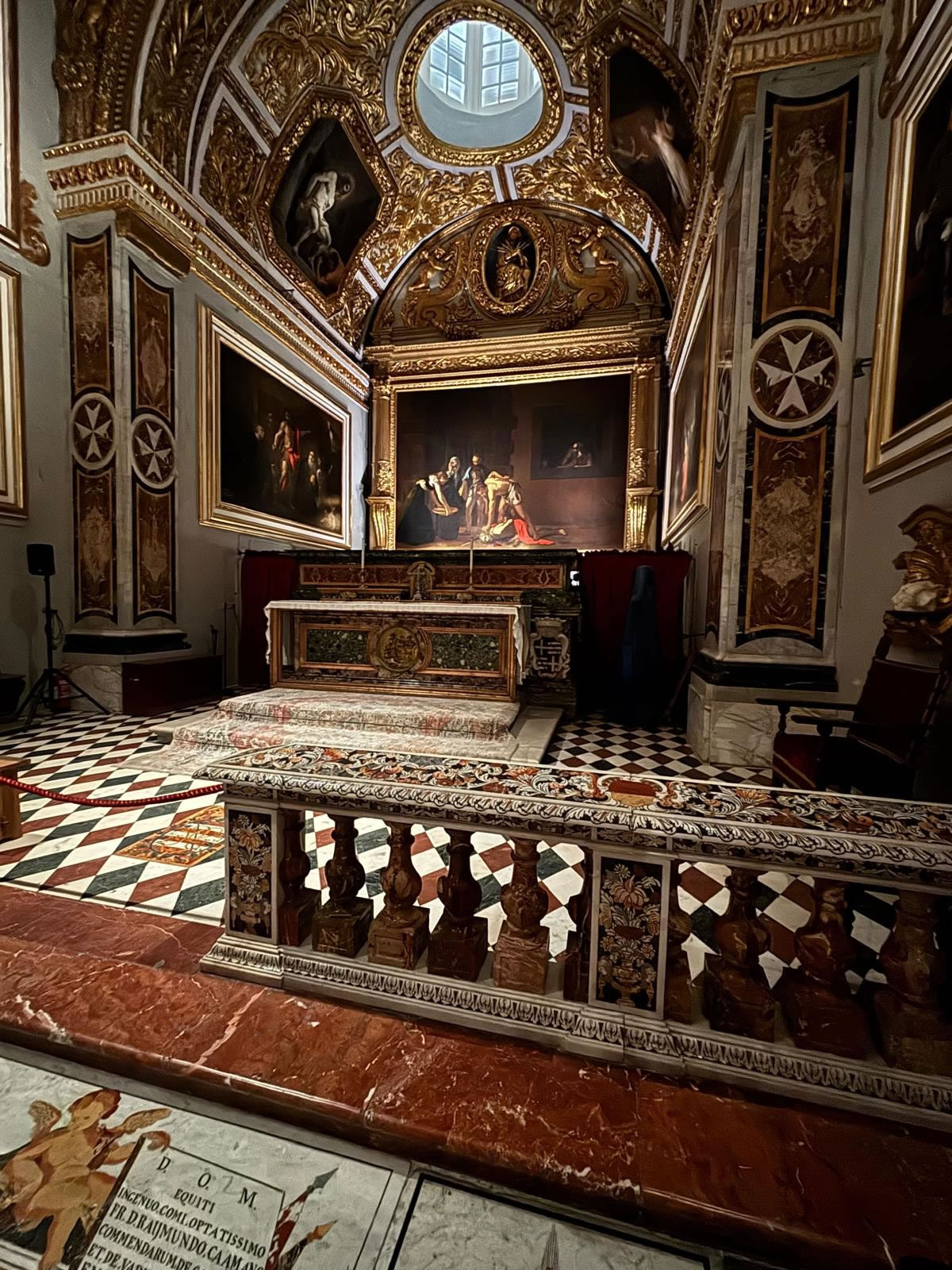
Architecturally, the Oratory is a rectangular hall attached to the Co-Cathedral, designed with simplicity in its original form. Over time, however, it was transformed into a richly decorated Baroque interior.
The structure includes:
- A central altar aligned with Caravaggio’s painting
- High vaulted ceilings
- Marble wall cladding
- Decorative arches and apse
The design reflects the dual function of the space as both a place of devotion and a setting for ceremonial gatherings.
Baroque Decoration and Artistic Programme
The Oratory underwent a major decorative transformation between 1679 and 1690, when it was enriched with Baroque embellishments.
This phase included the addition of ten large paintings by Mattia Preti, depicting saints associated with the Order of St John.
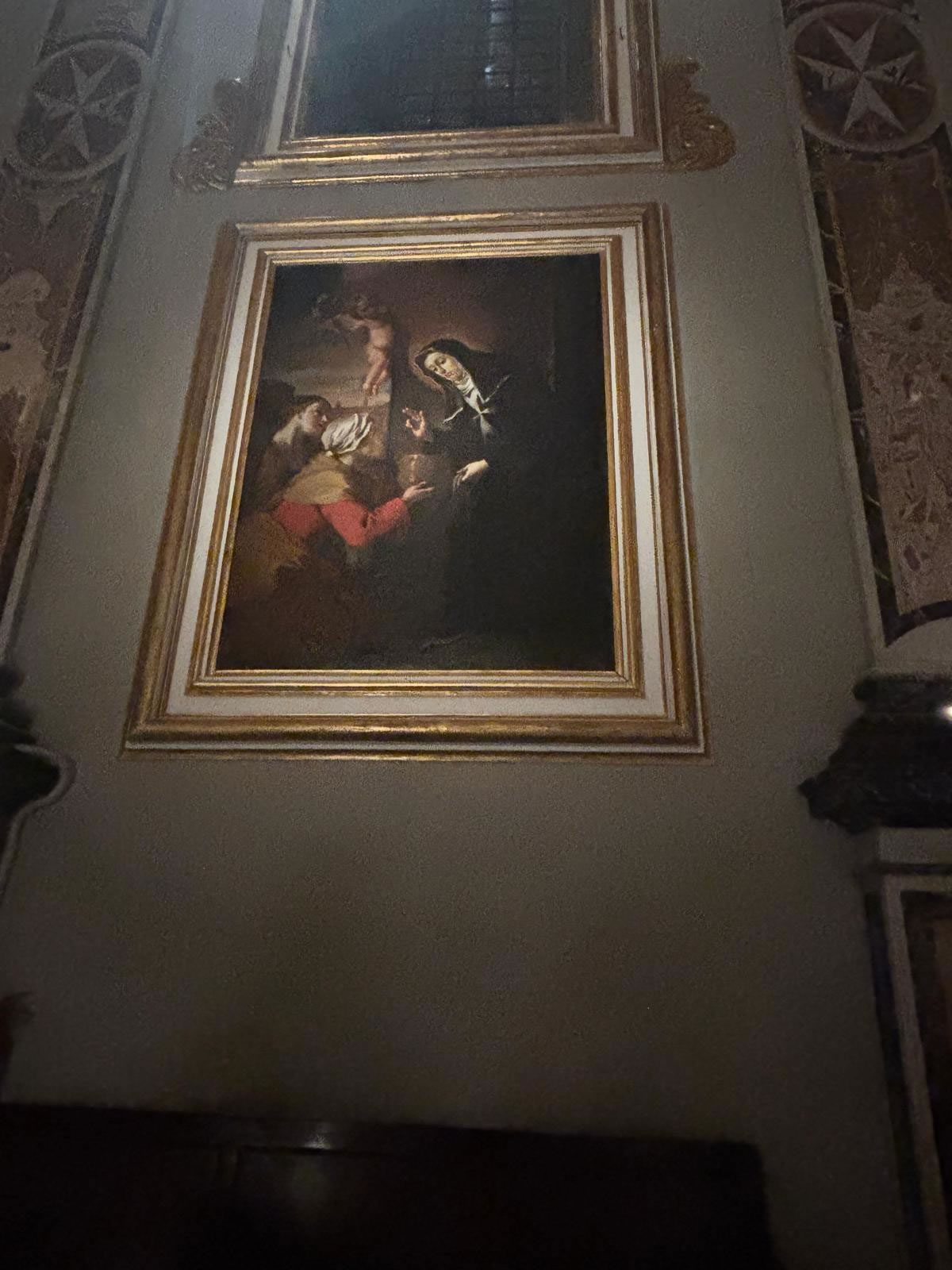
Preti, one of the leading Baroque artists of the time, also contributed to the decoration of the main cathedral. His works in the Oratory complement the dramatic style of Caravaggio, creating a cohesive artistic environment.
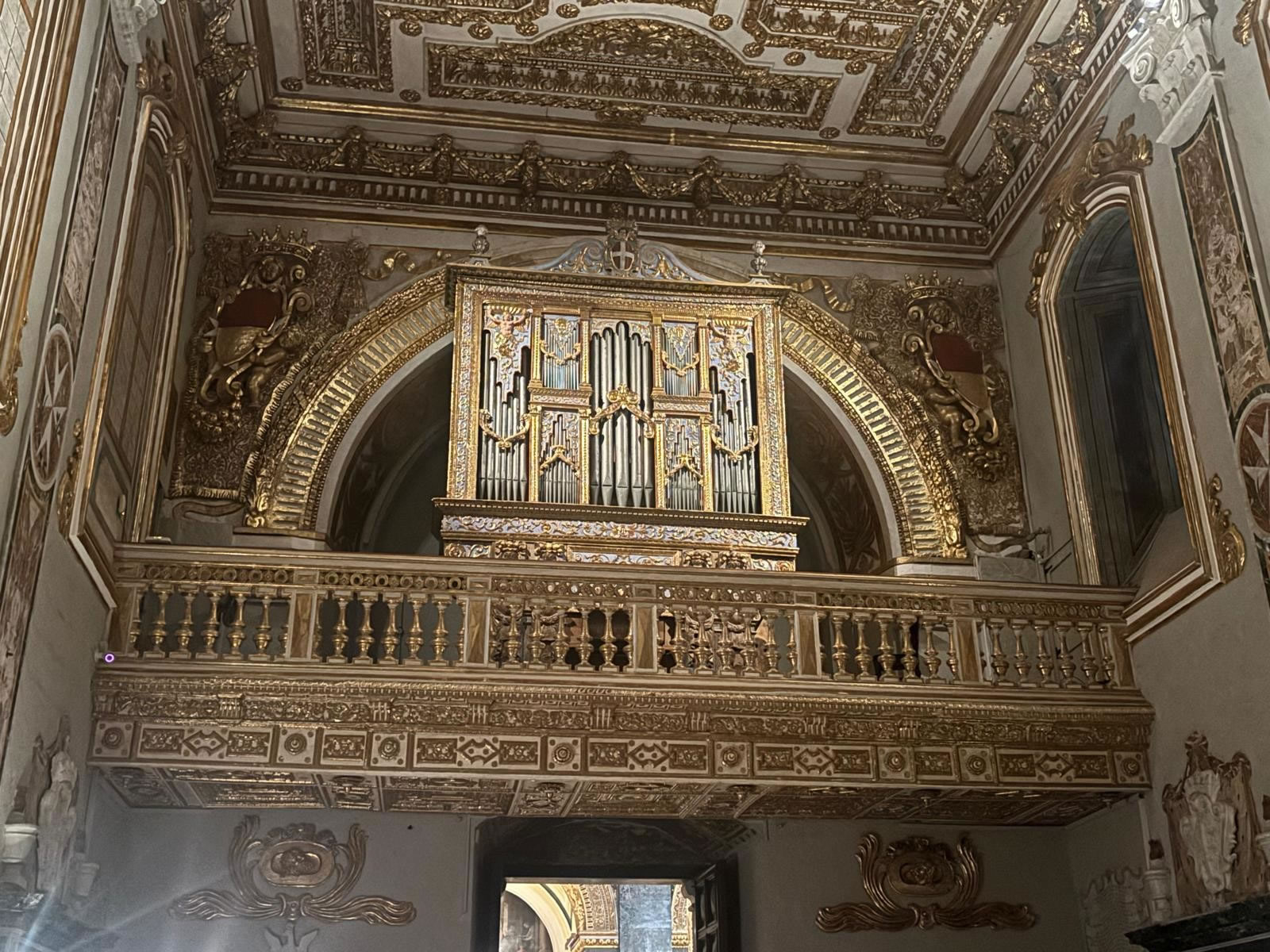
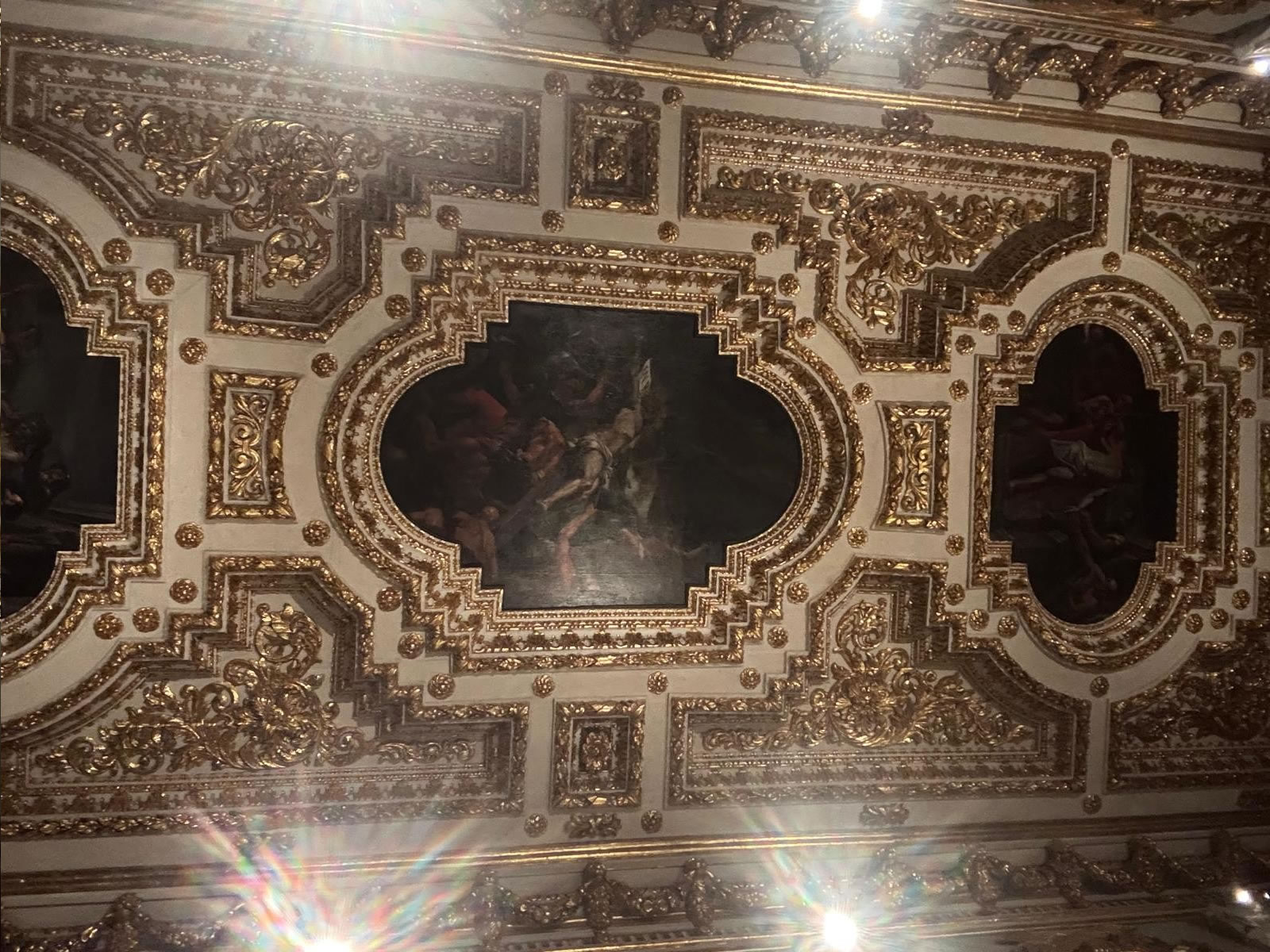
The ceiling features a richly gilded wooden soffit, while the walls are adorned with marble cladding added in 1740.
Additional artistic elements include:
- Oil paintings on stone and canvas depicting biblical scenes
- Trompe-l'œil decorative frames and architectural illusions
- Sculptural and ornamental details enhancing the apse
Together, these elements transform the Oratory into a fully immersive Baroque space.
Artworks and Iconography
The artistic focus of the Oratory revolves around themes of martyrdom, sacrifice, and redemption, reflecting the life and death of St John the Baptist.
Caravaggio’s The Beheading of Saint John the Baptist dominates the space with its dramatic composition and use of chiaroscuro. The painting’s scale and emotional intensity create a powerful visual and spiritual experience.
The surrounding works by Mattia Preti depict saints and figures associated with the Order, reinforcing the Oratory’s role as a space of reflection on the values and mission of the Knights.
Restoration and Conservation
The Oratory has undergone several restoration campaigns over the centuries, the most recent of which was completed in 2021.
This major project focused on the conservation of the Oratory’s late-Baroque embellishments, including:
- Restoration of paintings and decorative elements
- Cleaning and stabilisation of stone surfaces
- Conservation of the gilded ceiling and soffit
The restoration also led to the creation of the Caravaggio Wing, enhancing the visitor experience and providing additional interpretative context.
Advanced lighting systems were installed to protect the artworks, particularly Caravaggio’s painting, from heat and ultraviolet damage.
Modern Use and Visitor Experience
Today, the Oratory forms an integral part of the visitor route through St John’s Co-Cathedral. It attracts thousands of visitors annually, drawn by its artistic masterpieces and historical significance.
The space is also used for cultural events, including musical performances and theatrical productions that explore the history of the Knights and Caravaggio’s time in Malta.
Despite its role as a major tourist attraction, the Oratory retains its original spiritual character, offering a place for reflection and contemplation.
Relationship with St John’s Co-Cathedral
The Oratory is closely connected to the broader architectural and spiritual framework of St John’s Co-Cathedral. While the cathedral serves as a grand public space, the Oratory provides a more intimate environment.
Together, they represent the dual nature of the Knights’ religious life: public ceremony and private devotion.
Who is Buried in the Oratory
The list of individuals buried here are:
- Frà Giovanni Francesco Aijroli
- Frà Stefano Maria Lomellini
- Frà Don Ferdinando Vargas y Castro
- Frà Giovanni Minutillo
- Frà Ignatius Argote y Guzman
- Frà Don Gaspar de Monreal
- Frà Francesco Maffei
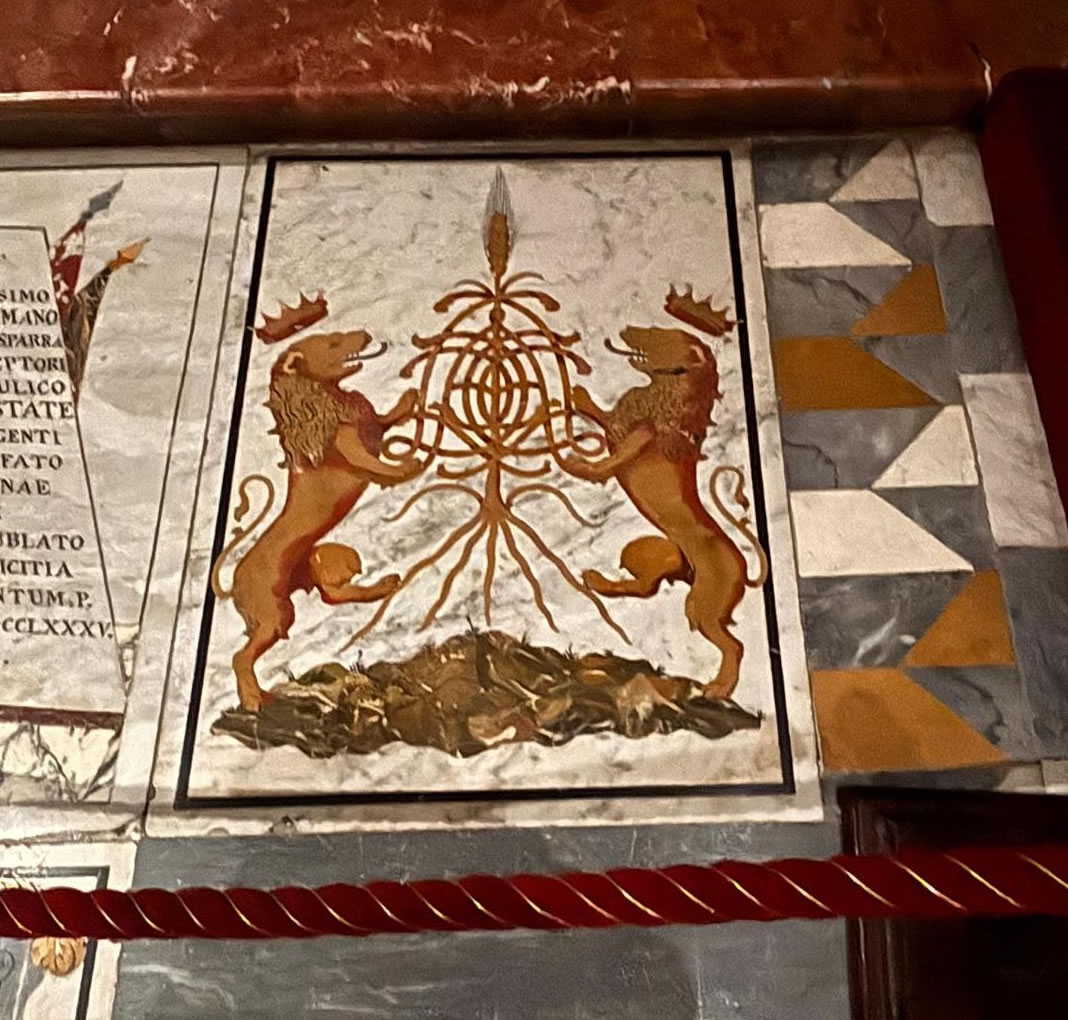
- Coat of arms Giovanni family on a tombstone
- Louis de Saint Pol
- Frà Carlo Linguilia
- Frà Nicola Abri Dezcallar
- Frà Louis du Mesnil de Simon
- Frà Stefano Libreri
- Ferdinando Quintanilla y Andra
- Frà Bernardo de Vecchiettis
- Frà Don Ramon Caamano
- Frà Don Emanuel Antonio de Souza e Almeijda
- Frà Jacques de Cordon d’Evieu
- Francisco Riaño Orobio y Arriaga
- Frà Don Juan Pablo de Arriaga
- Frà Don Enrico de Rocafull
- Coat of arms of the Lomellini Family on a tombstone
- Frà Zacharia Doria
- Frà Don José Contreras y Villaroel
- Frà Sancho Basurto
- Frà Antonio Abreo
- Frà Giovanni Andrea Pellerano
- Frà Gerolamo di Nobili
- Frà Louis le Nourry Dumesny Pontauray
- Frà Juan Pereira Coutinho
- Frà Francisco Guedes de Magelhaes
- Frà Alexander de Loubert Martainville
- Frà Andrea de Giovanni
- Frà Don Giovanni de Giovanni
- Frà Kaspar Fidel von Schönau
- Frà Pierre de Veure
- Emmanuel Ballesteros
- Frà Marion de Tressemanes Chastuel Brunet
- Frà Vincenzo Montalto
- Ġużeppi Chinzio
- Frà Giovanni Lanfranco Ceba
- Frà Don Ramon Soler
- Frà Dioniso Ceba
Conclusion
The Oratory of St John’s Co-Cathedral stands as one of Malta’s most remarkable cultural and artistic spaces. Through its architecture, artworks, and historical associations, it offers a unique insight into the world of the Knights of St John.
From its origins as a place of devotion for novices to its current role as a major cultural attraction, the Oratory continues to inspire visitors with its beauty and historical depth.
For anyone exploring Valletta and St John’s Co-Cathedral, the Oratory is an essential destination—an extraordinary space where art, history, and spirituality converge.