Hidden beneath the magnificent interior of St John’s Co-Cathedral in Valletta, Malta lies one of the most historically significant burial chambers in Europe – the Grand Masters’ Crypt. Among its many monuments, inscriptions, and tombs is a fascinating literary relic: a Latin poem written by Oliver Starkey, an English knight of the Order of St John.
Although often mistakenly believed to be buried in the crypt, Oliver Starkey is instead commemorated through this inscription dedicated to one of Malta’s most important historical figures – Grand Master Jean de Vallette.
Who Was Oliver Starkey?
Sir Oliver Starkey (c. 1523 – 1588) was an English knight of the Order of St John and a key historical figure during the turbulent 16th century. He holds a unique distinction as the only English knight known to have actively participated in the Great Siege of Malta in 1565.
Starkey served as Lieutenant Turcopolier of the Order and was responsible for coastal defences around Birgu during the Ottoman siege. At the same time, he acted as Latin Secretary to Grand Master Jean de Vallette, playing both a military and intellectual role in the Order’s administration.
His career continued to flourish after the siege. He later became Grand Prior of England and served under multiple Grand Masters, demonstrating his importance within the hierarchy of the Knights Hospitaller.
The Great Siege of Malta (1565)
The Great Siege of Malta in 1565 was one of the defining conflicts between the Ottoman Empire and Christian Europe. The Knights of St John, under the leadership of Grand Master Jean de Vallette, successfully resisted a massive Ottoman invasion.
This victory was crucial in halting Ottoman expansion into the western Mediterranean and elevated Malta’s importance as a strategic and symbolic stronghold of Christianity. The founding of Valletta shortly after the siege further cemented this legacy.
St John’s Co-Cathedral and Its Construction
St John’s Co-Cathedral was commissioned in 1572 by Grand Master Jean de la Cassière and built between 1573 and 1578. Designed by Maltese architect Girolamo Cassar, it served as the conventual church of the Knights of St John.
While its exterior reflects a fortified and austere style, the interior is one of the most elaborate Baroque masterpieces in Europe, richly decorated with marble tombs, carvings, and paintings.
The Grand Masters’ Crypt
Located beneath the high altar of the cathedral, the Grand Masters’ Crypt is a sacred burial chamber containing the remains of the early leaders of the Order of St John. It includes the tombs of the first Grand Masters who ruled Malta from 1530 onwards.
The crypt is constructed from Maltese globigerina limestone and features frescoes dating to the 18th century, attributed to Italian artist Niccolò Nasoni.
It serves not only as a burial place but also as a powerful symbol of the Order’s legacy, combining art, architecture, and history in a single space.
The Tomb of Jean de Vallette
Grand Master Jean de Vallette, the hero of the Great Siege and founder of Valletta, is one of the most important figures buried in the crypt. His remains were transferred there after the cathedral was completed.
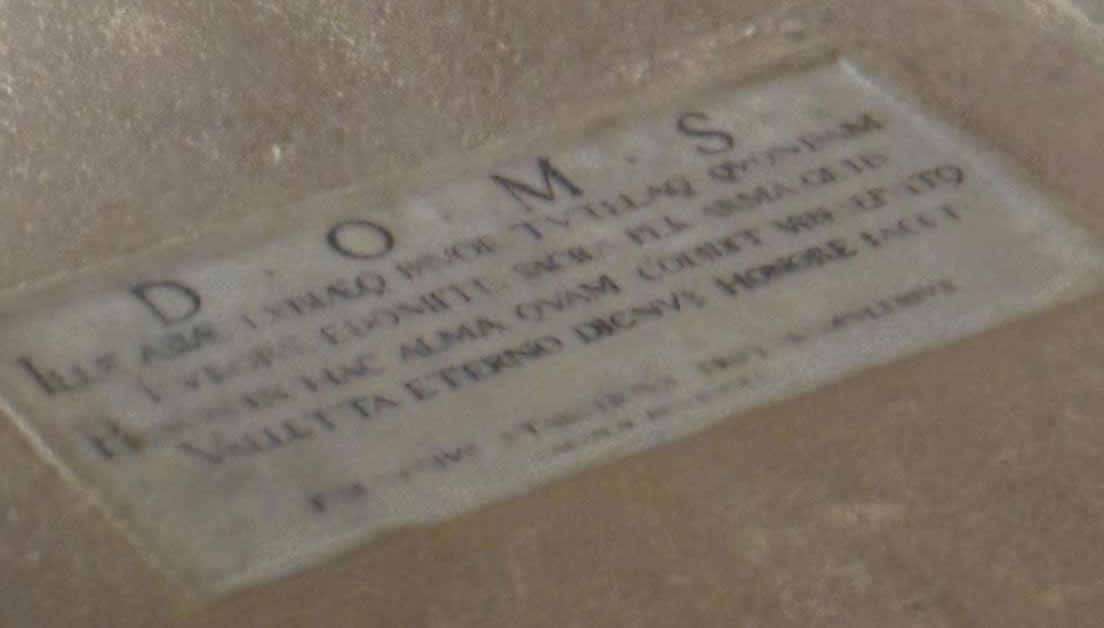
It is here that Oliver Starkey’s Latin poem is inscribed, commemorating Vallette’s achievements and legacy.
The Oliver Starkey Poem
The inscription attributed to Oliver Starkey is a Latin dedication honoring Jean de Vallette. While Starkey himself is not buried in the crypt, his literary contribution has become part of the cathedral’s historical narrative.
Latin Inscription Attributed to Oliver Starkey
D.O.M.
Hic situs est Ioannes de Valetta,
Ordinis Sancti Ioannis Hierosolymitani Magnus Magister,
Vir bello fortissimus,
Qui ingentem Turcarum classem ac exercitum
Magno animo sustinuit atque repulit.
Asiae et Africae terror,
Europae propugnaculum,
Urbis Vallettae conditor,
Dignus qui sempiterna laude celebretur.
English Translation of the Latin Inscription
Sacred to God, the Best and Greatest.
Here lies Jean de Valette,
Grand Master of the Order of Saint John of Jerusalem,
A man most valiant in war,
Who with great courage withstood
And repelled the immense fleet and army of the Turks.
The terror of Asia and Africa,
The bulwark of Europe,
Founder of the City of Valletta,
Worthy to be celebrated with eternal praise.
This poetic tribute emphasizes Vallette’s military victories, particularly against the Ottoman Empire, and celebrates his role in shaping Malta’s history.
Misconceptions About Starkey’s Burial
For many years, it was widely believed that Oliver Starkey was buried in the Grand Masters’ Crypt. However, historical evidence confirms that the tombstone bearing his name actually refers to the poem he composed, not his burial site.
This misunderstanding highlights how inscriptions can sometimes be misinterpreted without proper historical context.
Art, Restoration and Conservation
The Grand Masters’ Crypt underwent extensive restoration between 2007 and 2020, addressing issues such as humidity, salt damage, and deterioration of frescoes and stone monuments.
Today, visitors can view the crypt through a controlled environment designed to preserve its delicate artwork and historical integrity.
Visiting the Grand Masters’ Crypt
The crypt is accessible from within St John’s Co-Cathedral and can be viewed from a dedicated platform. It remains one of the most significant historical attractions in Valletta, offering insight into the lives and legacy of the Knights of Malta.
👉 Explore more: St John’s Co-Cathedral Guide
Conclusion
The story of Oliver Starkey and his poem in the Grand Masters’ Crypt provides a unique intersection of literature, history, and heritage. While he may not rest among the Grand Masters, his words ensure that his legacy remains embedded within one of Malta’s most iconic monuments.
For visitors and historians alike, this inscription offers a deeper understanding of the cultural and historical richness of St John’s Co-Cathedral and the enduring legacy of the Knights of St John.
Frequently Asked Questions
Was Oliver Starkey buried in the Grand Masters’ Crypt?
No, he was not buried there. The inscription is a poem he wrote, not his tomb.
Who is buried in the Grand Masters’ Crypt?
The crypt contains the remains of the early Grand Masters of the Order of St John, including Jean de Vallette.
What is the significance of the poem?
It commemorates Grand Master Jean de Vallette and celebrates his role in the Great Siege of Malta and the founding of Valletta.
When was St John’s Co-Cathedral built?
It was constructed between 1573 and 1578 by the Knights of St John.