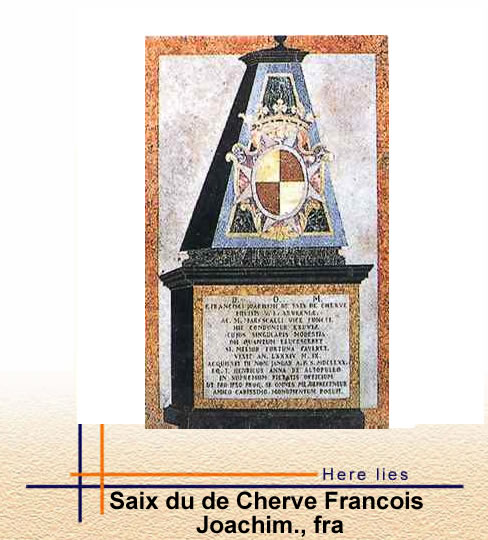
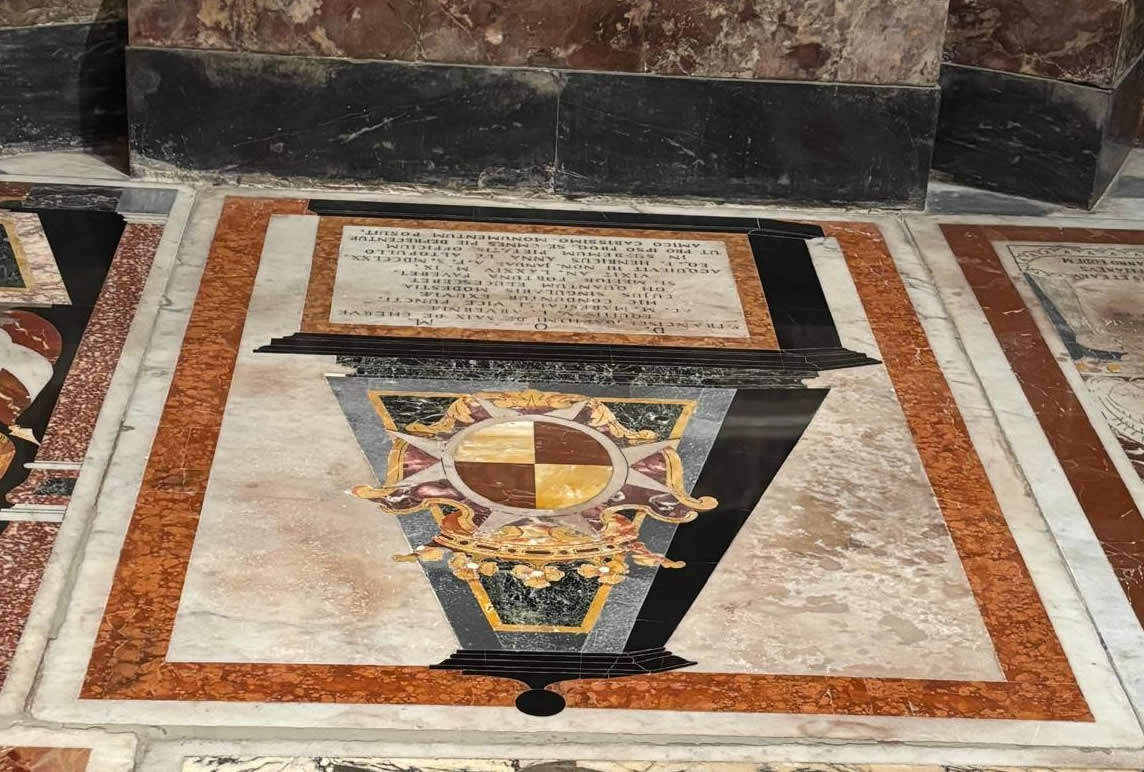
Frà François Joachim du Saix de Chervé was a Knight of the Order of St John of Jerusalem whose memory is preserved within the Main Nave of St John’s Co-Cathedral in Valletta, Malta. His tombstone forms part of one of the most extraordinary marble funerary ensembles in Europe, reflecting the legacy of the Knights of Malta and their enduring presence on the island.
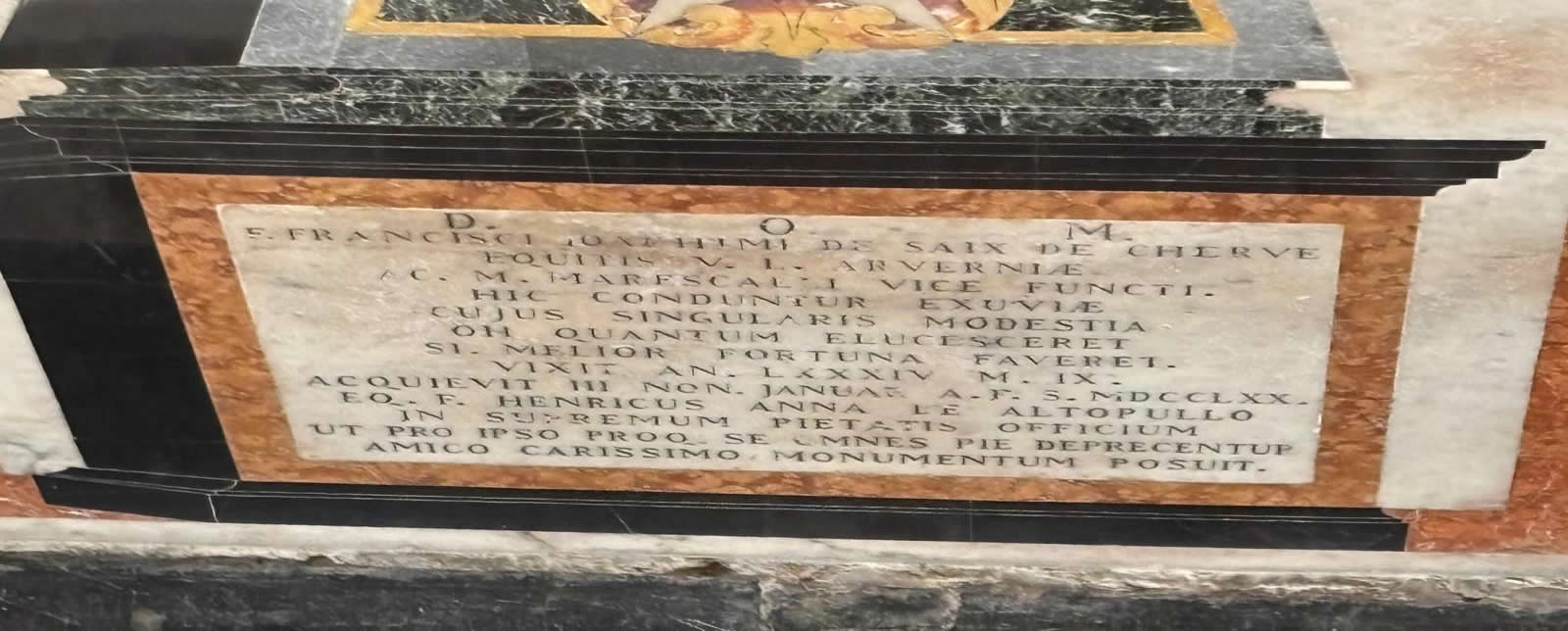
The Main Nave of St John’s Co-Cathedral
The Main Nave of St John’s Co-Cathedral is among the most visually striking spaces in Malta. Its entire floor is covered with intricately designed marble tombstones commemorating knights of the Order of St John. These tombs date from the early 17th to the late 18th centuries and form a continuous historical and artistic record of the Order’s members.
Within this remarkable setting lies the tomb of Frà François Joachim du Saix de Chervé, listed among the knights commemorated in the nave. His presence within this central space indicates his status within the Order and his contribution to its mission.
The Order of St John and Its Knights
The Order of St John, also known as the Knights Hospitaller, was a military and religious order founded in the 11th century. Its members combined monastic vows with military service, defending Christian territories while also providing care for the sick and poor.
By the time the Order established itself in Malta in 1530, it had developed into one of the most powerful institutions in the Mediterranean. Knights such as Frà François Joachim du Saix de Chervé were drawn from noble families across Europe and organised into langues, each representing different regions.
The title “Frà” signifies a professed knight who had taken religious vows, dedicating his life to the Order’s spiritual and military mission.
Life and Status of Frà François Joachim du Saix de Chervé
Although detailed biographical records of Frà François Joachim du Saix de Chervé are limited, his inclusion among the honoured dead of the Main Nave indicates that he was a knight of distinction.
Knights buried within the cathedral were typically individuals who held important roles such as commanders, bailiffs, or naval officers. Their careers often involved participation in Mediterranean campaigns, administrative leadership within the Order, and contributions to its financial and charitable operations.
The French origin of his name suggests that he likely belonged to one of the French langues of the Order, which were among the most influential in terms of military and political leadership.
The Tombstone and Its Symbolism
The tombstone of Frà François Joachim du Saix de Chervé forms part of the elaborate marble pavement that characterises St John’s Co-Cathedral. These tombstones are not simple markers but highly artistic compositions featuring inlaid coloured marble, coats of arms, and symbolic imagery.
Common motifs include skulls, skeletons, hourglasses, and angels — all reflecting Baroque themes of mortality, honour, and eternal life. Heraldic shields identify the knight’s lineage and rank, while Latin inscriptions commemorate his virtues and achievements.
Such tombstones were designed not only to honour the deceased but also to communicate moral and spiritual messages to those who walked upon them.
Artistic Importance of the Marble Floor
The marble floor of St John’s Co-Cathedral is considered one of the finest examples of Baroque funerary art in Europe. Each slab is unique, crafted using coloured marbles arranged in intricate patterns and symbolic designs.
The tomb of du Saix de Chervé contributes to this collective masterpiece, forming part of a visual narrative that spans centuries. Together, these tombstones create what has often been described as a “carpet of marble,” transforming the cathedral into both a sacred space and a historical archive.
Burial Traditions of the Knights of Malta
Burial within St John’s Co-Cathedral was a privilege reserved for members of the Order. Knights who distinguished themselves through service, leadership, or noble lineage were commemorated within the church, often in highly visible locations such as the Main Nave.
This practice reflected the close relationship between faith and honour within the Order. The placement of tombstones within the nave ensured that the memory of the knights remained an integral part of the cathedral’s daily life.
Legacy
Frà François Joachim du Saix de Chervé represents the many knights whose individual stories are preserved within the fabric of St John’s Co-Cathedral. While detailed records of his life may be scarce, his tomb stands as a testament to his role within one of the most influential institutions of early modern Europe.
Today, visitors to the cathedral encounter his memorial as part of a broader historical experience, gaining insight into the lives, values, and artistic achievements of the Knights of Malta.
Frequently Asked Questions (FAQs)
Who was Frà François Joachim du Saix de Chervé?
A Knight of the Order of St John commemorated in the Main Nave of St John’s Co-Cathedral.
Where is his tomb located?
His tomb is located in the Main Nave of St John’s Co-Cathedral in Valletta.
Why is the Main Nave important?
It contains a vast collection of marble tombstones commemorating knights of the Order.
What do the symbols on tombstones mean?
They represent themes such as mortality, honour, faith, and noble lineage.