Introduction
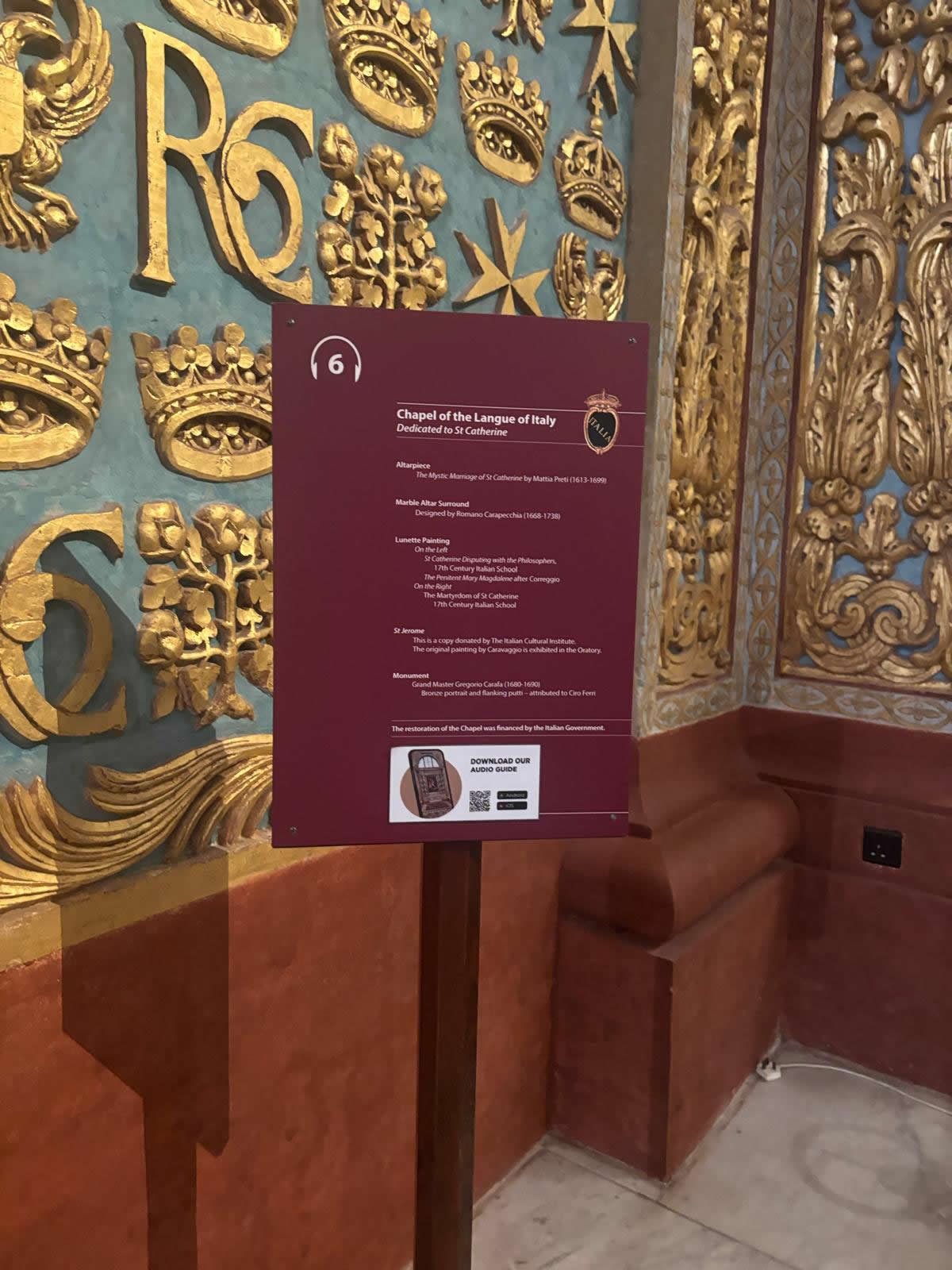
The Chapel of the Langue of Italy is one of the most refined and artistically significant chapels within St John’s Co-Cathedral in Valletta, Malta. This magnificent Baroque space represents the Italian division, or “Langue”, of the Order of the Knights of St John, reflecting both their religious devotion and artistic patronage.
Constructed as part of the original 16th-century cathedral complex, the chapel was later enriched during the great Baroque transformation of the interior in the 17th century. Today, it stands as a masterpiece of religious art, architecture, and funerary commemoration.
Historical Background
St John’s Co-Cathedral itself was commissioned by Grand Master Jean de la Cassière and built between 1573 and 1577. Designed by the Maltese architect Girolamo Cassar, the church initially featured a relatively austere interior, reflecting the disciplined military ethos of the Order.
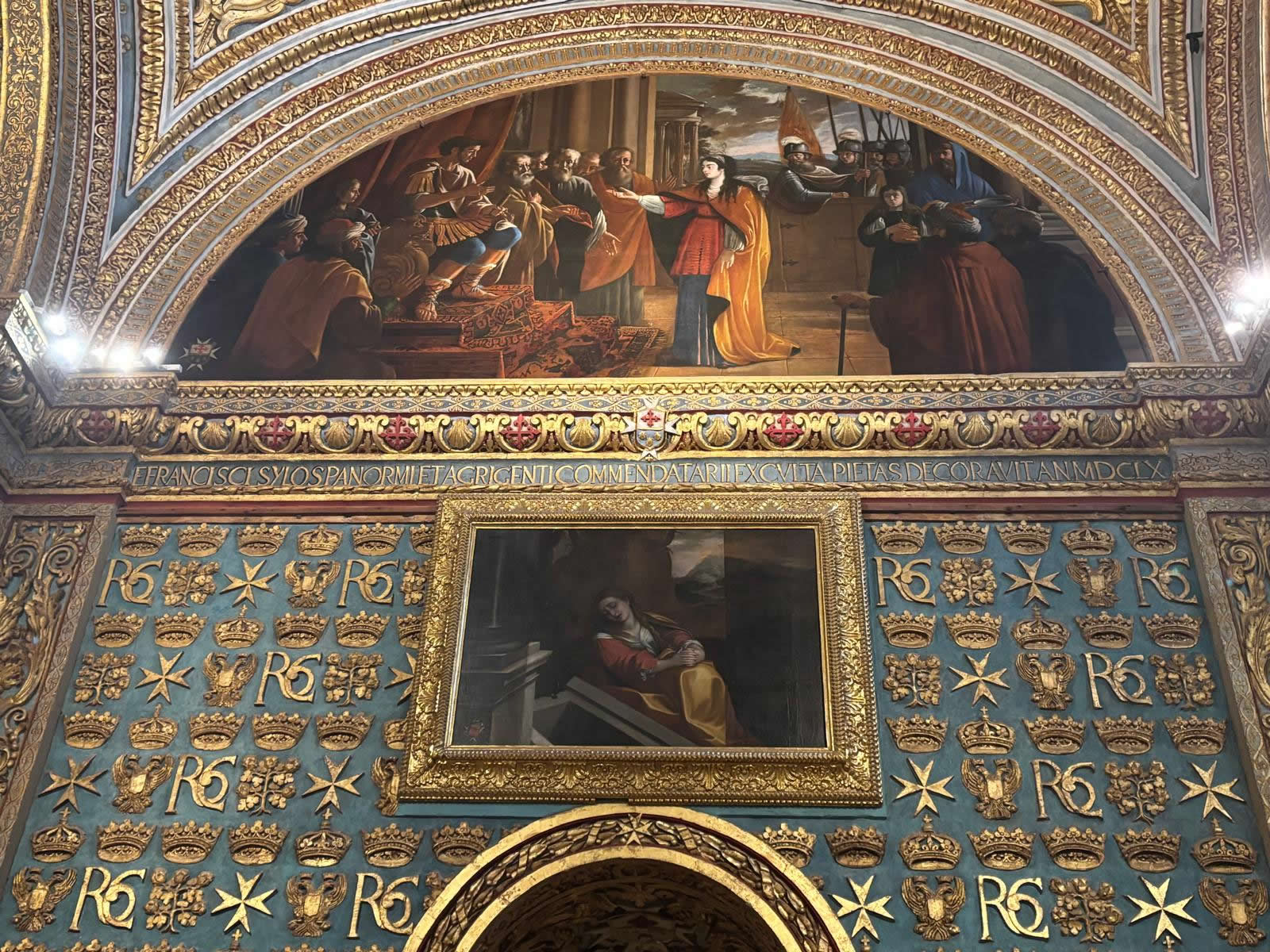
However, beginning in the 1660s, a dramatic artistic transformation took place. Under the patronage of Grand Master Raphael Cotoner, the cathedral was redecorated in lavish Baroque style. This transformation affected all chapels, including that of the Langue of Italy, elevating them into richly adorned artistic environments.
Each chapel in the cathedral was assigned to one of the eight langues of the Order, representing different European regions. The Italian Langue held significant influence within the Order, and its chapel reflects both prestige and artistic ambition.
Dedication and Religious Significance
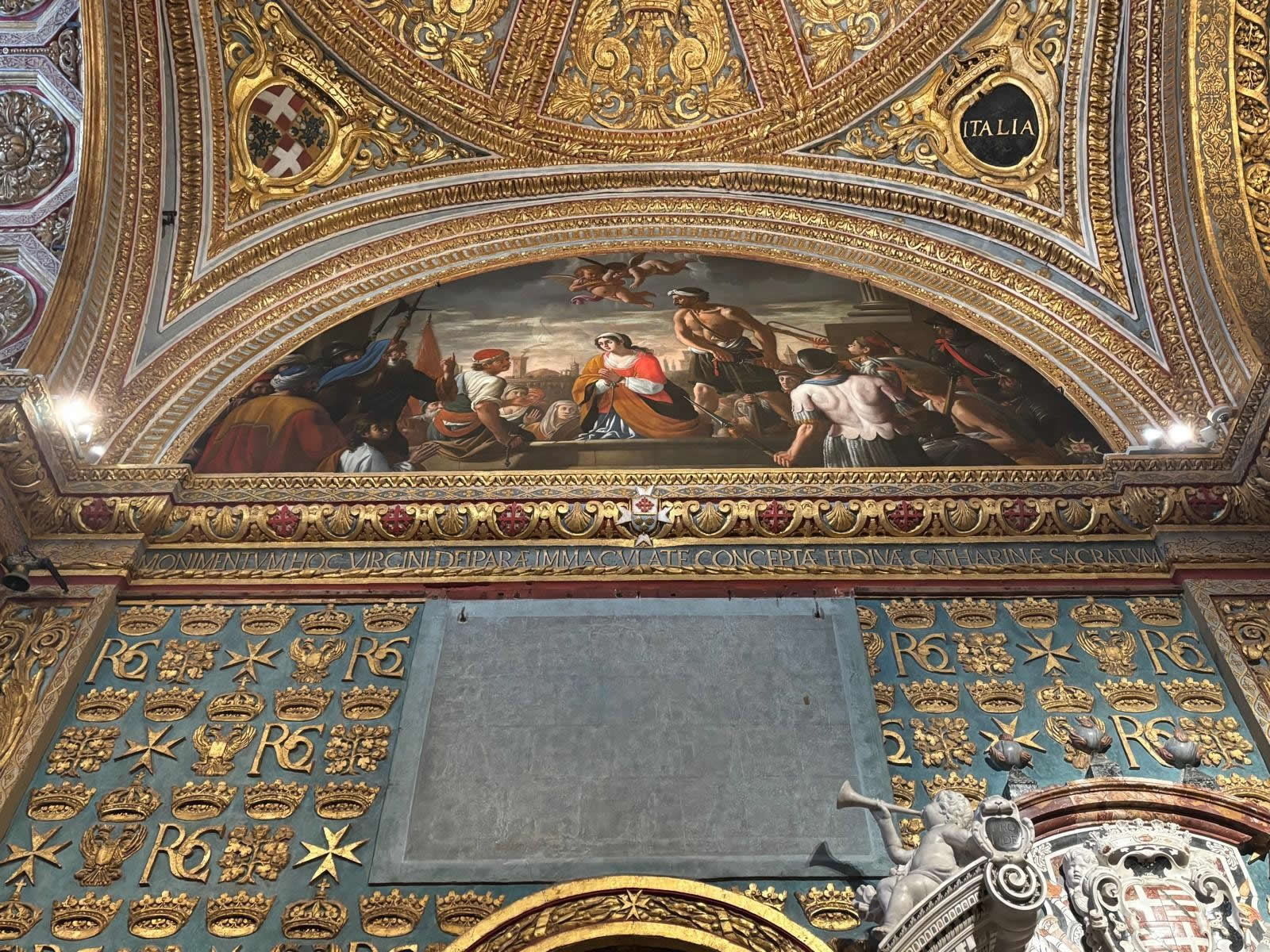
The chapel is dedicated to the Immaculate Conception and Saint Catherine of Alexandria. Saint Catherine, a learned and noble martyr, held particular importance for the Italian knights, symbolising wisdom, faith, and intellectual devotion.
The dedication aligns with broader Counter-Reformation themes, emphasizing purity, martyrdom, and doctrinal strength in response to Protestant movements across Europe.
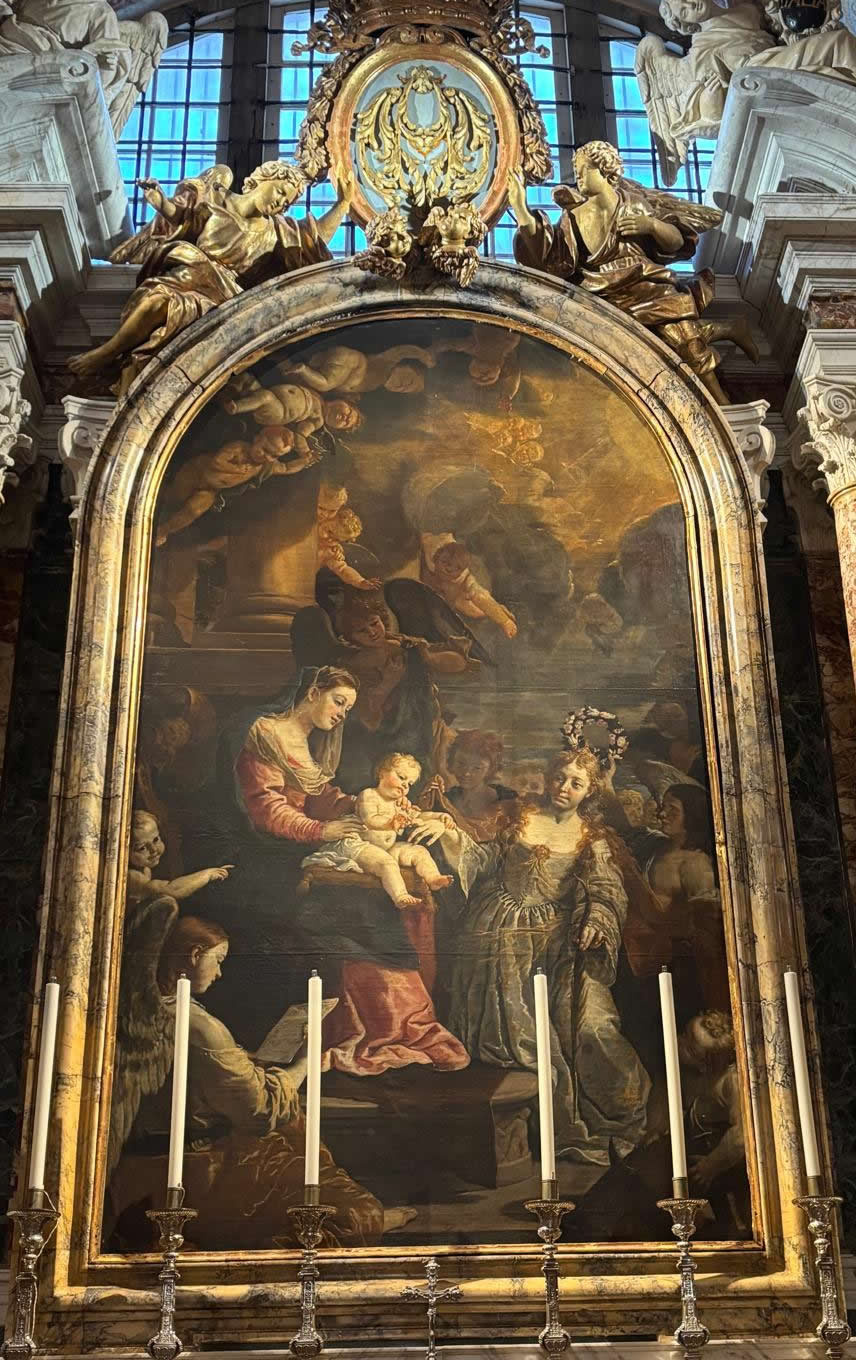
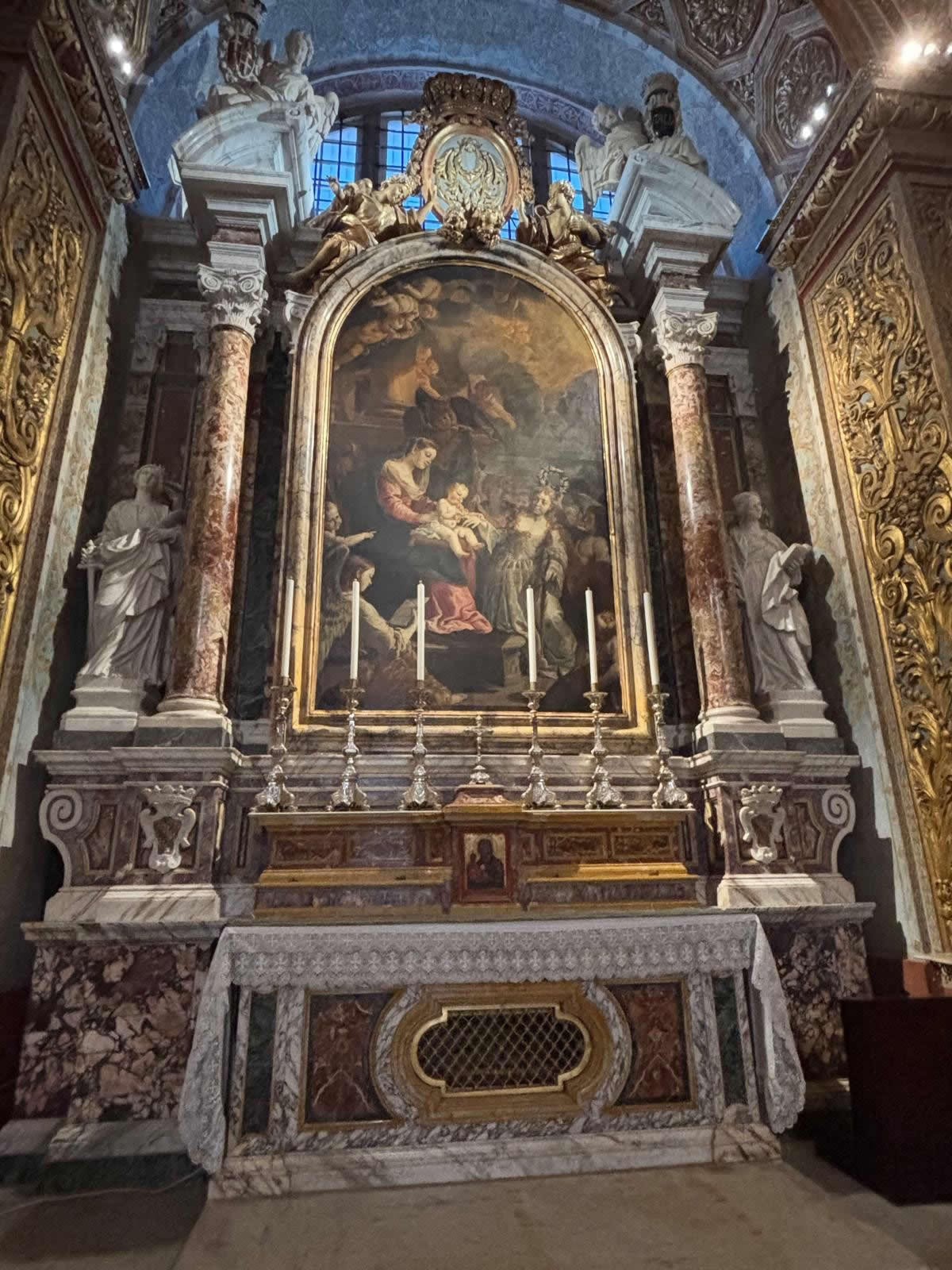
The Altarpiece – Mattia Preti
The focal point of the chapel is its magnificent altarpiece, “The Mystic Marriage of Saint Catherine”, painted by the renowned Calabrian artist Mattia Preti. This masterpiece exemplifies the dramatic Baroque style, combining movement, emotion, and strong contrasts of light and shadow.
Preti, who played a central role in decorating the entire cathedral, infused the chapel with a cohesive artistic vision. His work demonstrates mastery of composition and narrative, guiding the viewer’s eye toward the central spiritual message.
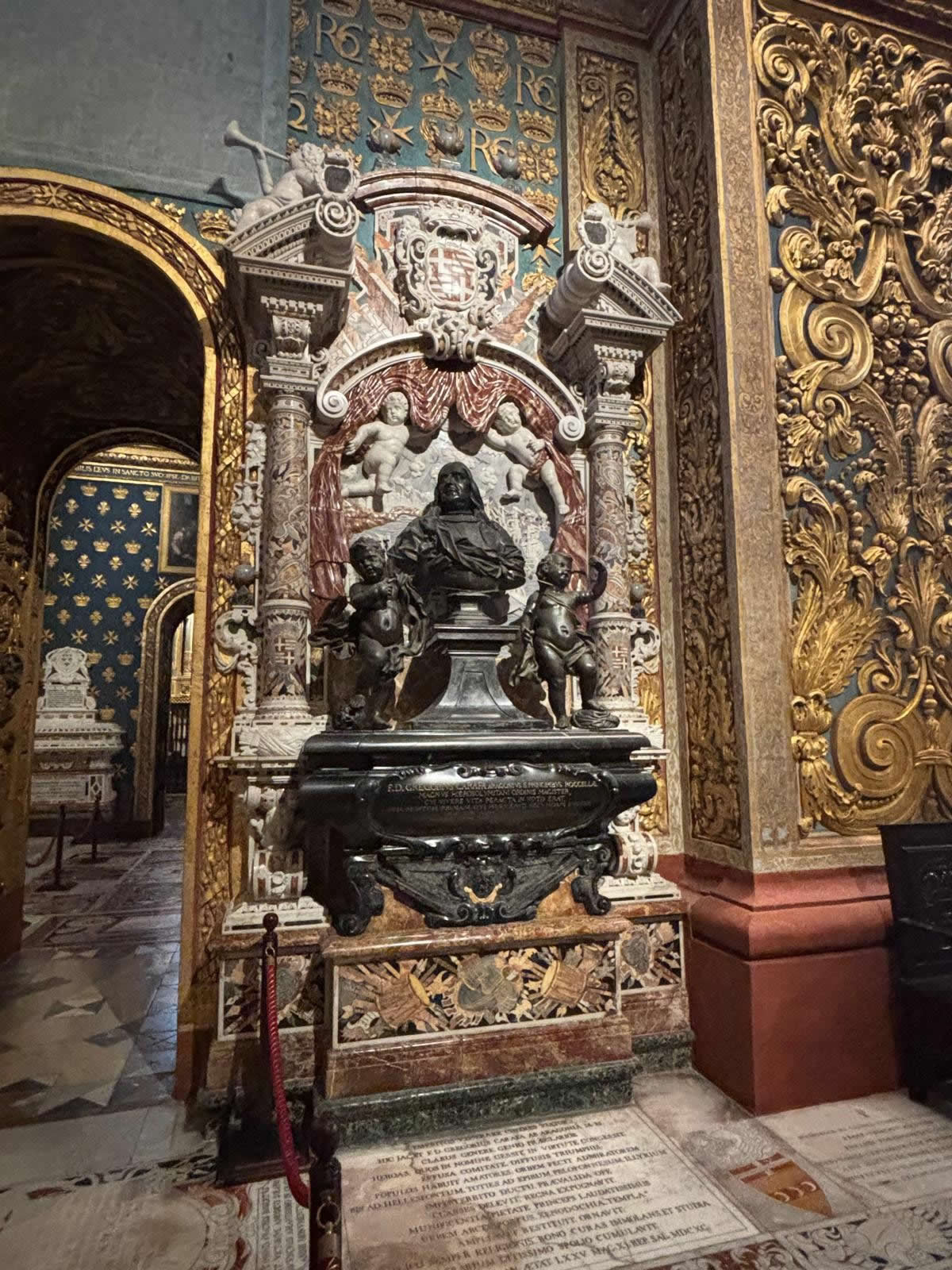
Funerary Monument of Grand Master Gregorio Carafa
One of the most important features of the chapel is the funerary monument of Grand Master Gregorio Carafa, who died in 1690. Carafa was a prominent leader of the Order and played a key role in strengthening its military and administrative structure.
The monument is a striking example of Baroque funerary art, combining sculpture, symbolism, and architectural framing. It reflects both the personal legacy of Carafa and the broader commemorative traditions of the Knights of St John.
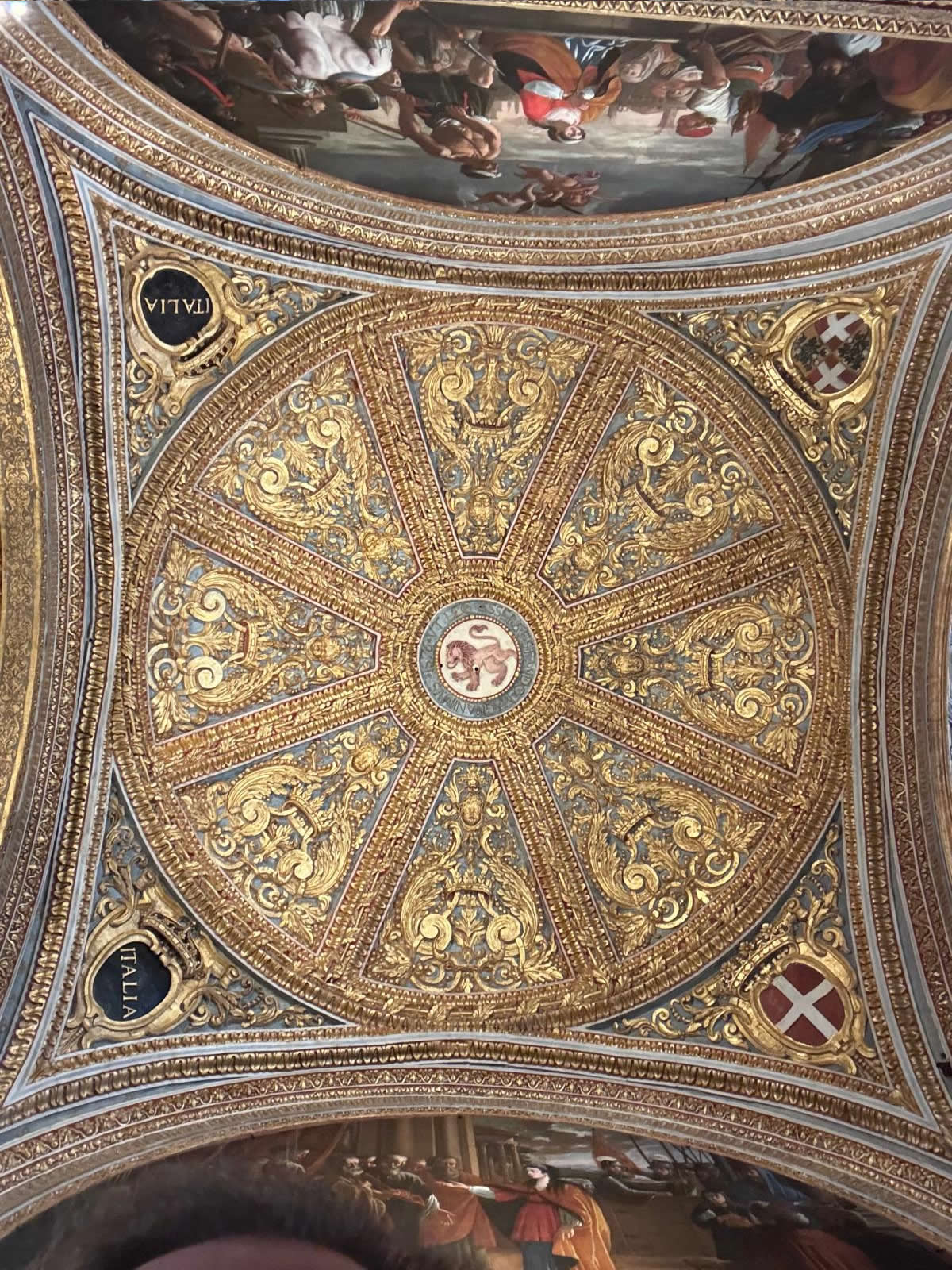
Architecture and Design
The chapel’s design integrates seamlessly into the overall structure of St John’s Co-Cathedral while maintaining its own distinct identity. Richly carved stone walls, gilded decorations, and intricate marble details create a visually immersive environment.
Like the rest of the cathedral, the chapel contributes to the extraordinary interior transformation that took place in the 17th century. The contrast between the plain exterior of the cathedral and the ornate interior highlights the theatricality of Baroque architecture.
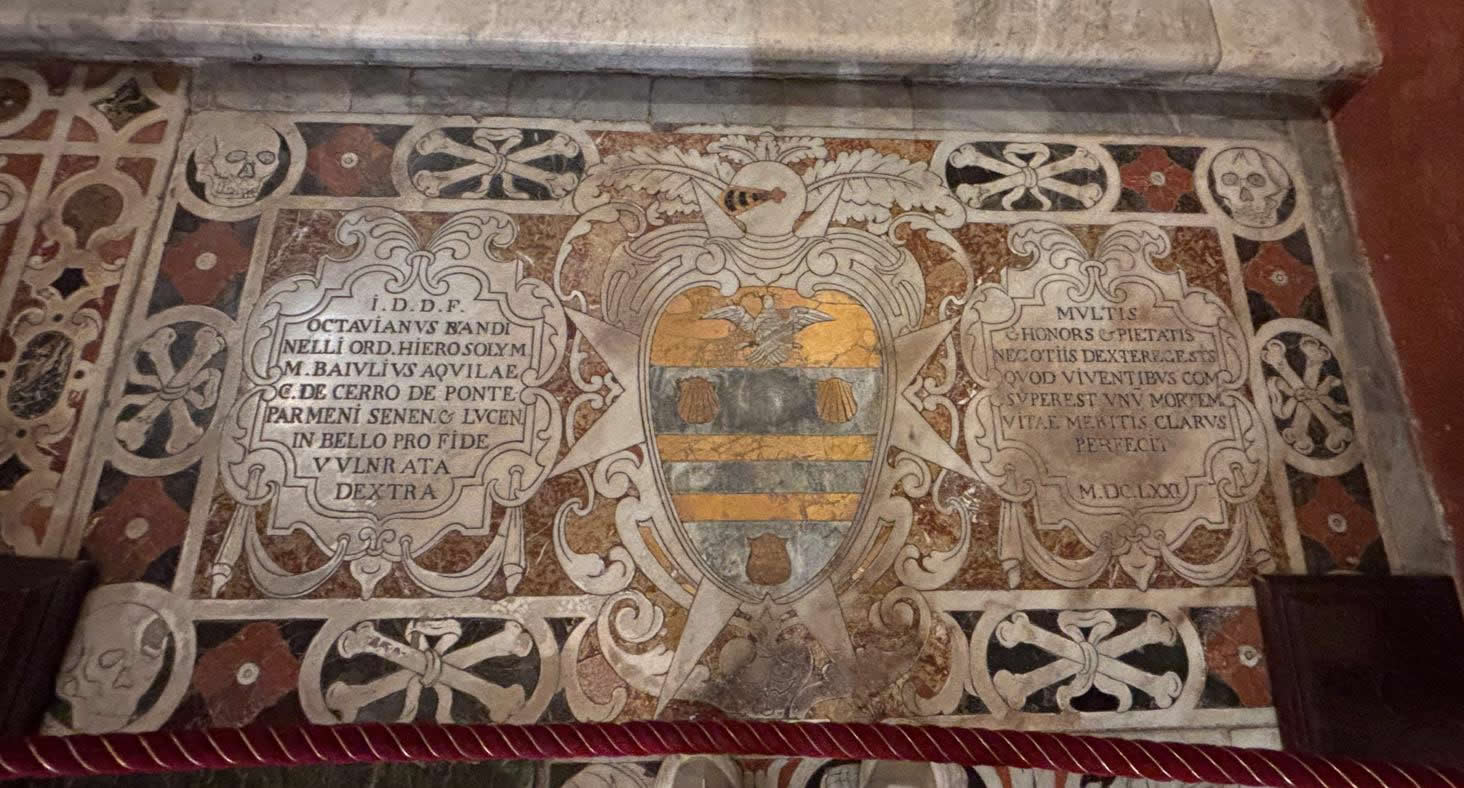
Marble Floor and Tombs
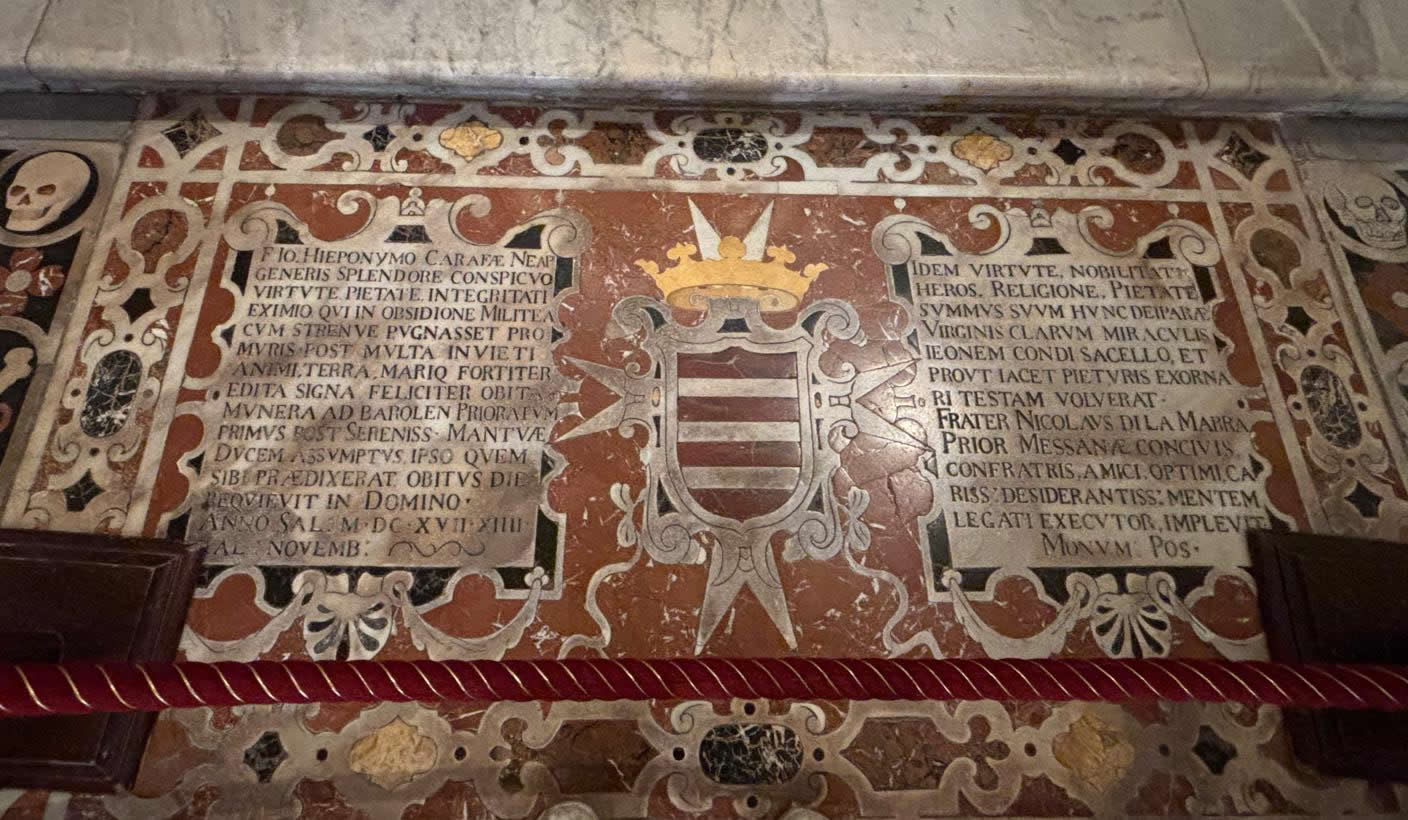
The chapel forms part of the cathedral’s famous marble floor, which is composed of intricately designed tomb slabs. These tombs commemorate knights and officers of the Order, each slab telling a story through heraldry, inscriptions, and symbolic imagery.
Walking through the chapel offers a direct connection to the history of the Order, as visitors literally walk over the memorials of its members.
Who is Buried in the Chapel of the Langue of Italy
The list of individuals buried here are:
- Frà Signorino Gattinara
- Frà Pompeo Rospigliosi
- Frà Cappone Capponi
- Frà Francesco Piccolomini
- Frà Bartolomeo Arezzo e Valle
- Frà Antonio Tancredi
- Don Ottaviano Bandinelli
- Frà Ferrante Coiro
- Frà Alessandro Benzi
- Don Giovan Battista Rivalta Orsini
- Frà Giovanni Gerolamo Salvago
- Ippolito Malaspina
- Frà Pasquale Gennaro Sarriano
- Frà Giovanni Gerolamo Carafa
- Frà Ottavio Solaro
- Grand Master Frà Don Gregorio Carafa
- Frà Leone Strozzi
Artistic Context
The Chapel of the Langue of Italy must be understood within the wider artistic program of the cathedral. The entire interior was conceived as a unified Baroque masterpiece, with contributions from leading artists of the time.
The Italian chapel stands out due to its strong connection with Italian artistic traditions, particularly through the work of Mattia Preti. Its artistic language reflects influences from Rome and southern Italy, blending theatrical composition with spiritual intensity.
Restoration and Preservation
Over the centuries, the chapel has undergone several restoration efforts aimed at preserving its delicate artworks and architectural features. These projects have focused on cleaning the paintings, stabilizing the structure, and restoring the vibrancy of the Baroque decorations.
Modern conservation techniques ensure that the chapel remains accessible to visitors while maintaining its historical integrity.
Visitor Experience
Today, the Chapel of the Langue of Italy is one of the highlights of St John’s Co-Cathedral. Visitors are often drawn to its dramatic altarpiece and the monument of Carafa, as well as the overall richness of its decoration.
The chapel forms part of a broader journey through the cathedral, which includes other chapels dedicated to different langues, each with its own unique character and artistic treasures.
Conclusion
The Chapel of the Langue of Italy represents a remarkable fusion of art, history, and spirituality. From its origins in the 16th century to its Baroque transformation and modern preservation, it continues to embody the legacy of the Knights of St John.
Through its artworks, monuments, and architectural beauty, the chapel offers a profound insight into the cultural and religious life of early modern Malta.
Frequently Asked Questions
Where is the Chapel of the Langue of Italy located?
It is located inside St John’s Co-Cathedral in Valletta, Malta.
What is the main artwork in the chapel?
The main artwork is “The Mystic Marriage of Saint Catherine” by Mattia Preti.
Who was Gregorio Carafa?
He was a Grand Master of the Order of St John, commemorated in the chapel with an elaborate monument.