
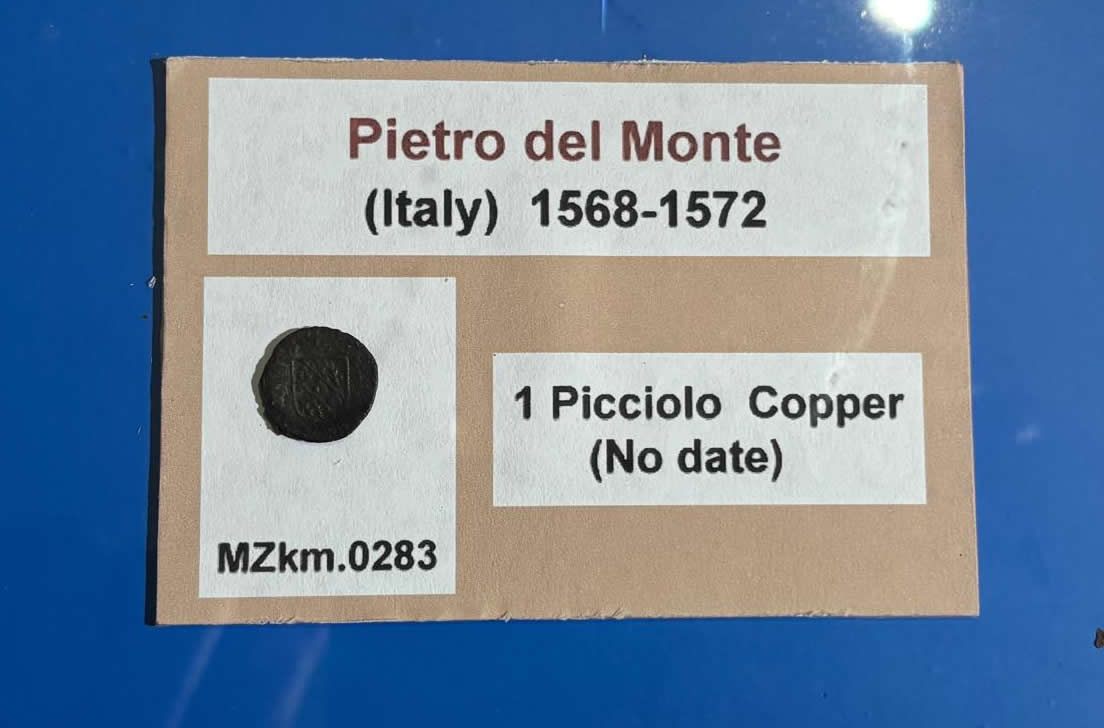
Grand Master Frà Pietro del Monte was one of the most important early leaders of the Order of St John in Malta. Serving as Grand Master from 1568 to 1572, he played a crucial role in consolidating the Order’s position on the island following the dramatic victory of the Great Siege of Malta in 1565. Today, he is buried in the Grand Masters’ Crypt beneath St John’s Co-Cathedral in Valletta, alongside some of the most influential figures in Maltese history.
Early Life and Noble Origins
Frà Pietro del Monte, also known as Pietro del Monte San Savino, was born in 1499 in Italy into a noble family. He was the nephew of Pope Julius III, a connection that helped shape his early career within the Order of St John. His aristocratic background and strong ties to the Catholic Church positioned him well for advancement within the Knights Hospitaller.
He joined the Order at a young age and quickly distinguished himself as a capable military leader. His early service included participation in the Siege of Rhodes in 1522, where the Knights were ultimately forced to surrender the island to the Ottoman Empire.
Military Career and the Great Siege of Malta
Frà Pietro del Monte’s military experience proved invaluable during one of the most significant events in Maltese history — the Great Siege of Malta in 1565. During this massive Ottoman assault, he played a key defensive role, particularly in the defence of Fort St Michael in Birgu.
Historical records indicate that he held out against Ottoman attacks for an extraordinary 55 days, demonstrating exceptional resilience and leadership under extreme pressure.
The successful defence of Malta not only preserved the island as a Christian stronghold but also elevated the Order’s prestige across Europe. This victory set the stage for the development of Valletta and the strengthening of the Knights’ rule.
Election as Grand Master (1568)
Following the death of Grand Master Jean de Valette in 1568, Frà Pietro del Monte was elected as his successor. His appointment came at a critical time when the Order needed stability, reconstruction, and strategic direction after the siege.
As Grand Master, del Monte focused on consolidating the Order’s defences and continuing the ambitious building programme initiated after the siege.
Role in the Construction of Valletta
One of the most enduring aspects of del Monte’s legacy is his contribution to the early development of Valletta, Malta’s new fortified capital. The city had been founded in 1566 under Jean de Valette, but much of its construction continued during del Monte’s rule.
He oversaw the continued fortification of the city, ensuring that Malta would be better prepared against future Ottoman threats. Valletta’s grid layout, bastions, and defensive walls reflect the strategic priorities of this period.
Governance and Leadership
Del Monte’s leadership style was characterised by discipline and pragmatism. Having experienced both defeat at Rhodes and victory in Malta, he understood the importance of preparedness and unity within the Order.
His administration worked to strengthen the Order’s infrastructure, finances, and military readiness, laying the groundwork for future Grand Masters.
Death and Burial (1572)
Grand Master Frà Pietro del Monte died on 21 January 1572. He was buried in the Grand Masters’ Crypt beneath St John’s Co-Cathedral in Valletta, a burial site reserved for the earliest leaders of the Order in Malta.
The crypt, carved into the rock beneath the high altar, contains the remains of several Grand Masters from the 16th and early 17th centuries, including:
- Philippe Villiers de L’Isle-Adam
- Jean de Valette
- Jean de la Cassière
- Alof de Wignacourt
Frà Pietro del Monte is among this distinguished group, confirming his importance in the Order’s history.
The Grand Masters’ Crypt

The Grand Masters’ Crypt is located directly beneath the high altar of St John’s Co-Cathedral. It was carved out in the 16th century specifically for the burial of the Order’s leaders.
The crypt houses the remains of the Grand Masters who ruled Malta between 1530 and 1623, representing the formative period of the Knights’ presence on the island.
Unlike later Grand Masters, who were often buried in individual chapels within the cathedral, these early leaders were interred together in this underground chamber, reflecting the unity and shared mission of the Order.
Monuments and Tombs
While some Grand Masters are commemorated with elaborate monuments, others — including del Monte — are represented more modestly within the crypt. The focus of the space is not on individual display but on collective remembrance.
The crypt also features:
- Marble tomb slabs and inscriptions
- Baroque decorative elements
- The central altar with a Crucifixion sculpture
Together, these elements create a solemn and historically rich environment that reflects the spiritual and military identity of the Knights.
Legacy of Frà Pietro del Monte
Frà Pietro del Monte’s legacy is defined by his role as a transitional leader. He bridged the heroic era of the Great Siege with the consolidation and development of Malta as a fortified stronghold.
His contributions to the defence and development of the island ensured that the Order could maintain its position as a key power in the Mediterranean.
Today, his burial in the Grand Masters’ Crypt serves as a lasting reminder of his importance in Maltese history and the enduring legacy of the Knights of St John.
Visiting the Grand Masters’ Crypt
Visitors to St John’s Co-Cathedral can view the Grand Masters’ Crypt as part of their visit. The crypt provides a unique glimpse into the early history of the Order and the individuals who shaped Malta’s destiny.
👉 Explore more: St John’s Co-Cathedral Guide
Frequently Asked Questions
Who was Frà Pietro del Monte?
He was Grand Master of the Order of St John from 1568 to 1572 and a key figure after the Great Siege of Malta.
Where is he buried?
He is buried in the Grand Masters’ Crypt beneath St John’s Co-Cathedral in Valletta.
What was his role in Maltese history?
He helped consolidate Malta’s defences and oversaw the continued construction of Valletta.
Did he fight in the Great Siege of Malta?
Yes, he played a significant role in the defence of Fort St Michael.
When did he die?
He died on 21 January 1572.