
Grand Master Frà Ferdinand von Hompesch was the 71st and final Grand Master of the Order of St John to rule Malta. His brief but dramatic leadership between 1797 and 1798 marked the end of nearly 268 years of Hospitaller rule on the island. Unlike his predecessors buried in the Grand Masters’ Crypt at St John’s Co-Cathedral in Valletta, Hompesch died in exile and was buried in Montpellier, France, symbolising the end of an era in Maltese history.
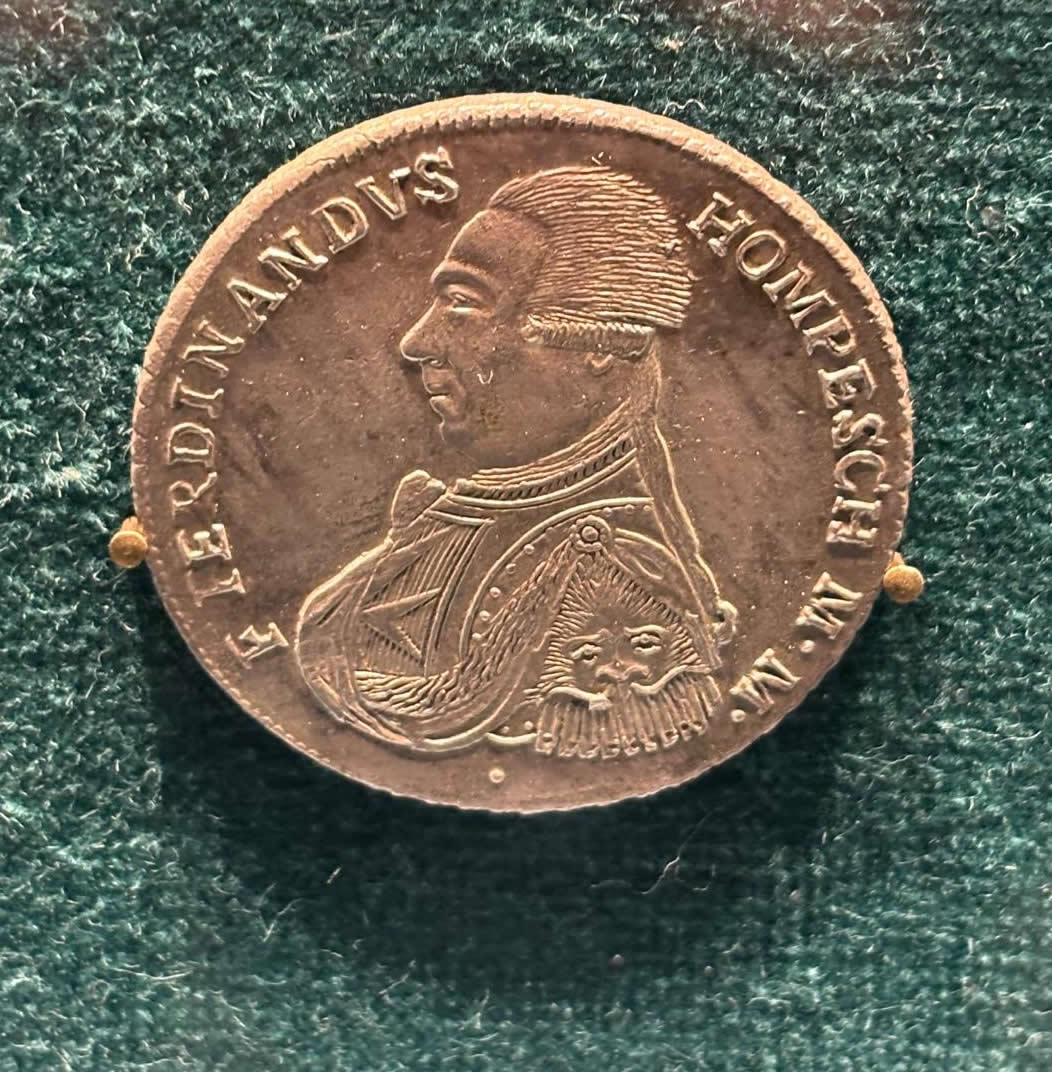
Early Life and Background
Ferdinand von Hompesch was born on 9 November 1744 in Bolheim, in the Electorate of Cologne (modern Germany). He came from a noble German family and joined the Order of St John at a young age, beginning a lifelong career within the Knights Hospitaller.
Throughout his early years in the Order, he held several important administrative and diplomatic roles. He served as ambassador to the Court of Vienna and rose steadily through the ranks, gaining experience in governance, diplomacy, and military organisation.

Election as Grand Master (1797)
Hompesch was elected Grand Master on 17 July 1797, becoming the first German to hold the office. His appointment came during a period of growing instability in Europe, as revolutionary France began expanding its influence across the continent.
The Order of St John was already in decline, facing financial difficulties, internal divisions, and weakening military strength. These challenges would culminate in one of the most significant events in Maltese history.
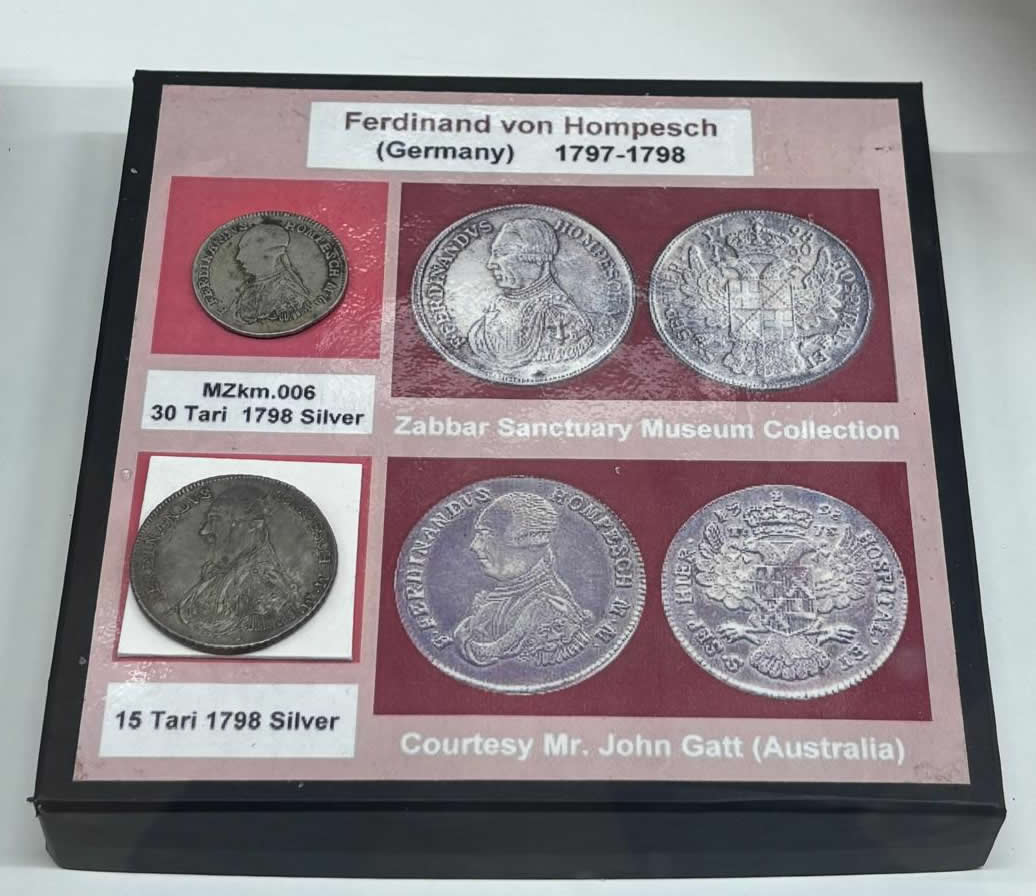
The French Invasion of Malta (1798)
In June 1798, a massive French fleet led by General Napoleon Bonaparte arrived in Maltese waters. The Knights, under Hompesch, faced overwhelming odds: approximately 29,000 French troops and hundreds of ships against a much smaller defending force.
A key factor in the defence was the Order’s rule forbidding knights from fighting against fellow Christians. This restriction, combined with internal divisions within the Order, severely limited their ability to resist the French invasion.
Faced with these constraints, Hompesch ultimately surrendered Malta to Napoleon without prolonged resistance. The French entered Valletta on 12 June 1798, effectively ending the rule of the Knights of St John on the island after more than two centuries.

Abdication and Exile
Following the surrender, Hompesch was forced into exile. He initially sought refuge in Trieste and later moved across Europe. In 1799, he formally abdicated as Grand Master, although the legitimacy of this abdication has been debated by historians.
His abdication marked the collapse of the Order’s sovereignty over Malta, leading to a period of uncertainty for the Knights, who would later re-establish themselves in Rome.
Final Years in Montpellier
In the final years of his life, Hompesch settled in Montpellier, France. His circumstances had dramatically declined, and he reportedly lived in relative poverty compared to his former status as Grand Master.
He died on 12 May 1805 at the age of 60. His death far from Malta underscores the profound political and personal consequences of the events of 1798.
Burial in Montpellier

burial site of Grand Master Ferdinand von Hompesch
Grand Master Hompesch was buried in the Church of Sainte Eulalie in Montpellier, France.Unlike the earlier Grand Masters interred in the Grand Masters’ Crypt in Valletta, his burial outside Malta reflects the loss of the island and the displacement of the Order.
A commemorative plaque installed in the church honours his memory, bearing an inscription identifying him as the 71st Grand Master of the Order of St John and noting his birth in 1744 and death in 1805.
Commemorative Plaque in Montpellier installed in 2005
Grand Master Ferdinand von Hompesch zu Bolheim, the 71st Grand Master of the Order of Saint John, is buried in the Church of Sainte-Eulalie in Montpellier, France. Following his death in exile on 12 May 1805, he was interred within this church. In 2005, on the bicentenary of his death, the Order of Malta installed a commemorative plaque in his honour, ensuring that his memory remains preserved at his place of burial.
French Inscription
À la mémoire de
Son Altesse Éminentissime
Fra’ Ferdinand Hermann Anton von Hompesch zu Bolheim
Prince et 71ème Grand Maître
de l’Ordre de Saint Jean de Jérusalem, de Rhodes et de Malte
Né le 9 novembre 1744 à Bolheim – mort le 12 mai 1805 à Montpellier
Inhumé en cette église
Requiescat in pace
English Translation
In memory of
His Most Eminent Highness
Fra’ Ferdinand Hermann Anton von Hompesch zu Bolheim
Prince and 71st Grand Master
of the Order of Saint John of Jerusalem, of Rhodes and of Malta.
Born on 9 November 1744 at Bolheim – died on 12 May 1805 in Montpellier.
Buried in this church.
May he rest in peace.
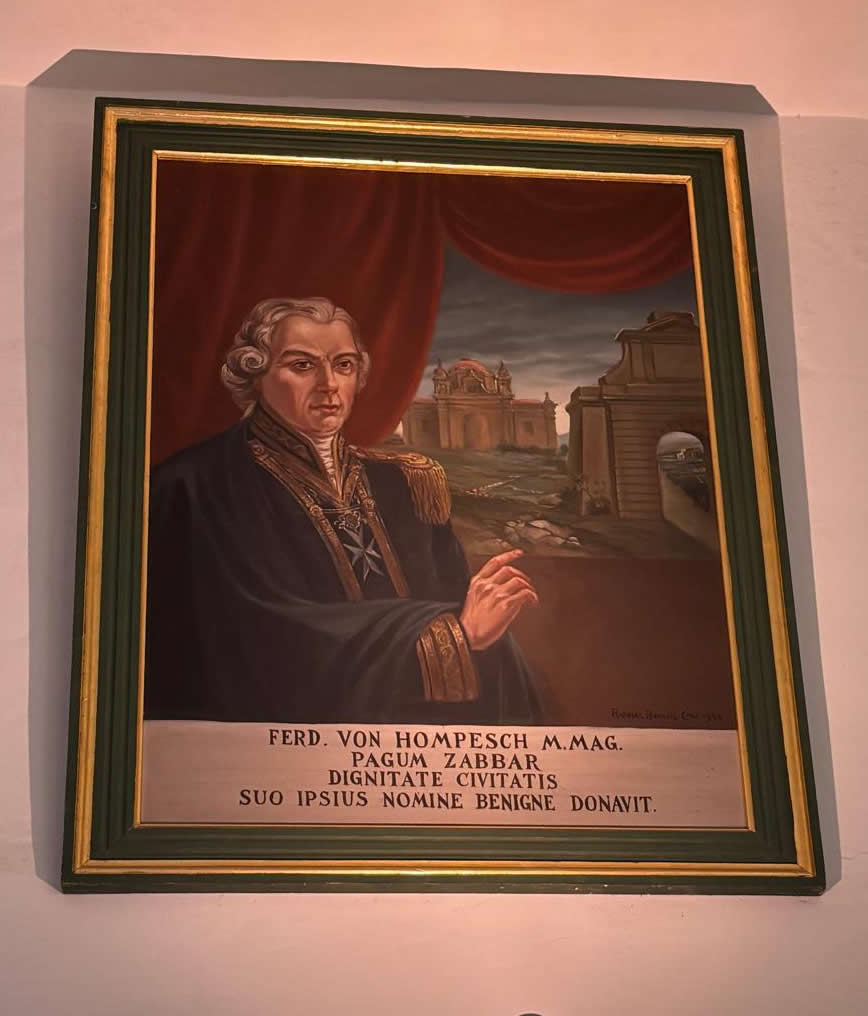
Historical Significance
This plaque highlights the final chapter in the life of the last Grand Master to rule Malta. Unlike his predecessors, who were buried in St John’s Co-Cathedral in Valletta, Hompesch died in exile following the French occupation of Malta in 1798. The installation of this plaque in 2005 reflects a renewed recognition of his role in the history of the Order and preserves his connection to the Knights Hospitaller.
The End of the Knights’ Rule in Malta
Hompesch’s reign represents a turning point in Maltese history. The loss of Malta to the French in 1798 marked the end of the Knights Hospitaller’s rule, which had begun in 1530 when they were granted the island by Emperor Charles V.
Following the French occupation, Malta would eventually come under British control in 1800, beginning a new chapter in the island’s history.
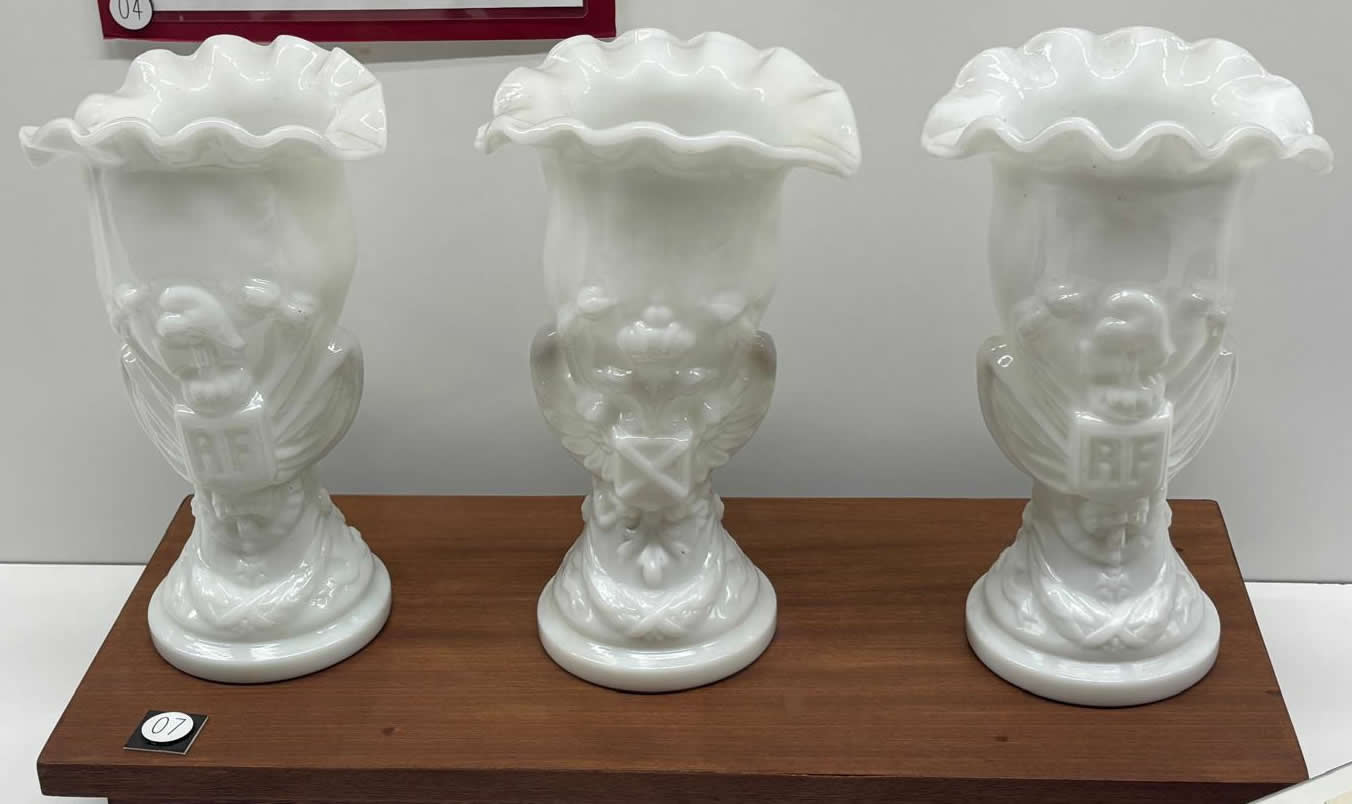
at the Żabbar Sanctuary Museum
Legacy of Ferdinand von Hompesch
Grand Master Hompesch remains one of the most controversial figures in the history of the Order of St John. His decision to surrender Malta without a prolonged fight has been debated for centuries.
Some historians argue that he had little choice given the overwhelming French forces and internal divisions within the Order. Others view his actions as a failure of leadership at a critical moment.
Despite this controversy, his legacy is inseparable from one of the most significant turning points in Maltese history — the end of the Knights’ rule.
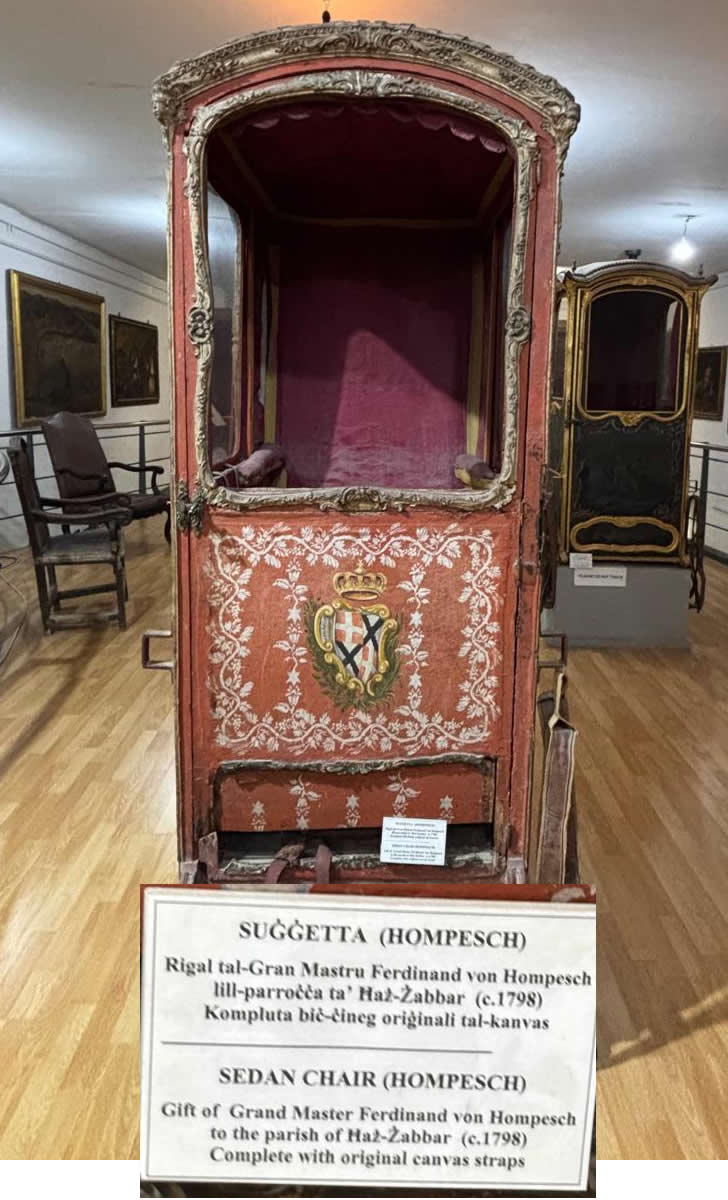
at the Żabbar Sanctuary Museum
Connection to St John’s Co-Cathedral
Although Hompesch is not buried in Malta, his story is deeply connected to St John’s Co-Cathedral in Valletta. The cathedral and its Grand Masters’ Crypt serve as the resting place for many of his predecessors, representing the height of the Order’s power.
Hompesch’s absence from the crypt symbolises the dramatic shift that occurred at the end of the 18th century, when the Order lost its territorial base and transitioned into a sovereign humanitarian organisation.
👉 Explore more: St John’s Co-Cathedral Guide
Frequently Asked Questions
Who was Ferdinand von Hompesch?
He was the 71st and last Grand Master of the Order of St John to rule Malta.
When did he rule Malta?
He served as Grand Master from 1797 to 1798.
What happened during his reign?
The French invasion of Malta in 1798 led to the end of the Knights’ rule.
Where is he buried?
He is buried in the Church of Sainte Eulalie in Montpellier, France.
Why is he not buried in Malta?
He died in exile after the loss of Malta and was buried in France.