
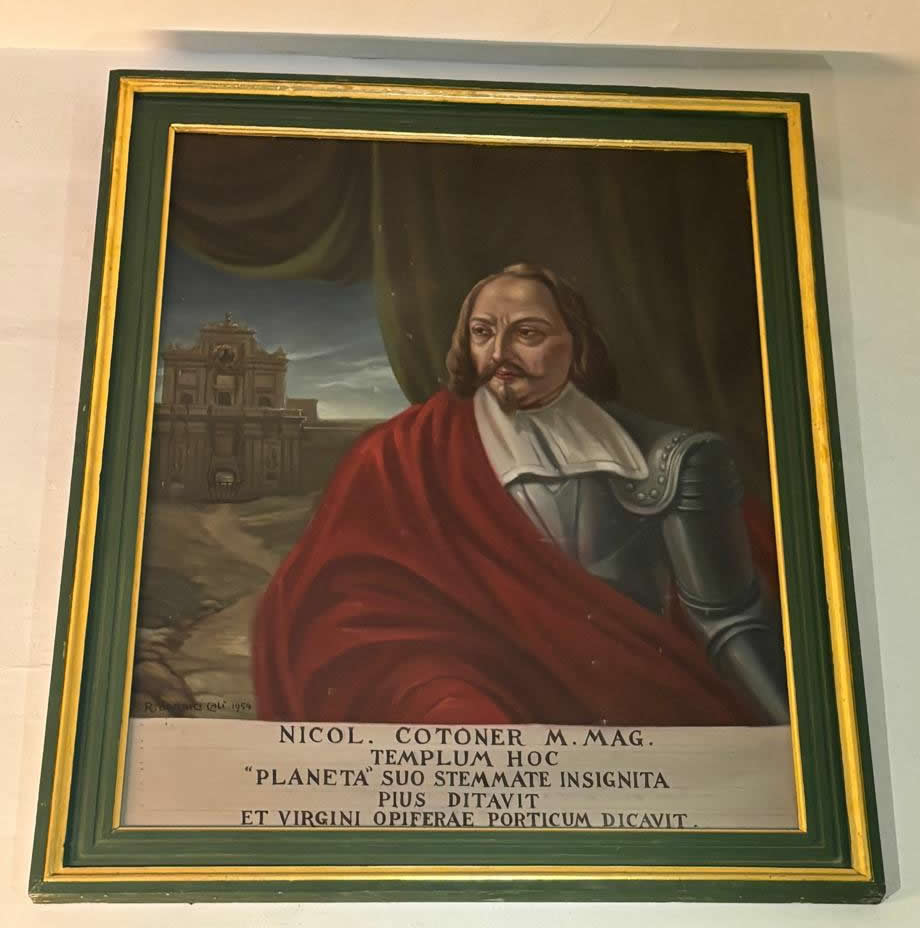
in the Wignacourt Museum, Rabat, Malta.
Grand Master Frà Nicolas Cotoner (1608 – 29 April 1680) was one of the most influential rulers of the Order of St John in Malta. Serving as the 61st Grand Master from 23 October 1663 until 29 April 1680, his long magistracy marked a period of military strengthening, artistic splendour, and institutional development for the Knights of Malta.
Origins and Rise within the Order
Nicolas Cotoner was born in 1608 in Mallorca, Spain, into the noble House of Cotoner. He was the younger brother of Grand Master Raphael Cotoner, whom he succeeded upon his death in 1663.
His election marked a rare moment in the history of the Order, as two brothers consecutively held the office of Grand Master—an exceptional occurrence reflecting the prestige of their family within the Order.
Grand Mastership (1663–1680)
Fortifications and Defence of Malta
Cotoner’s reign was defined by his extensive efforts to strengthen Malta’s defences. Following the fall of Candia (Crete) to the Ottoman Empire in 1669, fears of a renewed Ottoman attack on Malta intensified.
In response, Cotoner launched one of the most ambitious fortification programmes in Maltese history, including:
- The Cottonera Lines (1670): A vast defensive system enclosing Birgu, Senglea, and Bormla
- Fort Ricasoli: Guarding the entrance to the Grand Harbour
- Enhancements to the Floriana Lines
These fortifications were designed to accommodate tens of thousands of inhabitants in case of siege, reflecting the strategic foresight of his rule.
Urban and Military Development
Cotoner continued the strengthening of Malta’s coastal defences, including the construction of watchtowers such as the Isopu Tower in 1667.
His policies ensured that Malta remained one of the most heavily fortified islands in the Mediterranean during the late 17th century.
Medical and Institutional Reforms
As head of a hospitaller order, Cotoner showed particular concern for healthcare. He founded a School of Anatomy and Medicine in 1674, linked to the Sacra Infermeria in Valletta.
This initiative laid the foundations of Malta’s medical tradition and was partly driven by the devastating plague epidemic of 1675–1676, which claimed thousands of lives.
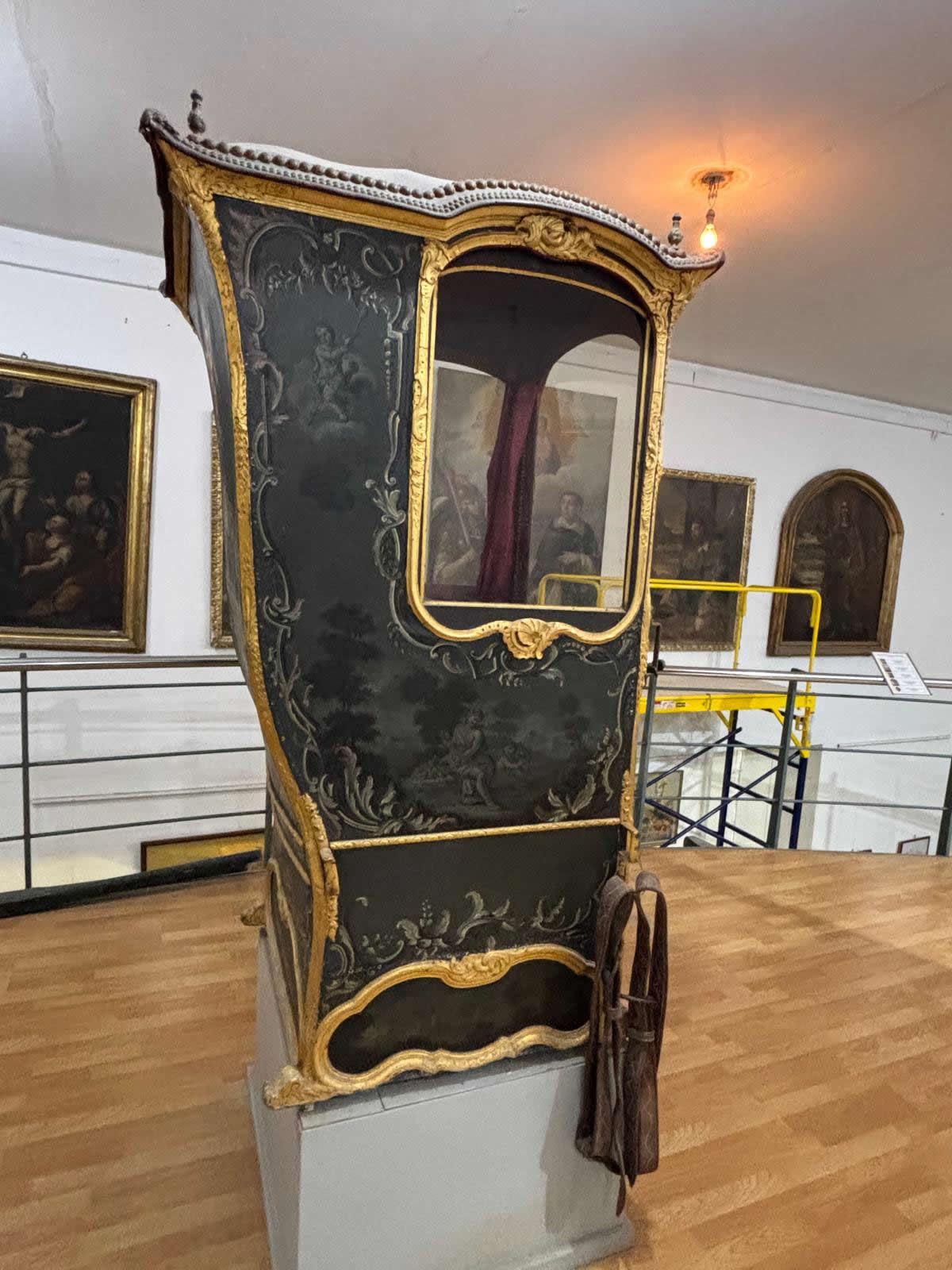
at the Żabbar Sanctuary Museum
Artistic Patronage and St John’s Co-Cathedral
Grand Master Cotoner played a decisive role in transforming St John’s Co-Cathedral into a Baroque masterpiece.
During his reign:
- The vault was painted by the renowned artist Mattia Preti
- The interior was enriched with gilded carvings and elaborate decoration
- Chapels, including that of the Langue of Aragon, were enhanced
Much of the splendour visible today in the cathedral dates from this period.
Chapel of the Langue of Aragon – St John’s Co-Cathedral Valletta

The Chapel of the Langue of Aragon is one of the most important chapels in St John’s Co-Cathedral. It served knights from Aragon, Catalonia, and Navarre and contains some of the most impressive funerary monuments in Malta.
The Tomb and Monument of Nicolas Cotoner

in the Chapel of the Langue of Aragon – St John’s Co-Cathedral Valletta
Grand Master Nicolas Cotoner died on 29 April 1680 and was buried in the Chapel of Aragon in St John’s Co-Cathedral.
His monument, created by the Italian sculptor Domenico Guidi, is among the most elaborate in the cathedral. It features:
- A pyramidal arrangement of allegorical figures
- A central bronze bust of the Grand Master
- Symbols of military triumph and authority
- An allegorical figure of Fame sounding a trumpet
The monument was assembled in June 1686 and remains one of the finest examples of Baroque funerary art in Malta.

in the Chapel of the Langue of Aragon – St John’s Co-Cathedral Valletta
Latin Inscription – Tomb of Grand Master Frà Nicolas Cotoner
F·D· NICOLAO COTTONER
MAGNO HIEROSOLYMITANI ORDINIS MAGISTRO
ANIMI MAGNITUDINE CONSILIO MUNIFICENTIA MAIESTATE
PRINCIPI
ERECTO AD MAHOMETIS DEDECUS
E NAVIGII ROSTRIS AC SULTANAE PRAEDA TROPHAEO
MELITA
MAGNIFICIS EXTRUCTIONIBUS TEMPLORUM NITORE
EXPLICATO MUNITOQUE URBIS POMERIO
SPLENDIDE AUCTA
CIVE E PESTILENTIA FAUCIBUS PENE RAPTO
HIEROSOLYMITANO ORDINE
CUI PRIMUS POST FRATREM PRAEFUIT
LEGIBUS AUCTORITATE SPOLIIS AMPLIFICATO
REBUS DIFFICILLIMIS SAEVISSIMI BELLI TEMPORIBUS SERVATO
VERE MAGNO
QUOD TANTI NOMINIS MENSURAM GESTIS IMPLEVERIT
PYRAMIDEM HANC EXCELSI TESTEM ANIMI
DAT DICAT DEDICAT
FAMA SUPERSTES
VIXIT IN MAGISTERIO ANNOS XVI MENSES VI
OBIIT XXIX APRILIS 1680 AETATIS SUAE 70
English Translation
To Fra Don Nicolas Cotoner,
Grand Master of the Order of St John of Jerusalem,
A prince distinguished by greatness of spirit,
wisdom in counsel, generosity, and majesty.
He rose to bring disgrace upon the enemies of the faith,
and from captured ships and spoils of the Sultan
erected trophies.
Malta was magnificently enriched by him
with splendid buildings, the adornment of churches,
and the extension and fortification of the city’s boundaries.
When the people were almost snatched away
by the jaws of plague,
he preserved them.
He ruled the Order of Jerusalem,
being the first after his brother to do so,
and enlarged it through laws, authority, and victories.
In the most difficult times and during the fiercest wars,
he safeguarded the state.
Truly great,
for he fulfilled the measure of so great a name through his deeds.
This pyramid stands as a lofty witness to his spirit,
given, dedicated, and consecrated
by enduring fame.
He lived as Grand Master for 16 years and 6 months,
and died on 29 April 1680,
in the 70th year of his age.
Legacy of Grand Master Nicolas Cotoner
Cotoner’s legacy is immense and enduring:
- Military: Creation of the Cottonera Lines and strengthening of Malta’s defences
- Urban: Development of the Grand Harbour area
- Medical: Foundation of Malta’s medical education system
- Artistic: Transformation of St John’s Co-Cathedral
His reign is widely regarded as one of the most important in the history of Hospitaller Malta.
Historical Timeline
- 1608: Birth in Mallorca
- 23 October 1663: Elected Grand Master
- 1667: Construction of coastal towers
- 1670: Construction of Cottonera Lines begins
- 1674: Establishment of medical school
- 1675–1676: Great plague in Malta
- 29 April 1680: Death and burial in Valletta
Frequently Asked Questions
Who was Nicolas Cotoner?
He was the 61st Grand Master of the Knights of Malta from 1663 to 1680.
What did he build?
He built the Cottonera Lines, improved fortifications, and developed medical institutions.
Where is he buried?
In the Chapel of the Langue of Aragon at St John’s Co-Cathedral.