Buried in the Chapel of Provence – St John’s Co-Cathedral, Valletta

Chapel of the Langue of Provence, St John's Co Cathedral, Valletta
Introduction
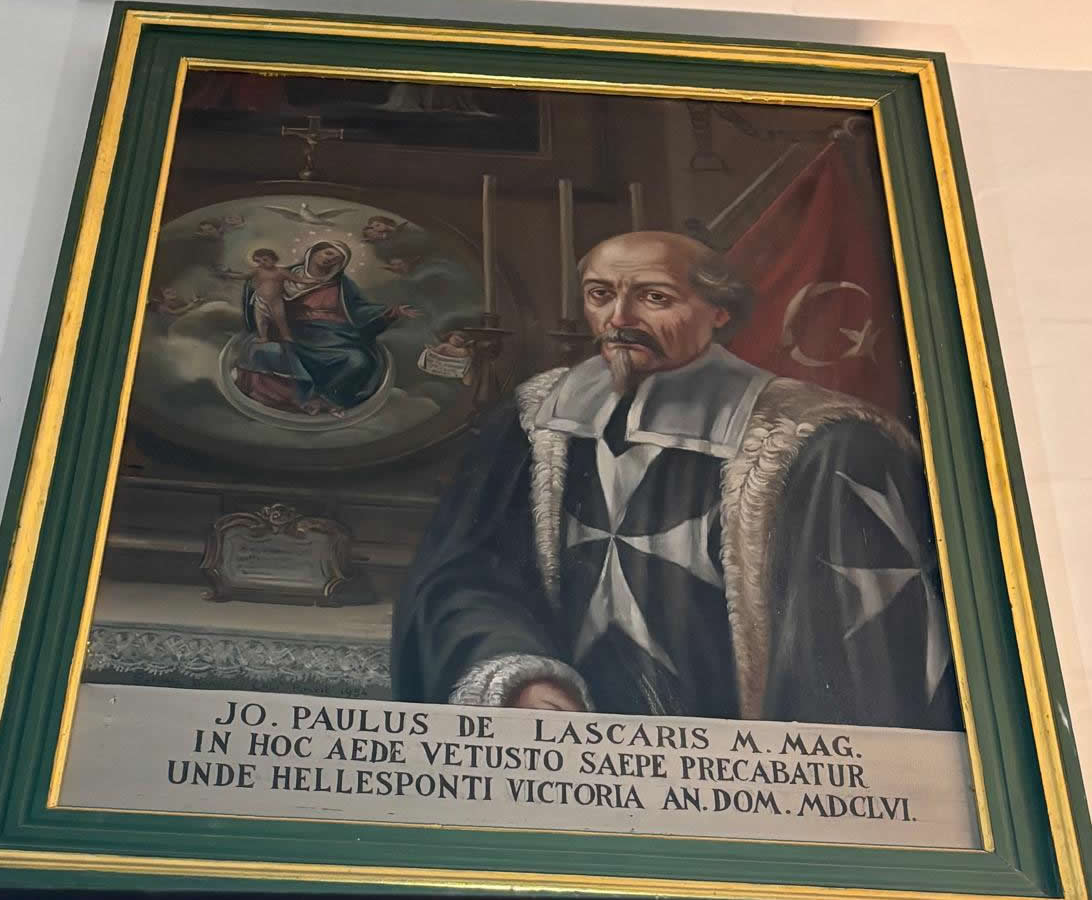
Grand Master Frà Jean-Paul de Lascaris Castellar stands among the most significant leaders of the Order of St John during its Maltese period. Serving as Grand Master from 1636 until his death in 1657, his long magistracy coincided with a period of political tension, military preparedness, and architectural development across Malta.

Today, Lascaris is commemorated within St John’s Co-Cathedral in Valletta, where he is buried in the Chapel of the Langue of Provence. His monument and tomb reflect both his status and the artistic traditions of Baroque Malta, offering visitors a tangible link to one of the Order’s most influential figures.
Early Life and Background
Jean-Paul de Lascaris Castellar was born on 28 June 1560 in Castellar, in the County of Nice, into a noble family connected to the ancient Counts of Ventimiglia and ultimately to the Byzantine imperial lineage.
He joined the Order of St John in 1584 as a member of the Langue of Provence, one of the most prestigious divisions within the Order. Over time, he rose through the ranks, serving in various administrative and diplomatic roles, including ambassadorial duties in major European courts.

Election as Grand Master (1636)
Lascaris was elected Grand Master on 12 June 1636 at an advanced age, reflecting the high regard in which he was held by his peers. His leadership began during a period marked by conflict between major European powers, particularly France and Spain, which deeply affected the multinational composition of the Order.
Despite these tensions, Lascaris proved to be a capable and pragmatic leader, maintaining stability within the Order while preserving Malta’s strategic position in the Mediterranean.
Military and Political Leadership
During his magistracy, Lascaris focused heavily on strengthening Malta’s defenses. The ongoing threat of Ottoman expansion and the instability of European politics required constant vigilance. He supported the continuation and development of fortification projects, including the Floriana Lines surrounding Valletta.
He also faced significant diplomatic challenges, particularly in managing relations between French and Spanish knights within the Order. His firm leadership style, though sometimes controversial, ensured that the Order remained unified during a turbulent era.
Architectural and Urban Contributions

Lascaris contributed to Malta’s architectural landscape through several projects. Among these was the development of the Floriana suburb, including the creation of the Maglio Gardens (Il-Mall), a recreational area for the knights established in 1656.
He also oversaw the construction of important infrastructure, including quarantine facilities and hospitals, reflecting the Order’s dual military and humanitarian mission.
The Chapel of the Langue of Provence
The Chapel of Provence within St John’s Co-Cathedral served as the spiritual home of the knights from the Langue of Provence. It is within this richly decorated Baroque chapel that Lascaris is buried, alongside other prominent members of the Order.
Like the other chapels of the cathedral, it was originally part of the 16th-century structure designed by Girolamo Cassar and later transformed into an elaborate Baroque space in the 17th century.

Chapel of the Langue of Provence, St John's Co Cathedral, Valletta
The Tomb and Monument of Lascaris
Lascaris died on 14 August 1657 in Malta at the age of 97, concluding one of the longest and most impactful magistracies in the history of the Order. He was buried in the Chapel of Provence, where his tomb forms part of the cathedral’s extensive funerary programme.
The tomb reflects the Baroque tradition of commemorating Grand Masters through elaborate monuments. These memorials were designed not only to honour the individual but also to reinforce the prestige and continuity of the Order itself.
Artistic and Funerary Context
St John’s Co-Cathedral is renowned for its marble floor, composed of hundreds of intricately decorated tomb slabs belonging to knights of the Order. Lascaris’s burial within the Chapel of Provence places him within this broader tradition of elite commemoration.
Following 1623, Grand Masters were no longer buried in the crypt but in the chapels of their respective langues, making the Chapel of Provence a site of particular historical importance.
Legacy
Jean-Paul de Lascaris Castellar’s legacy extends beyond his tomb. His leadership helped maintain the stability and prestige of the Order during a challenging period, while his contributions to Malta’s fortifications and urban development continue to shape the landscape of Valletta and its surroundings.
His era is often regarded as part of the Order’s “golden age” in Malta, during which its political influence, naval power, and cultural patronage reached significant heights.
Visitor Experience
Visitors to St John’s Co-Cathedral can view the Chapel of Provence and the tomb of Lascaris as part of the cathedral experience. The chapel’s artistic richness and historical significance make it a key highlight for those exploring the history of the Knights of St John.
Conclusion
The life and legacy of Grand Master Frà Jean-Paul de Lascaris Castellar are deeply intertwined with the history of Malta and the Order of St John. His burial within the Chapel of Provence serves as a lasting tribute to his leadership and achievements.
Through his contributions to military defense, architecture, and governance, Lascaris helped shape the identity of Malta during the 17th century, leaving a legacy that continues to be appreciated by historians and visitors alike.
Frequently Asked Questions
When did Lascaris rule Malta?
He served as Grand Master from 1636 to 1657.
Where is his tomb located?
In the Chapel of the Langue of Provence inside St John’s Co-Cathedral.
What is his historical significance?
He strengthened Malta’s defenses and led the Order during a key period of European conflict.