Introduction
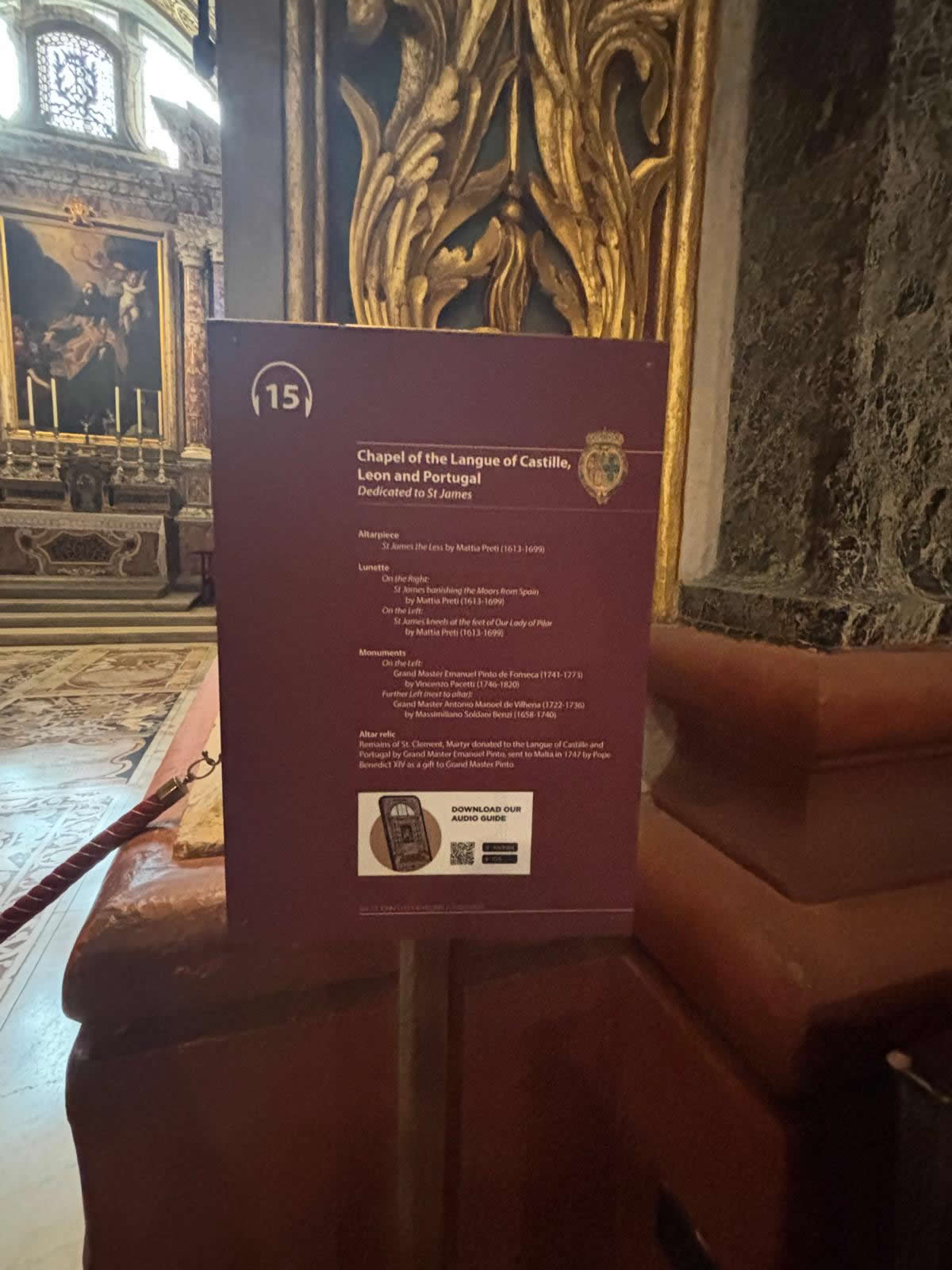
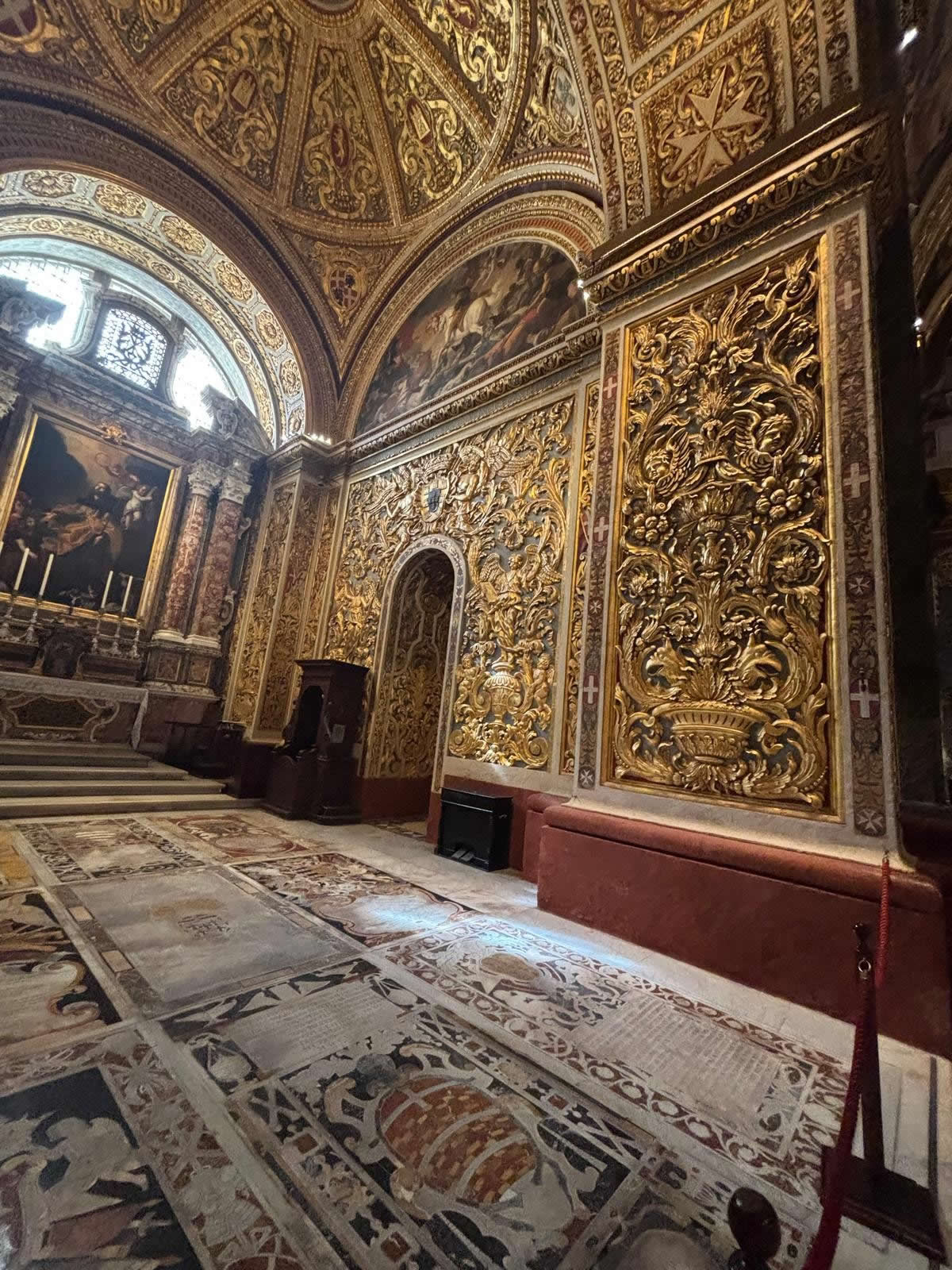
The Chapel of the Langue of Castile, Leon and Portugal is one of the most imposing and historically significant chapels within St John’s Co-Cathedral in Valletta, Malta. Representing the Iberian knights of the Order of St John, this chapel embodies the power, wealth, and artistic patronage of the Spanish and Portuguese members of the Order during the Baroque period.
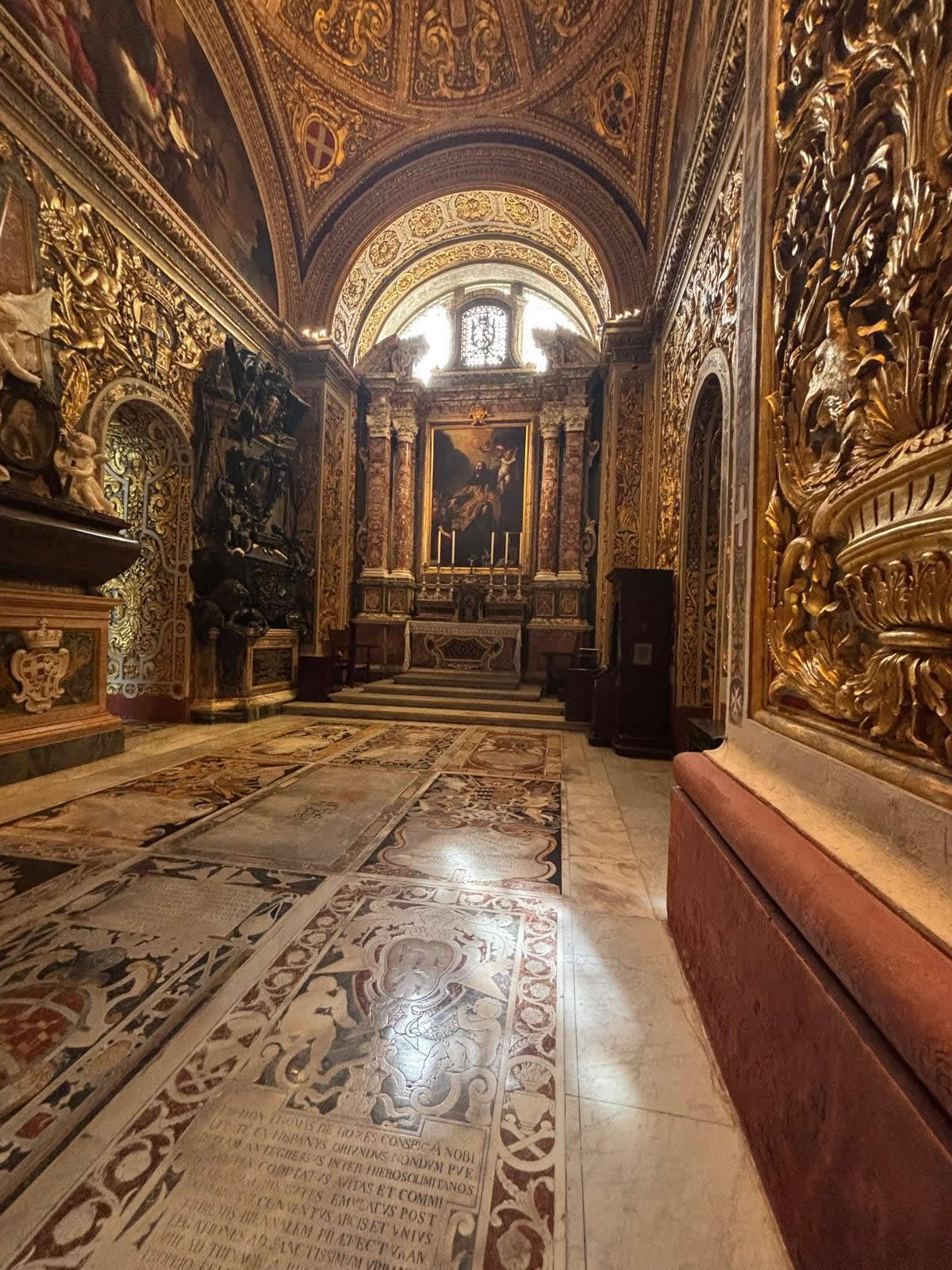
Dedicated to Saint James the Greater, the patron saint of Spain, the chapel reflects both the religious identity and political influence of the Iberian world within the Order. It is particularly notable for its grand funerary monuments and its richly decorated Baroque interior.
Historical Background
St John’s Co-Cathedral was constructed between 1573 and 1577 under the direction of the Maltese architect Girolamo Cassar, serving as the conventual church of the Knights of St John.
Each chapel was assigned to one of the langues of the Order, reflecting its multinational composition. The Langue of Castile, Leon and Portugal represented knights from the Iberian Peninsula, who played a vital role in the military and administrative structure of the Order.
Dedication to Saint James
The chapel is dedicated to Saint James (Santiago), one of the apostles of Christ and the patron saint of Spain. This dedication holds deep symbolic meaning, linking the chapel to the long tradition of pilgrimage to Santiago de Compostela and the broader spiritual heritage of the Iberian Peninsula.
Saint James was also associated with the Reconquista, reinforcing the martial and religious identity of the knights from Castile, Leon, and Portugal.
The Altarpiece by Mattia Preti
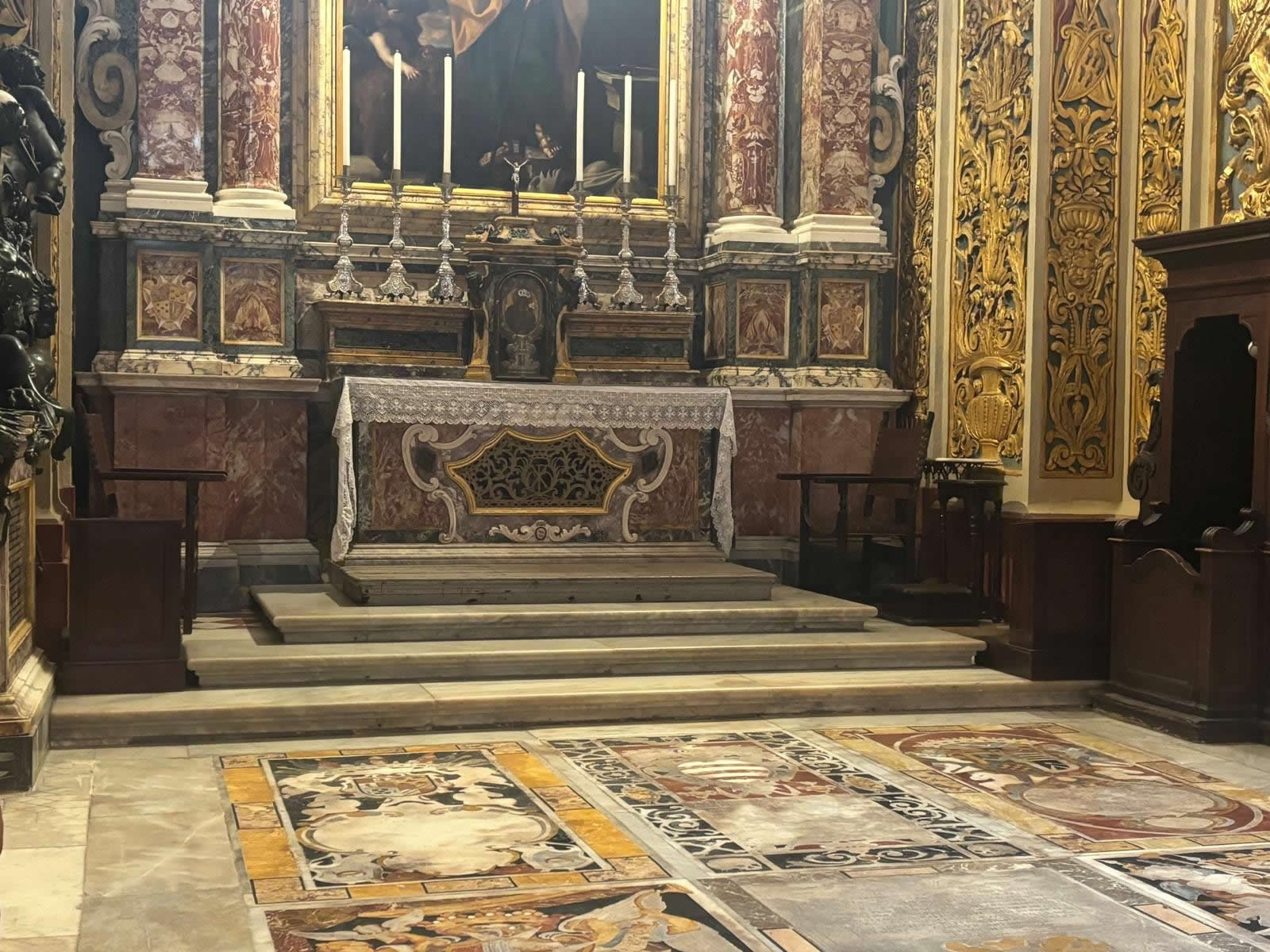
The focal point of the chapel is its altarpiece depicting Saint James, painted by the renowned Baroque artist Mattia Preti. This work forms part of the broader decorative programme that transformed the cathedral’s interior in the 17th century.
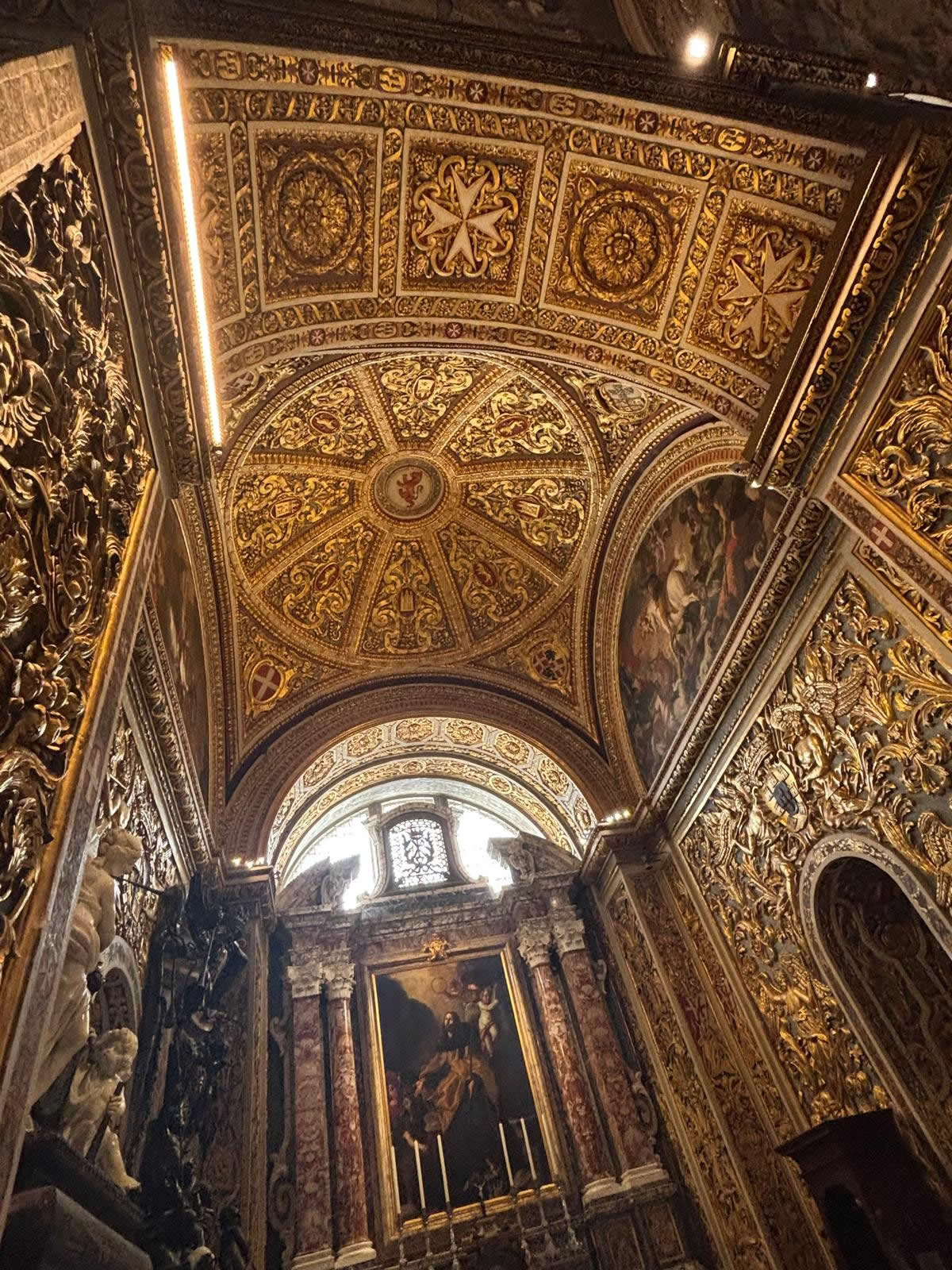
Preti’s painting captures the dramatic intensity and movement characteristic of Baroque art, guiding the viewer toward the spiritual message of the composition. His work throughout the cathedral helped unify its artistic identity and elevate it to one of the finest Baroque interiors in Europe.
Funerary Monuments
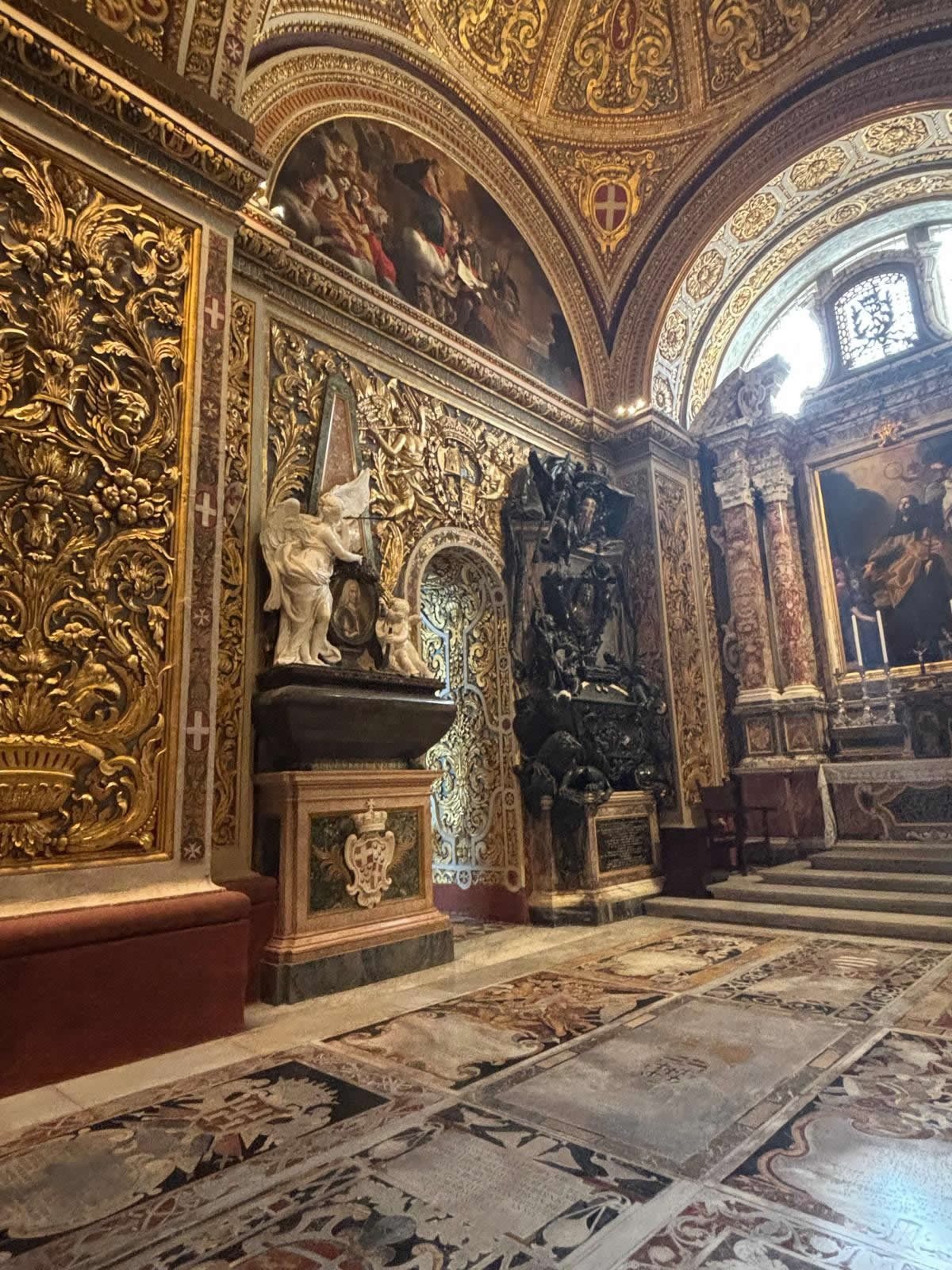
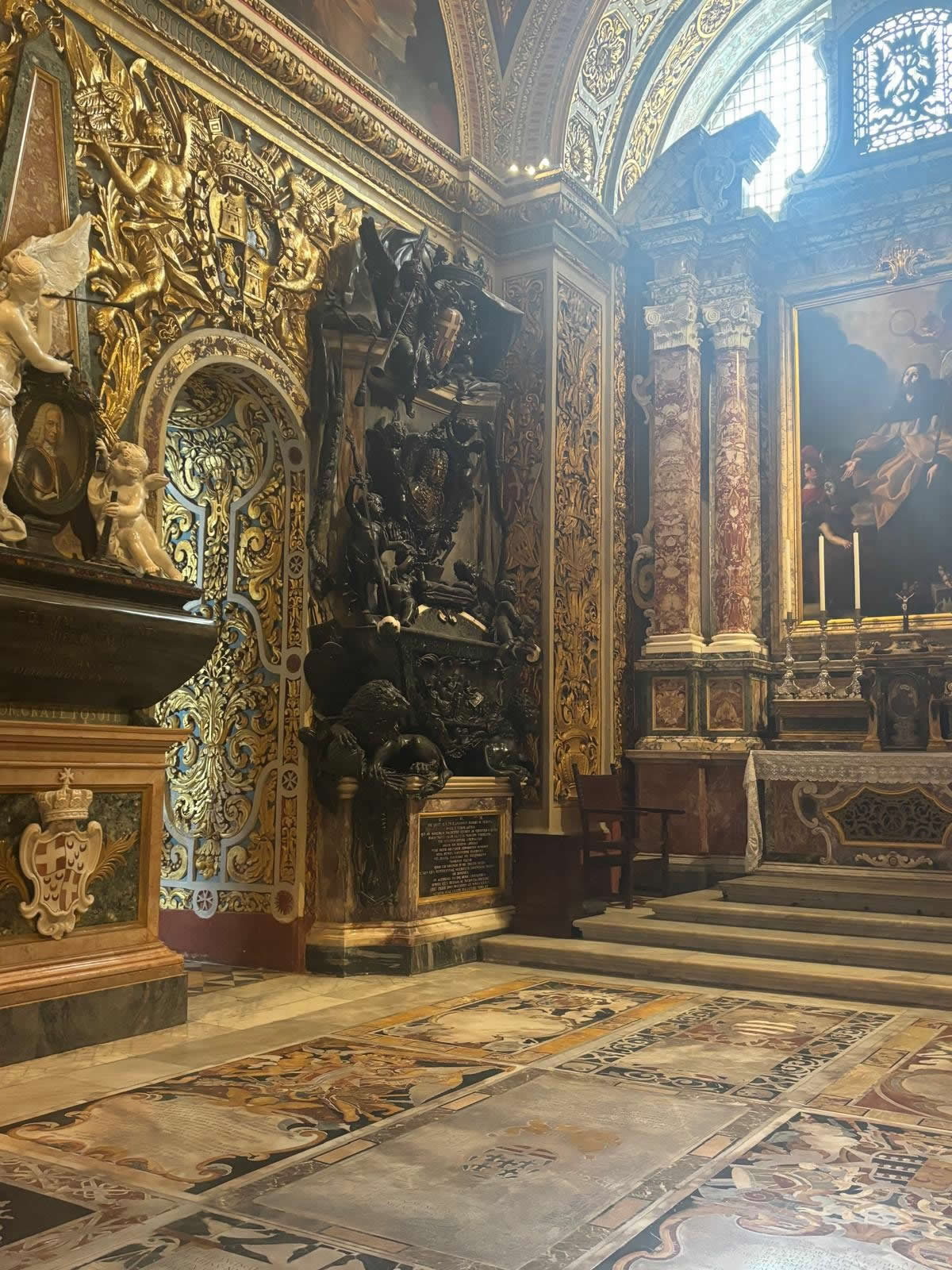
The chapel is particularly renowned for its elaborate funerary monuments, which commemorate some of the most important Grand Masters of the Order.
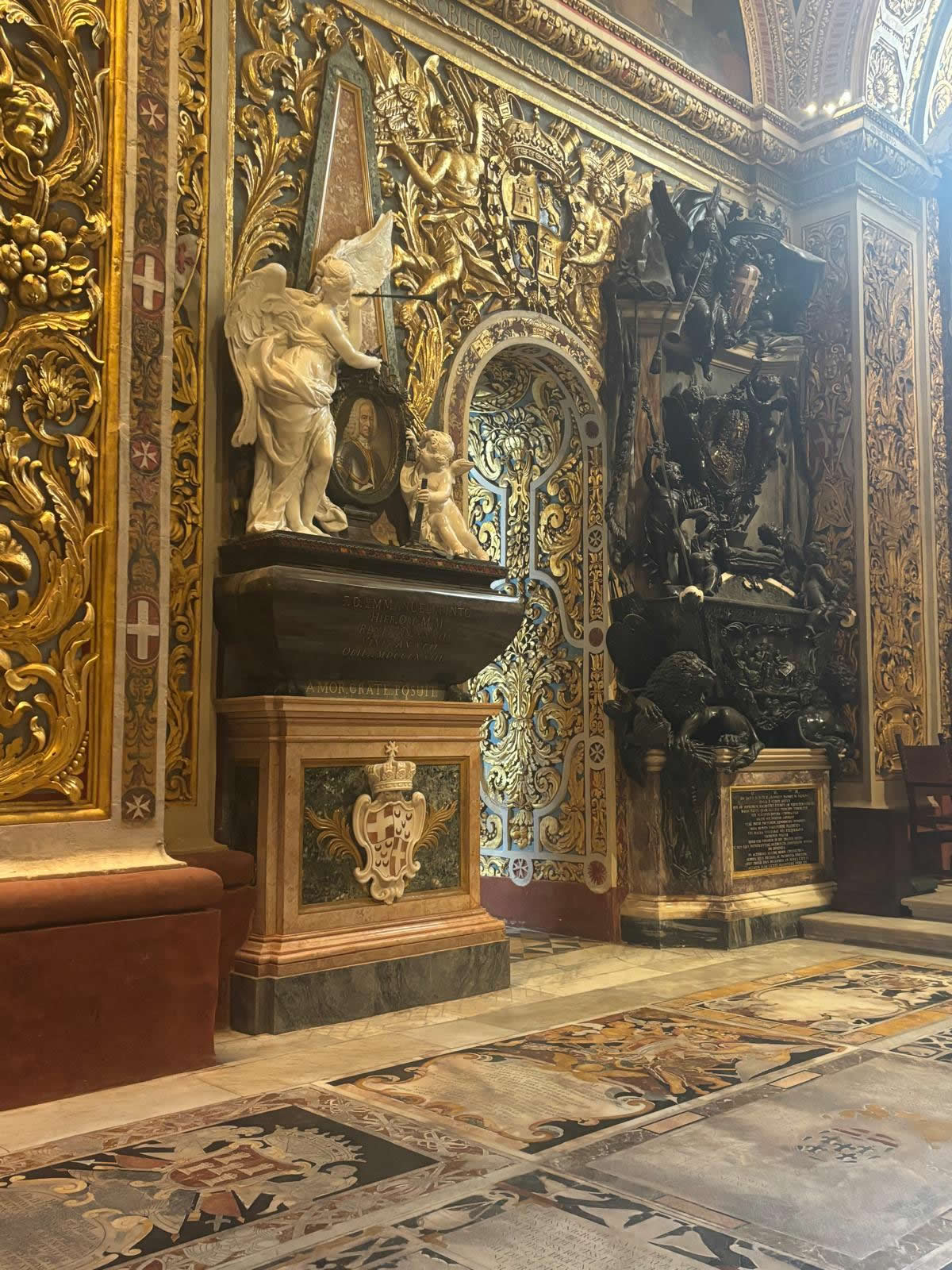
Among these is the monument of Grand Master António Manoel de Vilhena (d. 1736), one of the most influential rulers of Malta. His monument is a masterpiece of Rococo sculpture, depicting allegorical figures and architectural elements symbolising his achievements.
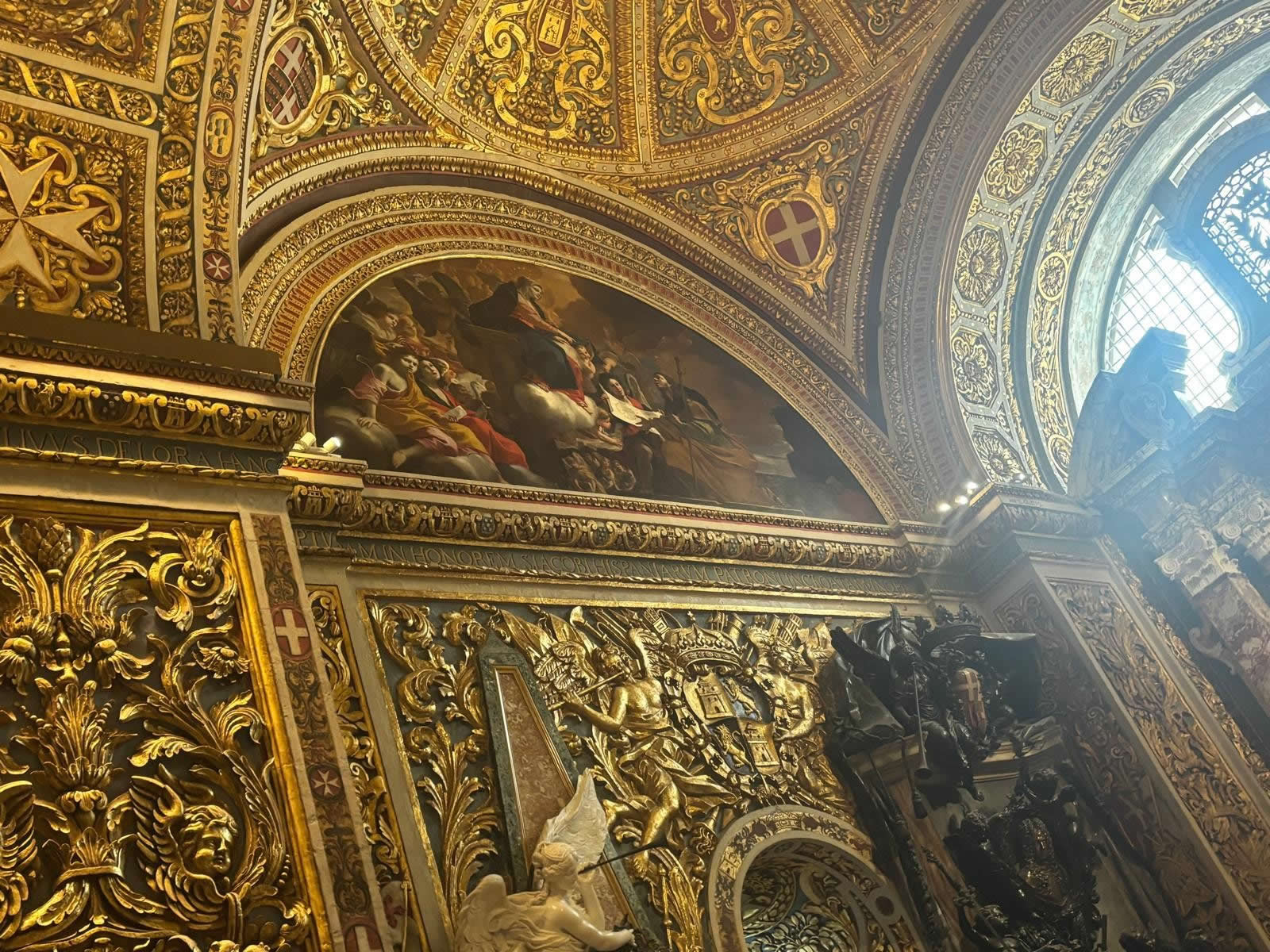
Equally impressive is the monument of Grand Master Manuel Pinto da Fonseca (d. 1773), whose long reign marked a period of prosperity and architectural development in Malta. His tomb reflects the grandeur and artistic ambition of the late Baroque period.
These monuments demonstrate the importance of the chapel as a site of elite commemoration within the Order.
Architectural Features
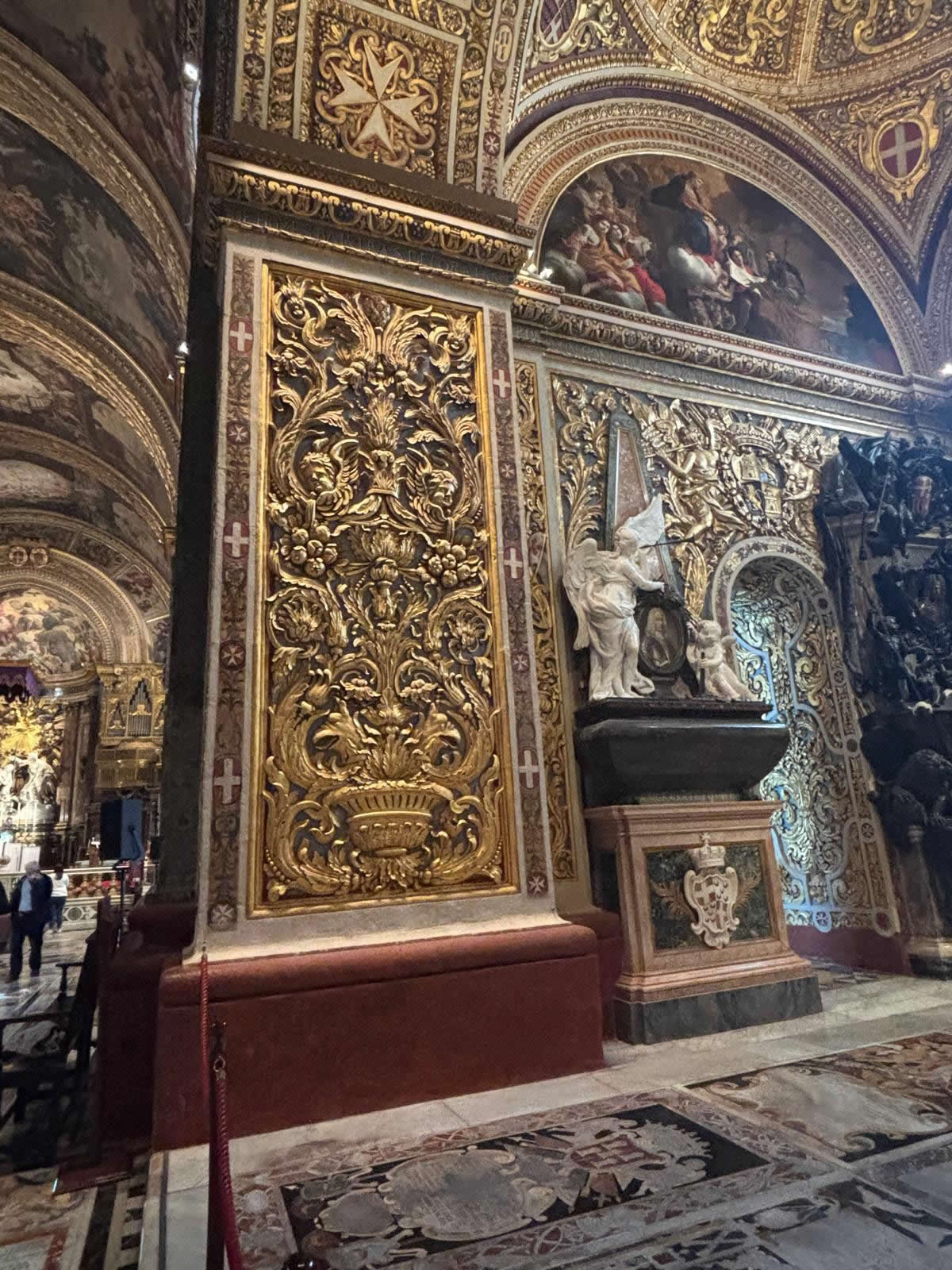
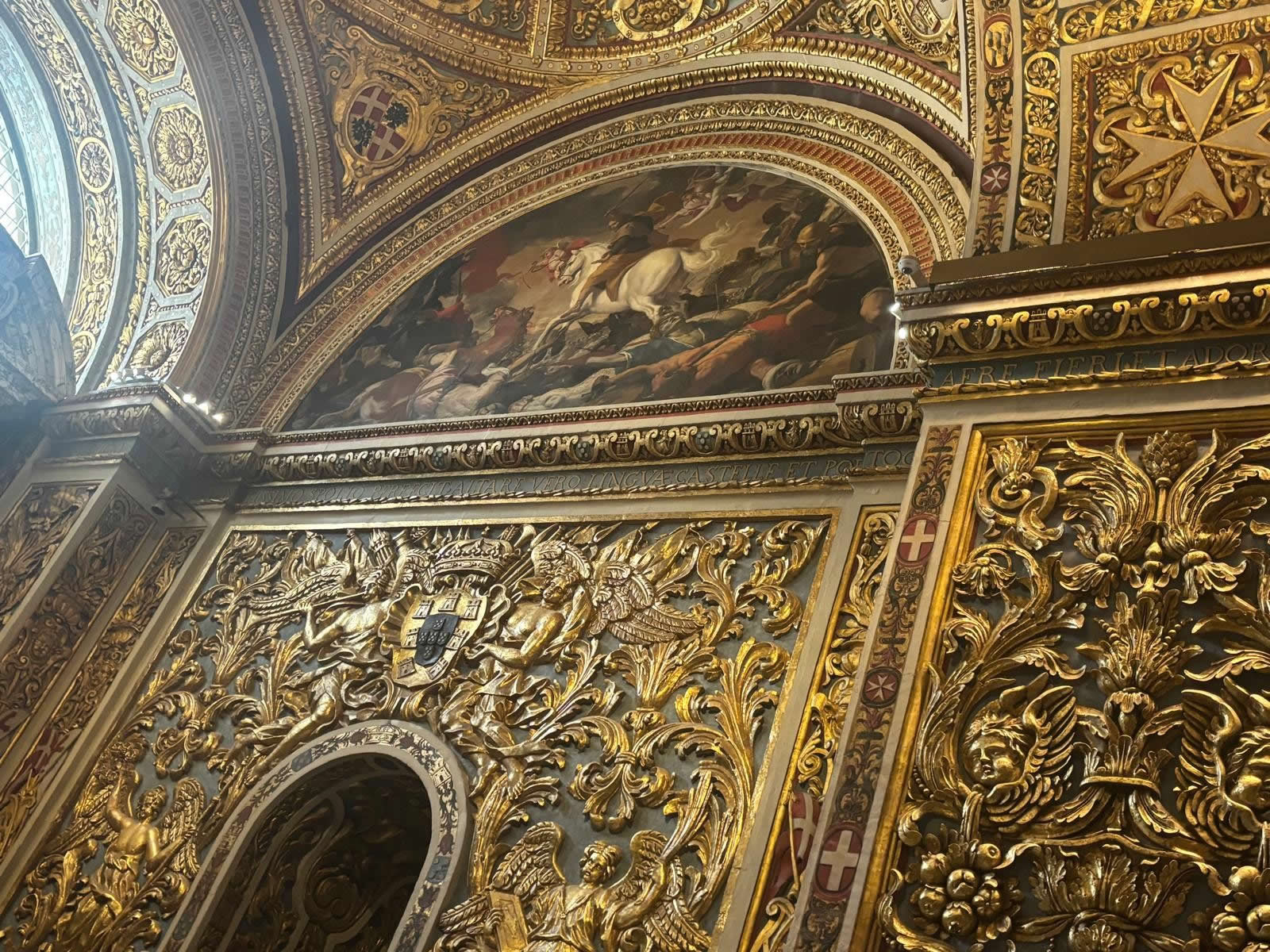
The chapel’s architecture integrates seamlessly with the overall structure of St John’s Co-Cathedral while maintaining its own distinctive identity. Richly carved limestone walls, gilded decorations, and elaborate sculptural elements create a visually immersive environment.
The Baroque transformation of the cathedral in the 17th century introduced a unified decorative scheme, in which architecture, painting, and sculpture combine to produce a dramatic and cohesive interior.
The Marble Floor and Tombs
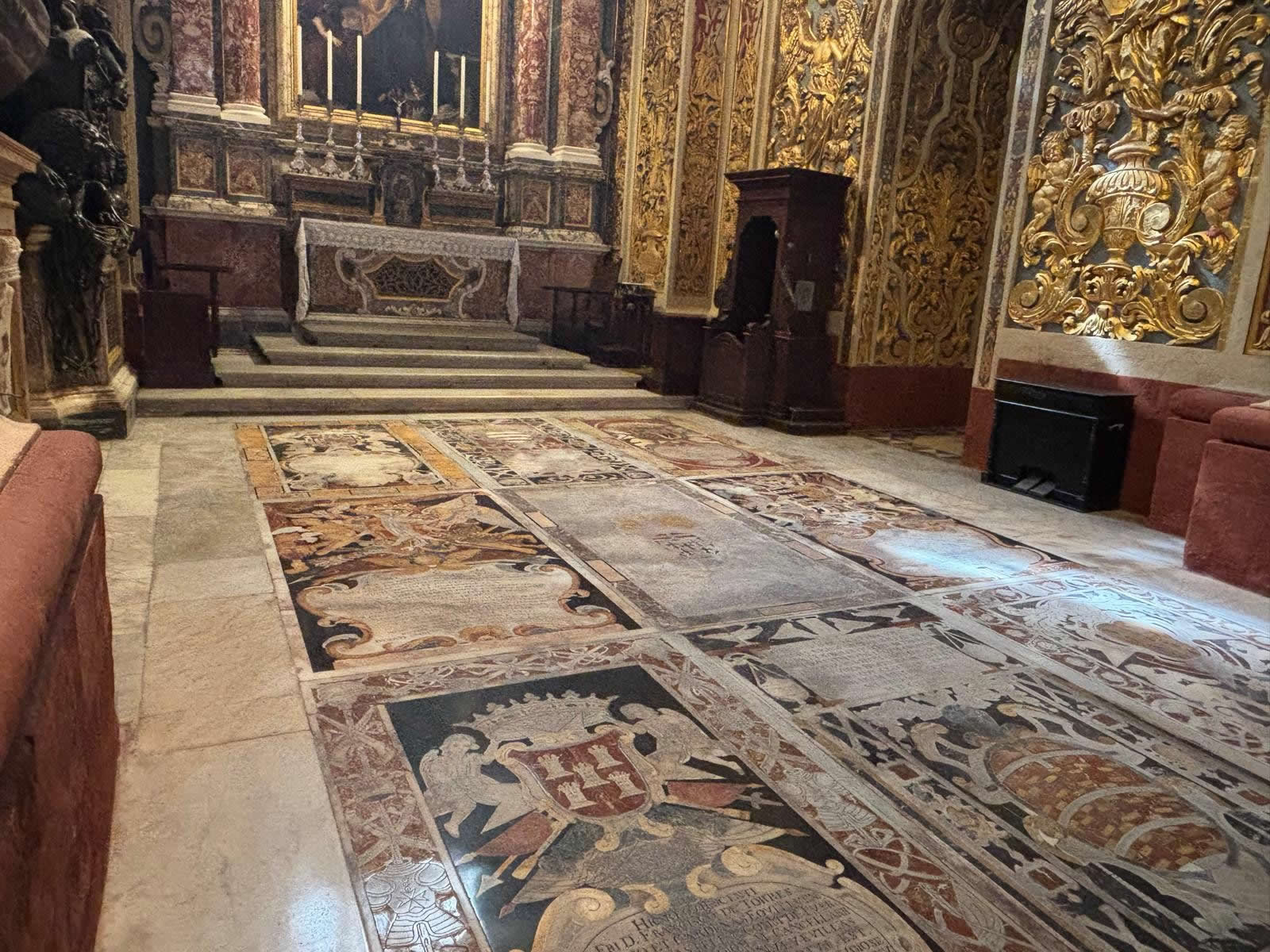
Like the rest of the cathedral, the chapel forms part of the famous marble floor composed of intricately inlaid tomb slabs. These tombs commemorate knights of the Order and feature heraldic designs, inscriptions, and symbolic imagery.
This funerary floor transforms the entire cathedral into a monumental memorial space, reflecting the Order’s traditions of honour and remembrance.
Who is Buried in the Chapel of the Langue of Castile, Leon and Portugal
The list of individuals buried here are:
- Grand Master Frà Don Emanuel Pinto
- Grand Master Frà Antonio Manoel De Vilhena
- Frà Don Francisco de Torres Pacheco y Cardenas
- Frà Don Fernando Contreras y Arellano
- Frà Don Lauren Mugnos de Figuerea
- Frà Don Francisco de Saavedra
- Frà Gundinsalvo de Porras
- Frà Balthasar de Marcina
- Frà Don Thomas de Hozes
- Frà Don Ettore Pinto de Miranda
- Frà Don Juan de Villaroel
Unique Features and Symbolism
One of the most remarkable features of the chapel is the tabernacle door, which incorporates an icon reportedly donated by Christian slaves who escaped captivity and returned to Malta.
This element adds a powerful narrative dimension to the chapel, linking it to the broader history of conflict and redemption in the Mediterranean.
Restoration and Conservation
The chapel has undergone extensive restoration as part of ongoing conservation efforts at St John’s Co-Cathedral. These works included structural stabilisation, cleaning of artworks, and restoration of decorative elements.
Significant restoration work was carried out between 2011 and 2012, ensuring the preservation of the chapel’s artistic and historical features.
Role within the Cathedral
Located on the south side of the cathedral, the chapel forms part of a sequence of chapels representing different langues.
Together, these chapels create a narrative of the Order’s multinational identity, with each space reflecting the traditions and contributions of its respective region.
Visitor Experience
Today, the Chapel of Castile, Leon and Portugal is one of the highlights of St John’s Co-Cathedral. Visitors are drawn to its monumental sculptures, dramatic altarpiece, and richly decorated interior.
The chapel offers a powerful insight into the artistic, religious, and political life of the Knights of St John, making it an essential stop for anyone exploring the cathedral.
Conclusion
The Chapel of the Langue of Castile, Leon and Portugal stands as a testament to the power and influence of the Iberian knights within the Order of St John. Through its art, architecture, and monuments, it reflects centuries of history and cultural exchange.
Its combination of Baroque splendour, historical significance, and artistic achievement ensures its place among the most important spaces within St John’s Co-Cathedral.
Frequently Asked Questions
Where is the chapel located?
It is located inside St John’s Co-Cathedral in Valletta, Malta.
Who is buried in the chapel?
Grand Masters António Manoel de Vilhena and Manuel Pinto da Fonseca.
What is the main artwork?
The altarpiece of Saint James by Mattia Preti.