Knights Hospitaller | Buried in St John’s Co-Cathedral, Valletta

Introduction
Grand Master Frà Antoine de Paule was one of the notable leaders of the Order of St John, serving as Grand Master from 1623 until his death in 1636. His tenure was marked by administrative development, strengthening of Malta’s infrastructure, and continued consolidation of the Order’s presence on the island.
Today, he is remembered not only for his leadership but also for his final resting place within St John’s Co-Cathedral in Valletta, specifically in the Chapel of the Langue of Provence.
Early Life and Background
Antoine de Paule was born in 1551 in Provence, France. Like many noblemen of his time, he joined the Order of St John, where he dedicated his life to military service, religious commitment, and governance.
His early career within the Order saw him rise through the ranks, gaining experience in both naval and administrative roles.
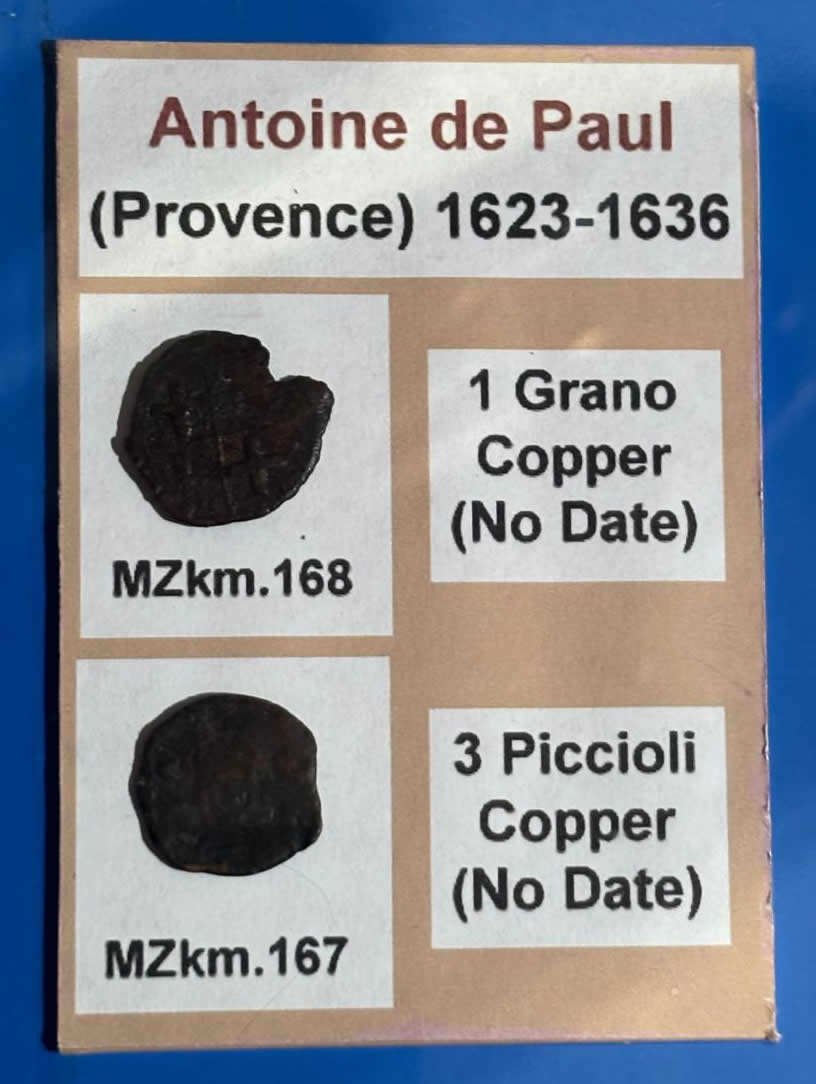
Election as Grand Master
In 1623, Antoine de Paule was elected Grand Master following the death of his predecessor. His election came at a time when the Order sought stability and continued growth.
His leadership was characterised by careful administration and attention to Malta’s development.
Contributions and Achievements
Founding of Paola
One of his most enduring legacies is the founding of the town of Paola, named after him. This development contributed to the expansion of Malta’s urban landscape.
Infrastructure and Development
During his rule, efforts were made to improve Malta’s infrastructure, including roads and fortifications. These developments strengthened the island’s defensive and economic capabilities.
Support for the Order
He worked to maintain the strength and unity of the Order of St John during a period of changing political dynamics in Europe.
St John’s Co-Cathedral
St John’s Co-Cathedral, constructed in the late 16th century, served as the conventual church of the Order. By the time of Antoine de Paule’s death, it had become the burial place of many knights and Grand Masters.
The Chapel of Provence
The Chapel of the Langue of Provence is one of the eight side chapels of the cathedral, each dedicated to a different Langue of the Order.
As a member of the Langue of Provence, Antoine de Paule was buried in this chapel, alongside other knights from the same region.

Chapel of the Langue of Provence
Latin Inscription – Tomb of Grand Master Frà Antoine de Paule
D.O.M.
F. ANTONIO DE PAVLA
MAG. MILITIAE HIEROSOL. MAGISTRO
PRINCIPI GRATISSIMO SPLENDIDISSIMO
QVI OB EGREGIAS ANIMI DOTES
VIVENS IN OMNIBVS SVI AMOREM
EXTINCTVS DESIDERIVM EXCITAVIT
PACEM MIRIFICE COLVIT ET AFFLVENTIAM
ORDINI
VIRES OPES
ADDIDIT AVXIT
AMPLIORI MVNIRE VALLO VRBEM AGGRESSVS
CVM ANNUM AGERET MAGISTERII XIV
AETATIS SVPRA OCTVAGESIMVM
DIVTURNO CVM MORBO CONSTANTER CONFLICTATVS
SEMPER SE IPSO MAIOR
PIISSIME AC RELIGIOSISSIME QVIEVIT IN DNO
V ID. IVNII ANNO SAL. MDCXXXVI
English Translation
To God, the Best and Greatest.
To Frà Antoine de Paule,
Grand Master of the Order of St John of Jerusalem,
a most gracious and most illustrious prince,
who, because of his outstanding qualities of mind,
while living inspired the love of all,
and in death stirred deep longing.
He fostered peace in a remarkable manner and prosperity,
and to the Order
added strength and resources,
increasing and enriching it.
He undertook to fortify the city with greater walls,
when he had reached the fourteenth year of his magistracy
and was above eighty years of age.
Having long struggled steadfastly with illness,
always greater than himself,
most piously and devoutly he rested in the Lord
on the 5th day before the Ides of June (9 June), in the year 1636.
The Tomb of Antoine de Paule
His tomb is an example of the elaborate funerary art found throughout St John’s Co-Cathedral. It features intricate marble work, heraldic symbols, and inscriptions commemorating his life and achievements.
The tomb reflects both his status as Grand Master and the artistic traditions of the Baroque period.

Chapel of the Langue of Provence
Latin Inscription – Lower Panel (Tomb of Grand Master Frà Antoine de Paule)
F. HENRICVS DE MERLES BEVCHAMPS ET D. MARTINVS DE REDIN
AC CATH. M. A CONSILIIS BELLICIS THOLOSAE ET NAVARRAE PRIORES ET
O. DE BERNOY VILLANOVA BAIULIVS AQVILEN. CONSANGVINEVS
TESTAMENTARII EXECVTORES OPT. BENEFACTORI MOERENTES H. M. F. C.
English Translation
Frà Henricus de Merles Beauchamps and Don Martin de Redin,
both of the Catholic Majesty, counsellors in matters of war,
Priors of Toulouse and Navarre,
and Fra Don de Bernoy Villanova, Bailiff of Aquileia, a kinsman,
executors of the will,
in sorrow to an excellent benefactor, had this made.
Artistic and Historical Context
The tomb forms part of a wider collection of memorials within the cathedral, which together create one of the richest ensembles of funerary art in Europe.
These monuments provide valuable insight into the identity and values of the Knights Hospitaller.
Death and Legacy
Antoine de Paule died in 1636 after thirteen years as Grand Master. His leadership left a lasting impact on Malta, particularly through urban development and administrative stability.
His burial within St John’s Co-Cathedral ensures that his memory remains closely tied to one of Malta’s most important historical sites.
Modern Significance
Today, visitors to St John’s Co-Cathedral can view the tomb of Antoine de Paule as part of the broader historical narrative of the Knights Hospitaller.
His legacy continues to be appreciated by historians and visitors alike.
Conclusion
Grand Master Frà Antoine de Paule played a significant role in shaping Malta during the early 17th century. His contributions to development and governance, combined with his final resting place in the Chapel of Provence, make him an important figure in Maltese history.
His tomb remains a lasting tribute within St John’s Co-Cathedral, linking his life and achievements to one of the island’s most iconic landmarks.
Frequently Asked Questions
Who was Antoine de Paule?
Grand Master of the Knights Hospitaller from 1623 to 1636.
Where is he buried?
In the Chapel of Provence, St John’s Co-Cathedral.
What did he achieve?
He founded Paola and contributed to Malta’s development.