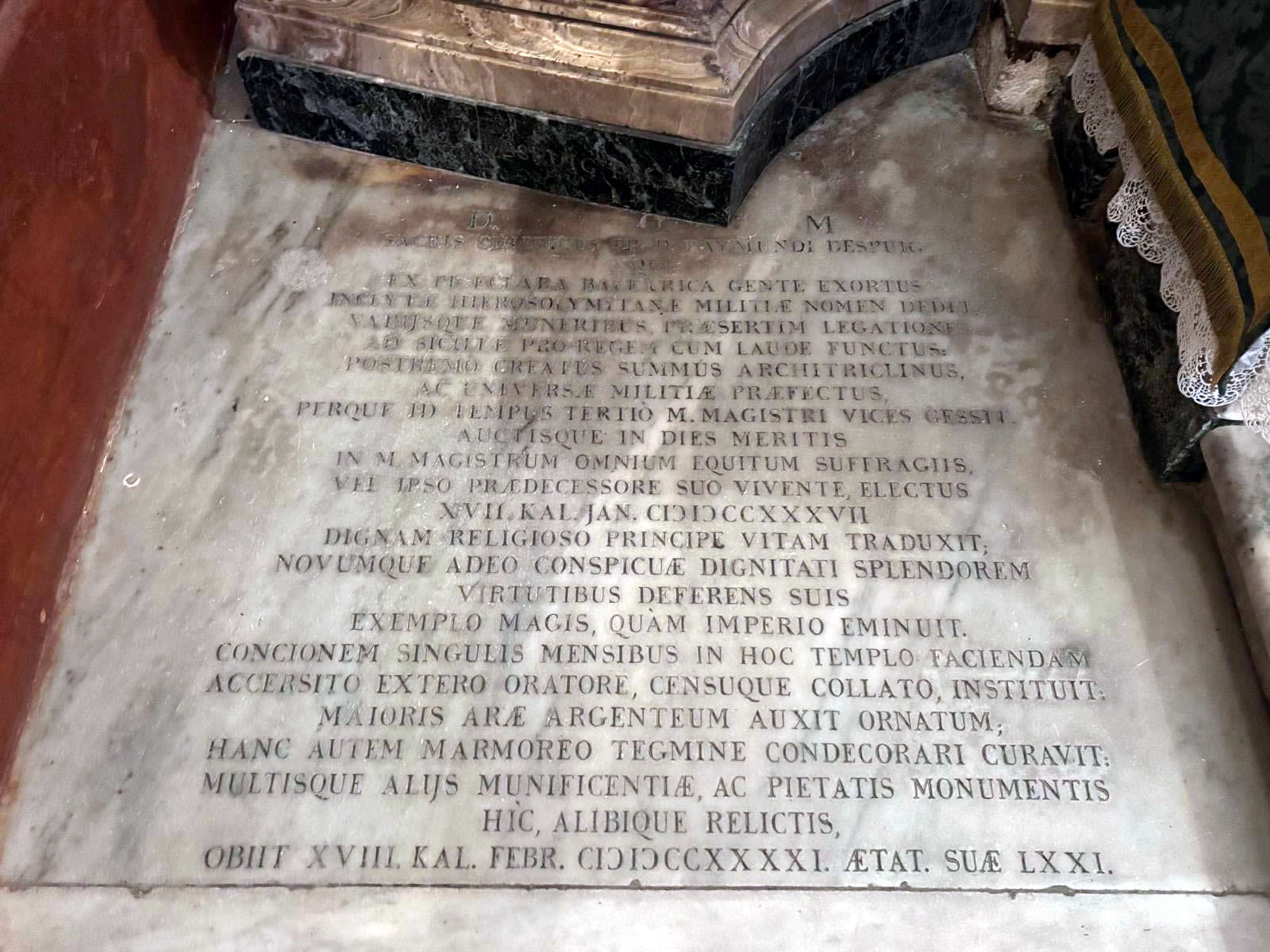
Frà Ramon Despuig, Grand Master of the Order of St John from 1736 to 1741, is commemorated within the Chapel of Aragon in St John’s Co-Cathedral, Valletta. His tomb reflects both his leadership of the Order and the enduring legacy of the Knights of Malta during the 18th century.
Early Life and Background
Frà Ramon Despuig was born into a noble Catalan family, reflecting the strong Spanish and Aragonese presence within the Order of St John. His aristocratic background enabled him to enter the Order at a young age, where he pursued a career combining military service, religious devotion, and administrative leadership.
The Langue of Aragon, to which he belonged, was one of the most prominent divisions of the Order, contributing significantly to its governance and military strength.

Rise within the Order
Before his election as Grand Master, Despuig held several important positions within the Order. These roles would have included commanderies and administrative posts that prepared him for leadership at the highest level.
His election as Grand Master in 1736 reflected both his experience and the trust placed in him by the knights of the Order.
Reign as Grand Master (1736–1741)
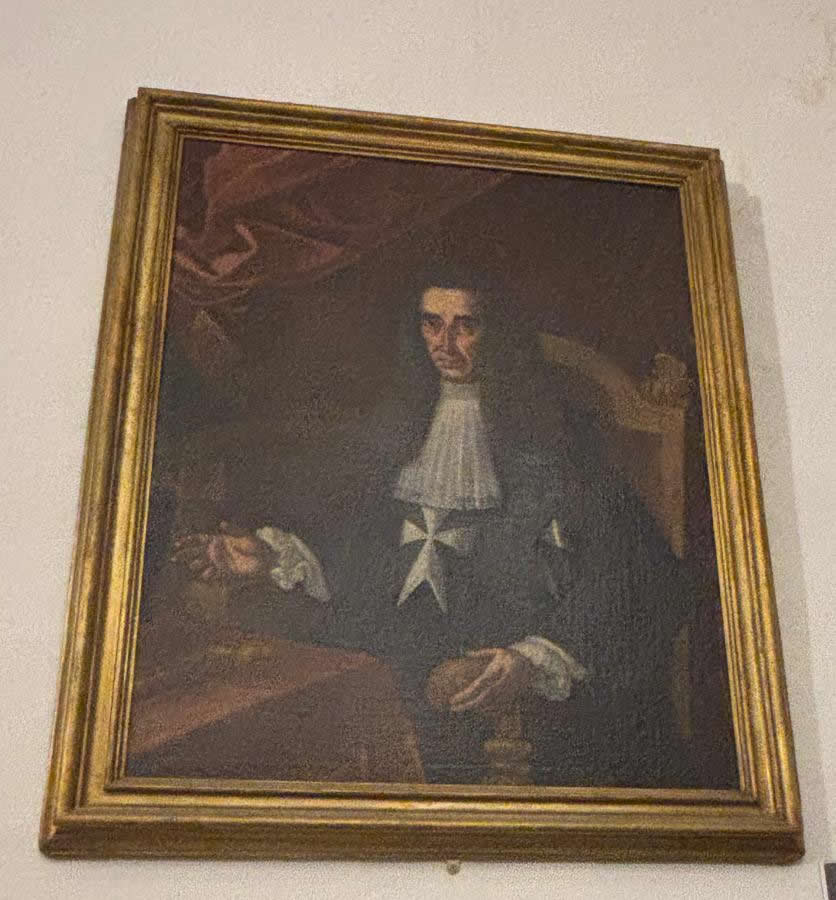
The magistracy of Frà Ramon Despuig took place during a relatively stable period in the history of the Order. While the major military conflicts of earlier centuries had subsided, the Order continued to play an important role in Mediterranean security and diplomacy.
During his reign, Despuig focused on strengthening the administration of the Order, maintaining its naval capabilities, and preserving its influence within European politics.
His leadership contributed to the continued stability and prestige of the Order during the 18th century.
The Chapel of Aragon
The Chapel of Aragon in St John’s Co-Cathedral is dedicated to the knights of the Aragonese Langue, including those from Spain and surrounding regions. It is richly decorated with Baroque art and serves as a memorial space for distinguished members of this division.
Grand Masters associated with the Langue of Aragon, including Despuig, are commemorated within this chapel, highlighting the importance of this group within the Order.
The Tomb of Ramon Despuig
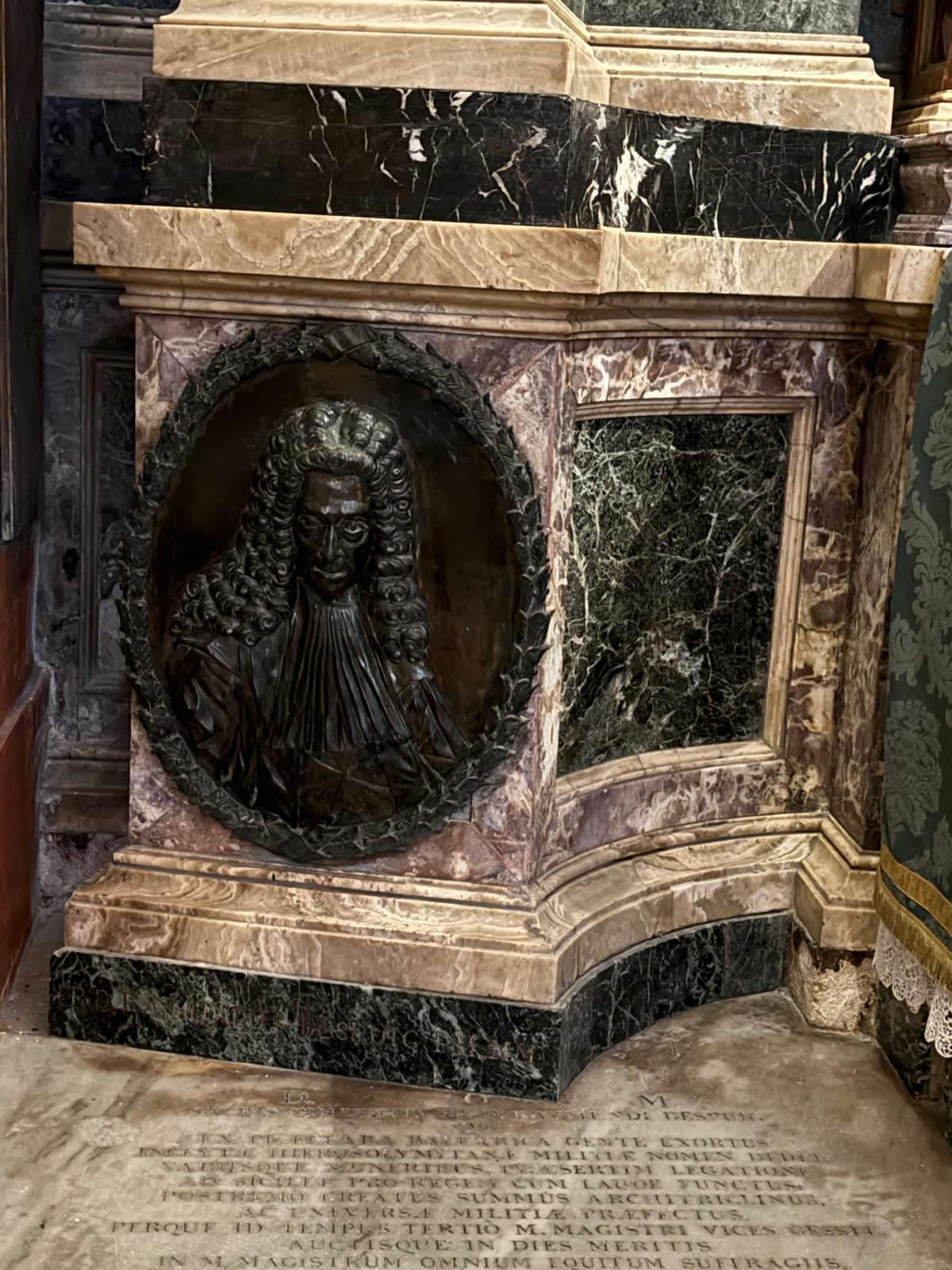
The tomb of Grand Master Despuig is an important feature within the chapel. Like other Grand Master tombs in the cathedral, it reflects both artistic excellence and symbolic meaning.
These tombs often incorporate heraldic elements, inscriptions, and decorative motifs that emphasise the authority and achievements of the Grand Master. The placement of Despuig’s tomb within the Chapel of Aragon reinforces his identity and legacy within that langue.
Artistic and Historical Context
St John’s Co-Cathedral is renowned for its Baroque interior and extensive collection of tombstones. The cathedral contains hundreds of memorials to knights and Grand Masters, making it one of the most significant historical sites in Malta.
The tomb of Despuig contributes to this collection, offering insight into the artistic and cultural values of the Order during the 18th century.
Legacy
Frà Ramon Despuig’s legacy lies in his leadership during a period of continuity and stability for the Order of St John. While not marked by major conflicts, his reign ensured the preservation of the Order’s traditions and influence.
Today, his tomb in St John’s Co-Cathedral serves as a lasting reminder of his role in the history of Malta and the Knights Hospitaller.
Frequently Asked Questions (FAQs)
Who was Grand Master Ramon Despuig?
He was the Grand Master of the Order of St John from 1736 to 1741.
Where is he buried?
In the Chapel of Aragon at St John’s Co-Cathedral in Valletta.
What did he achieve?
He maintained stability and governance of the Order during his reign.
What is the Langue of Aragon?
An administrative division of the Order representing knights from Spain and related regions.