Home › St John's Co-Cathedral › Chapel of Our Lady of Philermos
Introduction
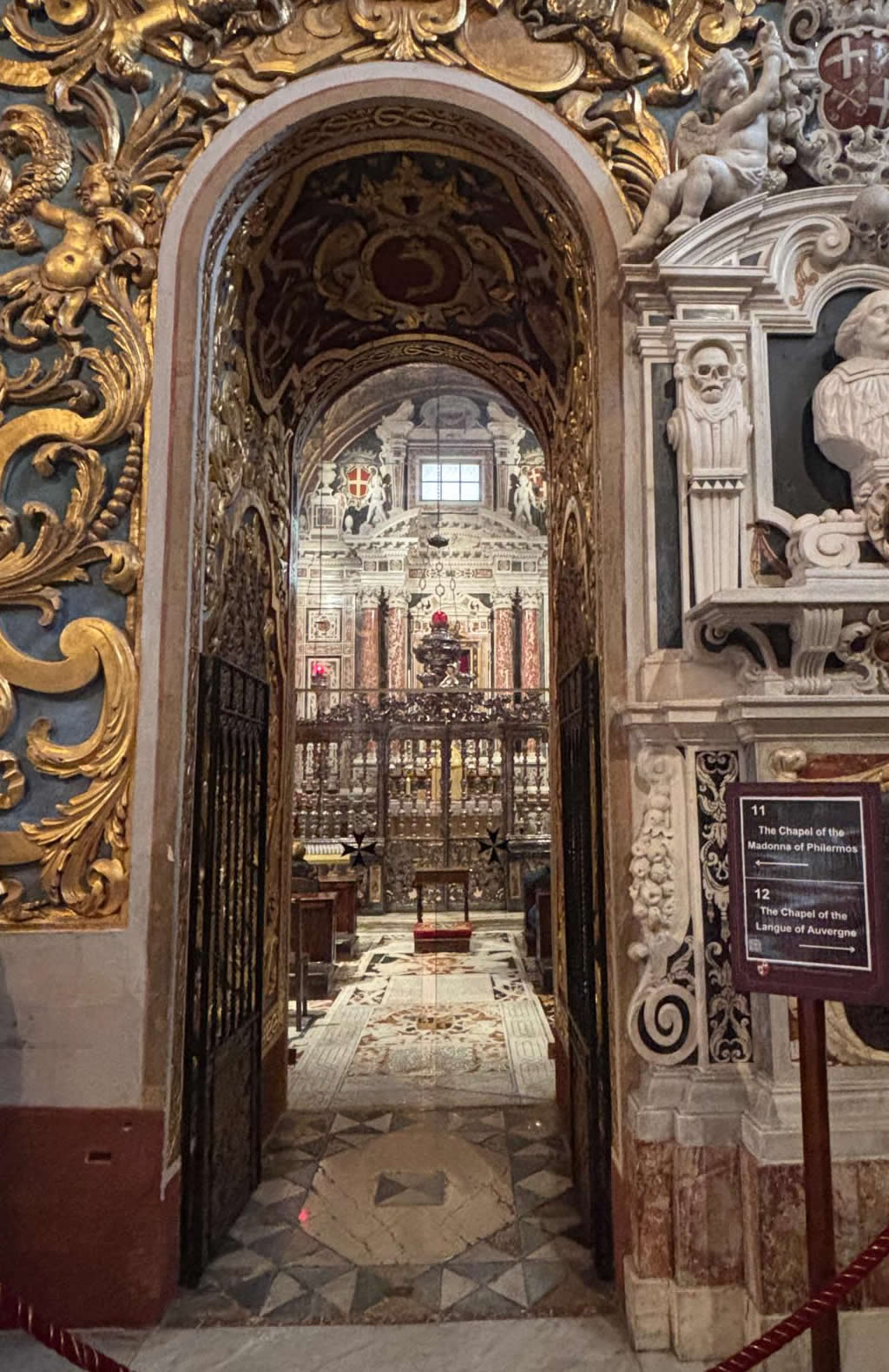
The Chapel of Our Lady of Philermos is one of the most spiritually significant spaces within St John’s Co-Cathedral in Valletta, Malta. Unlike the other chapels which are dedicated to the patron saints of the various langues of the Order of Saint John, this chapel is uniquely dedicated to the Blessed Virgin Mary under the title of Our Lady of Philermos.
For centuries, this chapel served as the devotional heart of the Knights Hospitaller. It housed one of their most treasured relics: the Byzantine icon of the Virgin Mary known as Our Lady of Philermos, believed to date from the 11th or 12th century.
Today, although the original icon is no longer present, the chapel remains a powerful testament to the faith, artistic patronage, and cultural identity of the Knights of Malta.
Origins of the Devotion to Our Lady of Philermos
The devotion to Our Lady of Philermos originates from the Byzantine icon once housed at the Monastery of Phileremos in Rhodes. The icon, depicting the Virgin Mary in solemn profile, became associated with miraculous protection and divine intercession.
When the Knights Hospitaller conquered Rhodes in the early 14th century, they took possession of the icon, elevating it to one of their most sacred relics. It became closely linked with their identity and was credited with protecting the island during times of siege.
After the Ottoman conquest of Rhodes in 1522, the Knights carried the icon with them during their years of exile. When they were granted Malta in 1530, the icon accompanied them, symbolising continuity and divine protection.
Establishment of the Chapel in Valletta
With the construction of St John’s Co-Cathedral between 1573 and 1578 under Grand Master Jean de la Cassière, a dedicated chapel was created to house the icon of Our Lady of Philermos.
Positioned prominently within the cathedral, the chapel was intended to reflect the central importance of Marian devotion within the Order. Unlike the chapels assigned to specific langues, this space belonged to all knights equally.
Its role extended beyond ceremonial use. It functioned as a daily place of prayer and reflection, reinforcing the spiritual discipline expected of members of the Order.
Architecture and Baroque Transformation
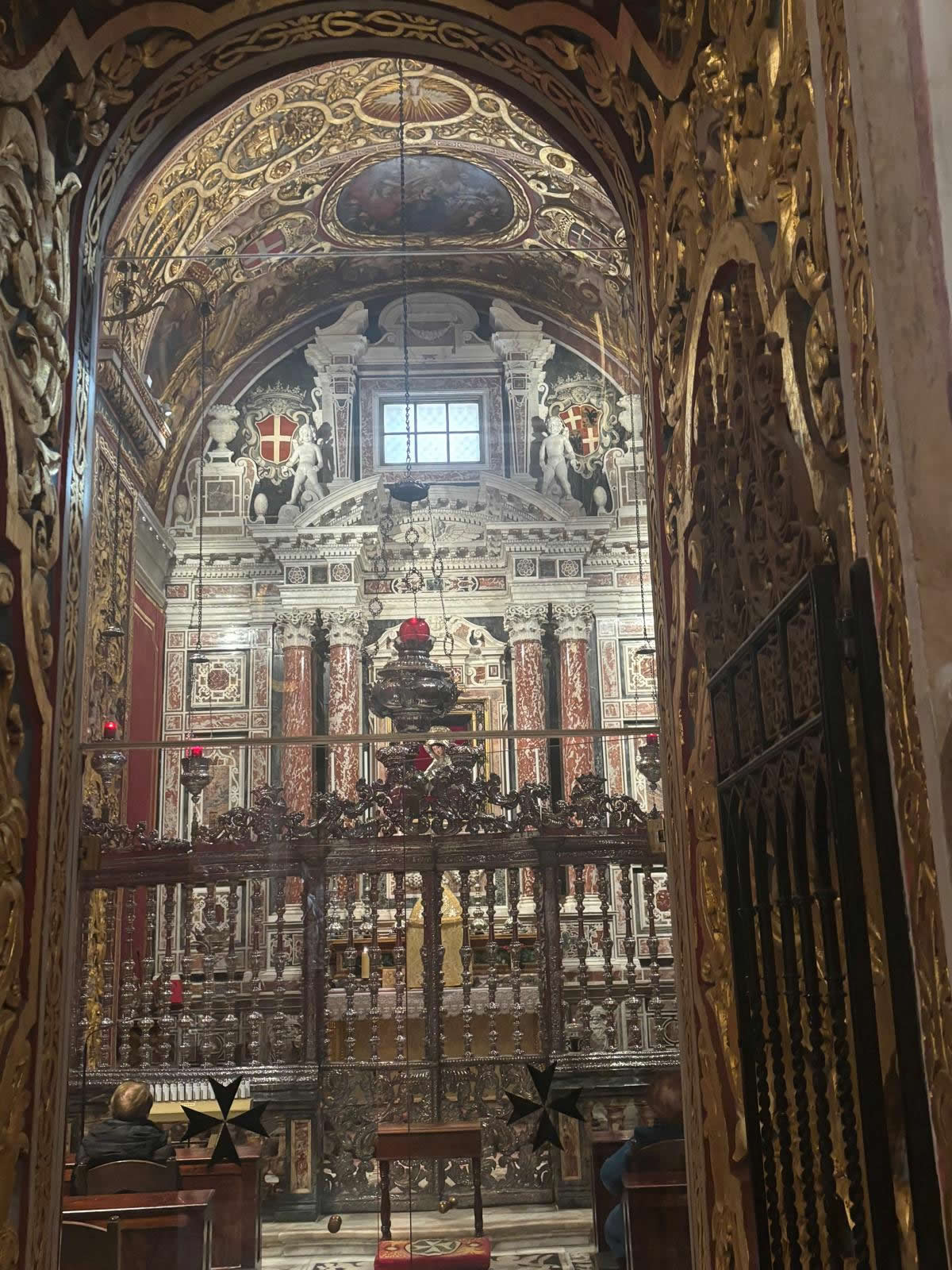
The chapel forms part of the richly decorated Baroque interior of the cathedral, which was transformed during the 17th century. Artists such as Mattia Preti contributed to the dramatic visual programme that defines the building today.
The chapel’s design incorporates intricate stone carvings, gilded decoration, and symbolic imagery associated with the Virgin Mary. The dome and surrounding architectural elements feature motifs representing Marian titles and virtues.
This artistic richness reflects the Order’s desire to express both devotion and prestige through sacred art, transforming the cathedral into one of the finest examples of Baroque architecture in Europe.
The Sacred Icon
At the heart of the chapel was the icon of Our Lady of Philermos, a small but immensely significant work of Byzantine art. Measuring approximately 44 by 36 centimetres, it depicts only the head of the Virgin Mary, rendered in a solemn and contemplative expression.
The icon was believed to possess miraculous powers and was venerated by the Knights as their protector. It played a symbolic role in major historical events, including the defence of Rhodes and the Order’s survival during periods of crisis.
In 1798, following the French invasion of Malta, the Knights were forced to leave the island. The icon was eventually taken to Russia and today resides in the National Museum of Montenegro, where it continues to be preserved as an important relic.
Function as the Chapel of the Blessed Sacrament
Over time, the chapel also became known as the Chapel of the Blessed Sacrament. This reflects its role as a focal point of Eucharistic devotion within the cathedral.
For the Knights, the chapel was not merely symbolic but deeply practical in their daily religious life. It served as a centre for prayer, meditation, and liturgical observance.
Its importance within the spiritual life of the Order cannot be overstated, as devotion to the Virgin Mary was central to the identity of the Knights Hospitaller.
Artworks and Decorative Elements
The chapel contains a number of important artistic features, including paintings depicting key events in the life of the Virgin Mary. These works enhance the devotional atmosphere and reinforce the Marian theme of the space.
The surrounding carvings and gilded surfaces are characteristic of the Baroque style introduced in the 17th century. These decorative elements create a sense of movement and drama, guiding the viewer’s attention towards the altar.
Symbolic motifs found within the chapel include representations of purity, sacrifice, and divine grace, all associated with the Virgin Mary.
Tombs and Memorials
Like much of St John’s Co-Cathedral, the Chapel of Our Lady of Philermos contains tombs of notable knights. The marble pavement of the cathedral is composed of intricately designed tombstones, commemorating members of the Order.
Within this chapel, several distinguished knights are buried, including patrons who contributed to its decoration and upkeep. These tombs serve as both memorials and works of art, featuring coats of arms, inscriptions, and symbolic imagery.
The presence of these tombs reinforces the chapel’s role as a sacred space where faith, art, and memory converge.
Who is Buried in the Chapel of Our Lady of Philermos
The list of individuals buried here are:
- Frà Pierre Mosquet
- Frà Just de Fay-Gerlande
- Frà Flaminio Balbiano
- Frà Pompeo Rospiliosi
- Frà Jean-Jacques de Verdelin
- Frà Ġwanni Franġisku Habela
- Frà Denis de Polastron la Hilière
- Frà Nicolao Cavarretta
- Frà Charles de Fay Gerlande
- Don Frà François de Panisse
- Frà Giovanni Deodato
- Frà Boniface de Puget Chiastuel
- Frà George de Castellane d’Aluis
- Frà Giovanni Gonzaga
- Frà Justin Fay Gerlande
- Frà Claude de Blot Vivier
- Frà Juan de Garzes y Pueyo
- Frà Vincenzo Martelli
Restoration and Conservation
Over the centuries, the chapel has undergone periods of deterioration due to environmental factors such as humidity, water infiltration, and candle soot.
A significant restoration project was carried out in the early 21st century, focusing on cleaning and preserving the delicate carvings and gilding. The restoration also included the conservation of paintings depicting scenes from the life of the Virgin Mary.
The process revealed previously hidden details, including intricate carvings within the dome and symbolic motifs associated with Marian devotion.
Today, the chapel stands restored, allowing visitors to appreciate its original beauty and spiritual significance.
Historical Significance
The Chapel of Our Lady of Philermos holds a unique place within the history of Malta and the Order of Saint John. It represents the deep Marian devotion that underpinned the identity of the Knights.
The presence of the icon within the chapel for over two centuries made it a centre of pilgrimage and veneration. Even after the icon’s removal, the chapel continues to embody the spiritual heritage of the Order.
It also reflects the broader historical journey of the Knights, from Rhodes to Malta and beyond, highlighting their resilience and enduring faith.
Visiting the Chapel Today
Visitors to St John’s Co-Cathedral can explore the Chapel of Our Lady of Philermos as part of their journey through one of Malta’s most important cultural and religious landmarks.
Located along the south side of the cathedral, the chapel offers a quieter, more contemplative space compared to the grandeur of the main nave.
It remains an essential stop for those seeking to understand the spiritual and artistic legacy of the Knights of Malta.
Key Facts
- Dedicated to: Our Lady of Philermos
- Location: St John’s Co-Cathedral, Valletta
- Constructed: Late 16th century (1570s)
- Original function: Shrine for the Philermos icon
- Later use: Chapel of the Blessed Sacrament
- Icon origin: Rhodes (Byzantine, 11th–12th century)
- Icon current location: Montenegro
Frequently Asked Questions
What is the Chapel of Our Lady of Philermos?
It is a chapel dedicated to the Virgin Mary and once housed a sacred Byzantine icon central to the Knights of Malta.
Where is the icon today?
The original icon is now preserved in Montenegro after being taken from Malta in 1798.
Why is this chapel unique?
It is the only chapel in the cathedral not dedicated to a langue but to a universal devotion shared by all knights.
Can visitors see it today?
Yes, it is accessible within St John’s Co-Cathedral in Valletta.