German Langue Knight | Early 18th Century
Buried in the Chapel of the Langue of Germany, St John’s Co-Cathedral, Valletta, Malta
Home > St John’s Co-Cathedral > Heinrich Ludger von Galen
Introduction
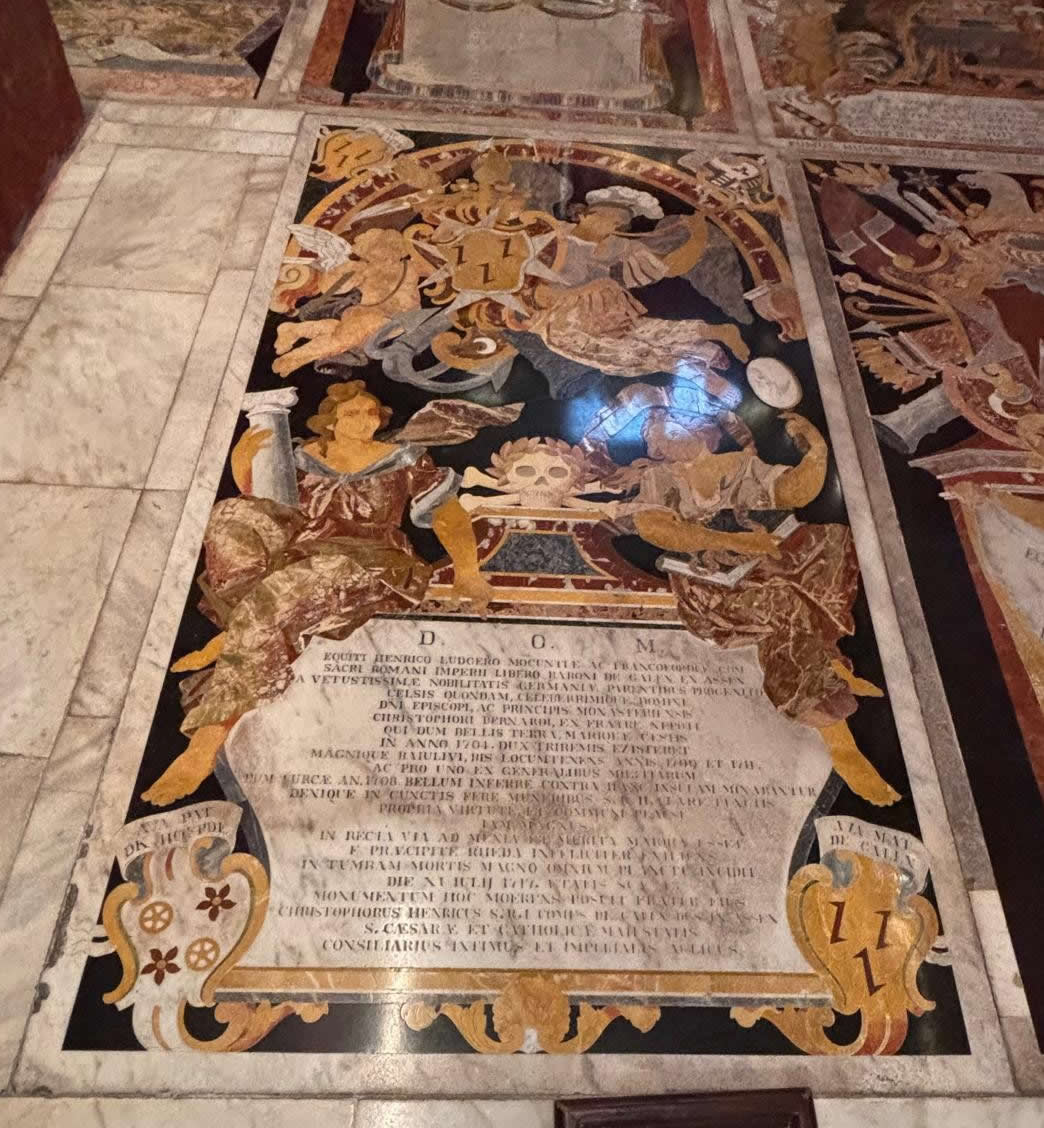
Heinrich Ludger von Galen was a Knight of the Order of St John belonging to the German Langue, whose burial in the Chapel of the Langue of Germany at St John’s Co-Cathedral places him among the distinguished members of the Order commemorated within this monumental Baroque church.
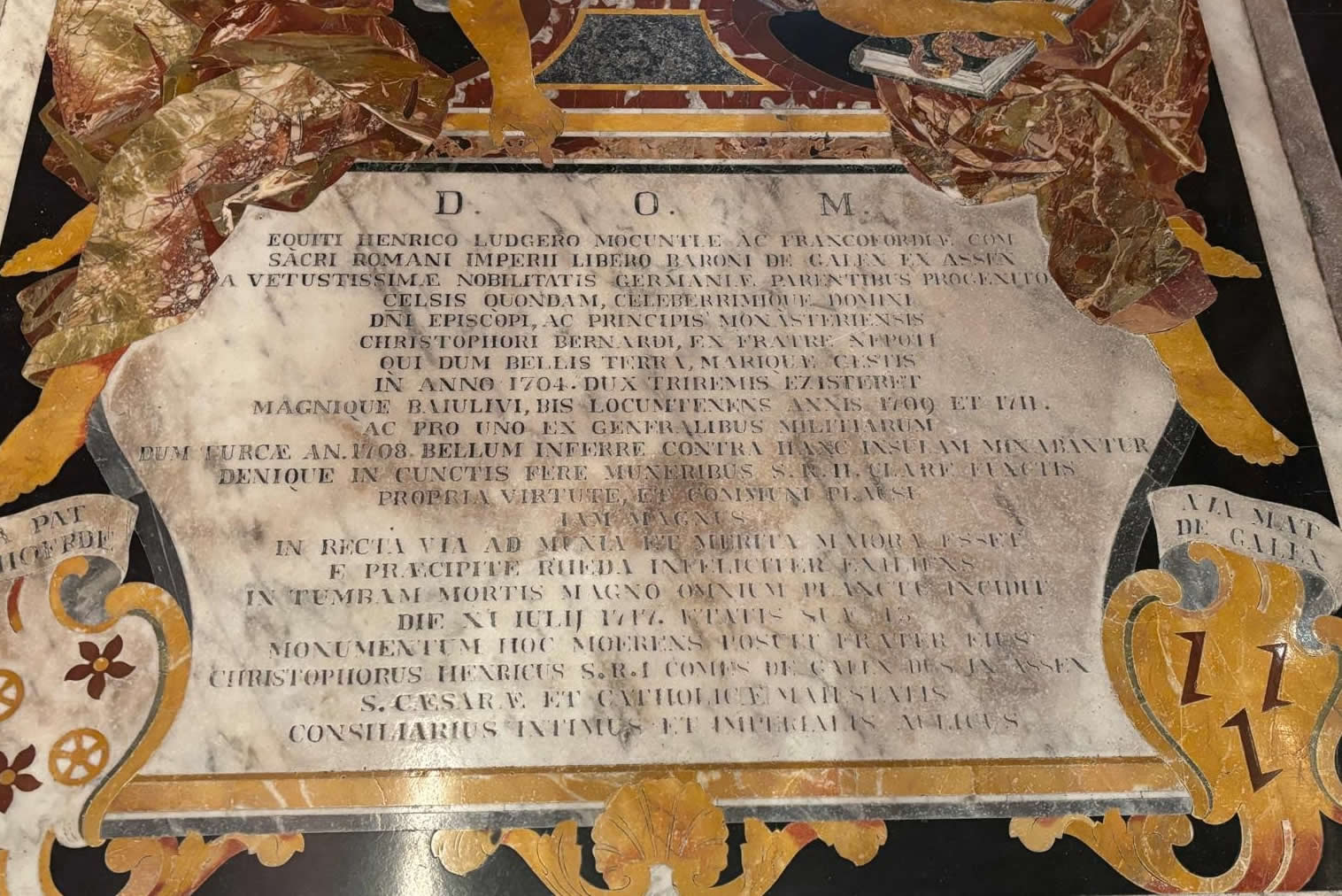
Although detailed archival records about his life remain limited, the Latin inscription on his tomb provides valuable insight into his military career and status within the Order, particularly during the early 18th century.
Latin Inscription (Partial Transcription)
... AC PRO UNO EX GENERALIBUS MILITARIBUS ...
... AN. 1708 BELLUM INFERRE CONTRA TURCAS ...
... DENIQUE IN CUNCTIS FERE MUNERIBUS ...
... PROPRIA VIRTUTE ANTECESSIT ...
Translation and Interpretation
The surviving portion of the inscription suggests that Heinrich Ludger von Galen held a position of considerable military importance. The phrase “ex generalibus militaribus” indicates that he was counted among military leaders or generals, a distinction reflecting senior rank within the Order.
The reference to the year 1708 and to warfare “against the Turks” places him within the broader context of ongoing conflicts between European powers and the Ottoman Empire during the early 18th century.
The inscription further praises his excellence “in almost all duties” and highlights his advancement through “his own virtue,” suggesting that his reputation was built on merit, leadership, and dedication.
Military Role and Historical Context
During the early 18th century, the Order of St John remained actively engaged in defending Christian Europe against Ottoman expansion. Knights of the German Langue, including von Galen, contributed to both naval and land-based military operations.
The mention of the 1708 campaign suggests involvement in broader European conflicts, possibly linked to ongoing wars in Central and Eastern Europe, where Ottoman influence remained a major concern.
As a figure described among military leaders, von Galen would likely have held command responsibilities, overseeing troops, coordinating operations, or managing strategic positions within the Order’s military structure.
The Tomb within St John’s Co-Cathedral
The tomb of Heinrich Ludger von Galen forms part of the richly decorated marble pavement of St John’s Co-Cathedral, one of the most remarkable artistic features of the building.
Each slab commemorates a knight, transforming the cathedral floor into a vast memorial space reflecting the Order’s history, hierarchy, and international composition.
The placement of von Galen’s tomb within the German Chapel indicates his association with the German Langue and highlights his importance within that group.
The German Langue
The German Langue consisted of knights originating from the Holy Roman Empire, including regions of present-day Germany, Austria, and surrounding territories. These knights played a crucial role in the Order’s military and administrative operations.
The Chapel of the Langue of Germany is dedicated to the Epiphany and is richly decorated with Baroque artworks, reflecting the wealth and influence of its members.
Symbolism and Legacy
The tomb inscription of Heinrich Ludger von Galen reflects the values of the Order of St John: military service, religious devotion, and personal virtue. The emphasis on merit and excellence highlights the ideals expected of knights during this period.
Although much of his personal history remains unknown, his commemoration within St John’s Co-Cathedral ensures that his legacy endures as part of Malta’s rich historical heritage.
Conclusion
Heinrich Ludger von Galen represents the many knights of the Order of St John whose lives were dedicated to service, warfare, and faith. His tomb provides a valuable glimpse into the military and cultural world of the early 18th century, preserving his memory within one of Malta’s most important historical monuments.
Frequently Asked Questions
When did Heinrich Ludger von Galen live?
He was active during the early 18th century, with references to the year 1708.
What was his role?
He is described as being among military leaders of the Order of St John.
Where is his tomb located?
In the German Chapel of St John’s Co-Cathedral, Valletta.
Why is his tomb important?
It provides insight into the role of German knights and military leadership within the Order.