Frà Antonio Tancredi was a Knight of the Order of St John of Jerusalem, associated with the Langue of Italy, whose tomb is preserved within the Chapel of the Langue of Italy in St John’s Co-Cathedral, Valletta. His memorial forms part of one of the most remarkable funerary collections of the Knights of Malta.
The Order of St John and the Italian Langue
The Order of St John was a unique institution combining military, religious, and charitable roles. Its members were organised into “langues,” or linguistic divisions, representing different regions of Europe.
The Italian Langue was one of the most influential divisions within the Order, composed of knights from various Italian states. These knights played key roles in administration, naval warfare, and religious patronage.
The Chapel of the Langue of Italy within St John’s Co-Cathedral reflects this importance. Richly decorated in Baroque style, it houses numerous tombstones and monuments commemorating Italian knights such as Frà Antonio Tancredi.
Life and Role of Frà Antonio Tancredi
Although detailed archival records of Frà Antonio Tancredi’s life are limited, his burial within St John’s Co-Cathedral indicates that he was a knight of notable standing within the Order. Only members of rank, distinction, or significant service were granted burial within the cathedral.
As a member of the Italian Langue, Tancredi would have been involved in both administrative and military functions. Knights of his status often served in naval expeditions, defended Christian territories, and contributed to the governance of the Order’s estates across Europe.
The title “Frà” indicates that he had taken religious vows, aligning himself with the spiritual mission of the Order alongside its military objectives.
The Chapel of the Langue of Italy
The chapel where Tancredi is buried is dedicated to Italian knights of the Order and is one of the most artistically refined spaces within the cathedral. Its design reflects the wealth and influence of the Italian nobility within the Order.
St John’s Co-Cathedral itself, built in the late 16th century, became the conventual church of the Order and later a masterpiece of Baroque art. The interior is renowned for its elaborate decoration, marble tombstones, and historical significance.
The chapel floor, like much of the cathedral, is composed of intricately inlaid marble tombstones commemorating knights. These tombs collectively narrate the history of the Order through symbols, inscriptions, and heraldry.
The Tomb of Frà Antonio Tancredi
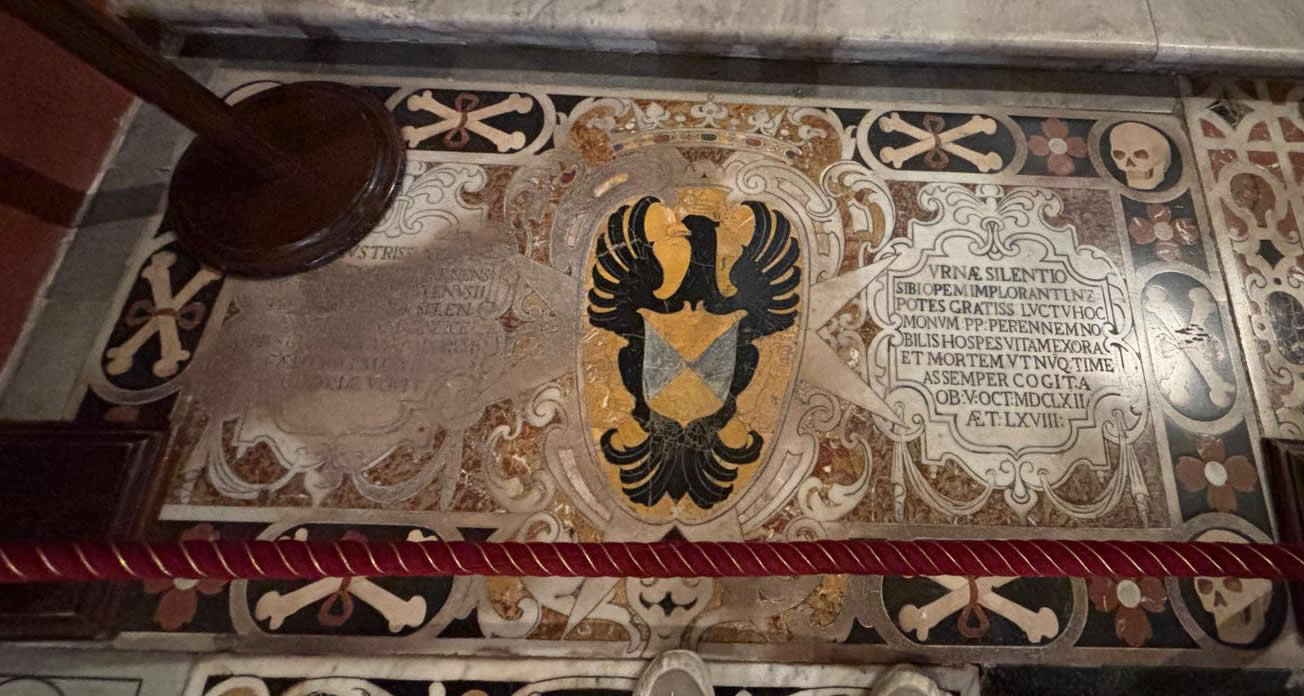
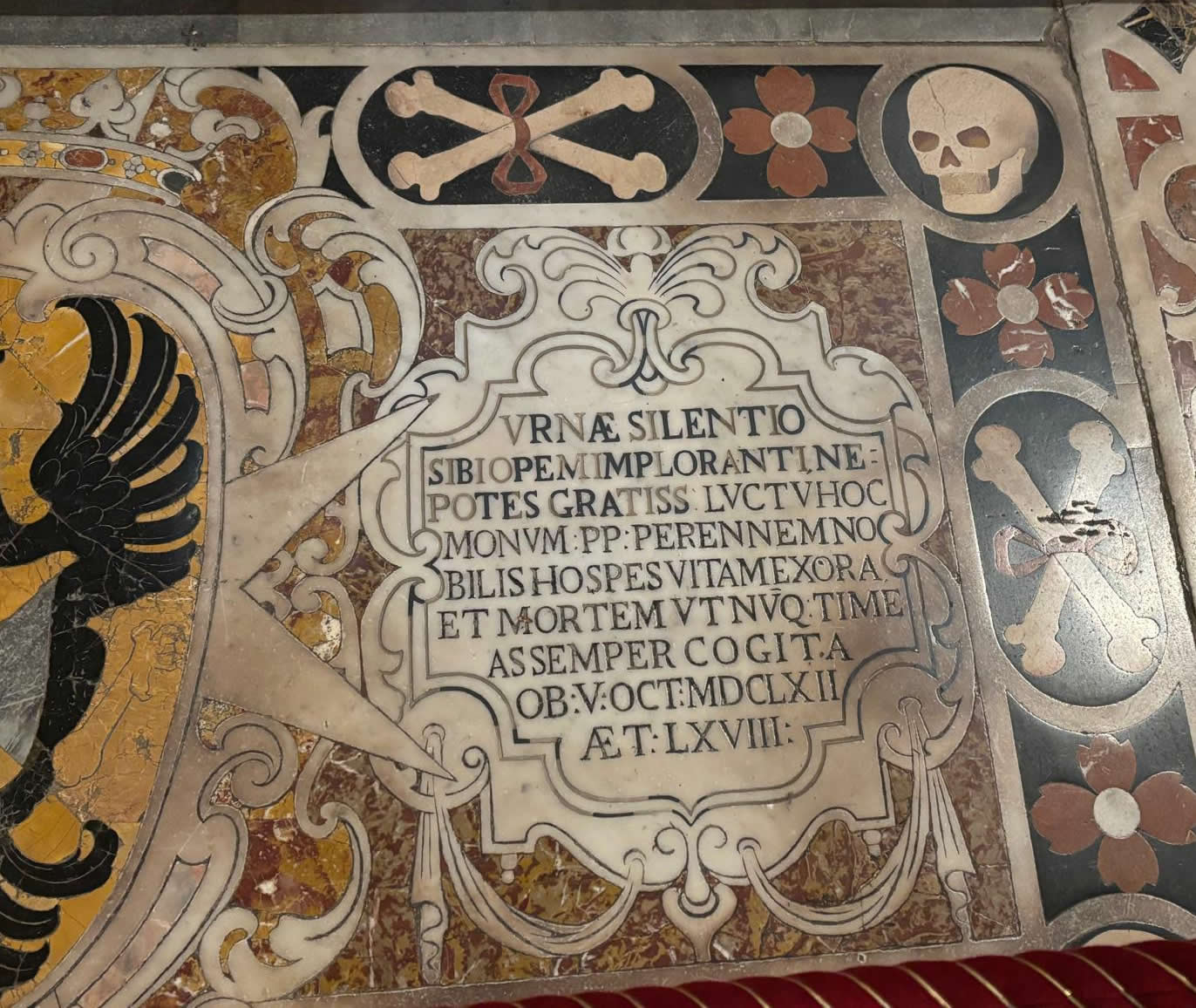
The tomb of Frà Antonio Tancredi is embedded within the marble floor of the chapel, forming part of the extensive funerary mosaic that defines St John’s Co-Cathedral.
These tombstones typically feature coats of arms, Latin inscriptions, and symbolic imagery such as skulls, hourglasses, and allegorical figures representing mortality and virtue. Such artistic elements reflect the Baroque fascination with death and remembrance, as well as the spiritual ideals of the Order.
Tancredi’s tomb contributes to this visual and historical narrative, representing the life of a knight whose service to the Order earned him a place within this sacred space.
Symbolism and Meaning
The tombstones of the Knights of Malta are more than burial markers; they are symbolic works of art. They communicate themes of faith, sacrifice, honour, and the transient nature of life.
For knights like Tancredi, burial within the cathedral was both an honour and a spiritual statement, reflecting their lifelong dedication to the ideals of the Order.
Historical Importance
St John’s Co-Cathedral contains nearly 400 tombstones of knights, making it one of the most significant collections of its kind in the world. Each tomb provides insight into the individuals who shaped the Order’s history.
Frà Antonio Tancredi’s tomb, though less documented than those of Grand Masters, remains an important part of this collective heritage, representing the broader body of knights whose service sustained the Order’s power and influence.
Legacy
The legacy of Frà Antonio Tancredi lies in his contribution to the Order of St John and the enduring presence of his memorial within one of Malta’s most important historical sites.
Today, visitors to St John’s Co-Cathedral can view his tomb as part of a wider narrative of chivalry, faith, and artistic achievement that defines the Knights of Malta.
Frequently Asked Questions (FAQs)
Who was Frà Antonio Tancredi?
A Knight of the Order of St John belonging to the Italian Langue.
Where is he buried?
In the Chapel of the Langue of Italy at St John’s Co-Cathedral in Valletta.
What is the significance of his tomb?
It forms part of the cathedral’s historic collection of knightly tombstones.
Why are knights buried in the cathedral?
Burial within the cathedral was reserved for distinguished members of the Order.