Frà Giovanni Gerolamo Carafa was a distinguished Knight of the Order of St John of Jerusalem and Prior of Barletta, commemorated within the Chapel of the Langue of Italy at St John’s Co-Cathedral in Valletta, Malta. His legacy reflects the deep connection between the Italian nobility and the military-religious Order that shaped Malta’s history.
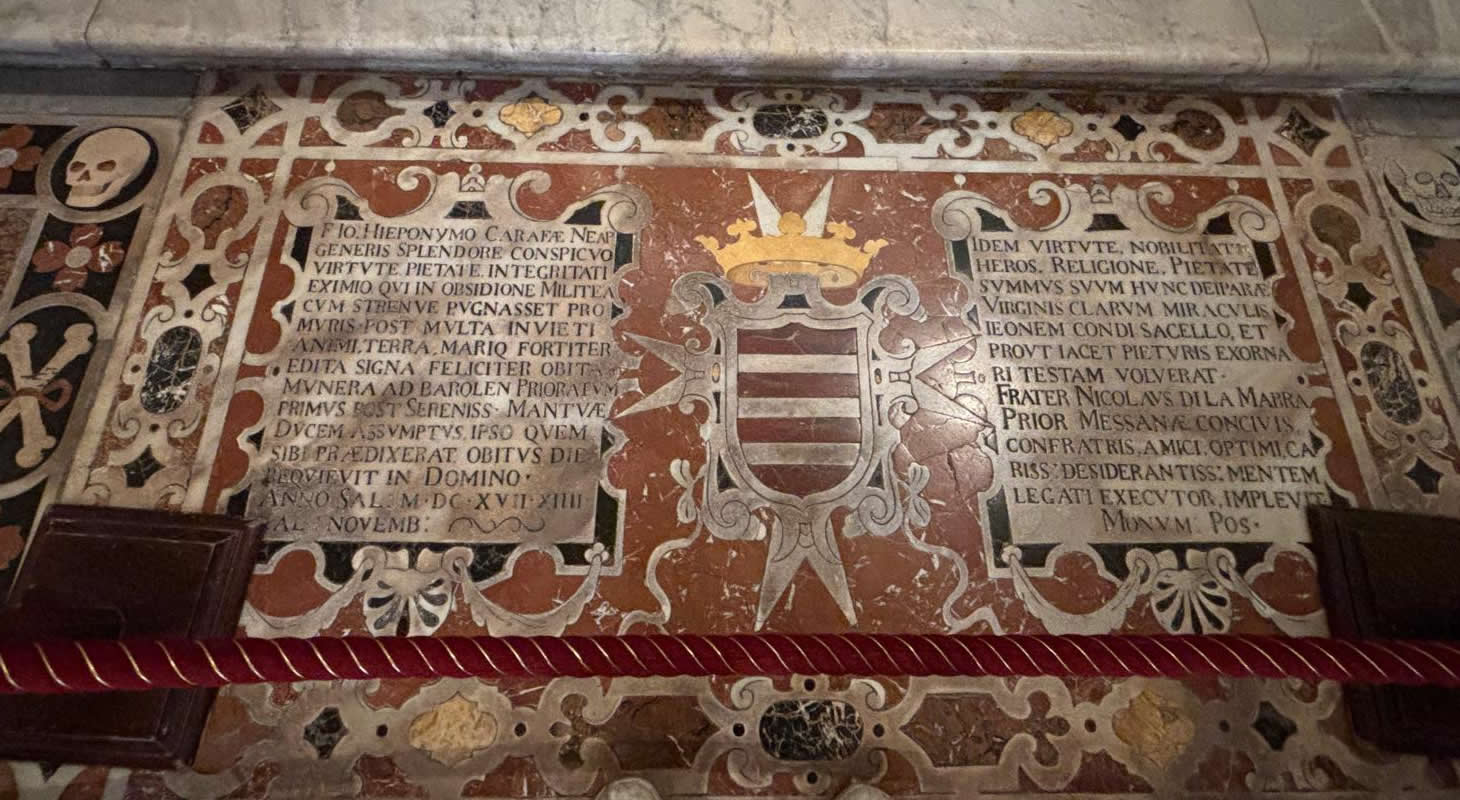
The Carafa Family and Noble Origins
The Carafa family was one of the most prominent noble dynasties in southern Italy, producing influential churchmen, military leaders, and even popes. As a member of this distinguished lineage, Frà Giovanni Gerolamo Carafa belonged to a tradition of service to both Church and state.
Members of the Carafa family frequently held high-ranking positions within the Order of St John, reinforcing the strong Italian presence within the Order’s hierarchy.
Role within the Order of St John
Frà Giovanni Gerolamo Carafa served as Prior of Barletta, one of the most important priories within the Italian Langue. The role of a prior involved both administrative and spiritual leadership, overseeing estates, revenues, and the welfare of knights under his jurisdiction.
The Order of St John was both a military and hospitaller institution, dedicated to defending Christendom and caring for the sick. Its members were drawn from noble families across Europe and organised into langues, including the powerful Italian Langue.
The Langue of Italy in St John’s Co-Cathedral
The Chapel of the Langue of Italy is one of the most richly decorated chapels within St John’s Co-Cathedral. Each langue had its own chapel, reflecting the international composition of the Order.
The cathedral itself was constructed between 1573 and 1578 as the conventual church of the Order, later becoming one of the finest examples of Baroque architecture in Europe.
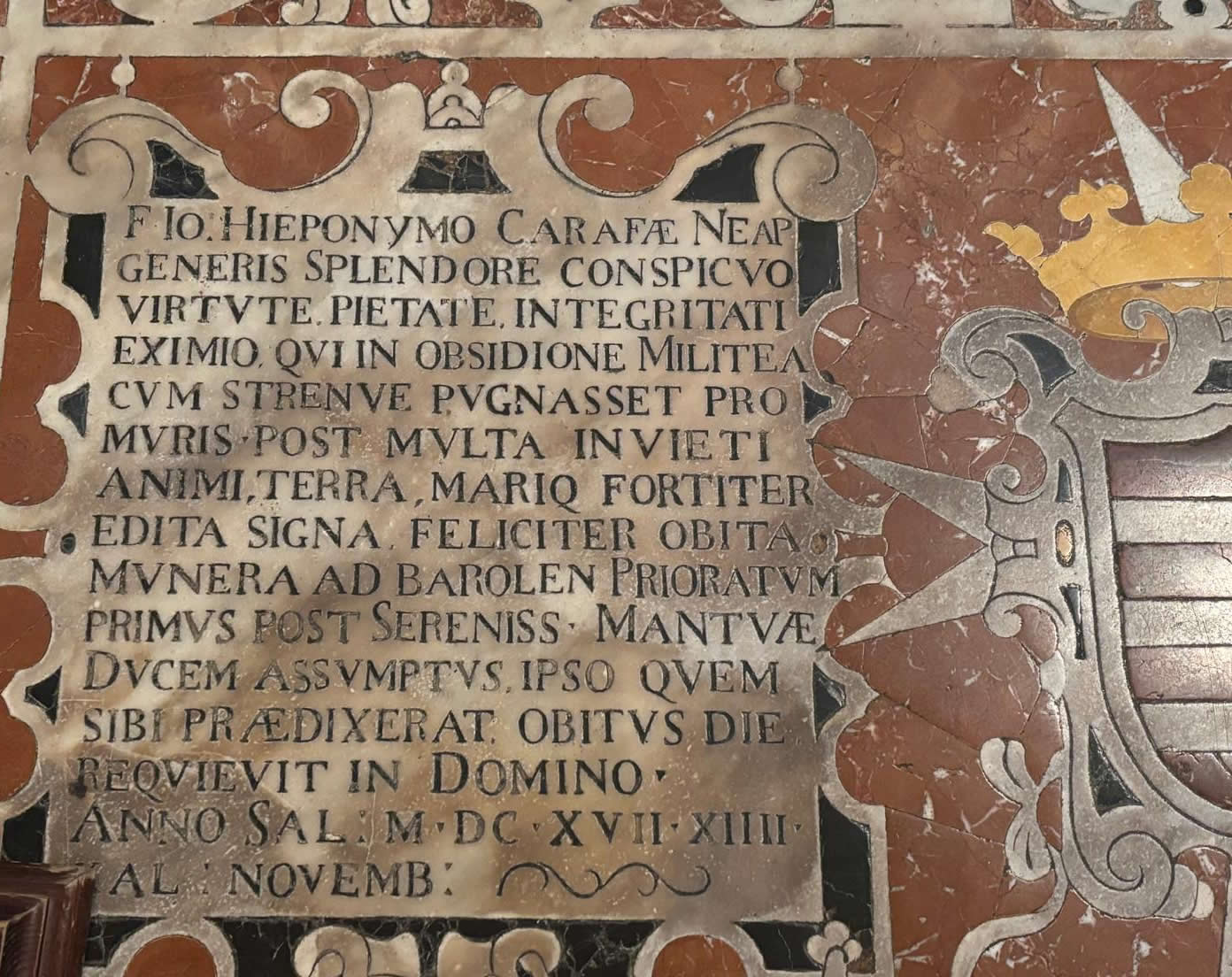
Within this chapel, the tomb of Carafa forms part of a wider funerary landscape, where knights were commemorated with elaborate marble slabs bearing coats of arms and inscriptions.
Artistic and Religious Contributions
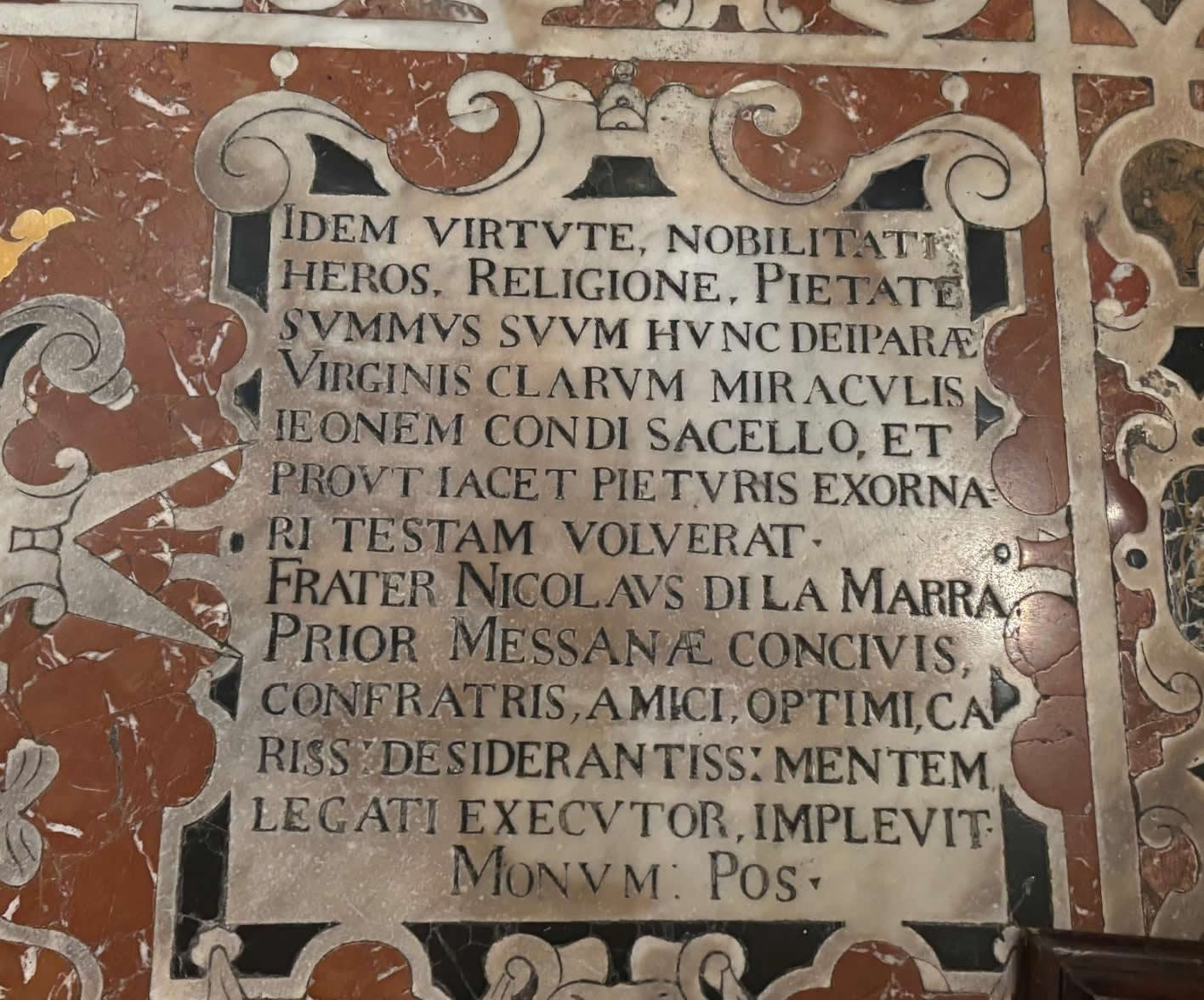
Frà Giovanni Gerolamo Carafa is also associated with artistic patronage. Historical records indicate that a devotional icon known as the “Madonna of Carafa” was commissioned by him, reflecting his piety and role as a patron of sacred art.
This connection highlights the broader cultural influence of knights within the Order, who not only engaged in military and administrative duties but also contributed to the artistic and spiritual life of their communities.
The Tomb in the Chapel of the Langue of Italy
The tomb of Frà Giovanni Gerolamo Carafa is embedded within the marble floor of the chapel, part of a remarkable collection of funerary monuments. St John’s Co-Cathedral contains around 400 tombstones commemorating knights and officers of the Order.
Each tombstone is unique, combining heraldic imagery with inscriptions that reflect the life, rank, and achievements of the individual. Carafa’s tomb stands as a testament to his noble status and service within the Order.
Symbolism of Knightly Tombs
The tombstones of the Knights of Malta are rich in symbolism, often depicting coats of arms, allegorical figures, and emblems of mortality. These designs served both as memorials and as reminders of the spiritual values upheld by the Order.
For visitors, these tombs offer a powerful visual narrative of the Order’s history, linking individual stories like that of Carafa to the broader legacy of the Knights of St John in Malta.
Legacy of Frà Giovanni Gerolamo Carafa
Frà Giovanni Gerolamo Carafa represents the influential role of Italian knights within the Order of St John. His leadership as Prior of Barletta and his contributions to religious and artistic life exemplify the ideals of service, faith, and nobility.
Today, his tomb continues to attract visitors interested in the history of the Order and the artistic heritage of St John’s Co-Cathedral.
Frequently Asked Questions (FAQs)
Who was Frà Giovanni Gerolamo Carafa?
A Knight of the Order of St John and Prior of Barletta from a noble Italian family.
Where is he buried?
In the Chapel of the Langue of Italy at St John’s Co-Cathedral in Valletta.
What is the significance of his tomb?
It forms part of the cathedral’s historic collection of knightly tombstones, reflecting rank, heritage, and service.
What was his role in art history?
He is associated with the commissioning of the Madonna of Carafa, demonstrating the cultural patronage of the Order.